In case you missed our best recent articles:
Bessent and the BoJ: Sacrificing US Treasuries to Save the Yen? (FREE)
US & Japan Bond Alert: When Oil and AI Squeeze the Long End Together
250 Years of the American Economy - Part 2: The Scale Revolution (1865-1913)
250 Years of the American Economy - Part 1: Hamilton's Gamble (1776-1865)
Last time, Viet Hustler took readers through the Scale Revolution. In half a century, America poured steel, oil, electricity and 20 million people into a newly unified market, invented the modern corporation, and overtook Britain to become the world's workshop.
But if you had to pick the single most important line from Part 2, it was not about Morgan, Rockefeller or Carnegie, but a line that appeared only briefly at the end: from this point on, America would grow rich not by expanding production, but by expanding consumption.
Revisit Part 2 here:
Yet the very scale machine built in Part 2 carried a paradox:
The assembly line could now produce more goods than ever before, but who would buy them all?
No matter how much cheaper steel got, how much cheaper oil got, or how abundant goods became, the worker at the end of the line still earned just enough to get by. Productivity outran purchasing power. The result: Mass production had arrived, but mass consumption had not.
→ For America in the early 20th century, the question was no longer how to produce more, but how to find enough buyers.
That was the greatest paradox of industrial capitalism, and the 32 years covered in this article tell how America tried to resolve it.
It tried every way it could: paying wages never seen before, teaching an entire nation to trust paper securities, inventing buy-now-pay-later, and inventing modern advertising to turn desire into demand.
But in just four years, nearly all of the private sector's solutions were wiped out.
The government had to step in and rewrite the balance sheet of every household.
And in the end, the largest war in history inadvertently completed the other half of that invention.
In Part 1, America built the Market. In Part 2, America built Scale. This time, America built the hardest thing of all: Demand.
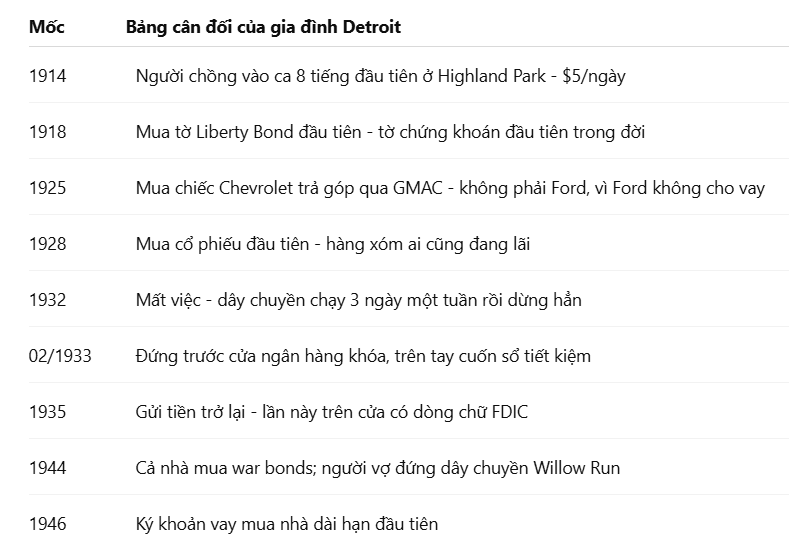
For the first time in this series, the protagonists will not be Hamilton, Morgan or Ford. Instead we will follow a working-class family in Detroit. They are fictional, but they represent millions of real families. Every event, date and policy around them is verified history; only the perspective is imagined.
In this installment, from Ford's $5 paycheck to the Bretton Woods conference, every policy ultimately comes down to one place: The finances of the American household.
When the Paycheck Became the Most Effective Marketing Tool
The Household: From Buyer to Lender
Buy Now, Pay Later and the Birth of Modern Credit
When the Consumption Machine Ran in Reverse (1929-1933)
The New Deal: How America Rebuilt Trust
War: The Final Boost to Purchasing Power
Part I. When the Paycheck Became the Most Effective Marketing Tool
In the early hours of 01/06/1914, the family's husband stood in a crowd outside the Highland Park plant in Detroit, in the sub-zero cold of a Michigan winter. He had arrived at 5 a.m. - and was still late: some had been queuing since 3 a.m. Around him were more than 10,000 men waiting for a single chance.
That chance began with a newspaper notice the day before. On 01/05/1914, Henry Ford and vice president James Couzens announced that Ford Motor Company would pay workers $5 for an 8-hour shift, instead of $2.34 for a 9-hour shift - more than double the pay for one hour less work.
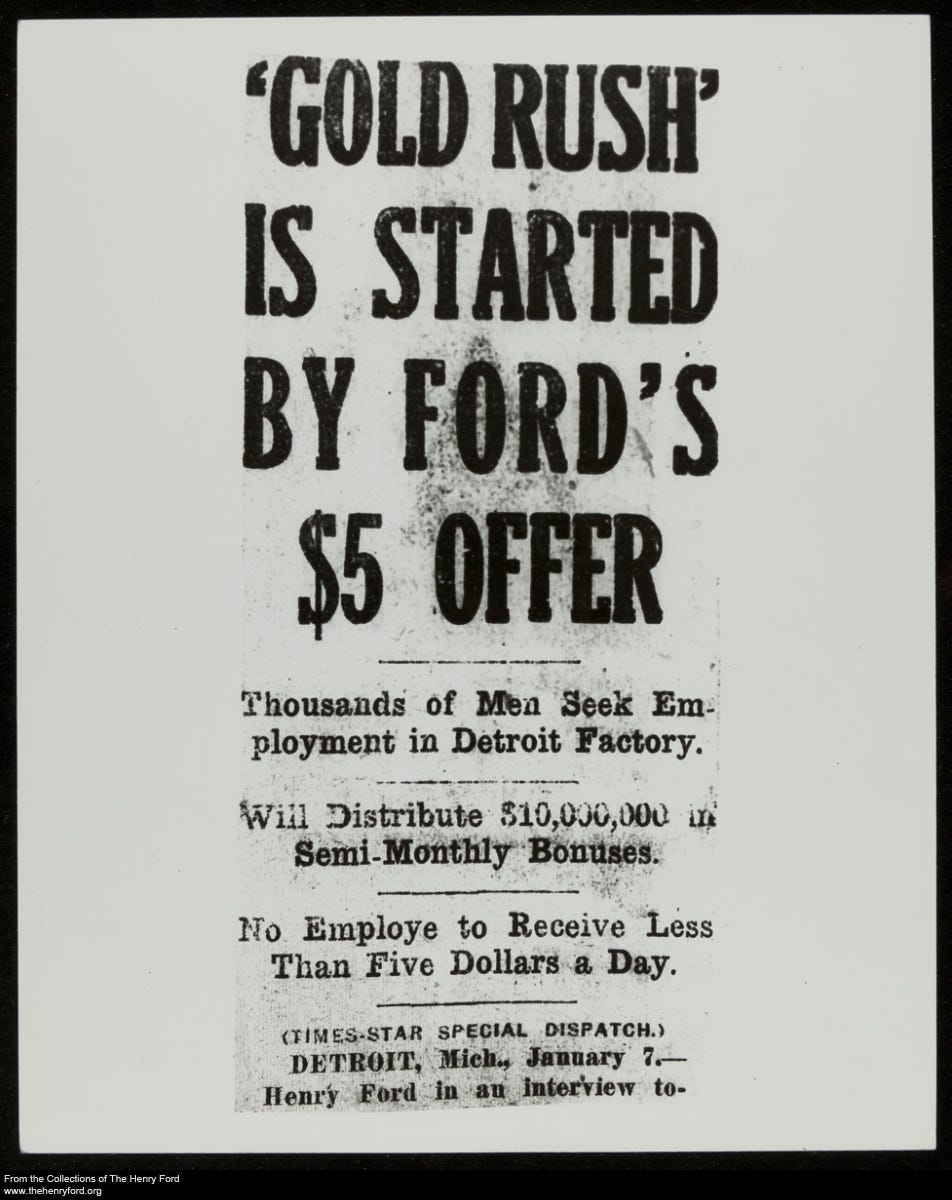
Industry across America was stunned. At the time, the unwritten rule was to pay workers as little as possible, not a cent more.
A week later, on 01/12/1914 - the day the policy officially took effect - more than 12,000 people again flocked to Highland Park in a snowstorm.
The crowd grew so large the company even had to use fire hoses to disperse it in the freezing cold.
But the more important question is: why would Ford do something that seemed so crazy? To answer that, you have to go back exactly one year.
On 01/04/1913, at the Highland Park plant, the first moving assembly line began operating - initially just for magneto generators, inspired by Chicago slaughterhouse conveyor belts. By the end of 1913, the model was applied to the entire chassis:
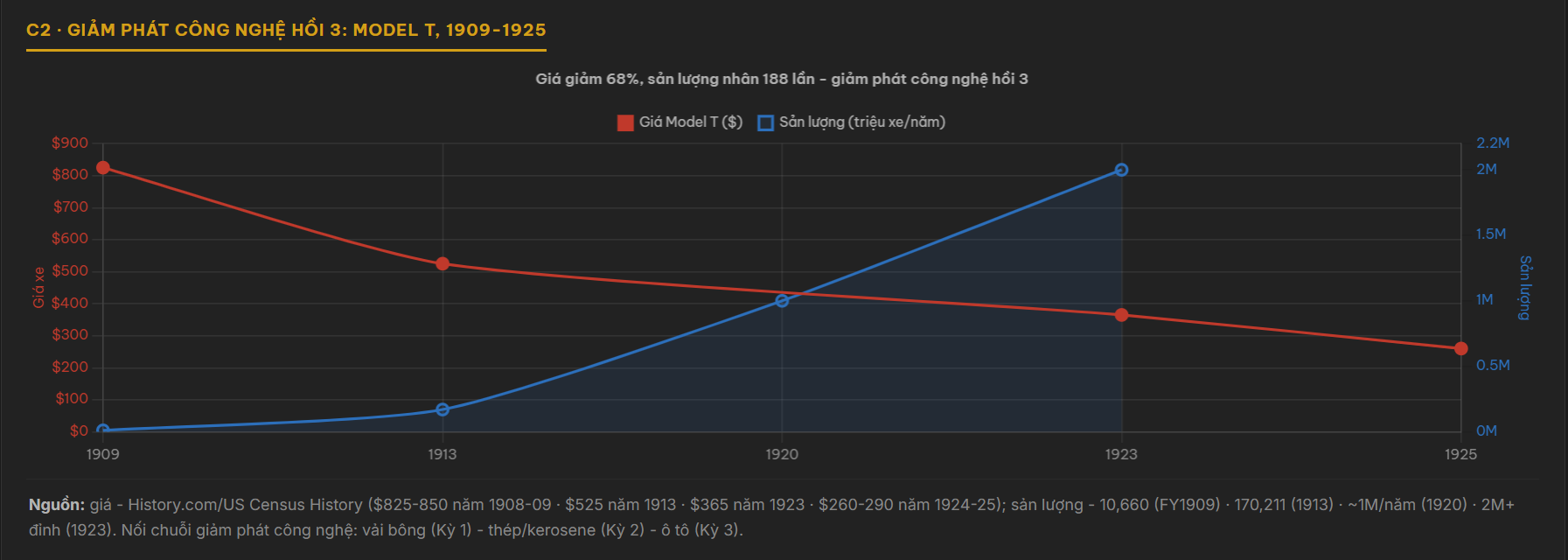
The time to assemble a Model T chassis fell from 12.5 hours to just 93 minutes - a drop of 88%.
Vehicle prices kept tumbling and output soared.
But the line also created a problem few talk about.
Work was broken down into such repetitive tasks that turnover hit 370-380% per year.
To keep 100 workers on the line, Ford had to hire nearly 1,000 people.
The more efficient the machine became, the harder it was to keep the people who operated it.
That is why the $5 paycheck was created - to solve the puzzle:
How to retain workers and ensure enough hands on the line to meet target output?
The most repeated story is: Ford paid high wages so workers could afford the very cars they built, giving them an incentive to work. That is true - but only half true.
According to The Henry Ford's own archives, the initial motive was to reduce turnover and keep the plant running three shifts continuously.
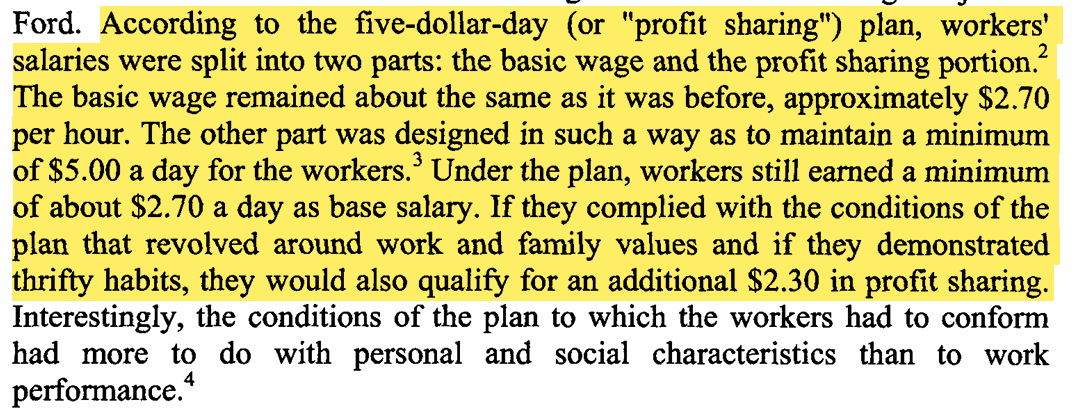
The $5 was actually a conditional profit-sharing program: a base wage of $2.34, plus $2.66 in profit-sharing if workers met the company's standards.
Ford even set up a Sociological Department, sending inspectors to workers' homes to check whether they drank, saved, and lived by the company's desired standards.
But then Ford realized he had created a far larger effect.
Workers earning higher wages began buying more goods - and among those goods were... Ford cars.
The worker-turned-customer effect was real - it just was not the original intent, but something Ford recognized after solving his staffing problem.
In other words, America's mass consumer was invented in part by accident.
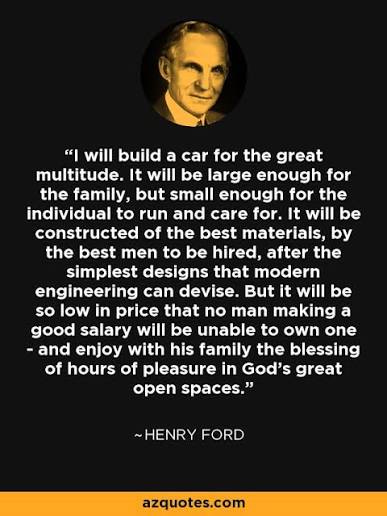
Once he realized it, Ford exploited it to the fullest. In his memoir My Life and Work, he wrote:
"I will build a motor car for the great multitude."
"I will build a motor car for the great multitude."
The results came almost immediately.
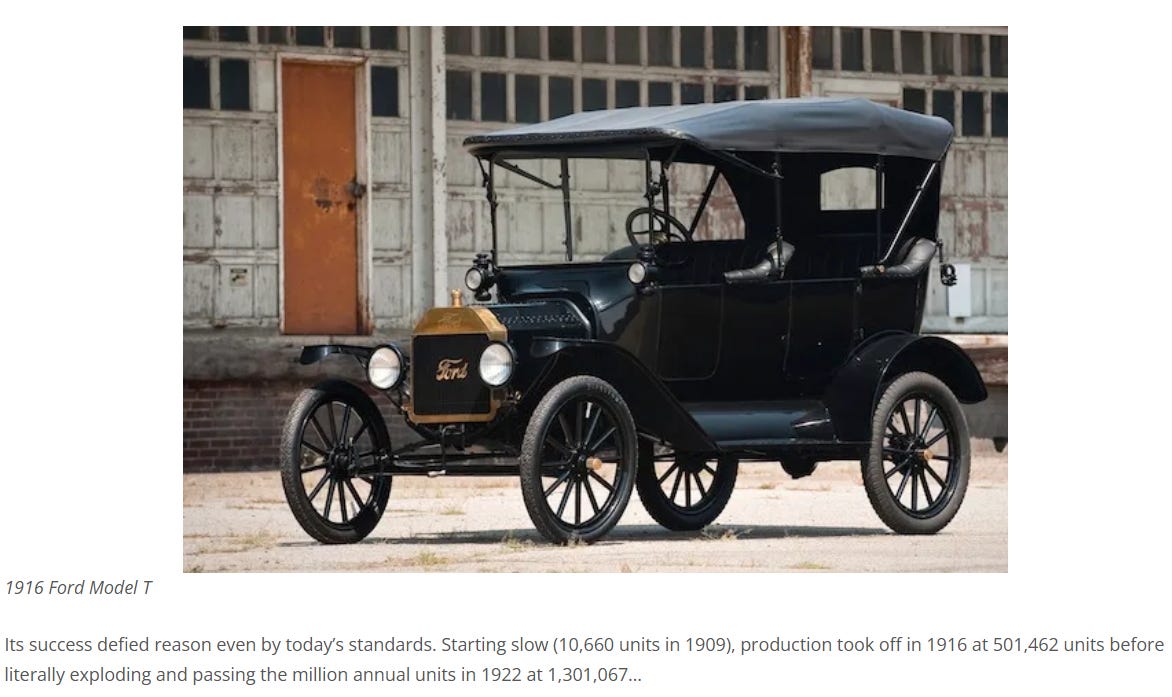
In 1914, Ford sold 308,000 Model Ts - more than all other automakers combined.
In 1915, sales rose to 501,000 vehicles.
By 1920, Ford was selling about 1 million cars a year.
The Model T price continued to fall from $825 (1908) to $525 (1913) and then to about $260 by the mid-1920s.
And so that afternoon, the husband in the family got hired. For the first time in his life, an unskilled worker earned enough to think about more than next month's rent.
For the first time in industrial history, a company's payroll became its most effective marketing tool.
→ What made the American economy bigger than it was yesterday?
The answer is: Wages. Ford not only solved his assembly line's labor shortage but also inadvertently discovered that his best potential customers were the very people standing at the end of that line. From then on, America began to learn how to expand not just production, but the number of people who could afford to buy what it produced.
Part II. The Household: From Buyer to Lender
In 1918, on factory walls, in movie theaters, outside post offices - everywhere you looked, the same call rang out: buy Liberty Bonds. The wife in the family started with small change. She pasted 25-cent thrift stamps into a booklet; 16 stamps could be exchanged for a $5 stamp, and she kept saving until the family owned its first $50 bond.
Just four years earlier, her husband had stood in a crowd of job seekers outside Highland Park; now his family was lending money to the U.S. government.
World War I brought profound changes to the U.S. economy, the first and most important of which was: America went from being the world's debtor to its creditor.
In 1914, America was still a borrower: its foreign debts exceeded its foreign lending by about $2.2 billion. But just five years later, the balance had completely reversed:
In 1919, America became a net creditor of about $6.4 billion.
U.S. investment abroad rose from $5.0 billion to $9.7 billion.
By December 1922, a total of 20 countries owed the U.S. Treasury $11.8 billion ($10.1 billion in principal + $1.7 billion in overdue interest).
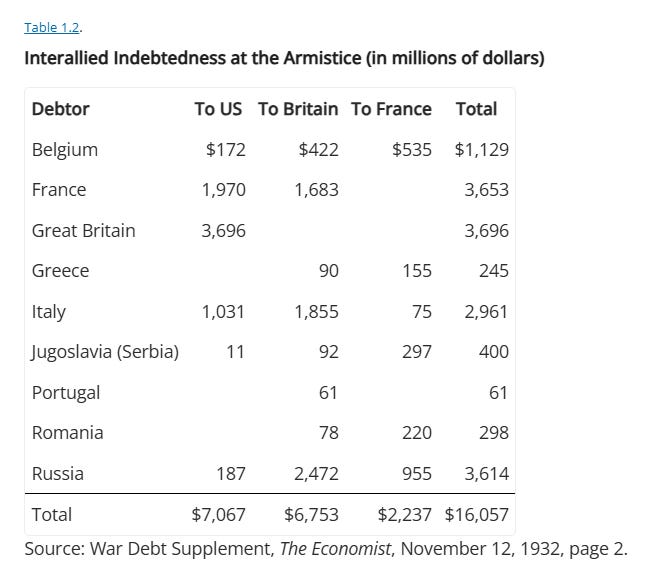
The war completed what Part 2 had only begun: shifting the world's financial center from London to New York. The European empires that had once lent to America now had to borrow from America itself.
For our Detroit family, however, something more important was happening right on the posters lining the streets.
The second great change WWI brought was this: America began teaching ordinary people how to become investors.
To pay for the war, the federal government had to borrow on an unprecedented scale. Federal debt surged from about $1 billion to more than $25 billion; the four Liberty Bond issues and the subsequent Victory Loan alone raised about $21.5 billion from the public.
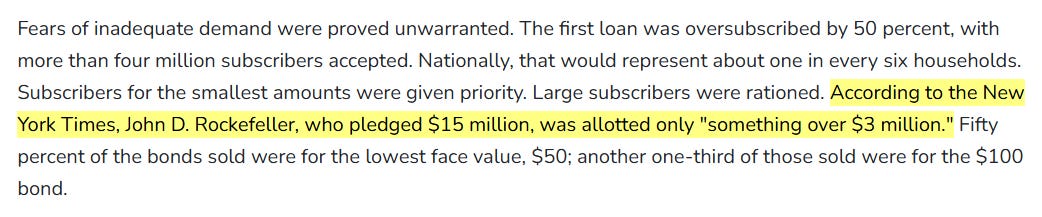
This time, the government did not just turn to banks or the wealthy like Rockefeller; it went directly to millions of American families.
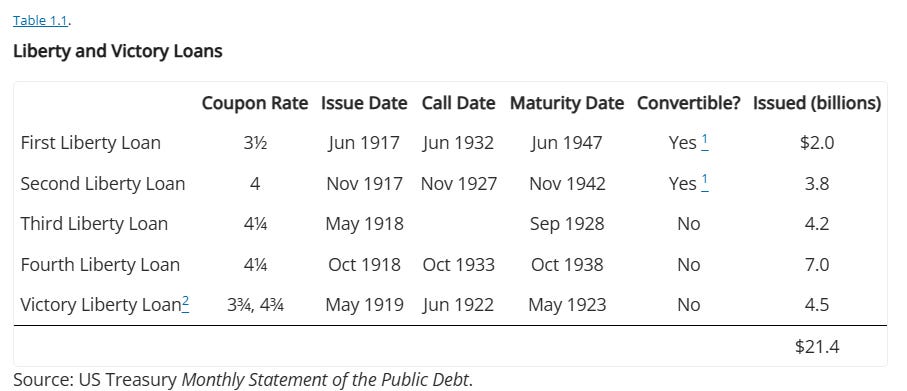
After four issues, 20 million individuals had bought Liberty Bonds - while the entire country had only about 24 million households at the time.
A 1918-1919 survey of urban workers showed 68% owned Liberty Bonds.
The government even deliberately favored small buyers; for example, Rockefeller subscribed for $15 million in bonds but was allotted just over $3 million.
This may sound like a financial story, but it was really a psychological revolution.
Before 1917, owning securities was largely a game for the wealthy and the financial centers. For a working-class family like the Detroit family, wealth meant cash, bank deposits, a house, or gold - securities were something other people owned.
Then the war made it ordinary. Posters on walls, parades in the streets, movie stars urging people to buy bonds - all turned holding a piece of paper that said the government owed you money into an act that was both patriotic and familiar.
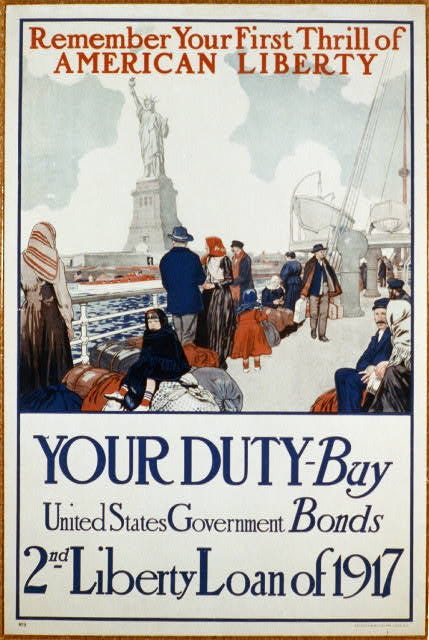
Above all, the most important lesson Liberty Bonds taught was this: America began learning to trust paper.
From gold, Americans learned to trust government paper.
From government paper, they would learn to trust stocks in the 1920s.
From stocks, they would learn to trust long-term mortgage debt in the New Deal era.
At the final step, the whole world would learn to trust a single piece of paper in place of gold: the dollar.
Seen that way, Liberty Bonds were not just a war-financing tool. They were America's first mass financial education.
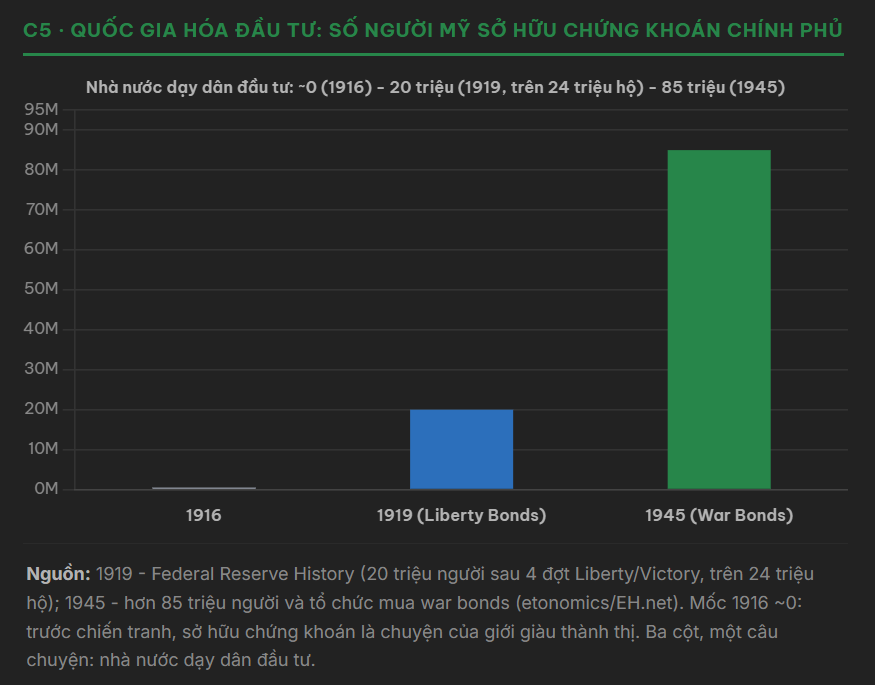
Readers of Part 1 and Part 2 may find this story somewhat familiar. Hamilton built American power on credit - the ability to make others believe the government would repay its debts. Morgan then turned character - reputation and the ability to keep promises - into the foundation of the capital markets.
World War I did something entirely new: it democratized that trust.
This time, it was not a Hamilton or a Morgan who needed convincing, but 24 million American households.
The Detroit family, like millions of other households across America, had just graduated from Investing 101. They did not yet know that the final exam would come exactly 11 years later - in October 1929, when the stock market crashed and that entire class of investors realized at once: financial paper can create wealth, but it can also vanish faster than anything else.
→ What made the American economy bigger than it was yesterday?
Its status as the world's creditor - and a people learning for the first time how to turn savings into financial assets. Liberty Bonds did more than help America pay for a war; they created a generation of Americans comfortable with the idea that they could own a piece of the financial system. And once Americans had learned to buy debt, the step to buying stocks was a very small one.
Part III. Buy Now, Pay Later and the Birth of Modern Credit
In 1925, a new Chevrolet appeared in front of the Detroit family's house. The husband still worked on the line at Ford, but the car did not bear the Ford badge. In the drawer was another stack of papers: a GMAC contract, 35% down, the rest payable over 12 months. The family did not have enough money to buy the car today, but they would have enough to pay for it in the future.
This was the biggest change in the U.S. economy in the 1920s: Americans not only earned more money, they began learning how to spend money they had not yet earned.
Ford had helped create the buyer by paying high wages and cutting car prices, but it was not until the 1920s that consumer demand was truly unleashed, thanks to: consumer credit.
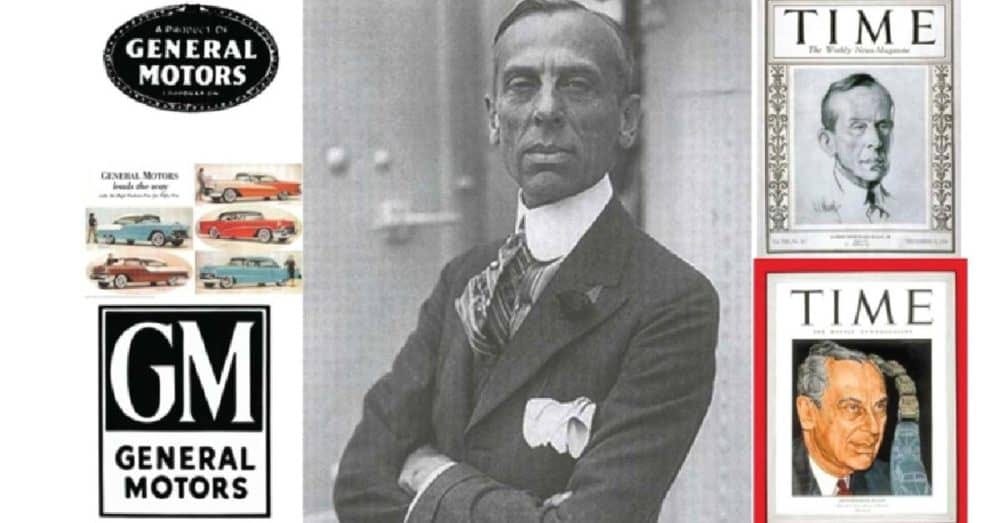
In 1919, General Motors founded General Motors Acceptance Corporation (GMAC), a finance company that lent customers money to buy cars - at the time GM was still controlled by William Durant, with John Raskob overseeing finance. But the man who turned GMAC into a strategic weapon was Alfred Sloan, president of GM from 1923: under him, credit became a link in the machine of "a car for every purse, a new model every year."
Instead of having to save the full price before buying, a family could put down about 35%, sign a 12-month contract, and pay in installments at 10-12% interest.
Installment selling was not actually GMAC's invention:
Singer had sold sewing machines on installment since the mid-19th century, and Sears had also sold goods through catalogs on credit.
What GMAC brought was scale and legitimacy: when a major industrial corporation stood behind the loan, "buying on credit" was no longer something to hide from the neighbors; it became a normal part of middle-class life.
The model quickly spread beyond autos. Radios, refrigerators, washing machines - products that just a few years earlier most American families had not even considered - all began to be sold with the same formula: buy today, pay tomorrow.
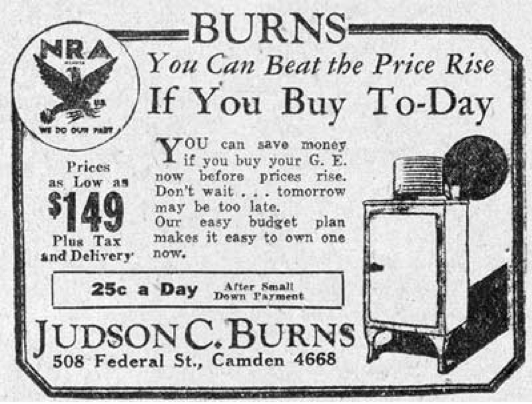
Ironically, Henry Ford - who had helped create the modern consumer - wanted no part of this game, because he saw consumer debt as a bad habit.
Instead of offering installment plans, Ford introduced a "pay-in-advance" plan: customers deposited $5-10 each week into an account at the dealership, and only received the car once the full price had been paid.
Ford believed he understood the American consumer better than General Motors, but he was wrong.
By 1925, 75.5% of cars sold in America were bought on installment.
By 1930, about three-quarters of new cars were sold "on time." Meanwhile, Ford - once dominant - steadily lost market share.
In 1918, about half the cars on the road in America were Fords...
...but by 1927, the Model T had to be discontinued; General Motors pulled ahead and held the market lead for decades.
Competition also made credit ever more accessible: down payments that had been 40-50% of the car's price gradually fell to just about 10%.
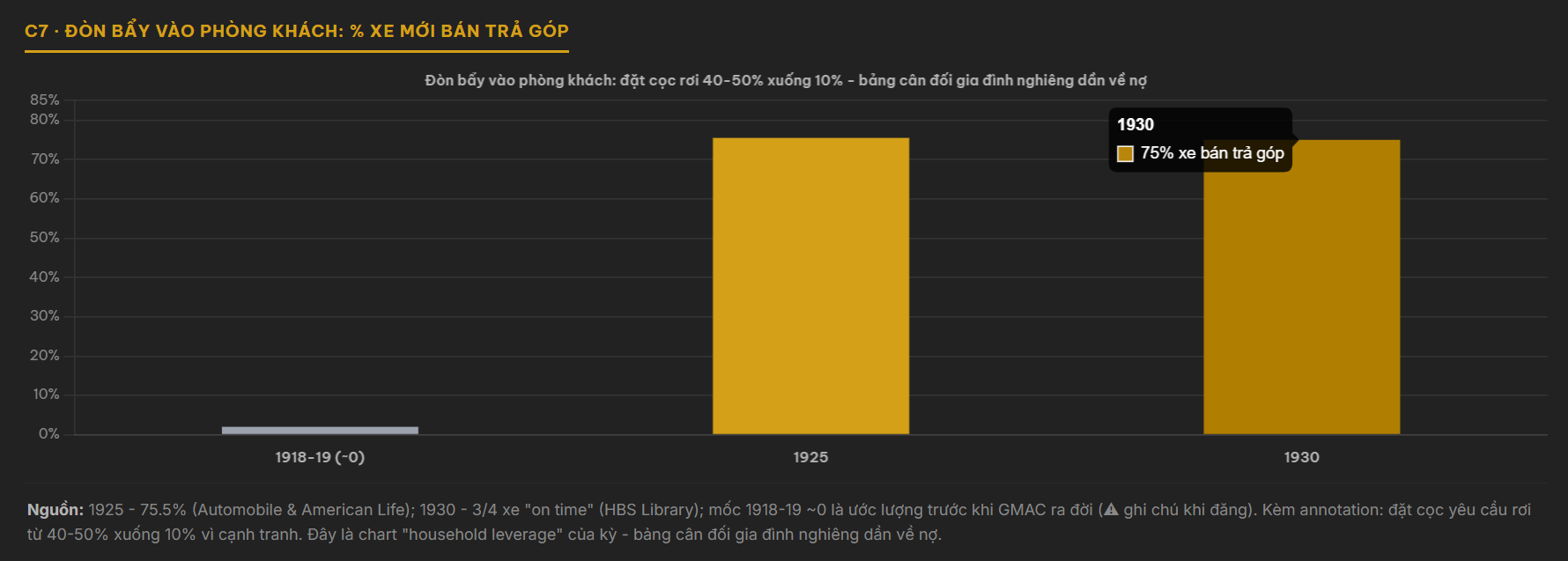
Ford invented the buyer; GM discovered that the buyer did not necessarily need to have the money, but all of that only solved half the equation. The story is: you can lend a consumer money - but first, you have to make them want to buy something they never thought they needed.
That is when modern advertising entered the game.
Radio brought commercial messages straight into the living room, with NBC - the first nationwide broadcasting network - launched in 1926.
General Motors did not just build a finance company to sell cars; under Alfred Sloan, it also built a modern marketing system: multiple models for multiple income levels, annual design changes, and incentives for customers to trade in old cars for new ones.
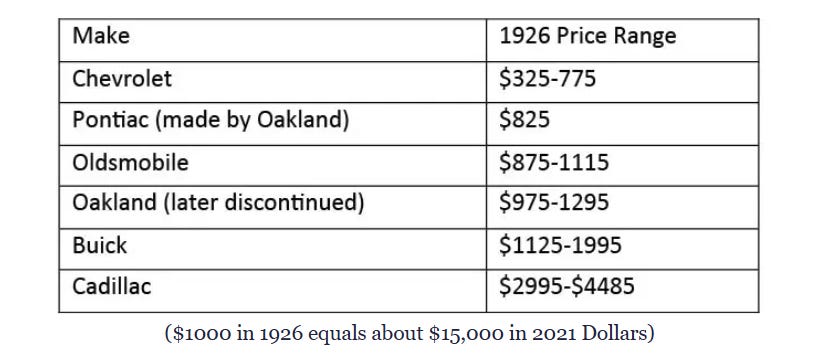
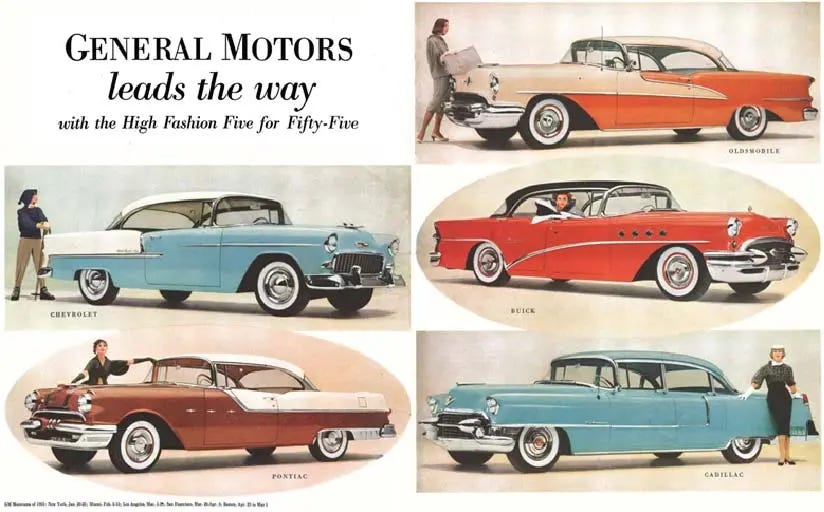
Edward Bernays pushed this logic even further:
The nephew of Sigmund Freud - the father of psychoanalysis - Bernays believed advertising should not just tell consumers a product exists; it had to tap into their deep-seated desires and make them feel they needed it.
In 1929, the "Torches of Freedom" campaign paid women to march smoking Lucky Strikes down Fifth Avenue, turning cigarettes into a symbol of women's liberation and expanding the market to a customer group previously deemed unsuitable.
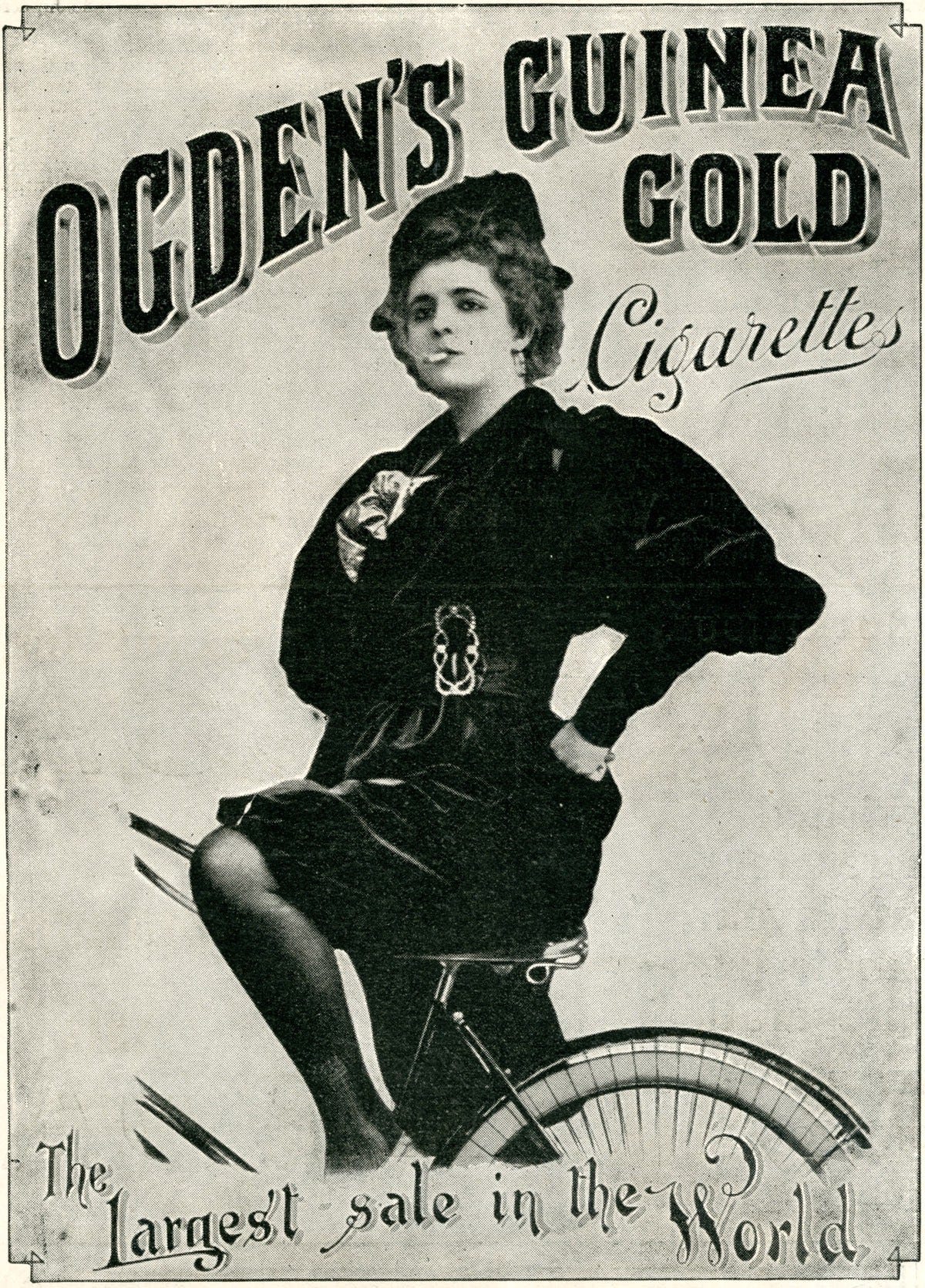
The American consumer was now "equipped" from both sides: Credit created the ability to buy; advertising created the desire to buy.
That spirit was captured by President Calvin Coolidge in a remark to the press in 1925:
"The chief business of the American people is business."
"The chief business of the American people is business."
And once Americans grew accustomed to buying things with tomorrow's money, that logic began to spread to an even bigger market: Wall Street.
In 1928, the Detroit family also bought their first few shares. Not because they had become professional investors, but simply because neighbors were making money, colleagues were making money, and stock prices seemed to have only one direction to go.
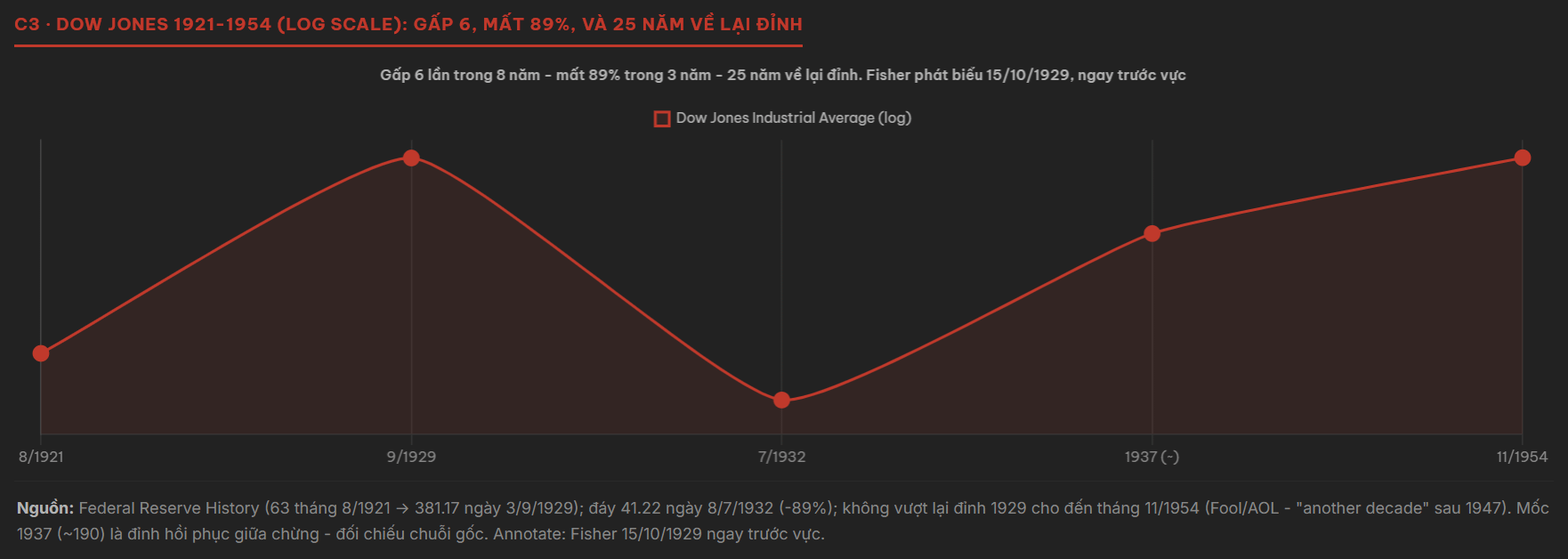
The Dow Jones rose from 63 points in August 1921 to 381.17 points in September 1929 - more than sixfold in eight years. And just as with buying a car on installment, Americans could buy stocks with borrowed money on margin.
The truth was that beneath that glossy veneer, cracks had long since appeared:
American agriculture had been in decline since 1920-21; even in the midst of the "prosperous decade," an average of about 600 rural banks failed each year.
But when asset prices were rising every day, few wanted to look down at their feet.
On an evening in October 1929, at a dinner of the Purchasing Agents Association in Manhattan, Irving Fisher - the famed Yale economist - rose to speak. He believed the market had entered a new era:
"Stock prices have reached what looks like a permanently high plateau..."
"Stock prices have reached what looks like a permanently high plateau..."
He even said the market would continue to climb in the months ahead. But two weeks later, that "permanently high plateau" began to collapse.
The most frightening thing was not Wall Street's fall, but what came after: that collapse would throw into reverse the entire machine America had spent more than a decade building in reverse.
Credit would turn into bad debt
Goods would turn into inventory
Buyers would turn into sellers
Depositors would turn into withdrawers.
→ What made the American economy bigger than it was yesterday?
The answer is: Consumer credit and advertising. Americans had learned to buy the future with money they had not yet earned, and to crave things they had not known they needed the day before. For eight years, that machine looked like a stroke of genius that left the whole country in awe - until it started running in reverse.
Part IV. When the Consumer Machine Ran in Reverse (1929-1933)
On the morning of 02/14/1933, the husband in the Detroit family walked his child past the bank where they had kept their money for 15 years. The doors were locked, a notice from the governor of Michigan taped to the window. In his pocket was still his passbook, the neatly handwritten figures from each year still on the page, but the money was gone.
Michigan was not the first state to shutter its banks - Nevada had done so in late October 1932 - but Michigan was Detroit, the industrial heart of America. And most ironically, the trigger was Union Guardian Trust - the bank tightly linked to the Ford family, where Henry Ford was the largest depositor.
To save the bank, the RFC (Reconstruction Finance Corporation - the Hoover-era federal rescue fund) was ready to lend. But by law, the loan had to be fully collateralized - and Union Guardian did not have enough. The only way out: Ford would have to agree to subordinate about $7.5 million of his deposits - meaning if the bank collapsed, he would lose his money before any other depositor.
On the night of 02/13/1933, Hoover sent the Secretary of Commerce and the Undersecretary of the Treasury to meet Ford. He not only refused, but declared: if Union Guardian were abandoned, the next morning he would withdraw the remaining $25 million from First National Bank - Detroit's other major bank.
Ford bet the government would not dare let the bank fail, but he miscalculated. Talks collapsed, and in the early hours of 02/14/1933, the governor of Michigan declared an 8-day "bank holiday."
The man who demanded that subordination condition from Washington was Senator James Couzens - the same vice president who had stood beside Ford to announce the $5 day on 01/05/1914. Together they had once invented the American consumer, only to find themselves on opposite sides 19 years later as that consumer collapsed.
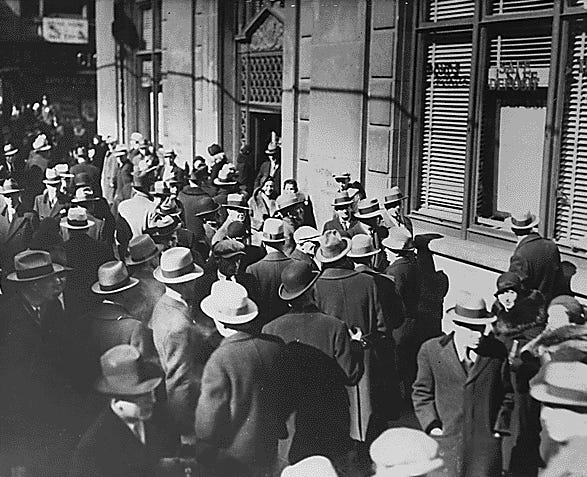
Yet the morning in front of those locked bank doors did not begin in Detroit or Nevada; it had begun more than three years earlier, on Wall Street.
On 10/28/1929, the Dow Jones lost nearly 13%.
The next day, the index lost another nearly 12%.
Those two days went down in history as Black Monday and Black Tuesday, but the crash was not the Great Depression; it was just the opening gun.
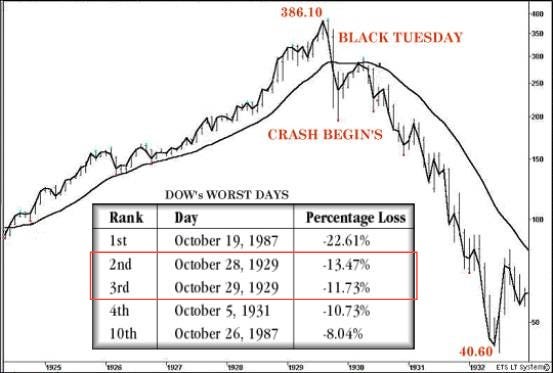
The real collapse unfolded more slowly and more painfully.
The Dow Jones fell from its peak of 381.17 points on 09/03/1929 to just 41.22 points on 07/08/1932 - losing 89% of its value.
It was not until November 1954, nearly 25 years later, that the index returned to its old peak.
But the most frightening thing was not on the Wall Street ticker; it lay in what America had spent two decades building, as every invention of the consumer age began to run in reverse.
Ford's $5 day had once turned workers into customers. Now, factories cut shifts, cut wages, and then cut workers altogether.
Installment contracts had once helped Americans buy the car of the future. Now, the unemployed could not keep up with loan payments and their cars were repossessed.
Stocks had once turned millions into investors. Now, margin calls forced them to sell into the decline.
Most important of all - faith in paper that America had spent a generation building - began to collapse.
When people heard another bank was about to close, they immediately rushed to withdraw their money.
The more cash banks lost, the more they had to sell assets and cut credit.
One bank's failure only made depositors at other banks more panicked.
A self-reinforcing spiral took hold
Bank runs were nothing new - America had endured panics in 1873, 1893 and 1907, when Morgan had to step in as a flesh-and-blood central bank (Part 2). What was new in 1930-1933 was the scale and the paralysis: the Fed - the institution created in 1913 precisely so America would never need another Morgan - stood by and watched. And with no deposit insurance, an evening rumor could become a line of withdrawers by the next morning.
Bank failures rose from about 600 a year in the 1920s to 1,350 in 1930, and then about 4,000 in 1933 alone.
In total from 1930 to 1933, more than 9,000 banks disappeared - about one-third of the American banking system. Money supply and bank credit contracted by more than 30%.
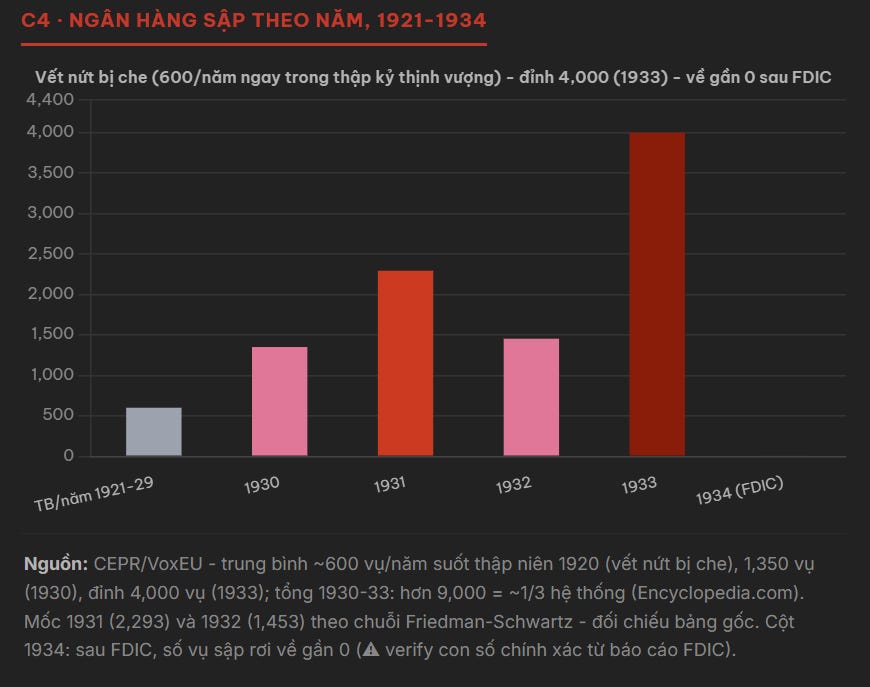
When banks stopped lending, the entire economy began to run short of what it needed most: money to keep operating.
Businesses could not borrow to produce; workers lost their jobs.
Even those still employed feared losing their jobs and stopped spending.
Shops sold less, factories produced less, and businesses laid off even more workers.
The consumer machine America had spent two decades assembling now ran in reverse, gear by gear.
That is why the Great Depression was not just a stock market crash - it was a crisis of the balance sheet.
Plunging prices might sound like good news - a dozen eggs fell from about 50 cents in 1929 to just 13 cents in 1933.
But there was a catch: falling goods prices did not mean your debt fell too.
The Detroit family could buy cheaper eggs, but the car loan remained the same. Wages fell, asset prices fell, revenues fell - yet the figure on the loan contract stayed put. To repay, he had to sell assets, and millions of others were doing the same. The more they sold, the lower prices fell; the lower prices fell, the heavier the debt became relative to asset values.
That is the spiral the economist Irving Fisher later called debt deflation.
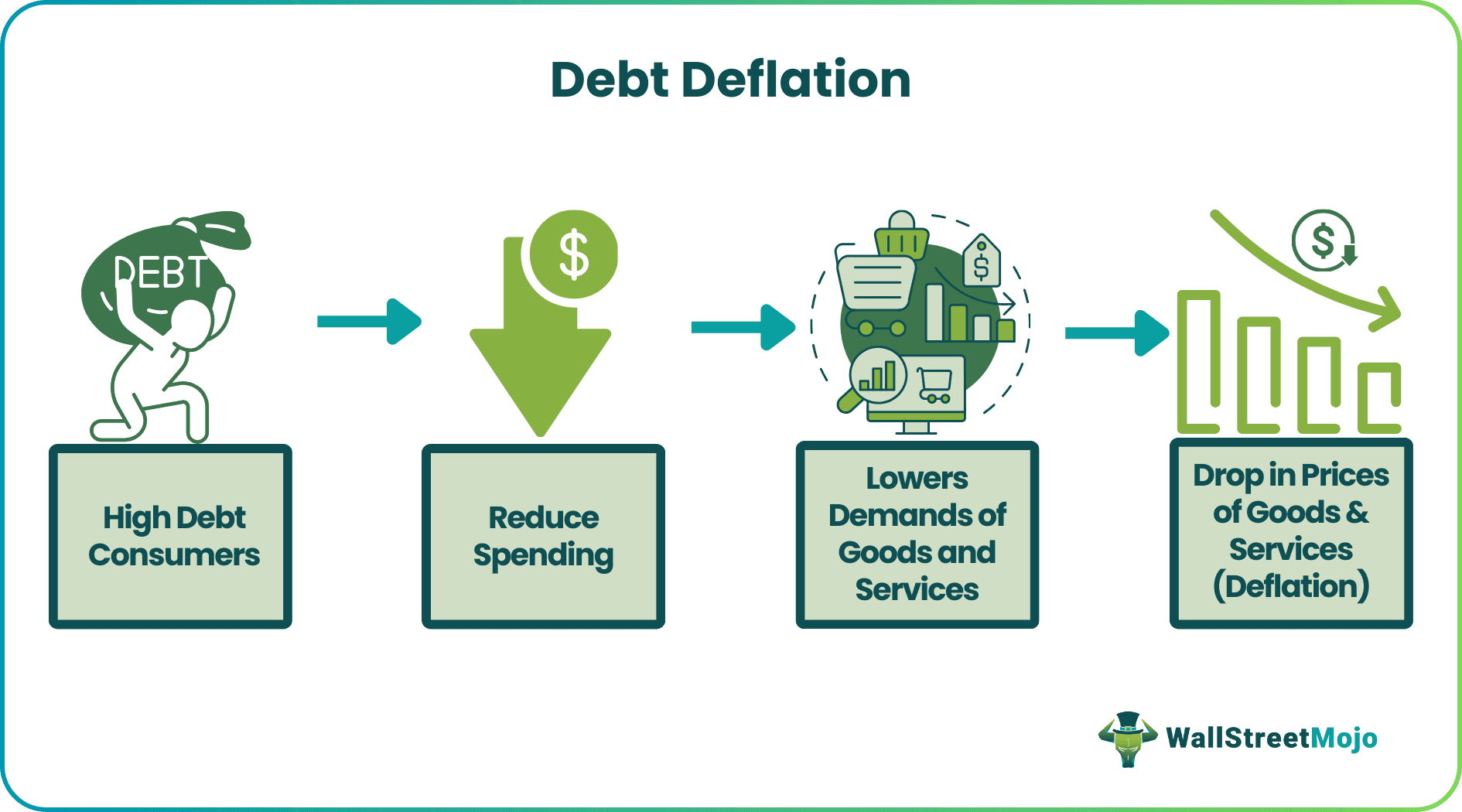
This was also one of the bitterest ironies of the Great Depression: Fisher himself had declared in October 1929 that stock prices had reached a "permanently high plateau." After the market collapsed, he lost nearly his entire personal fortune and spent his final years explaining why debt and deflation could drag the whole economy down together.
While households tried to hold on to every penny, policy at the time often did the opposite.
The Fed raised interest rates in 1931 to defend the gold standard, while the government tried to keep the budget balanced.
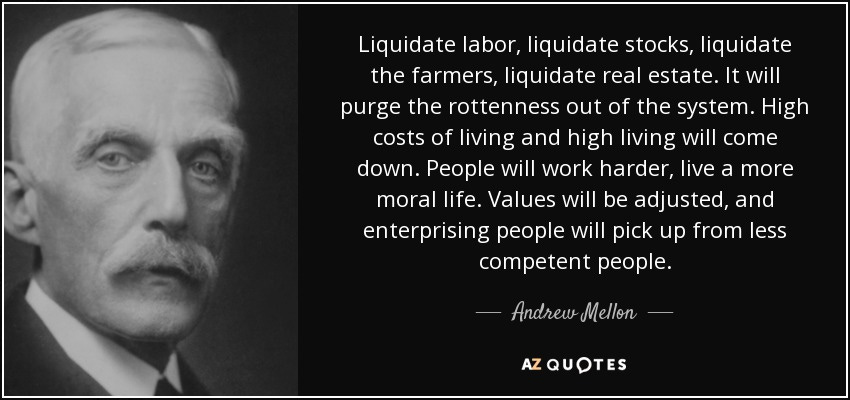
Treasury Secretary Andrew Mellon, according to President Hoover's memoirs, favored a harsh remedy: let weak businesses, weak banks and weak borrowers be "liquidated," and the system would purge itself.
"Liquidate labor, liquidate stocks, liquidate the farmers, liquidate real estate... it will purge the rottenness out of the system."
"Liquidate labor, liquidate stocks, liquidate the farmers, liquidate real estate... it will purge the rottenness out of the system."
But the economy did not "purge" and then recover on its own; instead, it kept sinking.
U.S. industrial output had lost about 40% by the end of 1931 alone.
Exports plunged from $5.2 billion in 1929 to $1.7 billion in 1933, as Smoot-Hawley and retaliatory trade barriers shrank global trade.
By 1933, one in four American workers was unemployed.
A country that had just learned to consume en masse no longer had enough jobs to consume.
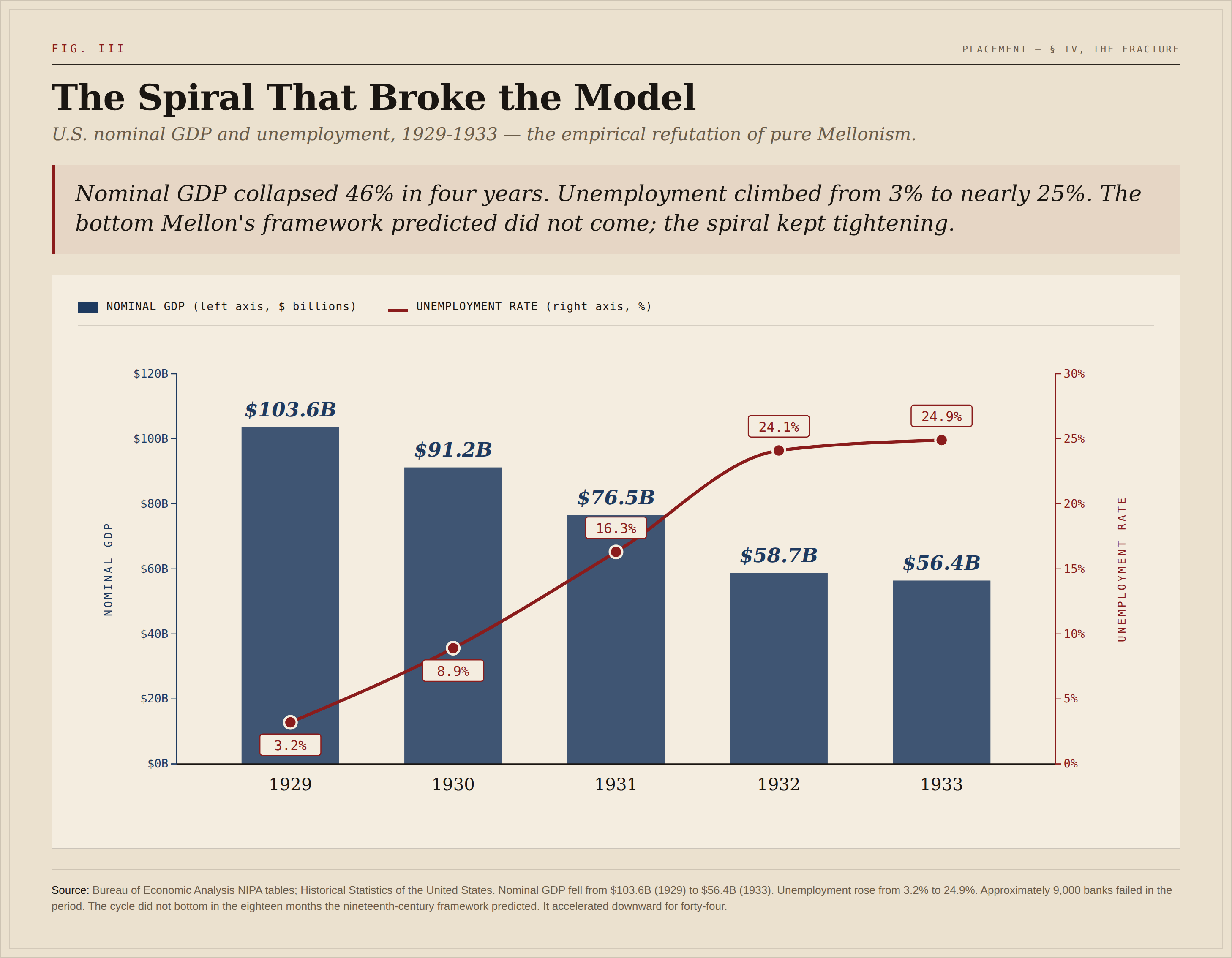
So why did a stock market crash turn into a four-year catastrophe?
That question became one of the great debates of 20th-century economics. Later economists offered different answers:
Friedman và Schwartz: The Fed let the money supply contract too sharply, turning a recession into a catastrophe.
Keynes: aggregate demand collapsed; when households and businesses stopped spending at the same time, the government had to step in to fill the gap.
Fisher and Minsky: excessive debt combined with deflation creates a self-reinforcing spiral - the harder borrowers try to repay, the weaker the economy becomes.
Barry Eichengreen: the gold standard was a set of shackles. Countries that clung to gold could not freely ease monetary policy; those that broke free sooner tended to recover sooner.
In truth, there is no single cause for this question. But viewed through the Detroit family's balance sheet, the story becomes much clearer: Americans did not just lose money. They lost jobs, lost credit, lost assets and ultimately lost faith in the system that held their money.
That is why the lesson of the Great Depression is not just "don't let stocks rise too high," but the bigger lesson is: an economy can amplify itself on the way up and on the way down.
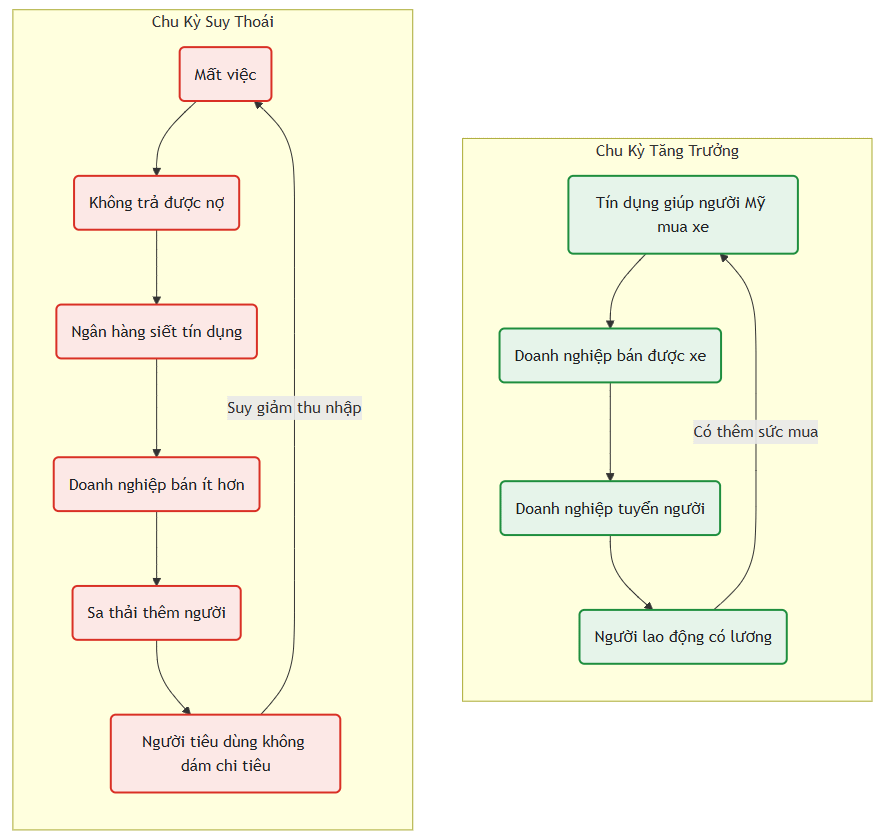
The same machine, the same model, just spinning in the opposite direction.
69 years later, at Milton Friedman's 90th birthday party, Ben Bernanke - then a Fed governor and one of the leading scholars of the Great Depression - said on behalf of the Fed to Friedman:
"Regarding the Great Depression. You're right, we did it. We're very sorry. But thanks to you, we won't do it again."
"On the Great Depression: You are right, we caused it. We are very sorry. But thanks to you, we will not do it again."
A central bank admitting its own mistake. Six years later, Bernanke himself would have to prove he had truly learned that lesson when another financial crisis erupted.
But in 1933, Americans did not know that yet; all they knew was that the machine that had helped them earn money, borrow, buy homes, buy cars and invest had shattered. From that rubble, America began to build something entirely different: a state large enough to co-sign the household balance sheet.
→ What made the American economy bigger than it was yesterday?
For the first time in the series, the answer is nothing at all.
The U.S. economy shrank by nearly one-third: Millions lost their jobs, thousands of banks disappeared, and the consumer Ford had inadvertently created now had almost no money left to spend. But just as household finances collapsed, America began to invent what came next: a state large enough to co-sign that balance sheet with them.
Part V. The New Deal: How America Rebuilt Confidence
On the evening of March 12, 1933, the Detroit family gathered around the radio they had bought on installment in more prosperous times - but this time, they were not listening to music. They listened as the new president explained why banks had closed, what was happening to their deposits, and most importantly: when banks reopened, whether they should bring their money back or keep hiding it under the mattress.
Franklin D. Roosevelt took office on 03/04/1933, just as the U.S. banking system was nearly paralyzed. In his inaugural address, he delivered a line that would become emblematic of the era:
"The only thing we have to fear is fear itself."
"The only thing we have to fear is fear itself."

It sounds like a slogan, but in the context of the Great Depression, it describes the mechanics of the crisis quite accurately: people feared banks would collapse so they withdrew their money; banks, short of cash, became even more likely to collapse; seeing that, others grew even more afraid and kept withdrawing. Fear itself became a machine that destroyed the system.
Two days after taking office, Roosevelt shut down the entire banking system nationwide, but what happened next was what mattered.
On the evening of March 12, he went on the radio for his fireside chat first fireside chat and explained to the public, in almost everyday language, how banks actually work. He did not speak to them in the language of Wall Street; he spoke about the very money an ordinary family feared losing.
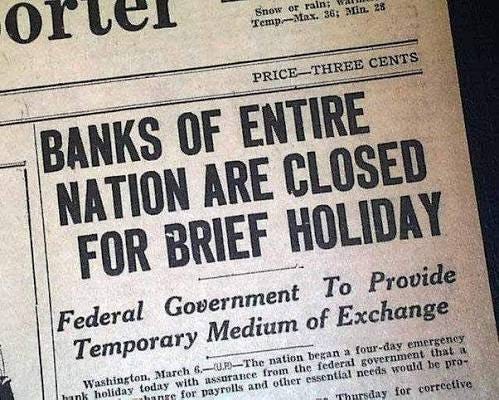
And when banks reopened, money began to flow back:
Confidence, it turned out, is also a form of economic infrastructure.
But Roosevelt still had a bigger problem to deal with: gold.
For years, the gold standard had forced the government to defend the value of the dollar instead of freely easing monetary policy. In a deflationary economy, that was the shackle economic history would later call golden fetters.
In 1933, Roosevelt began to remove those shackles:
Executive Order 6102 required citizens to surrender most monetary gold; by January 1934, the Gold Reserve Act raised the price of gold from $20.67 to $35 an ounce.
The dollar was devalued, commodity prices could rise again, and most importantly: the Fed and the government gained more room to ease monetary policy.
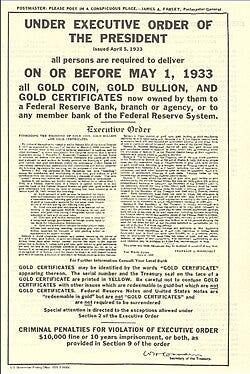
But the New Deal was not just Roosevelt and his radio addresses: more importantly, a host of new institutions began to emerge around the finances of an American family.
Back to the Detroit family: After four years of the Great Depression, they had not just lost their jobs, they had lost faith in almost everything: deposits could vanish, stocks could become worthless paper, banks could close, homes could be seized.
The New Deal addressed each of those fears in turn:

The important point is not each new institution that was created, the important point is that the state began to stand between households and the risks they had previously had to bear alone.
Before 1933, if a bank failed, the family lost its money. If stocks were fraudulent, the family bore the loss. If they lost their jobs, they were on their own. If they grew old, they had to save for themselves. If they could not repay a loan, the house would be gone.
After the New Deal, the government co-signed a portion of that risk.
The FDIC is the clearest example. Before the New Deal, depositing money in a bank was essentially an act of faith: you handed your money to the bank and hoped it would still be there to pay you back tomorrow.
After 1933, that faith was insured by the state.
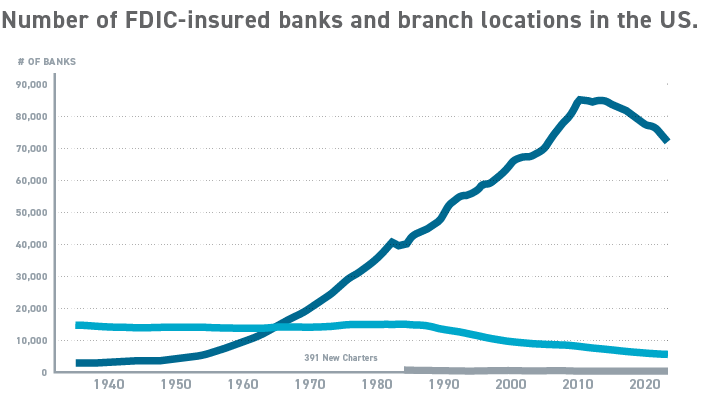
This meant far more than a deposit insurance policy, it gave Americans the confidence to use the financial system again.
They dared to deposit money in banks, buy stocks, take on longer-term loans, buy homes, and spend today's wages instead of keeping everything under the mattress for another doomsday.
In other words, the New Deal did not just rescue a few banks or create a few more regulators, it rebuilt the confidence consumers needed to exist in a modern economy.
But one thing must be made clear here: The New Deal did not end the Great Depression.
Unemployment fell from about 25% in 1933 to 14% in 1937, but then the economy slipped into the 1937-1938 recession and unemployment rose again to about 19%.
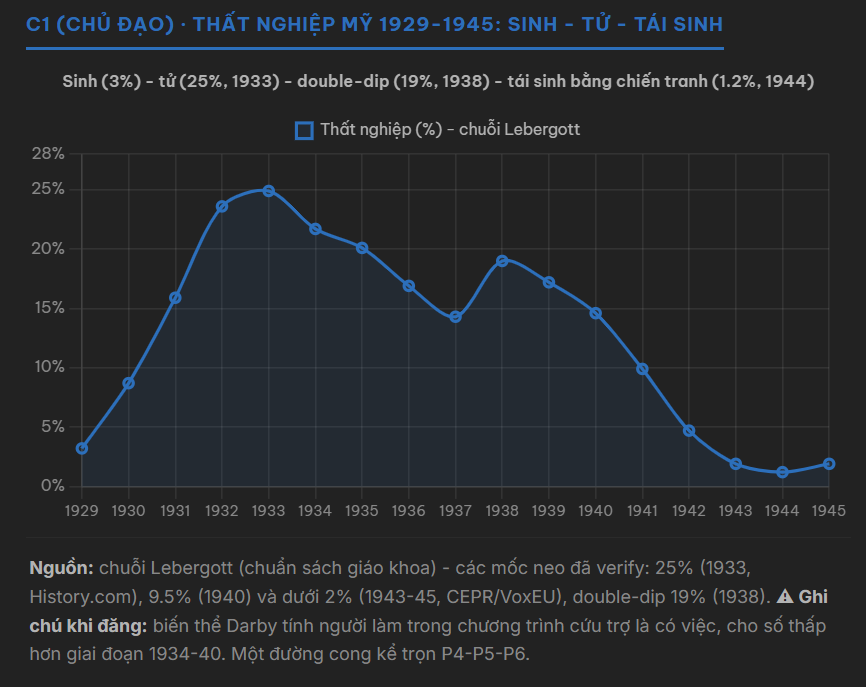
To this day, economists still debate the contribution of each policy.
Christina Romer emphasizes the role of monetary easing after the dollar devaluation;
Cole and Ohanian argue that some of the NIRA's price and wage controls actually hindered the recovery;
The Keynesian view stresses the shortfall in aggregate demand and the role of government spending.
More simply: The New Deal repaired the foundation of the house, but it was not enough to bring it back to full capacity.
The end of the Great Depression would come from somewhere else, but before we get there, let's look back at the Detroit family's journey.
In 1914, the husband earned $5 a day and for the first time had money to think about buying a car.
In 1918, the family bought Liberty Bonds and entered the financial world for the first time.
In 1925, they bought a Chevrolet with future money.
In 1928, they bought stocks as the whole country was intoxicated by the market.
In 1933, they lost almost all faith in that system.
And then, line by line, the balance sheet was rebuilt.
The most important turning point in the whole story lies here: America did not just invent the consumer, America began to protect consumers from the risks of the very financial system it had just invented.
→ What made the American economy bigger than it was yesterday?
The answer is not a new product, not a new assembly line, but institutions.
For the first time in the history of American capitalism, the state stepped in to share financial risk with households. When people knew they no longer had to bear all the risk alone, they could begin to do what a modern economy most needs them to do: spend again.
Part VI. War: The Final Boost to Purchasing Power
In 1944, the wife in the Detroit family got the chance to work a shift at Willow Run, Michigan. It was the first time in her life she had a paycheck in her own name. The 3.5 million sq ft plant2 once farmland, now turned out a B-24 every hour. Her husband worked the night shift at the shipyard. Each month, the couple bought another war bond - not out of patriotism, but because they had money yet had almost nothing to buy.
Civilian car production had been halted since 1942, while gasoline, meat, sugar and many essentials were rationed.
So each month, instead of spending what they earned, the family put some in the bank, bought more war bonds, and waited for the war to end.
This is the final twist in the story. Throughout the 1930s, America wrestled with too few jobs and too little demand. War solved both in the simplest way possible: the government placed orders on an unlimited scale.
Defense spending rose from 1.4% of GDP in 1940 to more than 37% of GDP in 1945.
Unemployment, which had hit 25% during the Great Depression, fell from 9.5% in 1940 to below 2% in 1943-1945.
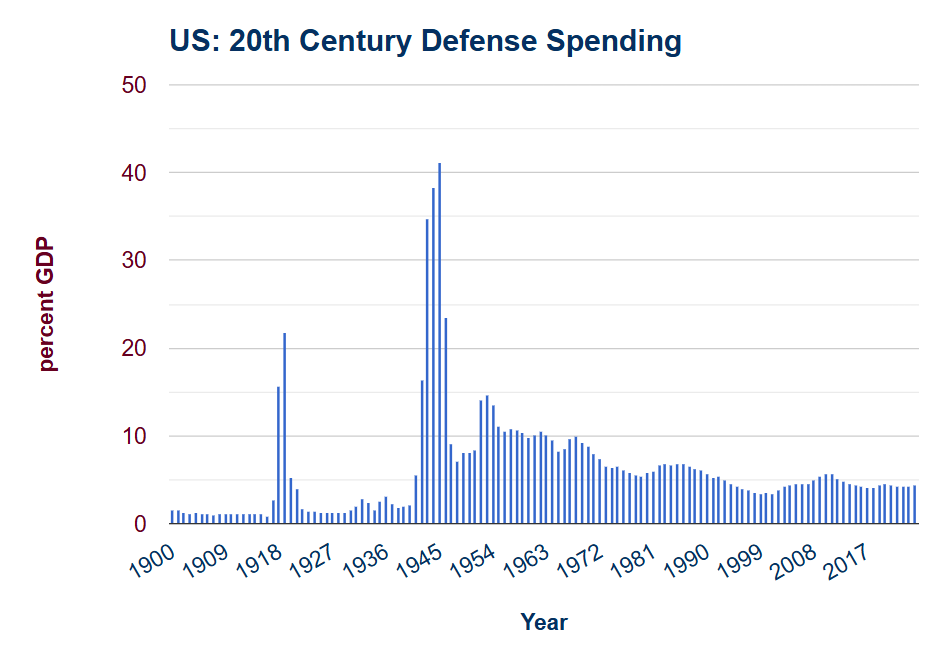
It was not the New Deal that created enough jobs to end the Great Depression, but war that did it by generating a flood of orders.
Once the orders arrived, the industrial machine America had spent half a century building instantly ran at full capacity. In just a few years, America produced:
Nearly 300,000 aircraft, with 96,318 built in 1944 alone.
About 87,000 tanks, 72,000 naval vessels and nearly 2 million trucks.
A Liberty ship that once took 244 days to build was cut to about 42 days.
By the end of the war, America supplied nearly two-thirds of all Allied military equipment.
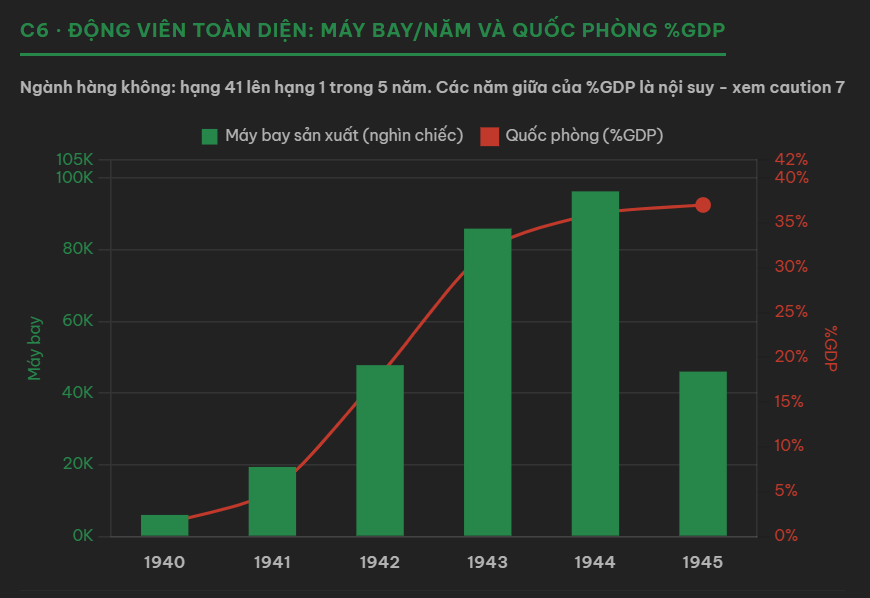
Aviation was the most extreme example:
Before the war, it ranked just 41st among American industries.
Less than five years later, it had become the No. 1 industry.
But nowhere was that transformation more vivid than at Willow Run.
Ford's plant covered 3.5 million sq ft2, built on Michigan farmland and run on the logic of the Model T assembly line. The only difference: what rolled off the end of the line was no longer a car, but the B-24 Liberator.
By 1944, Willow Run could roll out a B-24 almost every hour, 8,685 in total during the war.
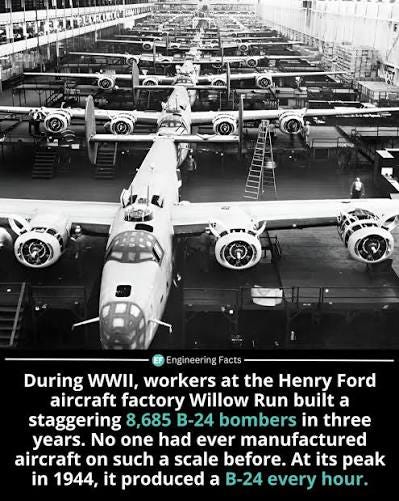
Henry Ford had once used the assembly line to turn the automobile into a mass product, and now that same thinking was used to turn bombers into mass-produced goods.
This is also Henry Ford's final act in our story: after the war, that same mass-production system would pivot back to consumer goods.
Willow Run would later become part of the auto manufacturing ecosystem
Ford's F-Series would debut in 1948 and later become one of America's best-selling vehicle lines
Model T → B-24 → F-Series: one production philosophy, three different eras. But more important than the aircraft was who was paying for it all.
The answer was American families themselves, as the government mobilized their money on an unprecedented scale.
On one side was taxes: The number of income taxpayers rose from about 4 million to 43 million during the war.
The top marginal income tax rate reached 94%.
Federal revenue rose from $6.5 billion in 1940 to $45.2 billion in 1945
![r/dataisbeautiful - [OC] Historical Highest Marginal Income Tax Rates For The Top Earners In America](https://cdn.tapchiphowall.com/img/aHR0cHM6Ly9zdWJzdGFja2Nkbi5jb20vaW1hZ2UvZmV0Y2gvJHNfITRjUU0hLGZfYXV0byxxX2F1dG86Z29vZCxmbF9wcm9ncmVzc2l2ZTpzdGVlcC9odHRwcyUzQSUyRiUyRnN1YnN0YWNrLXBvc3QtbWVkaWEuczMuYW1hem9uYXdzLmNvbSUyRnB1YmxpYyUyRmltYWdlcyUyRjA2ODg5MDRhLWQ0NzMtNGZiMS1iZjMzLWEyOGYwYzZkYTUyMl8xOTIweDk2OC5wbmc.png "r/dataisbeautiful - [OC] Historical Highest Marginal Income Tax Rates For The Top Earners In America")
On the other side were war bonds: More than 85 million Americans bought war bonds.
If the Liberty Bonds of 1917 were America's introductory investing class, World War II turned that class into a nationwide university.
The government even clamped down on a 1920s invention: from September 1941, the Fed's Regulation W required installment buyers to put down at least one-third and cut maturities to about 15-18 months - the state temporarily shut down the consumer credit machine to funnel every dollar of purchasing power into war bonds.
But here is the most interesting part: Americans were earning more than ever, yet unable to spend it.
Real GDP per capita rose about 67% from 1940 as millions of women entered the workforce for the first time and earned a paycheck of their own.
Wages rose and jobs were plentiful, but civilian production was curtailed to make way for the war effort.
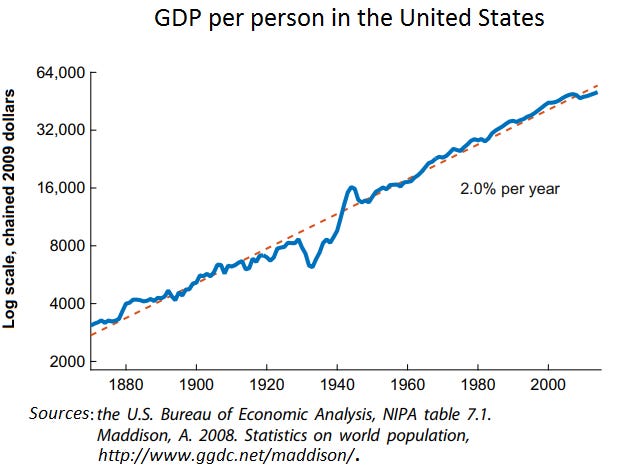
The result was a seeming paradox: incomes surged, but consumption did not keep pace.
The unspent money piled into bank deposits, war bonds and cash. Month after month, the wealth of tens of millions of American families grew substantially.
The Detroit family was no exception:
In 1933, they just wanted to hold on to what little they had left.
By 1944, they had jobs, savings and bonds in the drawer.
But a new Chevrolet could not yet be bought, a new house was not yet needed, a new refrigerator had to wait - the factories were still building aircraft instead of cars.
The American consumer did not disappear during the war; they were simply forced to defer spending. The war created something no advertiser, bank or New Deal program could create alone: a generation of Americans with jobs, money and confidence - and waiting to spend.
That was the ticking time bomb of 1945: When the guns fell silent, tens of millions would at once want to buy what they had waited years for: cars, homes, refrigerators, washing machines, radios, clothing, and a middle-class life that the war had put on hold.
For the first time, America had both ingredients to turn desire into growth: the production capacity of Part 2 and the purchasing power of this period.
→ What made the American economy bigger than it was yesterday?
The answer is: War. Not only because the government placed unlimited orders and pulled tens of millions back to work, but because while the industrial machine ran at full throttle, it simultaneously filled consumers' coffers.
In 1945, America did not just win a war; it emerged with something it had never had before: a colossal production machine and tens of millions of Americans with money to buy what that machine produced.
And that was when mass consumption was truly born.
Conclusion
32 years earlier, America had a problem: the machine knew how to produce, but not who would buy everything it made.
Over the next three decades, America built the other half of the machine piece by piece.
Ford paid $5 so workers could afford to become customers.
Liberty Bonds brought 20 million Americans into their first investing class.
GMAC taught them to buy today with tomorrow's income; advertising taught them to want things they had never thought they needed yesterday.
Then in 1929-1933, the whole machine went into reverse: credit contracted, banks closed, jobs vanished, and the newly invented consumer was nearly crushed.
The New Deal then did something more important than rescuing any single bank or home: the state began to co-sign households' balance sheets. The FDIC protected deposits, Social Security cushioned old age, and the FHA and long-term mortgages turned the home into a borrowable asset.
Then war finished the job. Unemployment plunged from 25% to below 2%; America produced nearly two-thirds of Allied military equipment; more than 85 million people bought war bonds. Most importantly, tens of millions of households emerged from the war with jobs, income and a large pool of savings waiting to be spent.
If Part 1 was the Market, Part 2 was Scale, then Part 3 was Demand - and America built it successfully.
For investors in 2026, this story carries an intriguing echo. Ford once faced a paradox: technology drove production costs down faster than purchasing power. He had to find a way to create buyers for his own products.
AI today may face a similar problem.
If AI makes software, content, research and ever more forms of knowledge work cheaper - who will buy all the new capacity it creates?
America answered that question once: the answer was not just to produce more, but to create a class of people with money, credit and confidence to consume.
But by 1944, America was ready to do something even bigger. In July 1944, just over a month after the Normandy landings and with more than a year of war still to go, 730 delegates from 44 nations sat down for three weeks in Bretton Woods, New Hampshire, to write the rules for the postwar world.
While the rest of the world was still fighting to decide who would win, America had already begun to decide how the world after victory would work.
The new rules: currencies pegged to the dollar; the dollar pegged to gold at $35 an ounce.
$35 was the price FDR set in 1934 to rescue the U.S. economy from deflation, and a decade later it became the foundation of the global monetary order.
The ladder of trust from Part II has now reached its final rung: Americans had learned to trust paper - now the whole world was about to trust another piece of paper: the dollar.
And the American household? In 1946, a husband and son just back from the war walked into a real estate office and signed the family's first long-term mortgage, with the down payment funded by the war bonds they had bought during the war. They did not know that signature was opening three decades that later generations would call America's golden age.
Next time, Viet Hustler will enter the era of building the World Order (1945-1971): when America not only built its own economy, but began to write the rules for the rest of the world.