If you missed our best recent articles:
250 Years of the U.S. Economy - Part 1: Hamilton's Gamble (1776-1865)
The AI Token Economy, Tokenmaxxing & Physical AI Bottlenecks
6 Signals to Determine the Strength of the U.S. Economy in 2026
Ask Steve anything (AMA) at new Facebook group
“This is a card you can play once.” - Chris Wright, U.S. Secretary of Energy, on Iran closing the Strait of Hormuz
There are crises that happen only once in a generation. And there are crises, far worse, that return for a second time just as the world has yet to clean up the wreckage of the first.
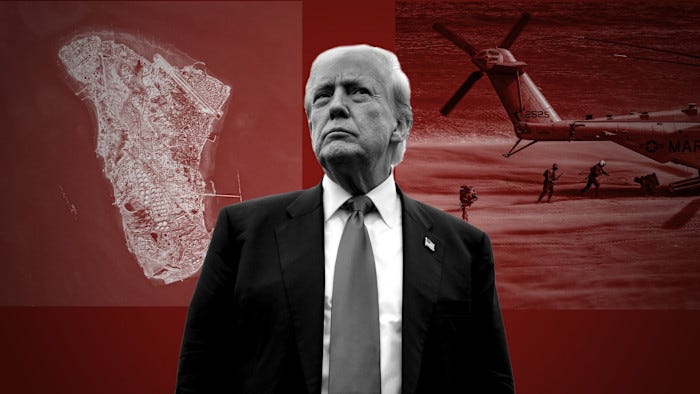
On the night of July 7 into July 8, 2026, at the NATO summit in Ankara, Donald Trump told the press that he believed the ceasefire agreement (MOU) with Iran “is over” - just hours before the U.S. military launched its second consecutive wave of airstrikes targeting sites in Iran. Secretary of Defense Pete Hegseth, who accompanied Trump in Ankara, confirmed that the Tuesday night attack targeted small attack boats, underground drone and missile storage facilities, coastal defense systems, radar, and surveillance installations - the entire infrastructure Iran uses to threaten freedom of navigation in the Strait of Hormuz. The Wednesday night airstrikes expanded in scope, hitting bridges that the U.S. believes are used by the Iranian military to transport missiles, drones, and military supplies.
This chain of events did not erupt from a single shock. It is the direct consequence of three cargo ships - including a Qatari liquefied natural gas carrier - being struck by Iranian anti-ship cruise missiles and suicide drones within Hormuz on Monday and Tuesday, all near the coast of Oman, where Iran is attempting to completely block usage. Washington's first and most immediate response was not military, but financial: on Tuesday, the U.S. Treasury Department revoked the license allowing Iran to sell oil on the open market - a license that was considered the most core economic benefit Tehran received from the MOU signed in June.
This is the starting point for this week's article. Not because the “second Iran war” is a clearly confirmed and irreversible event - at the time of writing, it remains on the boundary between a controlled escalation and a full-scale recurring war, with Trump himself wavering between extreme rhetoric (“scum,” “liars,” “thugs”) and hints that the Iranian side is quietly reaching out to seek a deal. But because, regardless of the outcome, the most important question for the global economy is no longer “what will happen in the Middle East.” The much more important question is: after five months of the first war drained almost every defensive buffer the world once had, is there enough of a buffer left to withstand a second shock?
This is the first paradox of this week's article: the first Iran war, while attempting to protect the global economy from a supply shock, inadvertently consumed the very defensive tools that a second crisis would require. The U.S. Strategic Petroleum Reserve (SPR) has fallen from its maximum capacity of 715 million barrels to just 319.5 million barrels - the lowest level since 1983. The IEA's mechanism to release 412 million barrels of emergency reserves has been almost entirely exhausted. The floating storage of both Russia and Iran, which served as a crucial buffer in the early weeks of the war, has been depleted since the end of May. In other words, the world is entering the possibility of a second round of war with a fire extinguisher that has almost run out of foam.
The second paradox lies in the market's reaction. Immediately following the news of the oil license revocation on Tuesday, Brent crude rose about 5% to nearly $76/barrel compared to Monday's closing price; the Dow Jones fell 577 points (1.1%), the S&P 500 fell 0.3%, while the Nasdaq reversed to a slight gain at the end of Wednesday's session. This is a significant reaction, but still far from the panic of the early days of the first war. The market has become more “accustomed” to this type of risk - and that makes the reaction to the news in early July relatively restrained. But that “familiarity” is a dangerous psychological trap: it makes it easy to forget that the physical foundation behind it - strategic reserves, commercial inventories, OPEC's spare capacity - is much weaker than it was at the start of the first war.
The third paradox, and perhaps the most unpredictable, lies with China - the player that quietly saved the global oil market throughout the first war by buying at a massive pace to stockpile. But by July, China itself is the party showing the least interest in buying more oil - from anyone. If the world's largest marginal buyer no longer wants to play the role of shock absorber as it did before, the question is: who will do it this time?
This week's article covers 6 parts:
Part I - The night of July 7-8 and the war on the map: the chain of events, targets, and the “war of words”
Part II - The buffers are dry: comparing defensive health between the two rounds of war
Part III - China: from silent hero to “not interested in buying from anyone”
Part IV - The battle for control of Hormuz: the Oman route, and who gets to collect the fees?
Part V - What has the U.S. prepared for round two: from oil to the dollar in Iraq
Part VI - Three scenarios for the next six weeks