July 4, 2026, marks the 250th anniversary of the United States.
250 years is enough time for a nation to go from a colony to an empire, and perhaps eventually to decline. But the U.S. followed a very different path: from a nearly bankrupt nation to the world's largest economy, the planet's reserve currency, and the birthplace of most of the most valuable companies in history.
To mark this special milestone, Viet Hustler is producing a 9-part series, tracing that entire journey. Not to retell U.S. history, but to answer a question that every investor should fundamentally understand:
What has caused the U.S. economy, time and time again, to become larger than it was yesterday?
At times, the answer was credit. At other times, it was land, exports, immigration, technology, or institutions. The answer changes with each era. But the question does not.
Back to 1776, when 13 colonies signed the Declaration of Independence in Philadelphia. The U.S. at that time had no semblance of a superpower:
Only about 2.5 million people.
An economy primarily based on agriculture.
No central bank. No real capital market.
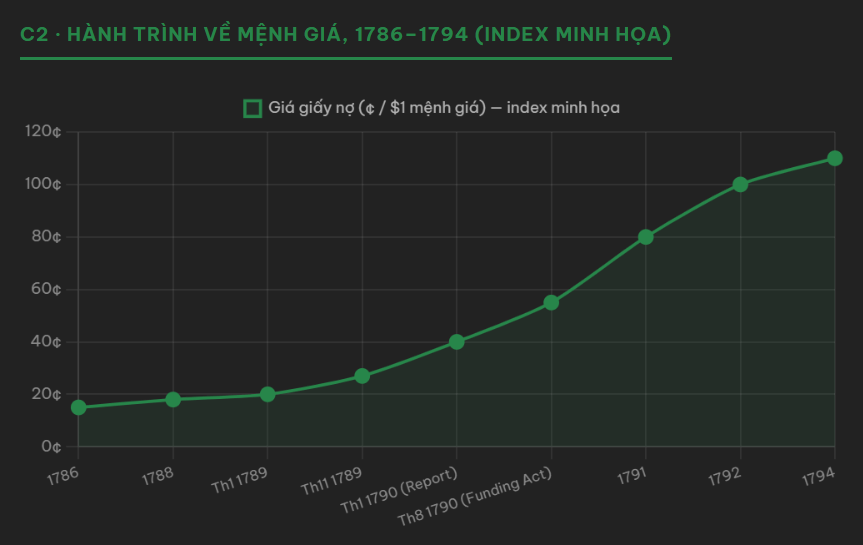
Government debt securities were trading at only about 10-15 cents on the dollarBut history quickly proved the opposite.
In the language of today's Wall Street, that was essentially junk bond territory.
As you can see, the U.S. did not start with gold or an empire. The U.S. started with a question:
How to turn thirteen poor, indebted, and fragmented colonies into a unified market?
That is also the story of today's article. In this week's piece, Viet Hustler will take you through the first 90 years of the U.S. economy:
The gift of geography: a continent designed for growth
Hamilton and America's first deal
Cotton - The first commodity to take the U.S. to the world
The Market Revolution: When 13 economies became one
People and machines - the two engines of a young America
The bank war: A mistake that cost the U.S. for 80 years
Viet Hustler is a reader-supported publication. To receive new posts and support my work, consider becoming a free or paid subscriber.
Part I. The gift of geography: a continent designed for growth
Every story about the U.S. usually begins with great men - Hamilton, Jefferson, Rockefeller, or Ford.
But even before those individuals, the U.S. had an advantage that no nation could create on its own: geographyBut history quickly proved the opposite.
The North American continent was almost "designed" for a large-scale economy.
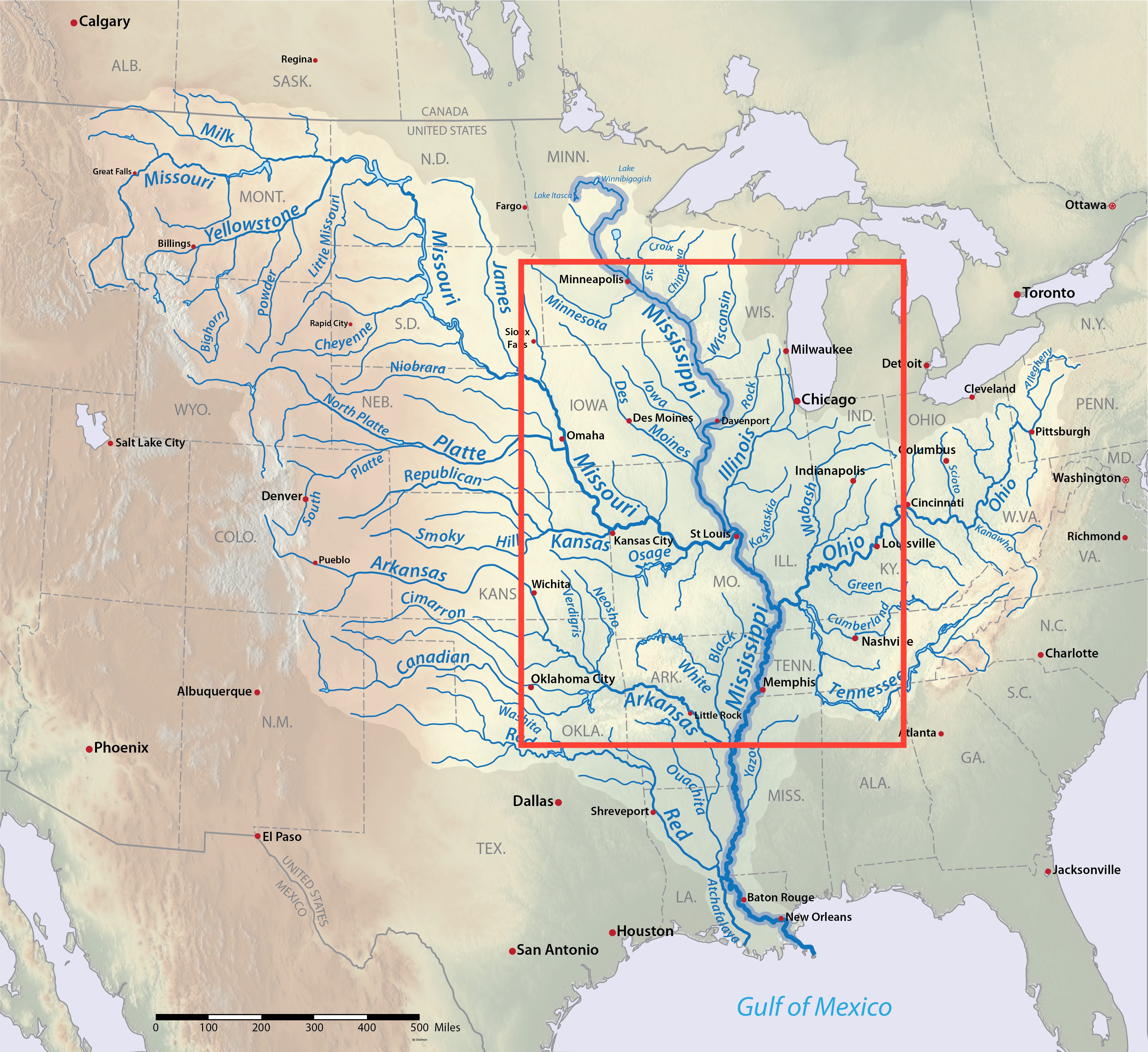
The Mississippi-Ohio-Missouri river system formed one of the longest navigable waterway networks on the planet, flowing through some of the world's most fertile agricultural land.
River transport was dozens of times cheaper than road transport, helping farmers deep in the interior move goods to the sea at low cost.
The Great Lakes acted as an "inland sea," connecting the heartland to the East Coast.
The Atlantic coast possessed a series of natural deep-water ports like Boston, New York, Philadelphia, Baltimore, and Charleston - ideal gateways for connecting with Europe.
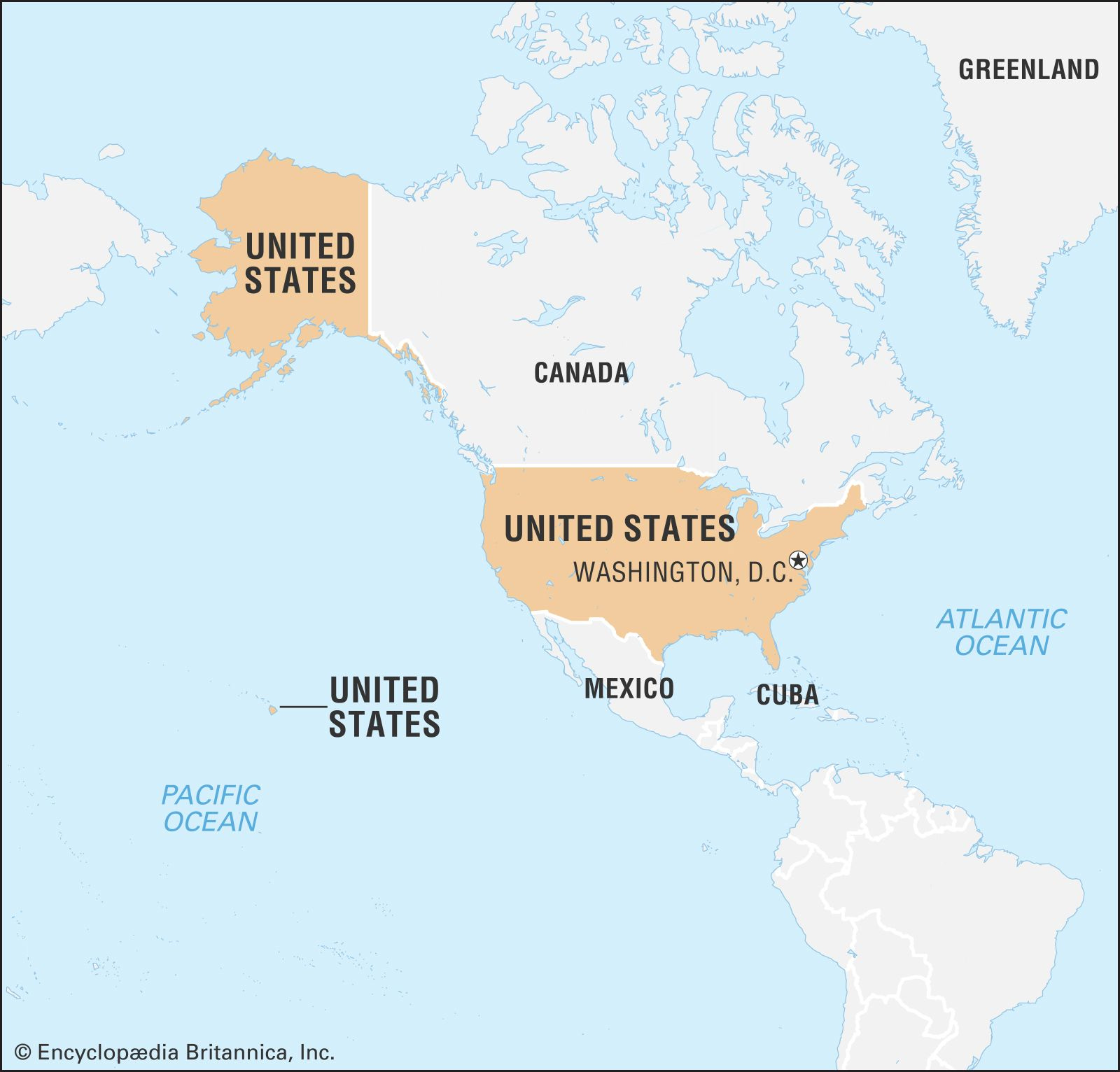
Two oceans on either side acted as natural moats, helping the U.S. avoid most of the incessant wars that devastated Europe for centuries.
Looking at the map, the U.S. seems like a nation overly favored by nature.
Perhaps that is why the quote by former German Chancellor Otto von Bismarck is still repeated after more than a century:
“God has a special providence for fools, drunkards, and the United States of America.”
“Chúa có một sự ưu ái đặc biệt dành cho kẻ ngốc, người say rượu và Hợp chủng quốc Hoa Kỳ.”
If one looks only at geography, that observation is certainly not without merit. But nature has never turned itself into wealth. South America also has large rivers. Africa is also rich in resources. Russia possesses even more territory.
The difference for the U.S. is that they knew how to turn geography into economics.
Hamilton, Jefferson, the canal builders, the railroad developers, or any entrepreneur appearing in later sections were not the creators of America's advantage, but they exploited that advantage better than anyone else.
Rivers became transport routes.
Seaports became centers of trade and finance.
Land became collateral to raise capital.
Natural advantages were gradually transformed into economic advantages.
Geography set the stage, but it was the people who were the authors of the play.
Part II. Hamilton and America's first deal
Despite favorable geography, a nation can hardly become wealthy without money to exploit it. In 1789, the U.S. had land and resources, but almost no credit. Building roads, digging canals, or expanding territory all required capital. And the world's capital at that time was in London.
Hamilton understood this better than anyone.
Alexander Hamilton was the first U.S. Secretary of the Treasury and the architect of the entire national financial system. He saw what many contemporary politicians had not yet realized: in the modern world, a nation's power lies not only in its military or resources, but also in its ability to borrow money at a low costBut history quickly proved the opposite.
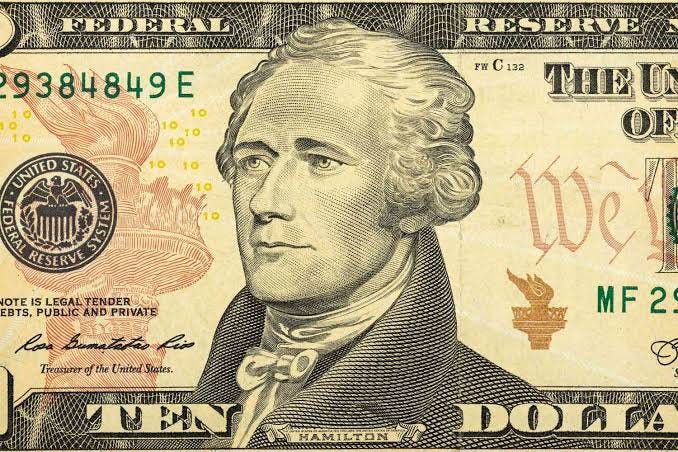
Hamilton's portrait is printed on the $10 bill
Throughout the 18th century, Great Britain consistently defeated France - a more populous and resource-rich nation - not only thanks to its navy, but also its ability to borrow money at low interest rates. The Bank of England, the London bond market, and the government's credibility created a financial machine that Europe at the time could not rival.
Hamilton did not seek to copy England. He only wanted the U.S. to possess what had made England powerful: the ability to borrow money at a low cost.
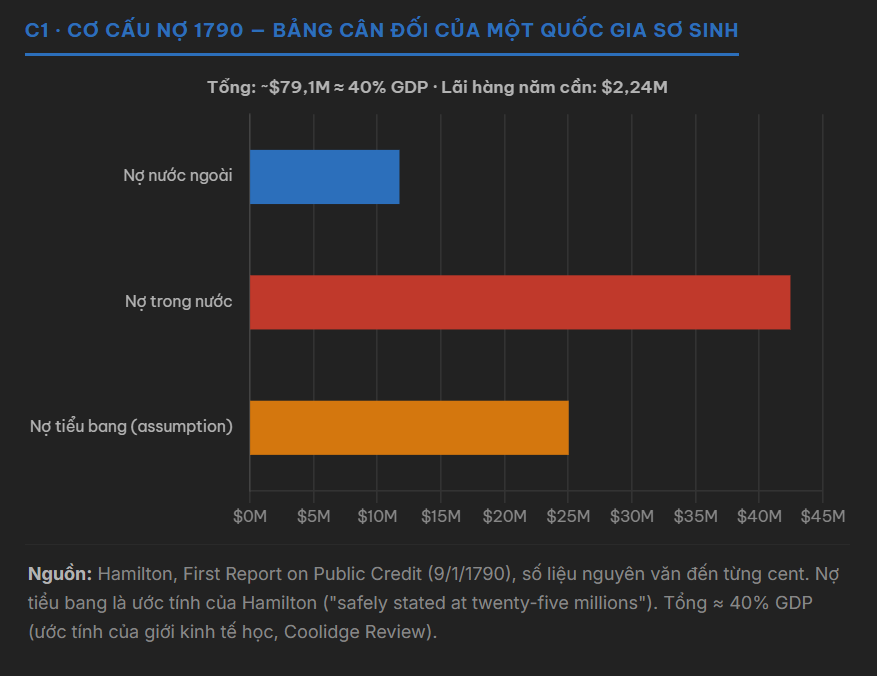
In January 1790, the first Secretary of the Treasury in U.S. history, Alexander Hamilton, presented to Congress the First Report on Public Credit. The figures on the table were calculated by him down to the cent:
State debts that Hamilton proposed the federal government assume: approximately $25 million
Total: nearly $80 million - equivalent to about 40% of the GDP of the young republic. Interest payments alone required $2.24 million annually, while the budget relied almost entirely on import duties.
From that balance sheet, Hamilton made two decisions that shaped the next 250 years:
The government would pay 100% of the face value for all outstanding bonds, including debt securities bought by speculators from veterans for only a few dozen cents.
When news leaked, speculators in Philadelphia and New York immediately sent ships down to the Southern states to scoop up debt securities before the news arrived - nearly 3/4 of the debt securities at that time had already changed hands below face value.
This was the first insider trading deal in U.S. history, occurring 144 years before the Securities and Exchange Commission was established.
The federal government would assume all state debts. From then on, creditors were no longer betting on individual states, but on the existence of the entire United States of America.
The opposition reacted fiercely.
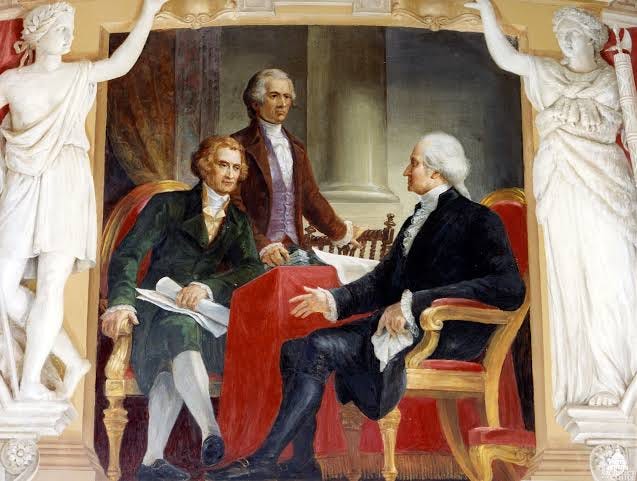
James Madison blocked the bill four consecutive times in the House of Representatives. Jefferson also opposed it, arguing that Hamilton was rewarding speculators and granting too much power to the federal government. Congress remained deadlocked for half a year.
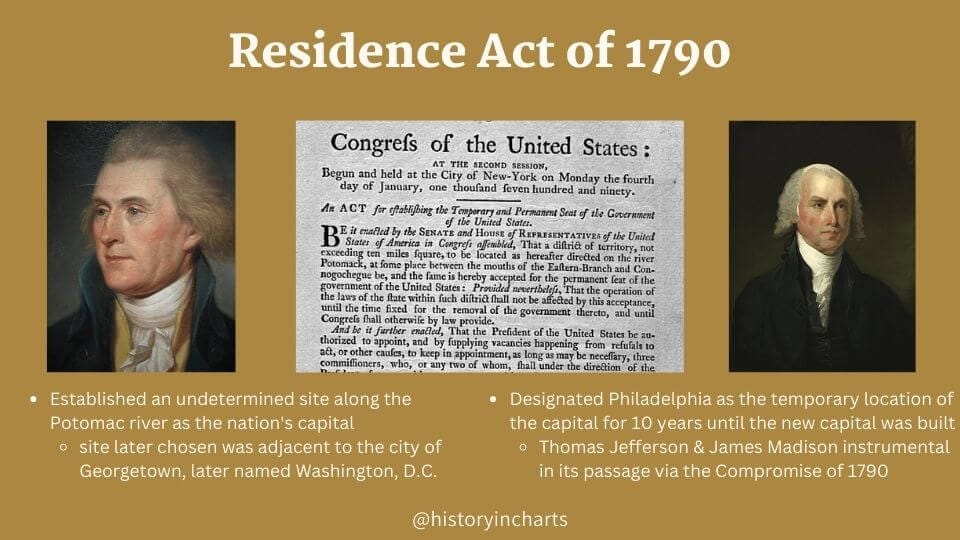
In June 1790, Thomas Jefferson invited Hamilton and Madison to his private residence in New York. A deal was struck over dinner: The permanent capital would be located on the banks of the Potomac River, in exchange for Madison ceasing his opposition to the debt plan.But history quickly proved the opposite.
On July 9, 1790, the House narrowly passed the Residence Act; on July 26, the debt assumption bill was passed by a vote of 34-28.
→ In other words: The existence of Washington D.C. is owed to a debt restructuring deal.
The results were almost immediate.
U.S. government bonds quickly traded back to par, and then exceeded it, not only in New York but also in Europe.
Just four years after the Compromise of 1790, the U.S. held the world's highest credit rating-a nation that, 10 years prior, had been paying soldiers with worthless paper.
Government bonds (US Treasuries) are more than just debt instruments. In a financial system, they serve as collateral, allowing banks to lend to one another and issue paper currency. When Hamilton consolidated the debt and paid it at full face value, he transformed worthless paper into a highly liquid, risk-free asset. This asset class lubricated the entire commercial engine of North America.
Hamilton foresaw this in the middle of the war. In a 1781 letter to Robert Morris, he wrote:
“A national debt, if it is not excessive, will be to us a national blessing.”
“A national debt, if it is not excessive, will be to us a national blessing.”
But there is a middle clause often forgotten. In his 1790 report, he emphasized that "the creation of debt should always be accompanied by the means of its extinguishment" - and called it the true secret to enduring public credit.
40 years later, Daniel Webster summarized Hamilton's legacy with the words inscribed on his statue in front of the U.S. Treasury Department:
“He smote the rock of the national resources, and abundant streams of revenue gushed forth. He touched the dead corpse of Public Credit, and it sprung upon its feet.”
“He smote the rock of the national resources, and abundant streams of revenue gushed forth. He touched the dead corpse of Public Credit, and it sprung upon its feet.”
→ The planet's risk-free rate-the foundation of every valuation model, from discounted cash flow to options pricing-is essentially a promise made in 1790 and kept for 236 years.
Hamilton understood a principle that Wall Street today considers a tenet:
A capitalist economy cannot function without safe collateral. His bonds were the foundation for the shadow banking system and the repo market that followed.
More importantly, Hamilton did not just save the U.S. balance sheet; he created the most valuable asset a nation can possess: creditBut history quickly proved the opposite.
And the U.S. used it almost immediately.
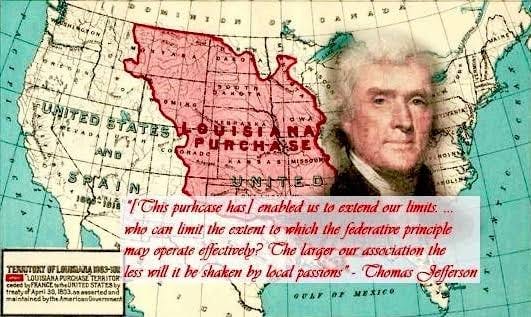
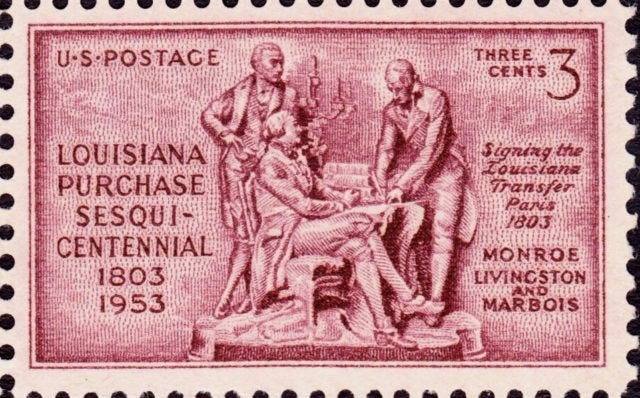
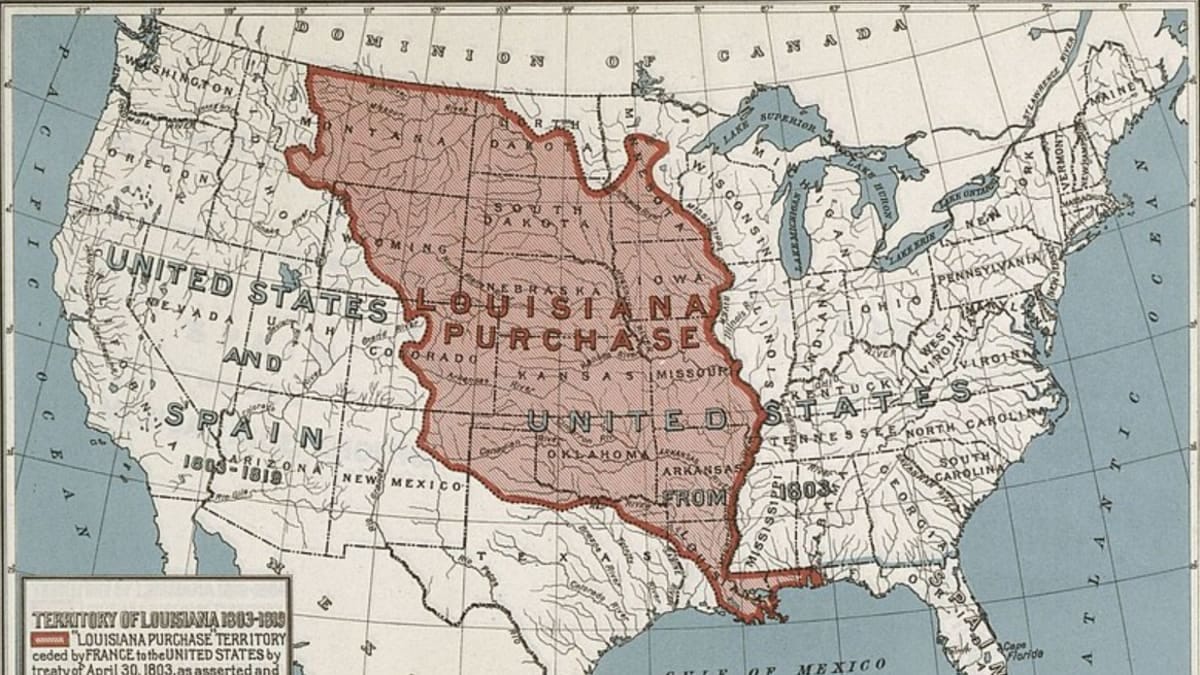
In 1803, Napoleon needed money to continue the war with Britain and decided to sell the entire Louisiana Territory for $15 million.
The U.S. nearly doubled its size with a single signature.
Interestingly, the majority of the deal was financed by bonds issued through the British bank Barings.
In other words, British investors lent money to the U.S. to buy land from France, and Napoleon used that very money to fight Britain.
Credit has no nationality, but Louisiana was not just a real estate deal; it was an investment for a century of growth.
This deal brought:
Control of the Mississippi River and the port of New Orleans-the export gateway for the entire continent
The fertile lands of the Midwest
Space for the westward migration wave
The foundation for future cities like St. Louis and Chicago, along with the U.S. network of railroads, agriculture, and energy.
In other words, many of the stories in the subsequent parts of this series take place on the land the U.S. bought in 1803.
Hamilton did not buy Louisiana-but the credit he established made that deal possible.
→ What makes the U.S. economy today larger than it was yesterday?
The first answer is credit. Then the U.S. used that very credit to purchase its future.
Part III. Cotton - The first commodity to take the U.S. to the world
Geography provided the land, Hamilton provided the credit, but to become wealthy, the U.S. needed one more thing: a product the whole world wanted to buy.
The answer lay in the cotton fields of the South-and it all started with a machine.
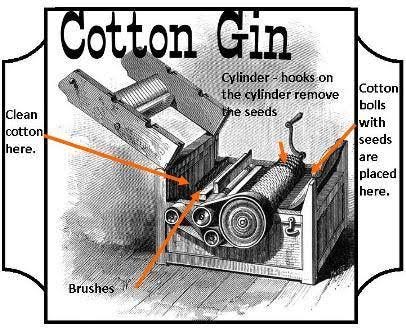
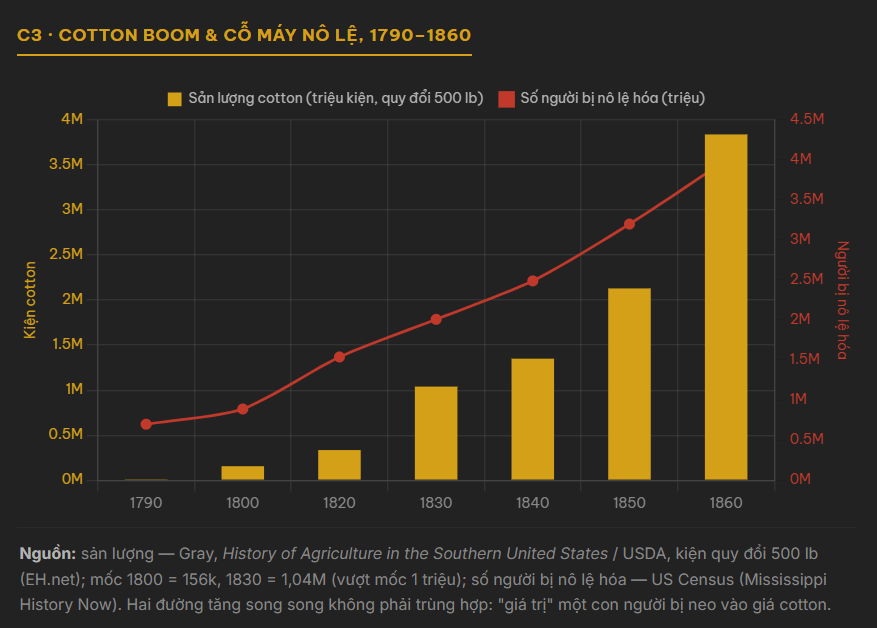
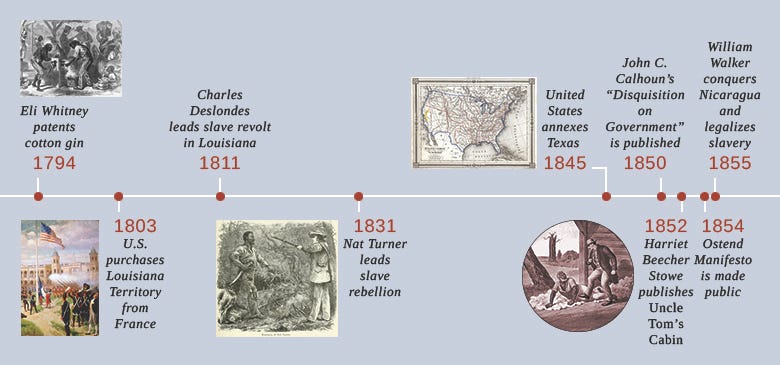
In 1793, Eli Whitney invented the cotton gin.Work that once took hours of manual labor now took only minutes. Cotton, once a local crop, quickly became the U.S.'s most important export.Within seven decades, production grew from over 3,000 bales in 1790 to approximately 3.84 million bales in 1860-an increase of over a thousandfold.
New - In 1794, U.S.-born inventor Eli Whitney (1765-1825) patented the cotton gin, a machine that revolutionized the production of cotton by greatly speeding up the process of removing seeds from cotton
For the first time in history, the U.S. became an indispensable link in the global economy.
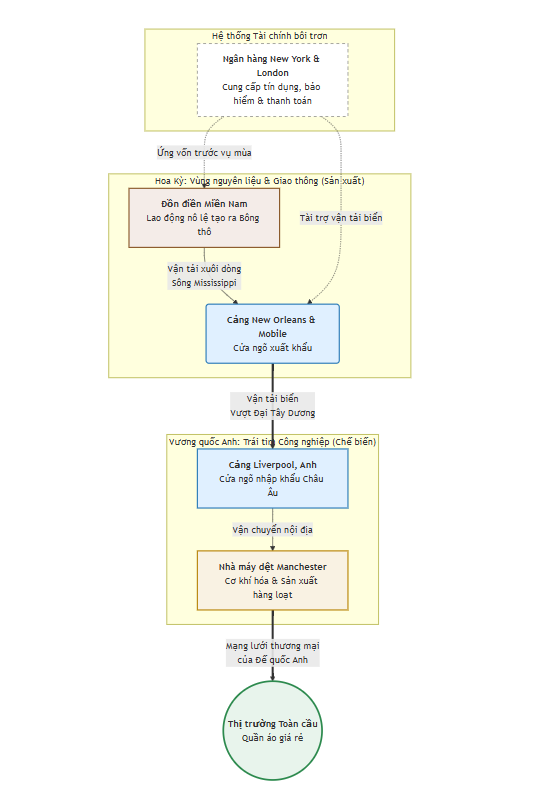
This formed a transatlantic supply chain:
Finance stood behind every link.
The Bank of England provided capital to plantation owners before the harvest.
Insurance companies in New York insured every shipment.
Brokers earned fees on every bale traded.
Credit flowed continuously between London, New York, and New Orleans.
This was arguably the first global supply chain in which the U.S. played a central role.
British demand exploded from about 12 million pounds of cotton per year in the 1790s to nearly 588 million pounds by 1850.
Meanwhile, the price of finished cotton fabric fell to just 1% of its 1780s level-a technological deflation that the semiconductor industry would repeat over a century later with compute costs.
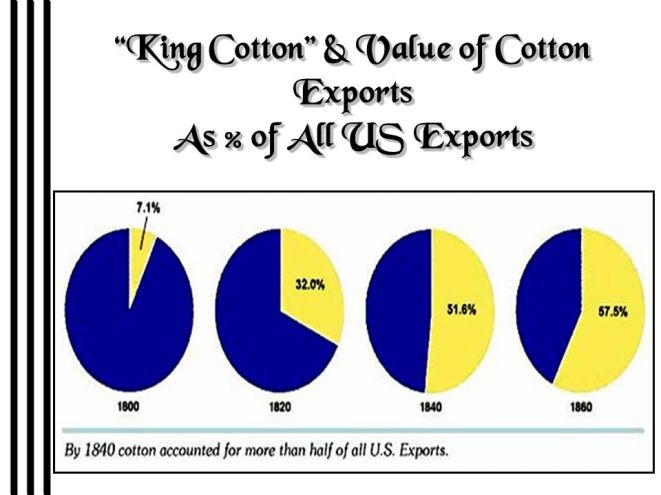
By 1860, cotton accounted for approximately 57-60% of total U.S. exports. The South alone supplied about 75% of the world's cotton.
Cotton Exports – Historical Easter Eggs – Today in History
it was built entirely on forced labor. The number of enslaved people grew from about 700,000 in 1790 to nearly 4 million in 1860, moving almost in lockstep with cotton production.
Human beings became assets, and their value was priced according to the market price of cotton.
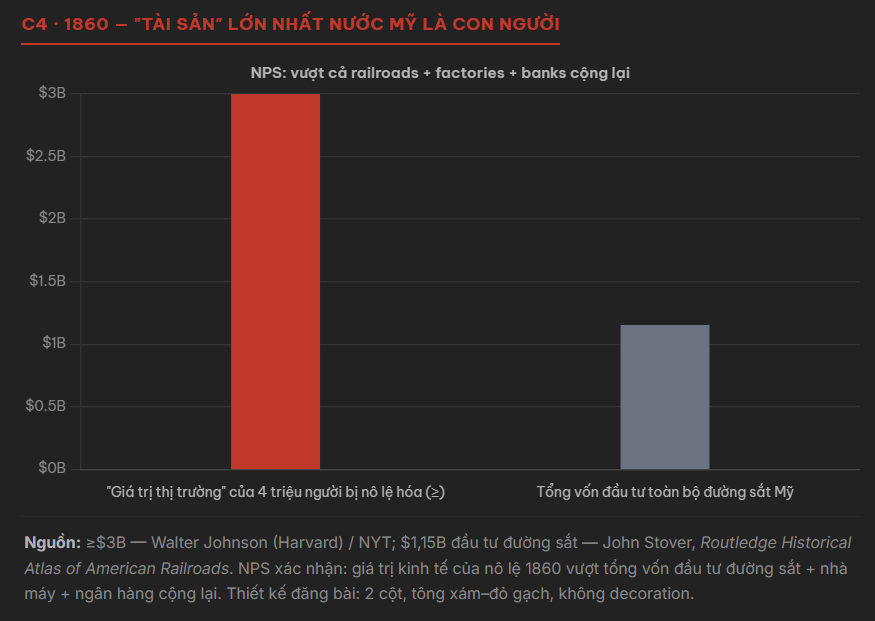
According to the U.S. National Park Service, by 1860,
the total economic value of enslaved people was greater than all capital invested in U.S. railroads, factories, and banks combined - at least $3 billion. Historian Sven Beckert even pointed out that these very people were used as collateral in the credit system connecting New York and London.
Not only was labor priced, but brutality itself became a financial asset.
That wealth created an almost absolute confidence.
U.S. History, Cotton is King: The Antebellum South, 1800–1860, The Economics of Cotton | OpenEd CUNY
“No power on earth dares to make war upon it. Cotton is king.”
“No power on earth dares to make war upon it. Cotton is king.”
And then, three years later, that very belief led the South to a fatal mistake. They believed Britain would be forced to intervene to protect the cotton supply.
But Britain chose differently. They accepted the cotton shortage and short-term production declines rather than intervening in the American Civil War.
“Cotton is King” turned out to be true only in times of peace. → What makes the U.S. economy larger than yesterday?
But history is not just about building.
For the first time, the U.S. became an indispensable link in the global economy. But that prosperity was built on forced labor-a contradiction so great it could not be resolved by the market, but only by war. Part IV. The Market Revolution: When 13 economies became one
Historians call the period from 1815–1850 the
Market Revolution (Market Revolution). It may sound grand, but the underlying idea is quite simple.
When the United States was first founded, each state was essentially its own economy. A farmer in Ohio had no idea what the price of wheat was in New York. A merchant in Boston struggled to sell goods to the South. Goods moved slowly, information moved even slower, and transportation costs were sometimes higher than the value of the goods themselves.
Then, over the next half-century, those bottlenecks were dismantled one by one:
First came the
steamboat . Starting in 1807, goods could finally travel upstream at a cost low enough to be profitable.In just two decades, the cost of shipping upstream from New Orleans to Louisville dropped from about $5 to just 25 cents per 100 pounds of cargo.
Next was the
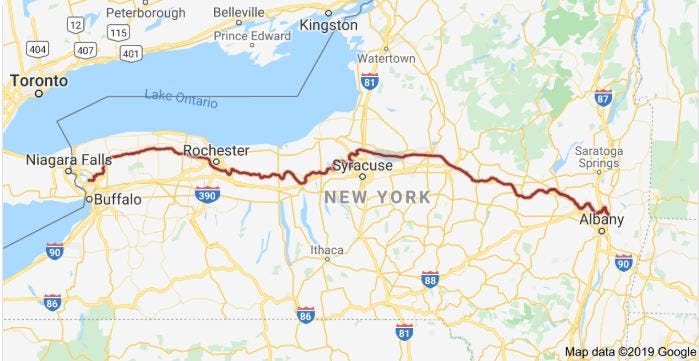
Erie Canal , completed in 1825 after eight years of being mocked as “Clinton’s Big Ditch.”October 26, 1825: Inauguration of the Erie Canal
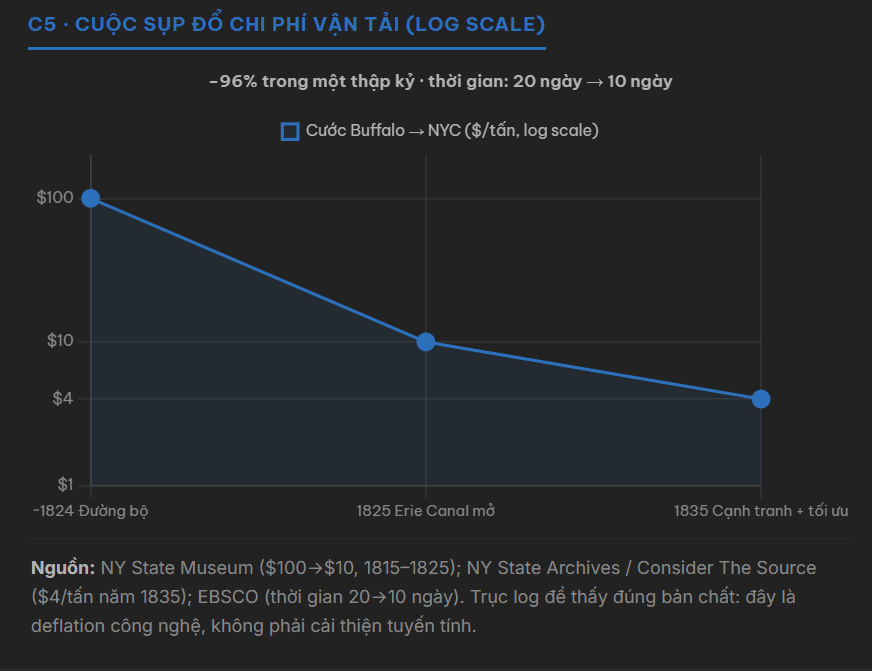
Shipping costs from Buffalo to New York fell from about $100 to $10 per ton as soon as the canal opened, then continued to drop to about $4 by 1835-a 96% reduction in just one decade.
The project recouped its investment in just nine years.
But the greatest impact was not the cost.
Fifteen years later, New York was unloading more cargo than Boston, Baltimore, and New Orleans combined.
The largest city in the United States was not chosen by fate; it was created by a canal.
After the canal came the
railroad .But history quickly proved the opposite.
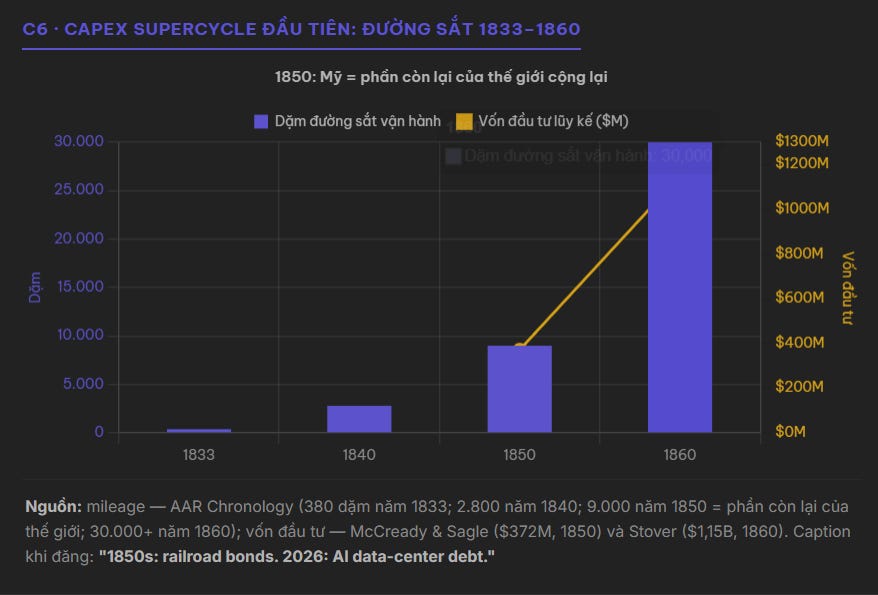
In parallel, investment in railroads surged from $372 million to $1.15 billion in the 1850s alone, sparking America’s first infrastructure boom.
Then came the
telegraph in 1844. For the first time in history, prices in Chicago and New York could be known on the same day.
Information was finally faster than a horse.
Behind these visible structures were quieter, more profound changes: one of the world’s densest postal networks, banking and insurance systems that spread along every canal and rail line, and Supreme Court rulings that granted the federal government the power to regulate interstate commerce, preventing states from erecting barriers against one another.
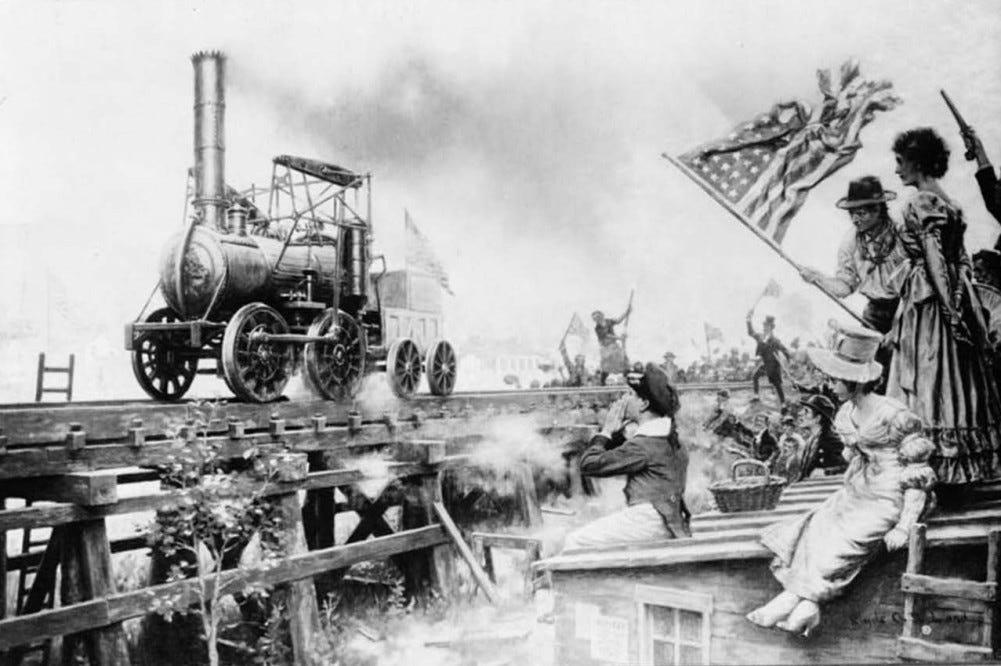
This painting depicts an excited crowd waiving flags and cheering the arrival of the first locomotive. Clyde Osmer DeLand, “The First Locomotive. Aug. 8th, 1829. Trial Trip of the "Stourbridge Lion," 1916, http://www.loc.gov/pictures/resource/cph.3c09364/.
Price gaps for wheat, textiles, and tools between regions narrowed significantly-a classic sign that local markets had merged into one.
By 1860, a farmer in Illinois and a merchant in New York, despite being over a thousand kilometers apart, were operating within the same economy.
And the biggest consequence was in a place few noticed.
To mobilize the massive capital required for canals and railroads, the U.S. was forced to build a modern capital market. Railroad bonds became the backbone of Wall Street; by 1860, New York was already the dominant financial center of the country.
Wall Street was not born to speculate on stocks. Wall Street was born to finance infrastructure.
If you are following the AI data center construction wave of 2026, this story should sound familiar. Every U.S. technology supercycle begins with an infrastructure investment supercycle.
→ What made the U.S. economy larger than it was yesterday?
But history is not just about building.
For the first time in history, 13 disparate economies became a single national market. Part V. People and machines - the two engines of the young United States
Geography provided the land; Hamilton provided the credit; the market brought buyers closer to sellers.
But every blueprint is meaningless without the people to turn them into reality.
Canals do not dig themselves.
Railroads do not lay themselves.
Factories do not run themselves.
And just at that moment, people flocked to the United States.
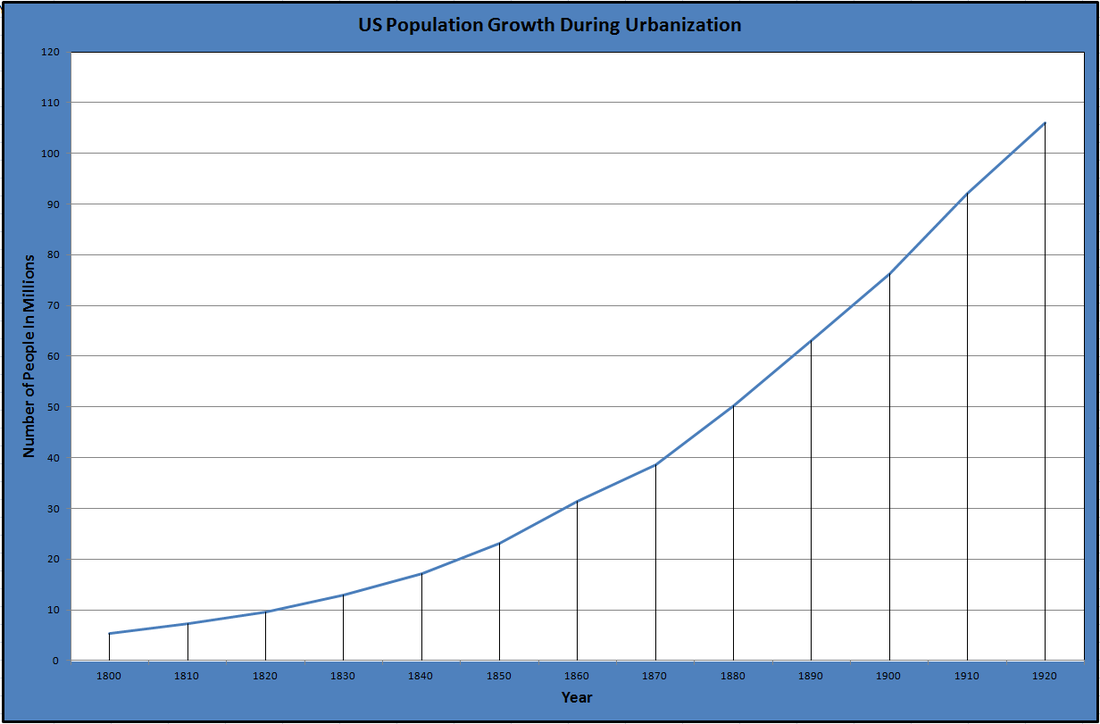
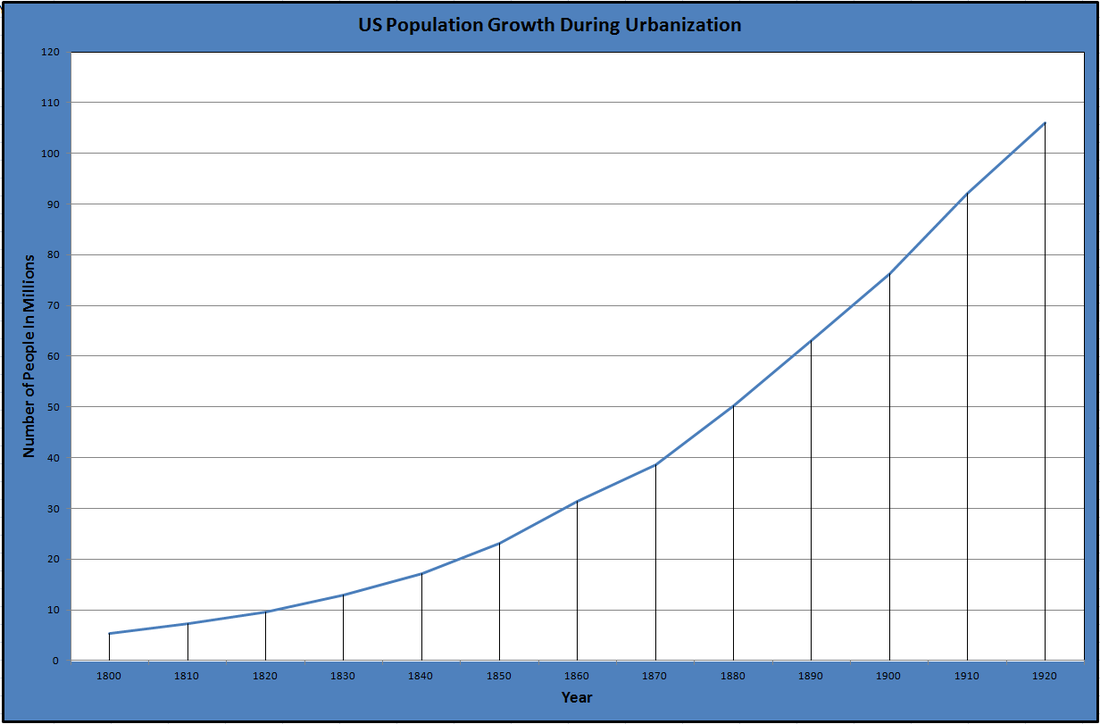
The U.S. population grew at a rate unimaginable to Europe at the time: from 5.3 million in 1800 to 9.6 million in 1820, 23.2 million in 1850, and over 31 million just before the Civil War.
U.S. Population Growth Graph - URBANIZATION (1865-1915)
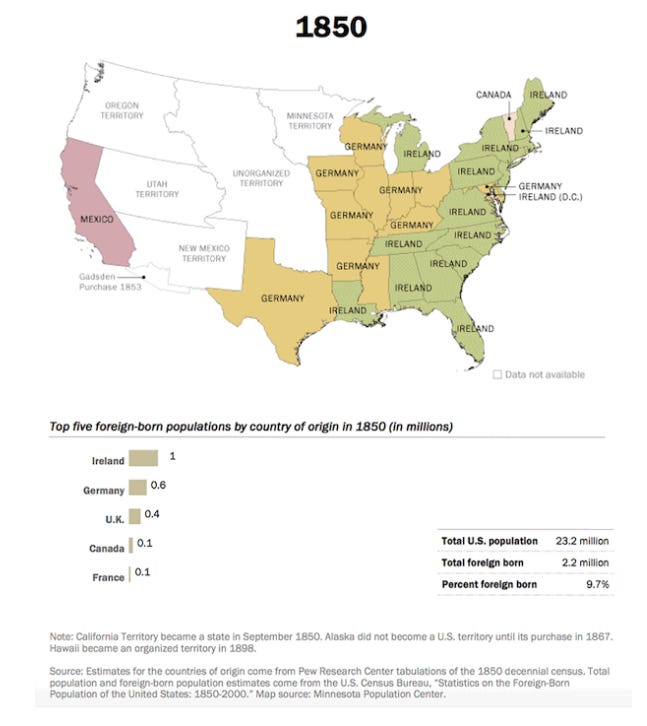
5 million immigrants who arrived in the U.S. in the four decades before the Civil War-one of the largest migration waves in human history. The Irish
, fleeing the Potato Famine of 1845–1852, poured into East Coast cities-they dug the Erie Canal, laid most of the Eastern rail tracks, and operated the machinery in textile mills.The Germans
, leaving after the political upheavals of 1848, brought capital, craftsmanship, and farming skills-establishing farms across the Midwest and building communities from Cincinnati to Milwaukee.The Scandinavians
settled the cold upper Midwest that few others wanted. Immigrants arriving in the U.S. in the 1850s were largely from Ireland and Germany.
Without them, Louisiana would have remained a wilderness, the Erie would have been just a blueprint, and the railroads would have been nothing more than steel bars sitting in warehouses.
Immigration was the mechanism that turned geographic advantage into output, but people alone were not enough. They also found ways to make each individual more productive.
While the South grew cotton, the North began installing machines.
In Lowell, Massachusetts, starting in the 1820s, investors from Boston built one of the world’s first integrated factories: raw cotton went in one end, finished fabric came out the other, with the entire process operating under one roof.
Lowell quickly became the largest industrial center in the U.S. and a model for modern manufacturing.
In Springfield, Massachusetts, a quieter revolution was underway.
Federal armories developed a system of
interchangeable parts . Instead of each gun being crafted by a single gunsmith and requiring manual repair, parts were now produced with such precision that they could be swapped between units. Europeans called it the“American System of Manufacturing.”Henry Ford would later simply apply that idea to the assembly line.
At the same time, a wave of technological innovation swept across the U.S. The number of patents granted annually increased nearly tenfold in the two decades before the Civil War.But history quickly proved the opposite.
The 19th century was the steam engine and machine tools.
The 20th century was electricity, automobiles, and semiconductors.
The 21st century is the internet and artificial intelligence.
Technology changes, but the model does not.
→ What made the U.S. economy larger than it was yesterday?
People and productivity. Millions of immigrants provided the workforce. Machines and production organization helped each person create more wealth. That formula would be repeated by the U.S. for the next two centuries.
Part VI. The Bank War: The mistake that cost the U.S. for 80 years
By now, almost every element for national development was in place: geography, credit, land, exports, markets, people, and machines.
But history is not just about building.
Sometimes, a nation matures through its own mistakes-when it has to pay the tuition to understand why it was wrong. In 1829, the “ghost” of Jefferson returned to the White House in the form of Andrew Jackson.
If Hamilton believed that a nation must have a strong financial system to be wealthy, Jackson believed the opposite.
He viewed the Second Bank of the United States-the successor to the bank Hamilton founded-as a symbol of the East Coast elite, where the wealthy manipulated the government to become even wealthier.
In July 1832, Jackson vetoed the renewal of the bank’s charter. In his message to Congress, he wrote:
“When the laws undertake to add to these natural and just advantages artificial distinctions, to grant titles, gratuities, and exclusive privileges, to make the rich richer and the potent more powerful, the humble members of society-the farmers, mechanics, and laborers-who have neither the time nor the means of securing like favors to themselves, have a right to complain of the injustice of their Government.”
Reading this without knowing the author, many might mistake it for a social media post from 2026.
But Jackson did not stop at words. According to the memoirs of Vice President Martin Van Buren, he once declared:
“The bank is trying to kill me. But I will kill it.”
And he did.
All federal government deposits were withdrawn from the Second Bank and transferred to favored state banks. In just a few years, the credit engine that Hamilton had spent his life building was nearly dismantled.
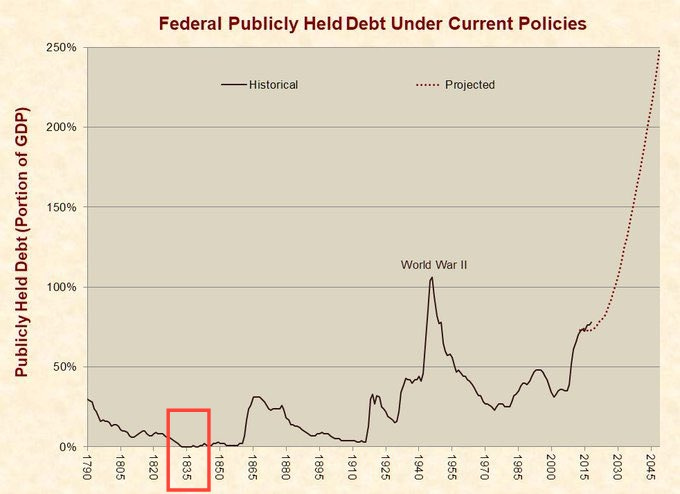
In January 1835, Jackson achieved the most symbolic victory of his career.
The U.S. federal debt hit
0
.
To this day, it remains the only time in U.S. history that the federal government has been completely debt-free.
On this day: On January 8, 1835, the U.S. national debt hit $0 for the first and only time under President Andrew Jackson. It remained at or near zero for about a
On this day: On January 8, 1835, the U.S. national debt hit $0 for the first and only time under President Andrew Jackson. It remained at or near zero for about a If Hamilton considered well-managed public debt a “national blessing,” Jackson had just proven the opposite.But history quickly proved the opposite.
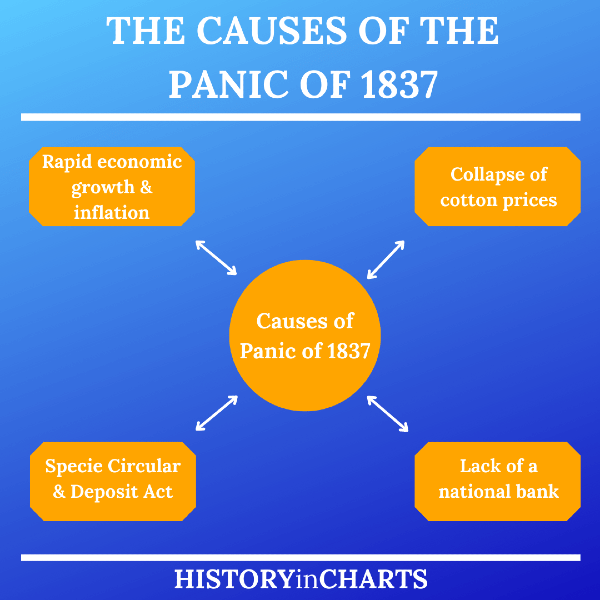
Just two years later, the system began to collapse.
According to traditional statistics, 343 out of approximately 850 banks closed entirely. Modern studies by the National Bureau of Economic Research provide more conservative figures, but all agree that nearly half of the banking system's assets vanished in just a few years.
4 Causes of the Panic of 1837 - History in Charts
4 Causes of the Panic of 1837 - History in Charts
Railroad stocks lost approximately 63% of their value.
The economic recession lasted until 1843.
But the hardest blow came from elsewhere.
Hamilton spent his entire career bringing the U.S. into the international capital market. But it took Jackson only a few years to cause foreign investors to turn their backs on the U.S.
Ironically, it was from those ruins that an entirely new business was born: credit rating.
The ancestors of Moody’s and S&P emerged because investors no longer dared to rely solely on the promises of the states.
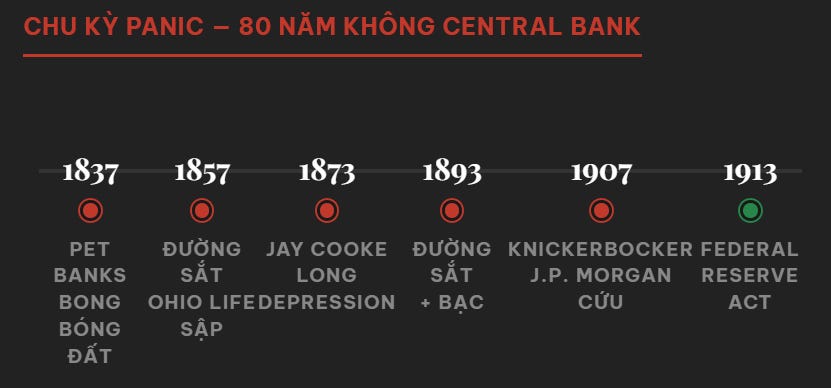
But it would take the U.S. nearly 80 years to truly learn the biggest lesson.
Without a central bank to act as a lender of last resort, financial panics recurred cyclically: 1837, 1857, 1873, 1893, and 1907.
Only after the Panic of 1907 did the U.S. finally accept the establishment of the Federal Reserve in 1913.
Jackson proved the exact opposite of what he intended to prove. Paying off debt does not mean the financial system has become stable.
An economy still requires institutions strong enough to absorb shocks when the credit cycle turns.
→
What made the U.S. economy larger than it was yesterday?
This time, the answer is not a growth driver, but a lesson. Markets require institutions to function.
It takes only a few years to destroy an institution; it took the U.S. nearly a century to rebuild it.
Conclusion
The greatest contradiction of these 90 years-an export economy built on slavery within a republic built on freedom-could not be reconciled by compromise. From 1861 to 1865, an estimated 620,000 to 750,000 Americans died in the Civil War. That was the price of delaying an answer for 90 years. But from an investor's perspective, 1865 was also the moment the U.S. first possessed nearly every condition for an explosion of growth.
They had a unified market stretching from the East Coast to the Midwest. There were over 30,000 miles of railroad connecting people, goods, and capital.
There was a credit system strong enough to mobilize massive amounts of capital.
There was the vast Louisiana territory, only partially developed.
There were millions of immigrants continuing to pour in every year.
And most importantly, the Northern economic model-free labor, industry, banking, and infrastructure-had now become the model for the entire nation.
The first 90 years did not turn the U.S. into a superpower. The first 90 years did only one thing: they built the framework.
Less than half a century after the guns of the Civil War fell silent, the U.S. surpassed Britain to become the world's largest economy. By 1913, the U.S. was producing nearly one-fifth of total global output.
What followed was no longer the story of building a market, but the story of building empires.
Rockefeller with oil.
Carnegie with steel.
Vanderbilt with railroads.
Morgan with finance.
It was also a period when the U.S. entered cycles of boom and bust on an unprecedented scale.
In Part 2 of the U.S. Economy series, Viet Hustler will join readers in entering the Gilded Age (1865-1913): oil, steel, transcontinental railroads, the first tycoons-and a U.S. without a central bank, where the system collapsed every 20 years, until a man named J.P. Morgan decided: if no one else would act as the central bank, he would do it himself.
Carnegie với thép.
Vanderbilt với đường sắt.
Morgan với tài chính.
Và cũng là thời kỳ nước Mỹ bước vào những chu kỳ bùng nổ rồi khủng hoảng ở quy mô chưa từng có.
Trong kỳ 2 của series Kinh tế Mỹ, Viet Hustler sẽ cùng bạn đọc bước vào Thời đại Mạ vàng (Gilded Age, 1865-1913): dầu mỏ, thép, đường sắt xuyên lục địa, các ông trùm đầu tiên - và một nước Mỹ không có ngân hàng trung ương, nơi cứ 20 năm hệ thống lại sập một lần, cho đến khi một người đàn ông tên J.P. Morgan quyết định: nếu không ai chịu làm ngân hàng trung ương, ông sẽ tự mình làm.