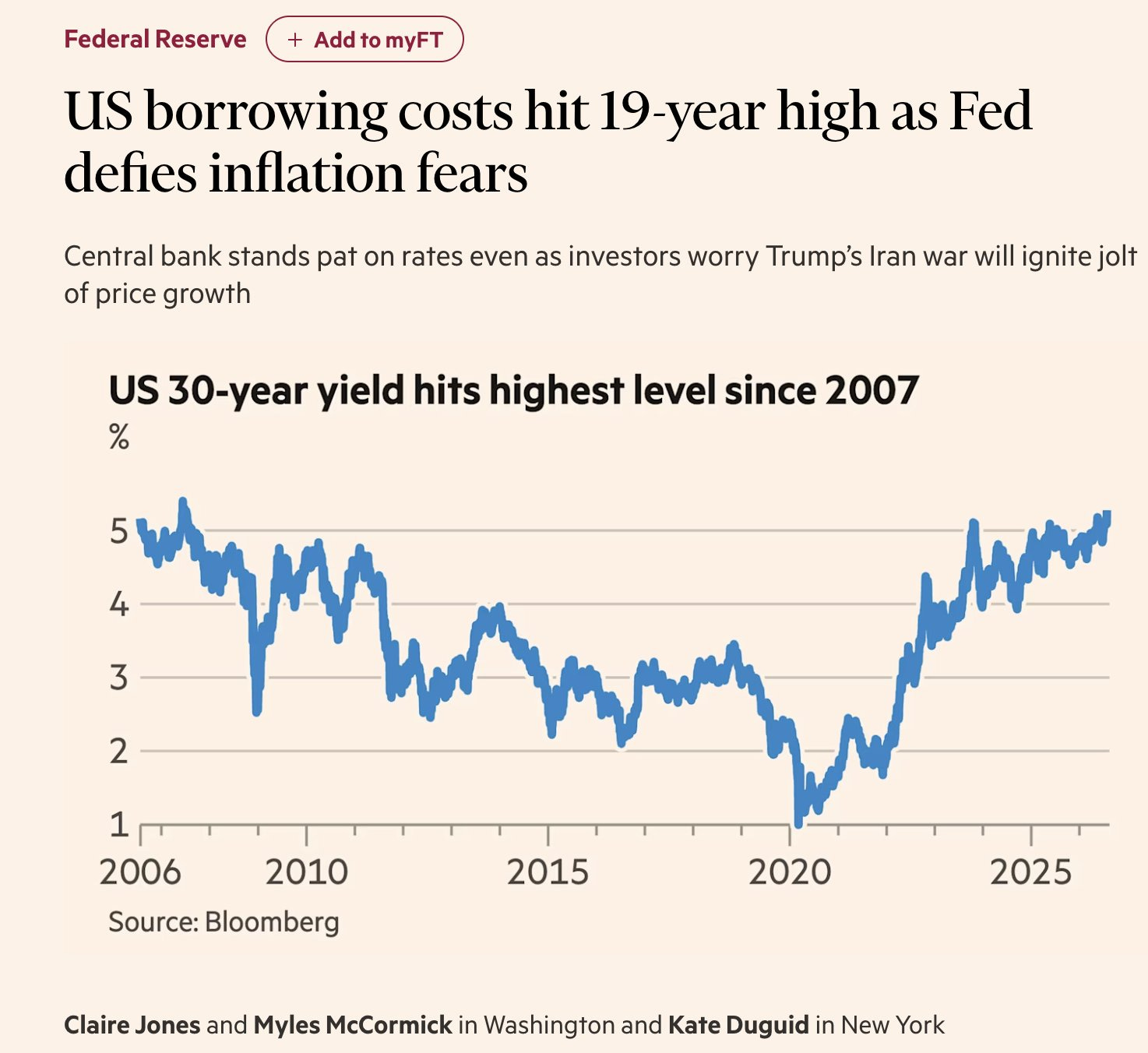
'Play the ball, not the referee.' - Kevin Warsh, FOMC press conference on July 29, 2026
In less than 48 hours, two branches of U.S. economic policy sent nearly opposing messages.
In Washington, the Federal Reserve kept interest rates on hold, pulled back on forward guidance, and accepted letting the bond market determine the path of yields on its own. Kevin Warsh argued that when the Fed speaks less, asset prices will reflect economic data directly rather than just trying to guess the central bank's words.
In New York, the U.S. Treasury stepped directly into the foreign exchange market. According to the Financial Times, cited by Reuters, the New York Fed sold euros to buy yen on behalf of the Treasury, after analysts estimated Japan had bought about 8.45 trillion yen in the previous session. This marks the first time Washington and Tokyo have bought yen to strengthen the Japanese currency since 1998.
The contrast is stark.
The Fed told the bond market: price inflation, growth, and policy risk for yourselves.
The Treasury told the currency market: do not assume the authorities will stand aside if the yen continues to depreciate.
One side proactively brought uncertainty back into the market. The other used that very uncertainty - the possibility of further intervention - to force investors to pare down short yen positions before the government had to deploy more reserves.
The intersection lies in the bond market.
If Warsh speaks less, the term premium could rise as investors have to absorb more policy risk. If the yen strengthens too rapidly, the carry trade could unwind, forcing investors who borrowed yen to buy foreign assets to cut their positions. If Japan has to use foreign exchange reserves or Japanese institutions repatriate capital, the Treasury market could also face additional pressure.
Therefore, the July FOMC was not just about whether the Fed held or raised rates. Yen intervention was also not just a currency jolt from 164 down below 158.
Together, the two events pose a larger question:
What happens when the Federal Reserve wants the market to bear more policy uncertainty just as the U.S. Treasury and Japan step in to prevent a one-sided global trade from unwinding in a disorderly fashion?
This week's article is structured in 4 parts:
Part I - A Hawkish Hold Without a Map
Part II - The Rebellion at the Long-End
Part III - From Rate Check to Coordinated Intervention
Part IV - How Much Time Does Intervention Buy?
Warsh wants bond investors to stop viewing the Fed as an insurer against all volatility.
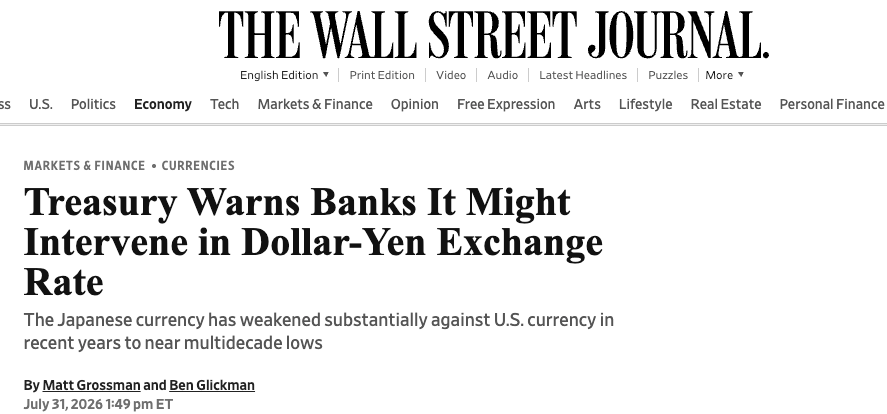
Bessent has just proven that in certain markets, Washington is still ready to step onto the field.
Viet Hustler is a reader-supported publication. To receive new posts and support my work, consider becoming a free or paid subscriber.
PART I - A HAWKISH HOLD BUT THE MAP IS PULLED
1.1. The Fed holds rates, but the 9-3 vote was far from neutral
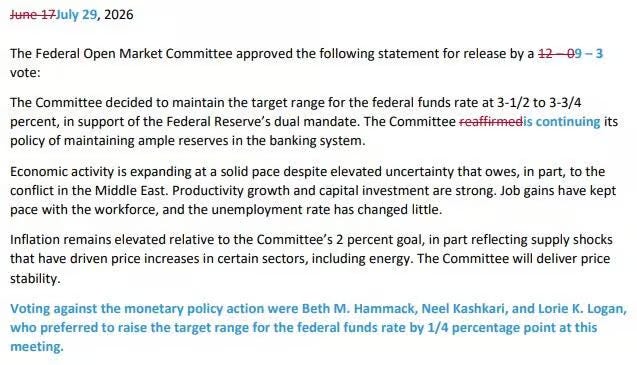
The Federal Reserve maintained its target interest rate range at 3.50-3.75% at its July 28-29 meeting. The decision passed with a 9-3 vote, as Beth Hammack, Neel Kashkari, and Lorie Logan all wanted a 25 basis point hike.
Three hawkish dissents mean the "hold" decision cannot be viewed as neutral. It shows that a significant faction within the FOMC believes current interest rates are not exerting enough pressure to ensure inflation returns to the 2% target.
The Fed's official statement continued to describe a relatively solid economy:
capital investment and productivity remain robust;
job gains are keeping pace with labor force growth;
economic activity continues to expand;
but inflation remains above target.
In other words, the Fed does not see an economy in urgent need of rescue. However, the central bank also lacks enough evidence to declare that the disinflation process is complete.
The Fed kept rates at 3.50-3.75%, but three dissenting members wanted a 25 basis point hike. - Source: Federal Reserve.
On the surface, this remains a rate hold with a familiar hawkish tone. The distinction of the July meeting lies not only in the three votes for a rate hike, but also in Kevin Warsh's refusal to provide a clear roadmap for subsequent meetings.
Typically, the market interprets a hold decision in one of two straightforward directions:
if the Fed essentially signals a hike in September, correction pressure will concentrate more heavily in the short end, which directly reflects expectations for policy rates;
if the Fed holds because it believes inflation is subsiding sustainably, yields across most of the curve have grounds to decline.
Yet the actual reaction is more complex.
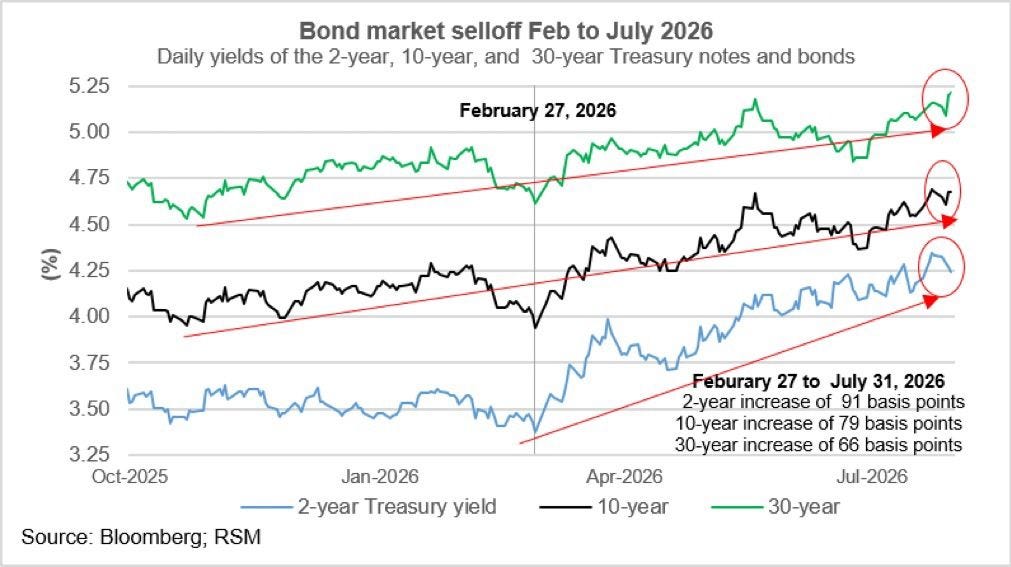
The chart below shows that from late February to late July, Treasury yields rose across the entire curve. Specifically:
the 2-year yield rose 91 basis points;
the 10-year yield rose 79 basis points;
the 30-year yield rose 66 basis points.
What is notable is that all three tenors trended clearly upward. This indicates the market adjusted expectations not just for a few upcoming meetings, but also repriced yield levels across the entire curve
The sell-off in the U.S. bond market from late February to late July spanned the entire curve: the 2-year yield rose 91 basis points, the 10-year rose 79 basis points, and the 30-year rose 66 basis points. - Source: Bloomberg, RSM.
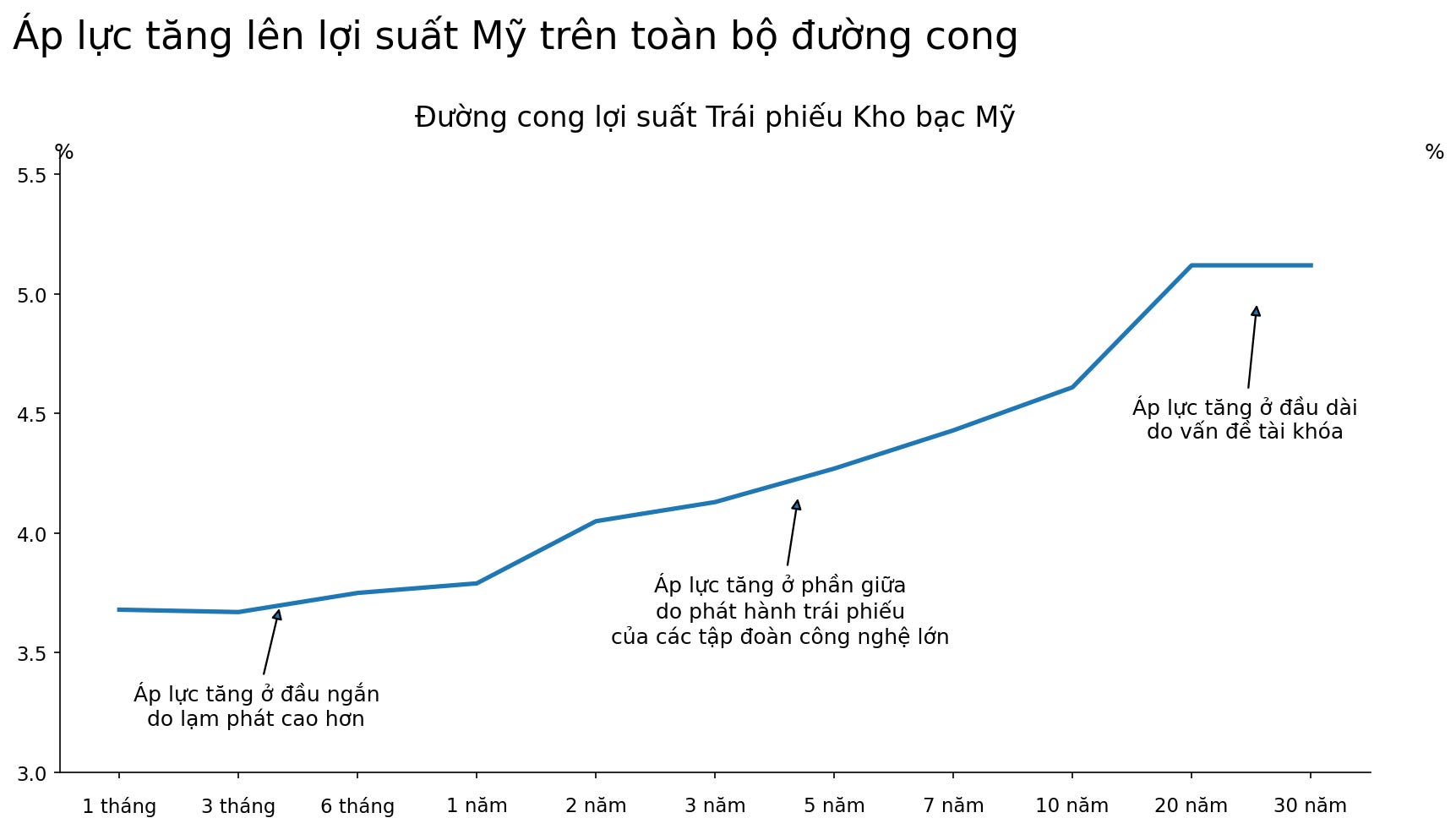
Looking at this chart alone, the most prominent message is that the market has shifted to a higher yield plateau. The short end reflects investors raising the probability that the Fed will maintain a hawkish stance. Meanwhile, the long end shows the market also demanding a larger term premium to hold long-term bonds amid a less predictable policy outlook.
In other words, following the July meeting, investors are not only asking whether the Fed will hike rates again, but also wondering by what logic the Fed is reacting.
This exact point is what makes the meeting consequential.
Warsh emphasized the commitment to bringing inflation back to 2%, but did not specify what threshold of inflation, employment, or financial conditions would prompt the Fed to hike, hold, or cut rates at the next meeting. The FOMC thus answered what the Fed is doing today, but left open a larger question: How will the central bank think when data changes?
This forces the market to redraw its map.
In essence, the reaction of yields can be split into two layers.
At the short end, yields rose because investors believe the Fed is not ready to ease, and may even need to hike further if inflation fails to cool further.
At the long end, yields rose because the market demands an additional risk premium for holding bonds in an environment where the path of inflation, government bond supply, and the Fed's reaction function are all harder to forecast.
Therefore, yields did not rise simply because the market expected "one more rate hike." It is a combination of:
higher short-term rate expectations;
greater policy uncertainty;
and the demand for extra compensation to hold long-term assets.
Warsh also rejected calling the decision a "pause." According to him, the Fed is continuously assessing policy, and the market has effectively generated some tightening on its own as yields rose even though the overnight rate remained unchanged.
That argument is not without foundation. As bond yields rise, real-world impacts on the economy have begun to materialize:
mortgage rates are higher;
corporate debt issuance costs are elevated;
infrastructure, real estate, and long-term investment projects must clear higher return hurdles;
overall financial conditions are tightening without the FOMC needing to raise the overnight rate further.
Viewed in this light, the Fed can let the bond market do part of its job.
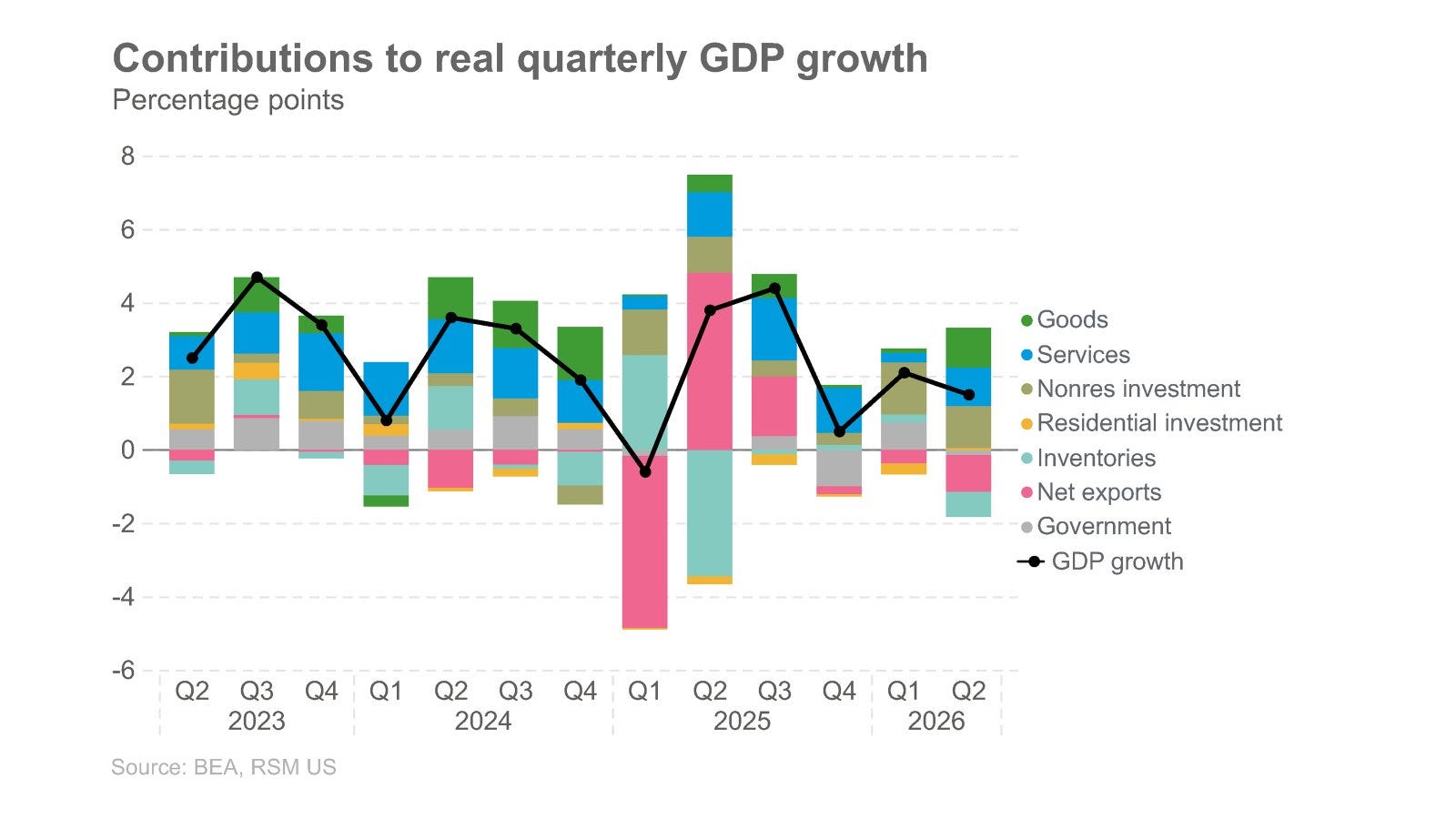
This argument becomes even more acceptable when looking at Q2 growth structures. U.S. GDP grew by only 1.5%, but the headline figure was dragged down by net exports, inventories, and government spending. Meanwhile, gauges reflecting underlying private demand still showed consumer spending and investment holding up relatively well. Non-residential investment continued to be supported by:
industrial equipment;
transportation vehicles;
machinery and capital goods;
artificial intelligence infrastructure.
Q2 GDP slowed, but consumption, services, and nonresidential investment still made positive contributions. - Source: BEA, RSM US.
Part of the rise in imports also stemmed from machinery and production equipment. In GDP calculations, imports are subtracted from growth. But economically, businesses importing more machinery can signal that they are expanding investments. Hence, low headline GDP does not necessarily mean an economy lacks demand, especially when private spending and AI-related investment retain resilience.
This is the context that allows Warsh to accept letting the bond market tighten financial conditions on behalf of the FOMC. But this strategy is only truly effective if yields rise because the market is correctly pricing the economy's strength and inflation risks.
Conversely, if yields rise primarily because the central bank has become less predictable, the economy will pay an extra cost for that ambiguity without necessarily securing more progress in the fight against inflation.
Việc Scott Bessent sử dụng New York Fed để hỗ trợ đồng yen quan trọng hơn quy mô của một giao dịch ngoại hối đơn lẻ. Nó cho thấy Bộ Tài chính Mỹ hiểu rằng biến động tại đầu dài của đường cong không chỉ bắt nguồn từ nỗi lo lạm phát quen thuộc, mà còn từ những dòng vốn đang dịch chuyển trong hệ thống tài chính toàn cầu. The 9-3 vote not only raises the likelihood that the Fed will have to act; it also increases the risk premium demanded by investors due to uncertainty over the rules by which the Fed will react.
This is why post-meeting pressure cannot be read as a one-way signal. The market is saying that the Fed held rates, but the price of "holding without a roadmap" is a higher plateau for yields.
1.2. Three dissents, but three different diagnoses of inflation
The three members wanting a rate hike disagreed with the FOMC majority not only on the final decision. They also differed on why the Fed needs to act and which type of risk is most concerning.
The common thread among Beth Hammack, Neel Kashkari, and Lorie Logan is their view that the cost of continued inaction is rising. However, the three do not see the same problem.
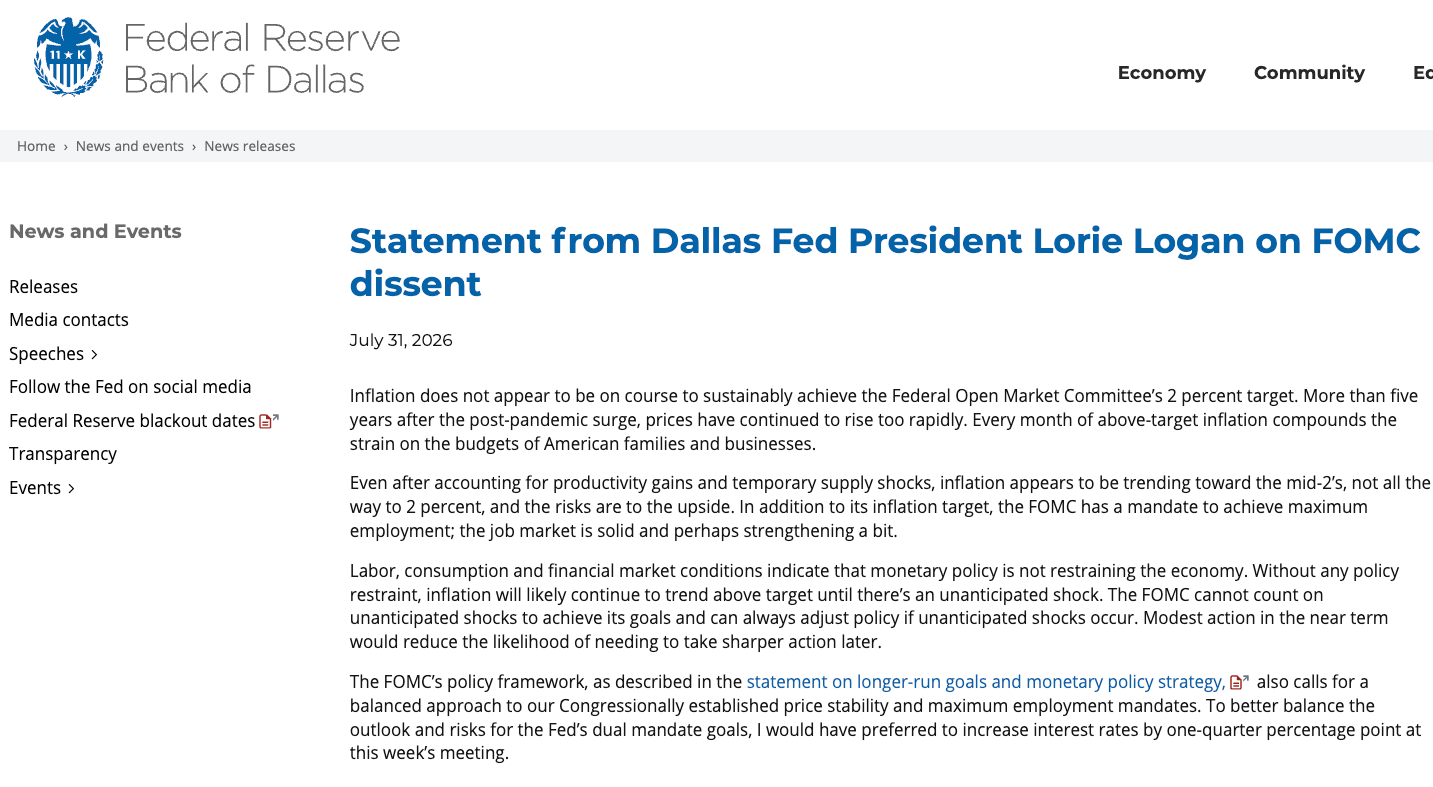
Lorie Logan focuses on underlying inflation trends beneath short-term volatility. She argues that even after stripping out the impacts of higher productivity and temporary supply shocks, inflation tends to stabilize in the mid-2% range rather than returning all the way to target.
The labor market remains solid, consumption has not clearly weakened, and financial conditions do not show the economy under enough pressure. This makes Logan skeptical that current interest rates are truly restricting economic activity as much as the Fed desires.
From this perspective, the problem lies in the equilibrium state of the broader economy:
inflation remains above target;
demand has not slowed down enough;
current policy has not created sufficient drag;
waiting too long could force the Fed to hike more aggressively later.
Therefore, Logan supports a small hike right now to reduce the risk of having to react more aggressively in the future.
Neel Kashkari: many 'temporary' shocks can create persistent inflation
Neel Kashkari offers a different diagnosis.
He agrees that the Fed should look past the transient impact of a single supply shock. Rate hikes cannot produce more oil, reopen a disrupted shipping route, or eliminate tariffs. If inflation rises due to a temporary cause, an overreaction can cause unnecessary damage to the economy.
But the current problem is that shocks no longer arrive in isolation. The pandemic, war, trade restrictions, the conflict in Iran, and the wave of data center investment have followed one another continuously. Inflation has not yet returned to target before a new source of pressure emerges.
The risk is that a chain of shocks labeled 'temporary' ultimately creates a persistent inflationary environment:
businesses grow accustomed to adjusting prices more frequently;
workers demand higher wages to offset the cost of living;
consumers gradually accept a higher baseline level of inflation;
inflation expectations become difficult to anchor down.
Consequently, Kashkari favors small and continuous adjustments. The Fed can pause if inflation subsides sustainably, but it should not wait until price expectations have already shifted before taking action.
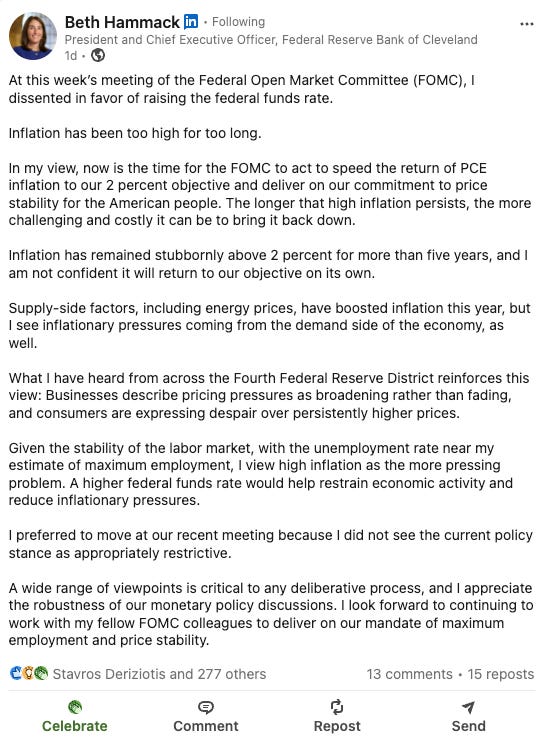
Beth Hammack: demand pressures remain too strong
Beth Hammack focuses more on the demand side of the economy.
She acknowledges that energy prices and supply issues pushed inflation higher this year. However, those factors do not fully explain the scale of price increases. Businesses within the Cleveland Fed's district report that pricing pressure is spreading across multiple sectors, while the labor market remains near full employment.
According to Hammack, the issue is not merely goods becoming more expensive due to constrained supply. Demand in the economy remains strong enough for businesses to pass costs on to consumers without losing too much sales volume.
If this view is correct, the Fed cannot simply wait for oil prices or supply chains to self-correct. The central bank must directly slow down demand through higher rates.
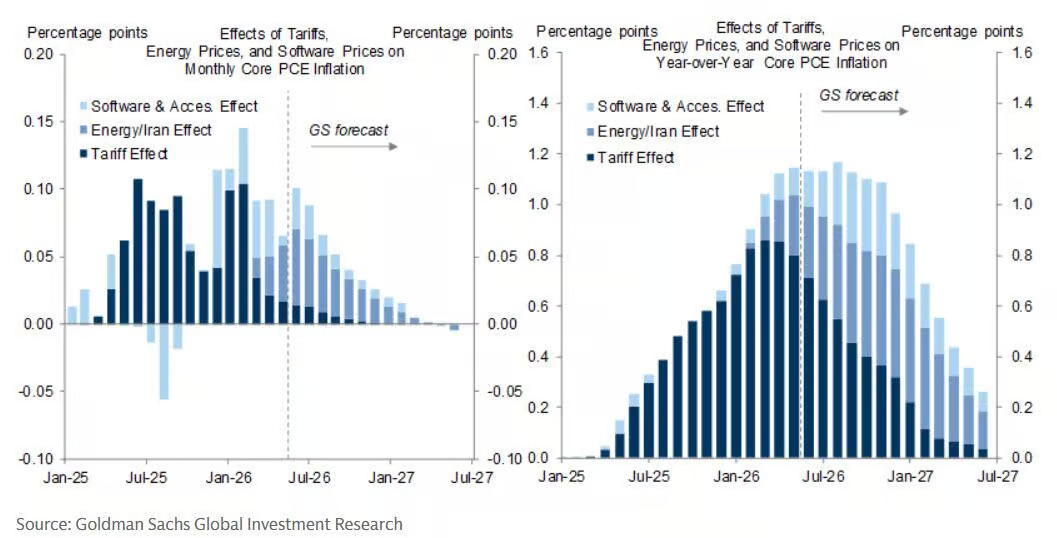
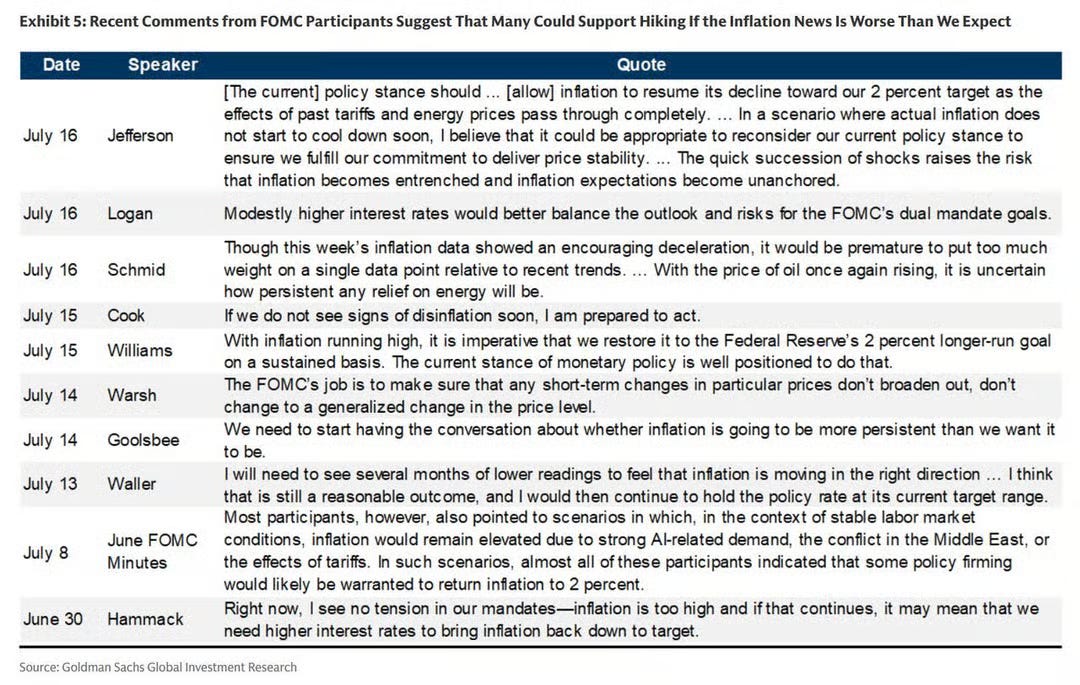
FOMC members lean toward a hawkish stance, but differ on the origins of inflation and the urgency of action. - Source: Goldman Sachs Global Investment Research and statements from Fed officials.
The three arguments can be summarized as follows:
Logan: core inflation is stabilizing above target because policy is insufficiently restrictive.
Kashkari: successive temporary shocks could turn high inflation into a persistent state.
Hammack: domestic demand remains strong enough to force the Fed to proactively slow the economy down.
This distinction matters because each diagnosis requires a different type of evidence before the Fed can change course.
If Logan is right, a few lower-than-expected inflation reports are not enough. The Fed needs to see core inflation and financial conditions cool together over a sufficiently long period.
If Kashkari is right, what needs to be monitored is both the data sequence and inflation expectations. One good month cannot erase the risk of continued compounding shocks.
If Hammack is right, the labor market, consumer spending, and private investment must slow down clearly enough to prove that current interest rates are genuinely restricting demand.
Therefore, three dissenting votes do not form a unified tightening stance. They merely show that a growing number of members believe the risks of waiting are greater than before.
Việc Scott Bessent sử dụng New York Fed để hỗ trợ đồng yen quan trọng hơn quy mô của một giao dịch ngoại hối đơn lẻ. Nó cho thấy Bộ Tài chính Mỹ hiểu rằng biến động tại đầu dài của đường cong không chỉ bắt nguồn từ nỗi lo lạm phát quen thuộc, mà còn từ những dòng vốn đang dịch chuyển trong hệ thống tài chính toàn cầu. Three individuals want to hike rates, but they are not answering the same question. Logan worries policy is not tight enough, Kashkari worries high inflation is becoming a habit, and Hammack worries demand remains too strong.
In an FOMC with such diverse diagnoses, the role of the chair becomes especially critical. The chair does not necessarily need to pre-announce the next decision, but needs to explain how the committee will balance the various risks.
-> That is precisely the kind of guidance that Kevin Warsh wants to curtail.
1.3. The Fed can drop forward guidance, but cannot drop its reaction function
'Play the ball, not the referee.' Focus on the game, not just the referee.
Kevin Warsh's message sounds quite reasonable: investors should focus on the economy rather than dissecting every adjective in the statement or every minor shift in the Fed chair's tone.
From this perspective, when the central bank speaks less:
asset prices will react more directly to economic data;
investors must assess risks themselves instead of waiting for the Fed to point the way;
the risk premium once compressed by overly explicit commitments will return to the market.
That argument has merit. Providing overly detailed forward guidance can create a form of moral hazard. When investors believe the central bank will pre-announce every shift, volatility around meetings decreases, the cost of holding long-term bonds becomes cheaper, and borrowing tends to increase.
The market then gradually trades on the Fed's words rather than independently assessing the outlook for growth, inflation, and policy risks.
However, a distinction must be made here between two concepts that are often lumped together.
Forward guidance: The Fed signals a specific decision, such as practically pre-announcing a rate hike, cut, or pause over a certain timeframe.
Reaction function: The Fed explains how it balances inflation, employment, supply shocks, financial conditions, and systemic risks when making decisions.
The Fed can reduce forward guidance without rendering policy ineffective. The central bank does not necessarily have to promise what it will do at the September or October meeting.
The problem only arises when the Fed simultaneously obscures its decision-making rule.
2-year Treasury yields do not remain unchanged simply because CPI rises or falls. A CPI report does not inherently contain the 'correct interest rate level.' Yields move because investors try to guess how the FOMC will react to that report.
Similarly, a strong employment report is only hawkish if the market believes the Fed places sufficient weight on demand and wage pressures. If the Fed views job growth as primarily reflecting better labor supply, the exact same data can be interpreted more dovishly.
When the reaction function is unclear, each new data release forces the market to answer two questions simultaneously:
How has the economic outlook changed?
In what direction will the Fed interpret that change?
Uncertainty thus increases even if economists do not disagree any more on growth or inflation. Investors must not only forecast the economy; they must also forecast how the central bank will read the exact same data set.
As a consequence, the range of policy outcomes widens:
bond yields experience higher volatility;
investors demand a larger premium to hold long-term bonds;
businesses must raise capital at higher costs;
the housing market faces pressure even though the policy rate remains unchanged.
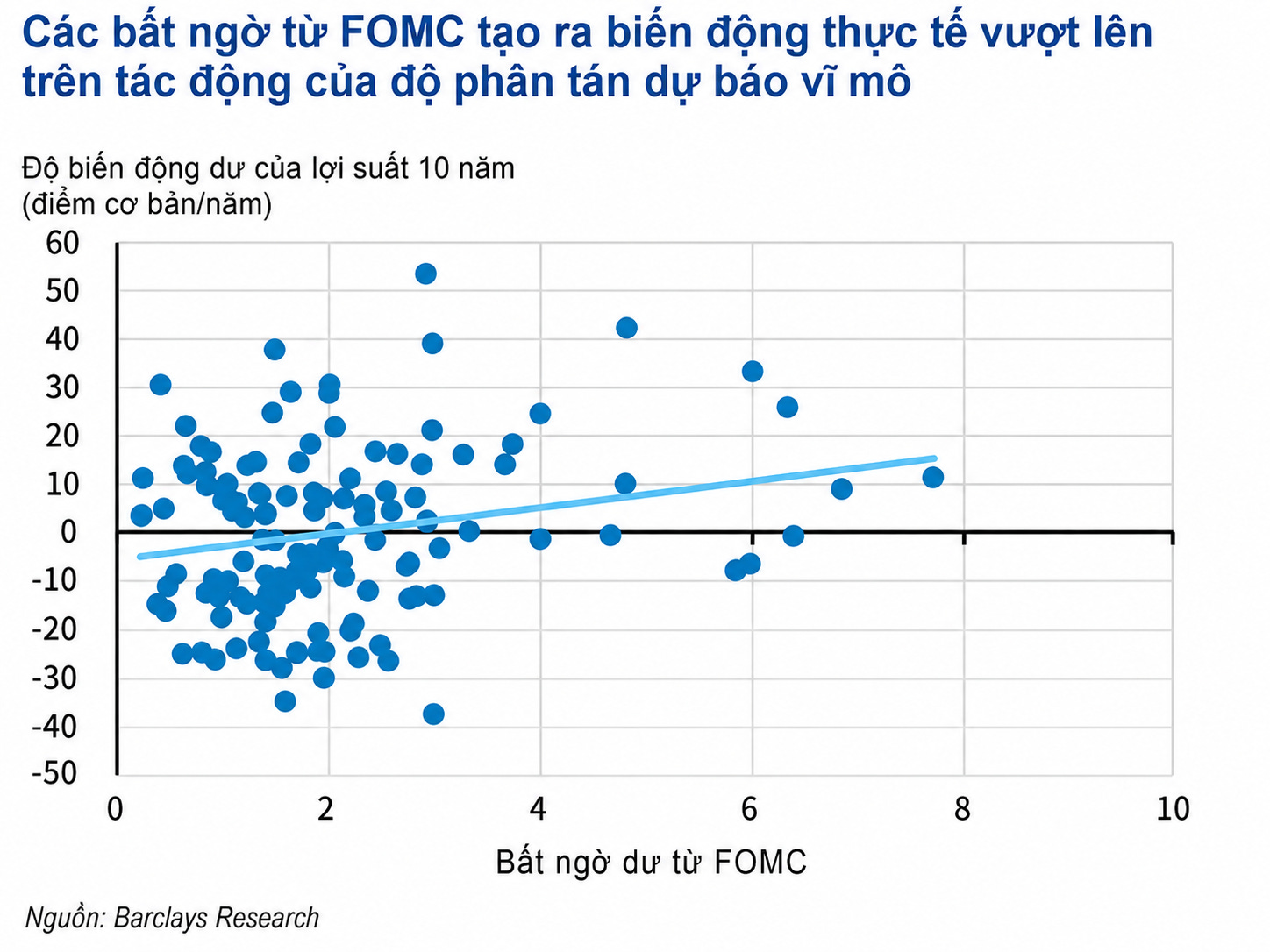
FOMC surprises not explained by macroeconomic forecast dispersion are positively correlated with Treasury realized volatility. - Source: Barclays Research.
Higher uncertainty can offer some benefits. It makes investors more cautious, curbs excessive speculation, and forces the market to price risks independently.
But this strategy also comes with costs. Warsh's issue is not about the Fed speaking less. The issue is that the market may not be able to distinguish:
when silence reflects the Fed's desire to maintain flexibility;
when it reflects a lack of consensus within the FOMC;
when the Fed is waiting for more data;
and when the Fed truly does not know which metric to weight.
The debate over inflation metrics clearly illustrates this difficulty.
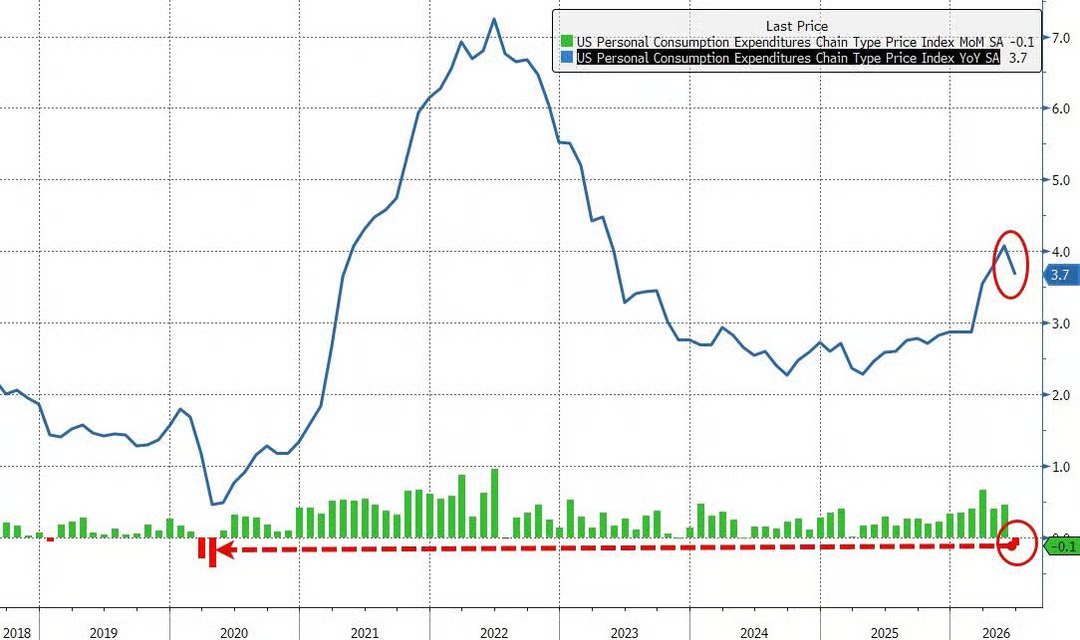
Headline PCE fell 0.1% in June, while core PCE rose slightly faster than expected. However, annualized inflation remains above the 2% target, and June data has not yet fully reflected the recovery in oil prices in July.
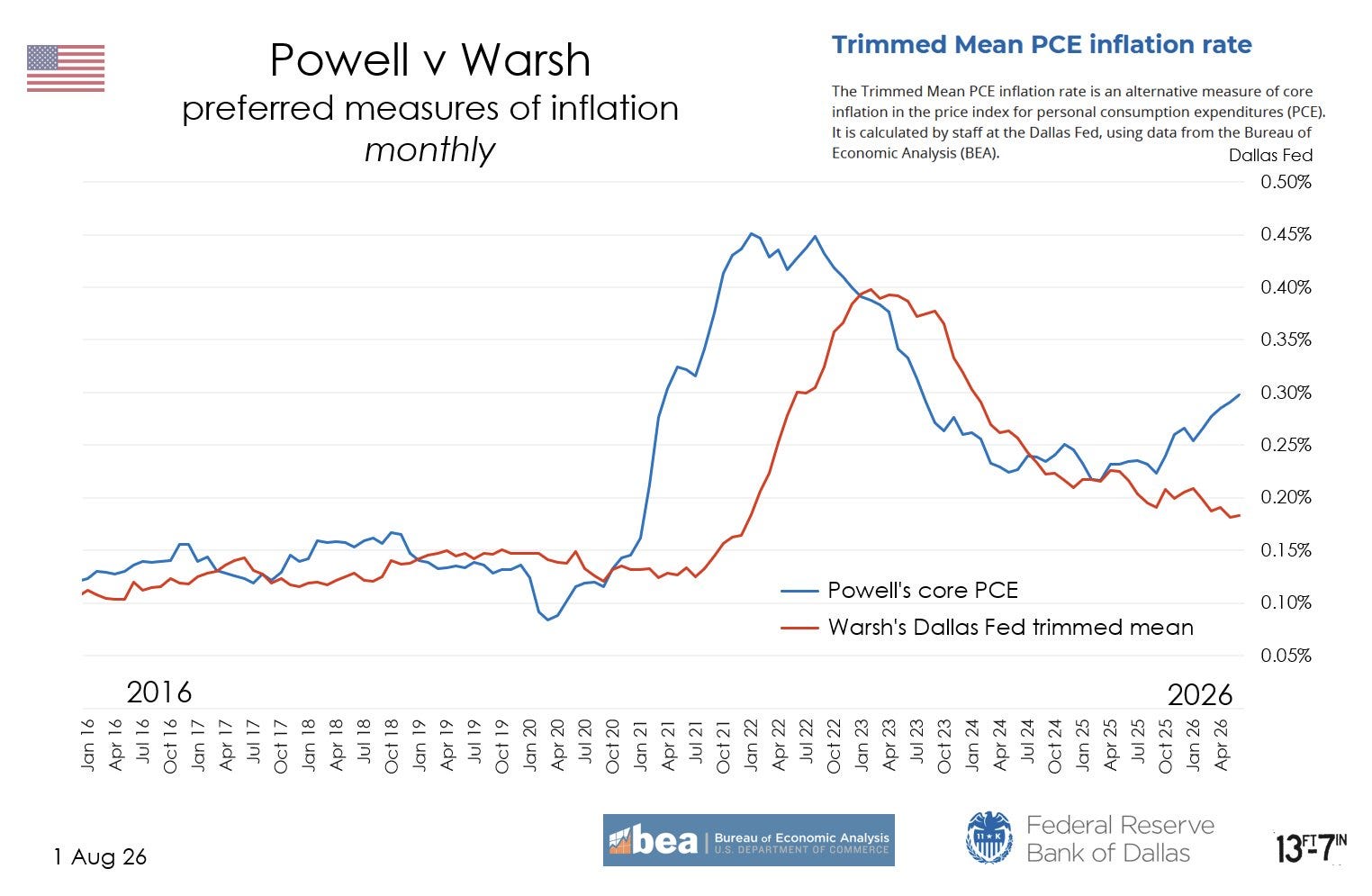
Two key gauges are also sending conflicting signals.
Core PCE excludes food and energy, but can still be pulled up or down by specific goods and services categories.
Dallas Fed Trimmed Mean PCE excludes extreme price increases and decreases, thereby better reflecting the breadth of price pressures across the entire economy.
If core PCE is high but the trimmed measure cools, the Fed might conclude inflation is concentrated in only a few narrow groups. Conversely, the trimmed measure could also react slowly if an initial shock appears in a few commodities and gradually spreads to the rest.
Core PCE and Dallas Fed Trimmed Mean PCE are sending different signals regarding the breadth of price pressures.
The Fed has valid reasons for using multiple indicators. No single gauge can fully describe inflation in every circumstance.
However, if Warsh does not explain when the Fed prioritizes each metric, the market may suspect the FOMC is cherry-picking the index that suits the decision it wanted to make all along.
A flexible framework only gains credibility when the logic of data selection is more stable than the data itself.
Việc Scott Bessent sử dụng New York Fed để hỗ trợ đồng yen quan trọng hơn quy mô của một giao dịch ngoại hối đơn lẻ. Nó cho thấy Bộ Tài chính Mỹ hiểu rằng biến động tại đầu dài của đường cong không chỉ bắt nguồn từ nỗi lo lạm phát quen thuộc, mà còn từ những dòng vốn đang dịch chuyển trong hệ thống tài chính toàn cầu. The Fed does not need to pre-announce its next decision, but it still must explain its thinking. Otherwise, the bond market will demand an extra premium for central bank ambiguity rather than just real economic risk.
That is precisely why pressure is concentrating increasingly at the long end of the yield curve.
PART II - THE REBELLION AT THE LONG END
2.1. The bond market is not protesting the rate pause; it is pricing in the uncertainty behind the decision
The reaction following the FOMC meeting was uneven across the yield curve.
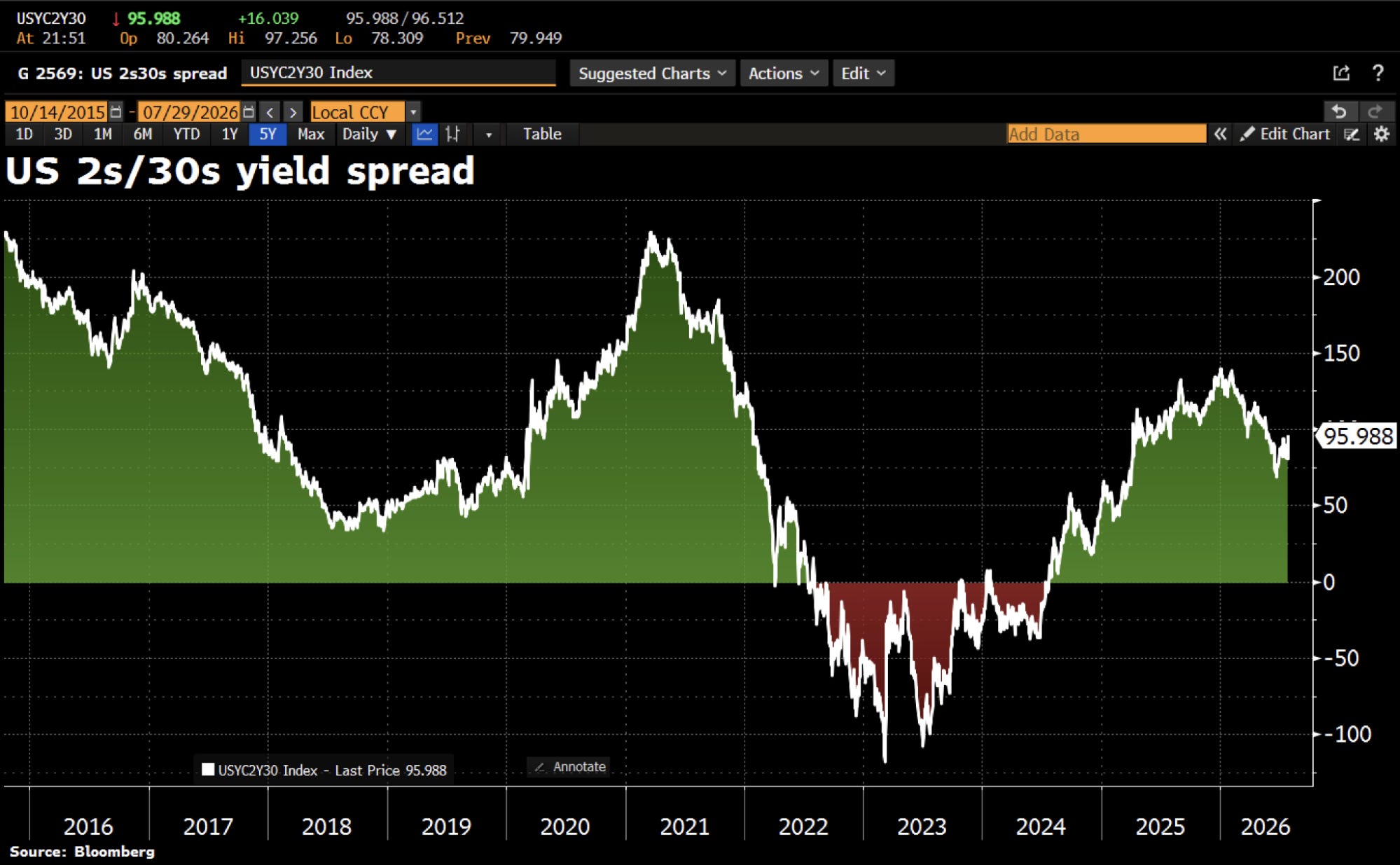
The Fed left interest rates unchanged, but the market did not aggressively price up short-term policy rate expectations despite three members wanting further tightening. Instead, selling pressure concentrated more heavily in long-term bonds. Yields on 10-year and 30-year Treasuries continued to climb, causing the yield curve to steepen.
The spread between 30-year and 2-year yields hovered around 100 basis points. This marks a significant reversal from the 2022-2023 period, when short-term yields far exceeded long-term yields and the curve was deeply inverted.
The 2s30s curve has shifted from deep inversion to a positive slope, reflecting mounting pressure at the long end. - Source: Bloomberg.
A steeper curve can reflect three different stories:
Growth and investment demand remain strong: the market believes the economy will continue to need more capital, forcing long-term yields to stay higher.
Long-term inflation risks are rising: investors demand extra compensation to protect the purchasing power of cash flows over the next 10, 20, or 30 years.
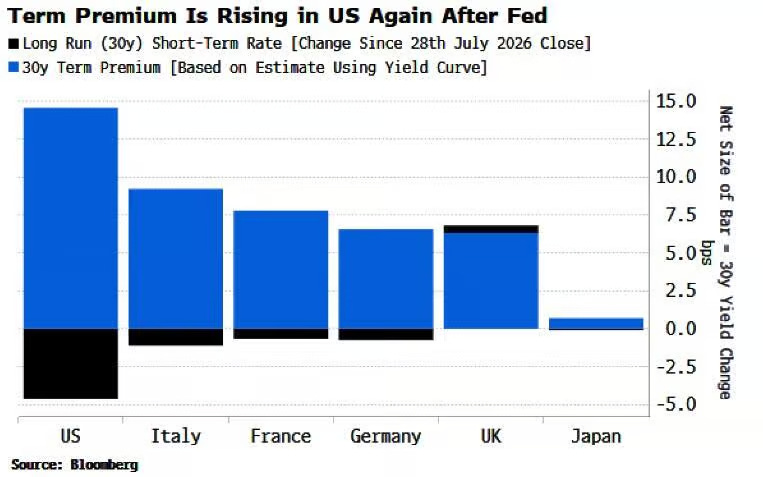
Term premium is increasing: heavy Treasury supply, less predictable policy, and high volatility lead investors to demand higher yields for holding long-term bonds.
In the current case, signals suggest the third factor is becoming increasingly important.
Following the FOMC meeting, the U.S. term premium rose the most among tracked developed bond markets, while expectations for long-term short-term rates shifted only slightly.
This shows that the 30-year yield is rising not primarily because the market believes the Fed will keep overnight rates higher for years. Investors are demanding higher yields to compensate for hard-to-forecast risks:
where inflation will stabilize;
how many bonds the U.S. government will issue;
how the Fed will react to new data;
how long market volatility will remain high.
solvency;
corporate bond liquidity;
investor risk appetite.
If the market still believes companies can service their debt, this spread does not necessarily have to widen. But borrowers still face a higher baseline yield.
In other words, the market may simultaneously believe two things:
Companies are not facing a widespread default wave. Long-term capital must be provided at a higher price than before.
The stability of corporate yield spreads therefore does not negate the signal from the long end of the curve. It merely shows that the current bond sell-off remains a repricing of the cost of holding long-term capital and the term premium, rather than a wholesale reassessment of debt-servicing capacity. The equity market has its own buffer
Equities have also not reacted aggressively because investors still see two sources of support:
continued corporate earnings growth;
AI investments generating revenue and productivity expectations in the future.
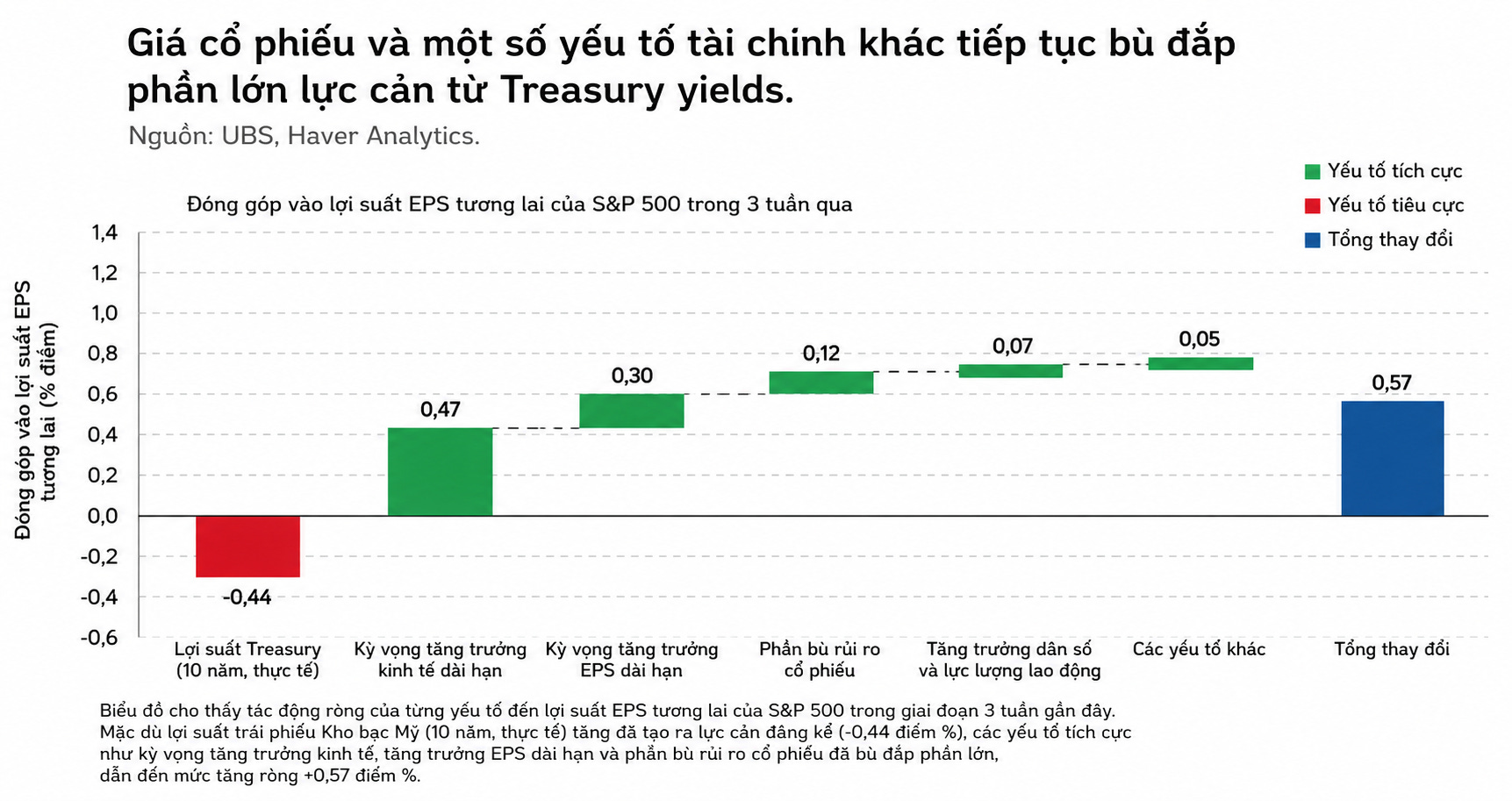
When earnings remain sufficiently strong, investors can accept a higher discount rate for a period of time. Stock prices do not necessarily fall immediately as yields rise, if expected cash flows are also revised upward.
But this buffer is not infinite.
When yields rise sufficiently high:
Việc Scott Bessent sử dụng New York Fed để hỗ trợ đồng yen quan trọng hơn quy mô của một giao dịch ngoại hối đơn lẻ. Nó cho thấy Bộ Tài chính Mỹ hiểu rằng biến động tại đầu dài của đường cong không chỉ bắt nguồn từ nỗi lo lạm phát quen thuộc, mà còn từ những dòng vốn đang dịch chuyển trong hệ thống tài chính toàn cầu. share buybacks become less attractive;
projects funded by debt must clear a higher required rate of return;
the premium investors receive for holding equities narrows;
stocks heavily reliant on long-term growth become more sensitive to interest rates.
Therefore, what needs to be monitored is not a fixed 30-year Treasury yield. There is no single magic number that, once breached, will guarantee a break in the equity or credit markets.
The true boundary lies at the point where high yields begin to alter behavior:
issuance deals are delayed; new projects no longer meet minimum return thresholds.
-> Equities and corporate yield spreads have not reacted strongly because the market still believes large enterprises can service debt and continue investing. But higher baseline yields are quietly making capital more expensive, especially for sectors heavily dependent on borrowing.
The current calm therefore does not mean the shock has vanished. It only shows that the impact is propagating sequentially: from Treasuries, to the cost of capital, and finally to investment decisions, credit, and stock prices.
2.4. The long end only becomes a macroeconomic shock when behavior changes
Falling bond prices or new peak yields do not automatically trigger a recession. Long-term yields only become a real economic shock when higher capital costs begin to alter investment, hiring, and credit-provision decisions.
The transmission process typically unfolds in four steps: Treasury yields rise, driving up overall corporate and household borrowing costs.The minimum rate of return a project must achieve also rises, making low-margin projects or those with long payback periods less attractive.
The impact therefore typically appears with a lag. The bond market can reprice in a matter of days, but companies take months to adjust investment budgets, hiring plans, and equipment procurement needs.
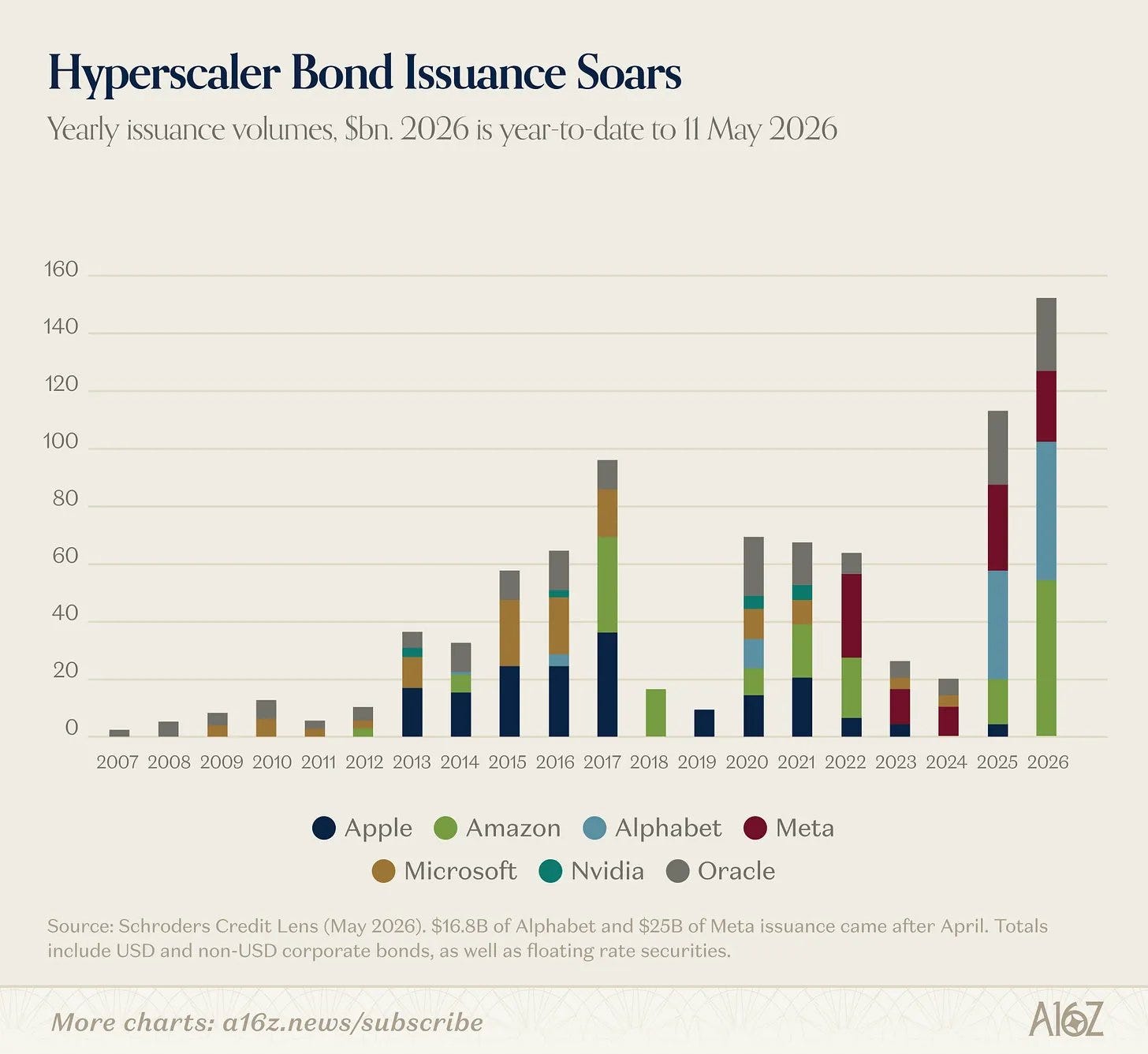
For the AI wave, the weakest link is not necessarily Microsoft, Amazon, or Alphabet. These conglomerates boast massive cash flows, strong balance sheets, and multiple funding channels. Pressure may instead emerge in a data center developer unable to refinance, a utility company not yet permitted to pass investment costs on to electricity prices, or a supplier with plenty of orders but lacking working capital to scale production.
This is the moment to distinguish between a normal repricing process and market dysfunction.
If yields rise in an orderly fashion and weed out projects that only make economic sense when capital is nearly free, the market is performing its proper function. Capital is reallocated to more efficient projects, leverage declines, and sponsors must better prove their cash flow generation capabilities.
But if sharp volatility causes banks and market makers to pare back their bond-holding capacity, the issue is no longer just expensive capital. Bid-ask spreads can widen, liquidity can dry up, and even high-quality companies will struggle to issue debt.
Signals to watch include Treasury auction results, short-term funding market conditions, market depth, the number of delayed corporate issuances, and whether credit spreads begin to widen alongside Treasury yields. Only when multiple indicators deteriorate simultaneously is there a basis to conclude that the repricing at the long end has morphed into a capital crunch.
Until then, high yields primarily generate bifurcation. Companies with strong balance sheets continue to invest, while leveraged borrowers facing refinancing needs bear the initial pressure. Housing and commercial real estate may slow down, even as mega-cap tech companies keep building data centers and broad stock indexes remain resilient.
->
The long end does not become a macroeconomic shock simply because yields hit a peak. It becomes a shock when high capital costs begin to change behavior, delaying viable projects and turning a bond repricing into a credit contraction.
Warsh wants the market to price its own uncertainty. But just as the bond market begins demanding a higher premium for that flexibility, another market receives an almost opposite message: the U.S. and Japanese Ministries of Finance stand ready to intervene if the yen's adjustment becomes too disorderly.
Việc Scott Bessent sử dụng New York Fed để hỗ trợ đồng yen quan trọng hơn quy mô của một giao dịch ngoại hối đơn lẻ. Nó cho thấy Bộ Tài chính Mỹ hiểu rằng biến động tại đầu dài của đường cong không chỉ bắt nguồn từ nỗi lo lạm phát quen thuộc, mà còn từ những dòng vốn đang dịch chuyển trong hệ thống tài chính toàn cầu. 3.1. Who decides, who executes?
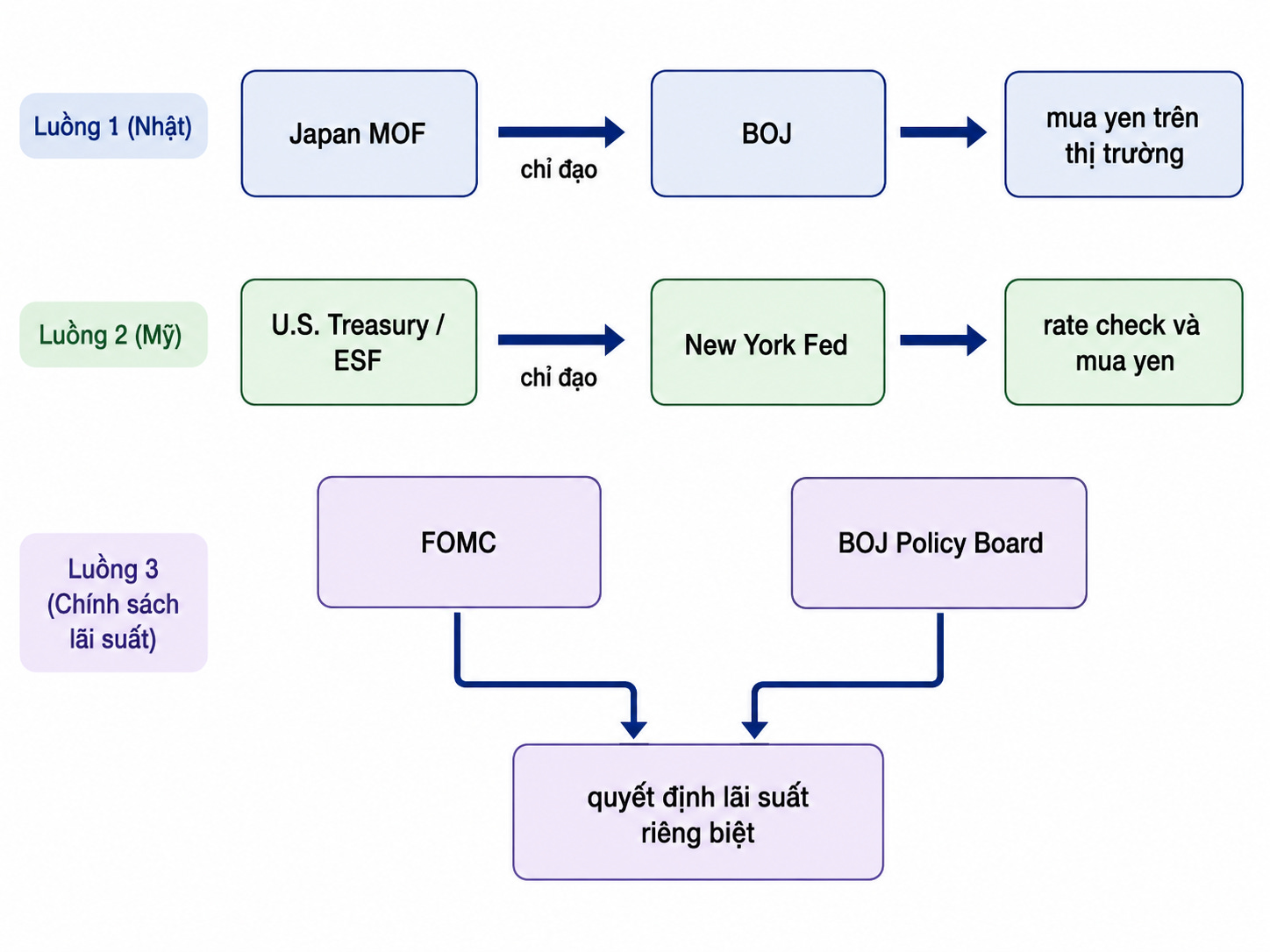
The phrase 'the Fed is intervening in the yen' easily leads to misunderstandings. The New York Fed does appear in trading, but that does not mean the FOMC has decided to alter exchange rates, nor does it show that the Federal Reserve is using monetary policy to prop up the yen.
In the U.S. system, the authority to decide on foreign exchange intervention belongs to
the U.S. Department of the Treasury , typically via the Exchange Stabilization Fund. The New York Fed merely acts as the execution agent: contacting major banks, checking prices, assessing liquidity, and executing trades on behalf of the Treasury.FOMC decisions regarding interest rates, balance sheet size, and monetary policy orientation remain part of an entirely separate process.
Japan maintains a similar division of responsibilities.
The Japanese Ministry of Finance
decides the timing, direction, and scale of intervention;
The Bank of Japan
executes market trades on behalf of the Ministry of Finance. The BOJ only exercises its independent authority when changing interest rates or government bond purchase programs via its Policy Board.
Therefore, the campaign to support the yen should be viewed through four distinct entities:
Japanese Ministry of Finance:
decides to buy yen and sell foreign currency assets held in national reserves.
Bank of Japan:
executes purchase and sale orders in the market per the Ministry of Finance's directives.
U.S. Department of the Treasury and Exchange Stabilization Fund:
decide whether the U.S. will use reserve assets to support the yen.
New York Fed:
checks prices and executes trades on behalf of the U.S. Department of the Treasury.
This distinction is vital because three very different tools are frequently lumped together in market commentary.
FUN FACT - RATE CHECK, INTERVENTION AND SWAP LINE ARE NOT THE SAME
Rate check
is when authorities ask dealers about prices and liquidity, typically understood by the market as a warning ahead of an intervention.
FX intervention
is an actual trade: selling one currency and buying another.
Swap line
is an agreement between central banks to provide currency liquidity to one another.
Information reported in this round includes exchange rate checks and direct yen purchases. There is no evidence that a new currency swap line has been activated. Therefore, claims that 'the U.S. is preparing to support the yen via a swap line' go beyond what current data can confirm.
Although it has not yet led to a large trade, a rate check carries policy impact. When the New York Fed asks multiple banks about USD/JPY or EUR/JPY, market makers understand that the U.S. Treasury is monitoring directly and has the capacity to step into the market.
Reactions typically emerge immediately:
banks trim their existing short yen positions;
bid-ask spreads widen;
clients are warned of intervention risks;
the cost of maintaining short yen positions rises.
Authorities therefore do not merely alter supply and demand in the present. They reshape how the market prices potential future outcomes. A short yen position with a previously predictable risk profile suddenly faces the prospect of massive buying orders materializing during Tokyo, London, or New York trading hours.
->
The New York Fed appears on trading screens, but policy decisions belong to the U.S. Treasury; the BOJ executes trades in Japan, but the decision-making authority rests with the Japanese Ministry of Finance.
This division of labor allows the FOMC to stay hawkish on inflation, while the U.S. Treasury simultaneously buys yen to curb financial instability. The two actions may use the same executing agency, but they serve entirely distinct objectives.
3.2. Japan may have executed one of the largest interventions in history
FX intervention typically fails when governments merely try to nudge exchange rates down by a few levels without altering market behavior. The notable aspect of this round is that Japan appears to be targeting something bigger: shattering the conviction that shorting the yen remains a low-risk, consistently profitable trade.
Prior to official action, the yen had weakened to the 163.65–164 range per USD, near its lowest level since 1986. Trading at the time was overwhelmingly one-way. The U.S.-Japan interest rate differential remained wide, high energy costs boosted foreign currency demand among Japanese corporations, and previous verbal warnings lacked the muscle to force investors out of cheap yen-funded carry trades.
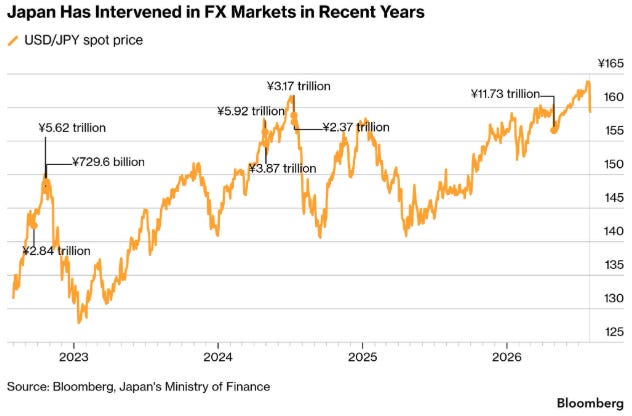
Japan has intervened multiple times as USD/JPY entered deep weakness zones, but the scale of this latest round significantly surpasses previous efforts. History also shows that exchange rates typically revert to previous trends if interest rate differentials and fundamental drivers remain unchanged. -
Source: Bloomberg, Japanese Ministry of Finance.
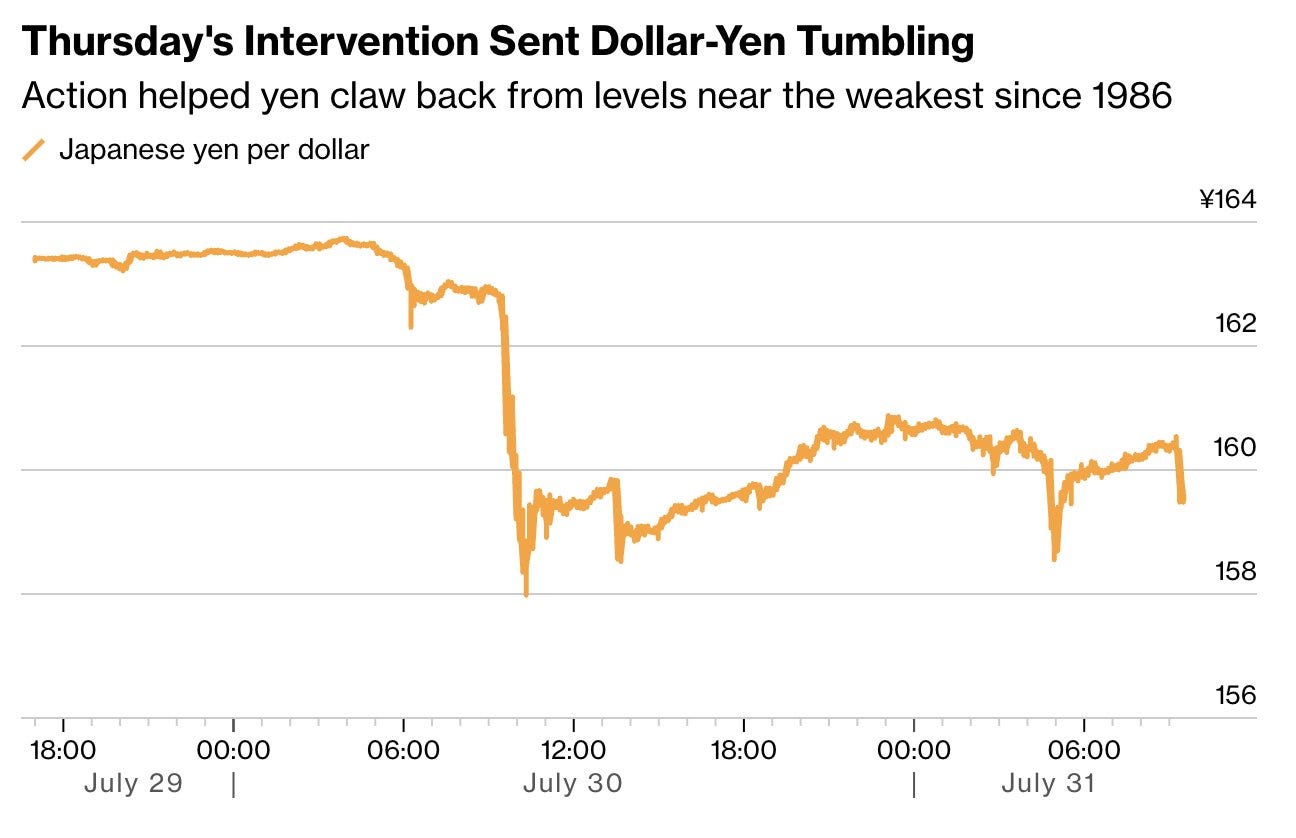
Subsequently, the exchange rate staged a sharp reversal. USD/JPY plunged below 160 before briefly touching near 158. Based on government account fluctuations and money market flows, analysts estimate Japan may have spent approximately
8.45 trillion yen
, equivalent to nearly
$52.8 billion
, in a single session. If confirmed, this would rank among the largest yen-support operations ever recorded.
Image
Image
USD/JPY dropped from near 164 to below 158 -
Source: Bloomberg.
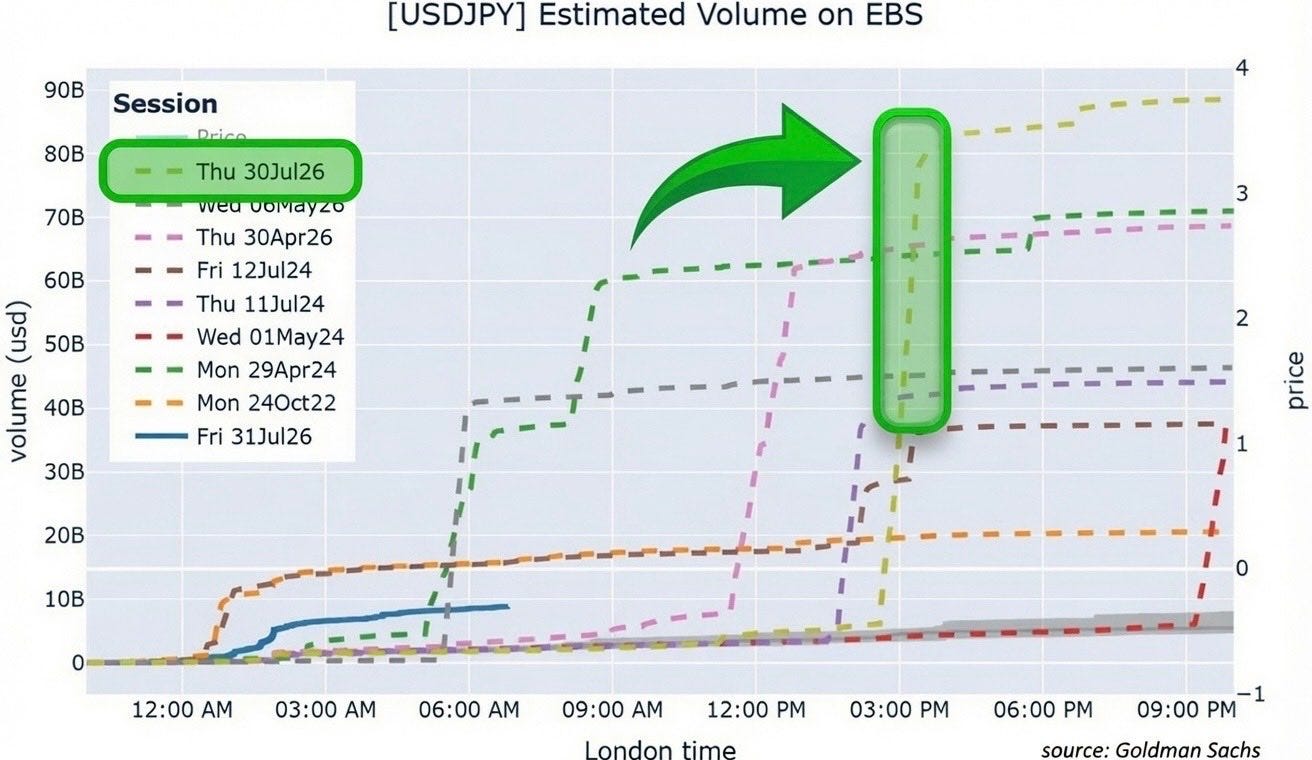
The unusual scale of the trading session also appeared in EBS data, one of the most critical interbank FX platforms. Estimated USD/JPY volume on July 30 surged to nearly
$90B
, far exceeding most previous interventions. Most of the spike occurred during a brief window in the London afternoon, coinciding with a sharp rally in the yen.
Image
Image
USD/JPY volume on EBS spiked to nearly 90 billion dong on July 30. This total volume includes both official transactions and the subsequent reactions of banks, investment funds, and market makers following the initial reversal.
- Source: Goldman Sachs.
The $90B figure does not mean the entire transaction volume belonged to the Japanese government. However, it shows that this was far more than a routine reaction to a policy statement. An official buying flow can trigger the initial shock, after which private markets amplify the volatility through position closing, de-leveraging, and risk hedging.
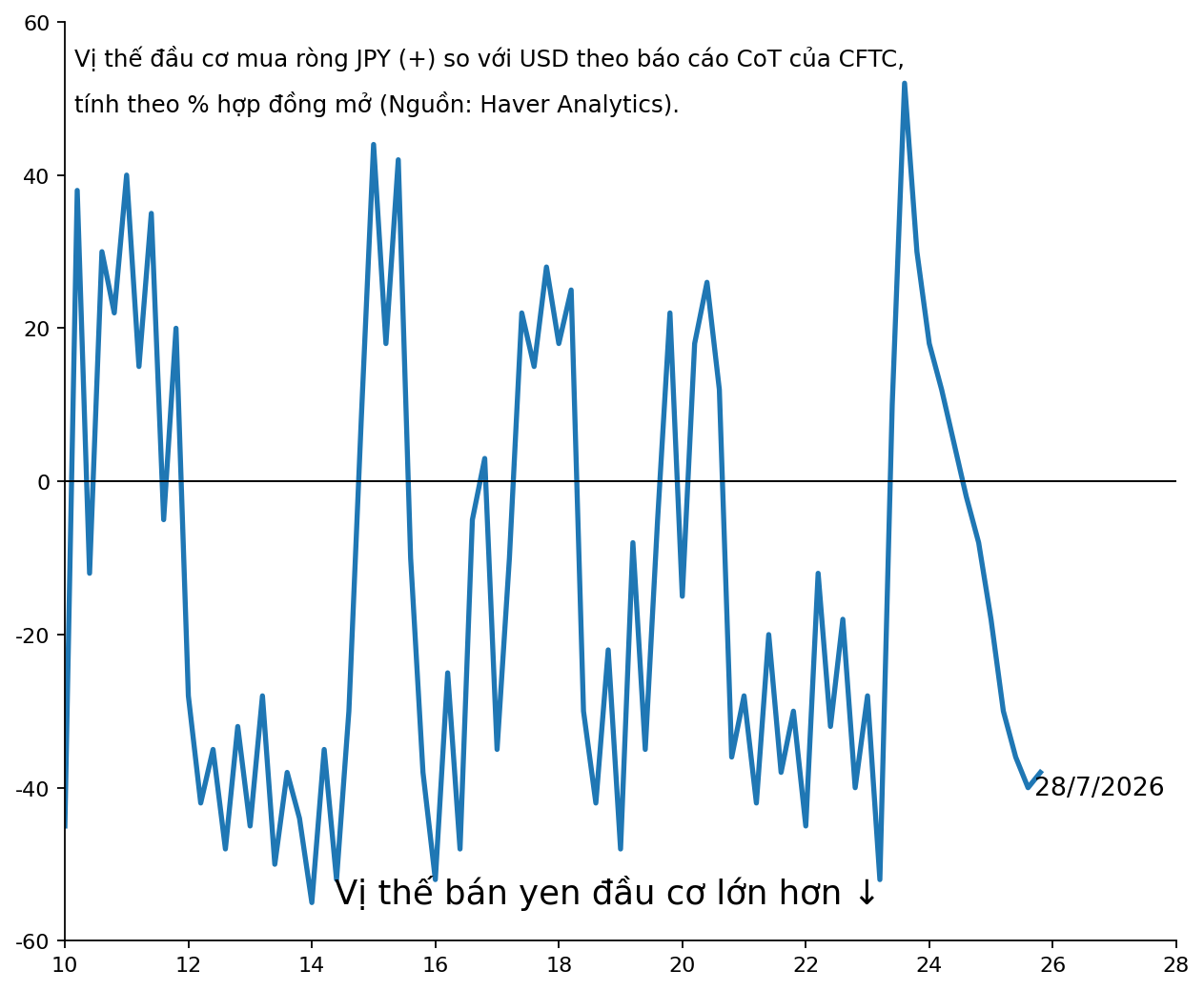
This was particularly crucial because, prior to the intervention, the market was heavily skewed to one side. CFTC data through July 28 showed speculative yen-versus-dollar positions at around
-40% of total open interest
, sitting near extreme net-short territory in recent history. When the exchange rate suddenly reversed, these positions became fuel for a massive short squeeze.
Speculative positioning on the yen had tilted heavily toward the short side ahead of the late-July intervention. When the exchange rate reversed, position-closing buybacks amplified the yen's surge. -
Việc Scott Bessent sử dụng New York Fed để hỗ trợ đồng yen quan trọng hơn quy mô của một giao dịch ngoại hối đơn lẻ. Nó cho thấy Bộ Tài chính Mỹ hiểu rằng biến động tại đầu dài của đường cong không chỉ bắt nguồn từ nỗi lo lạm phát quen thuộc, mà còn từ những dòng vốn đang dịch chuyển trong hệ thống tài chính toàn cầu. The transmission mechanism unfolds in three steps:
Direct buying flow:
The Ministry of Finance sells foreign currency assets and buys yen, instantly shifting the exchange rate.
Cut-loss buybacks:
Investors who shorted the yen must close positions or top up collateral, generating additional buying demand without requiring direct government funding.
Volatility repricing:
The cost of buying options to protect against a yen rally rises, making it more expensive to maintain short positions.
The latter two steps determine the bulk of the short-term reaction strength. Japan cannot continuously buy back every amount of yen sold across global markets. A more effective approach is to create a shock large enough that yen sellers become buyers themselves.
The timing of the trades also helped amplify the impact. A large buy order executed during thin liquidity can push the exchange rate much further than the same size during peak hours. As USD/JPY pierced key stop-loss levels, automated trading and bank hedging further propelled the yen higher.
However, an overcrowded short position only explains why the initial reaction was so strong; it does not prove the yen has entered a sustainable uptrend. Once most speculative positions are unwound, the exchange rate must still contend with fundamental headwinds such as the US-Japan interest rate differential, energy prices, and outbound capital flows.
The longer-term efficacy of the intervention thus hinges on the authorities' ability to maintain uncertainty. A large, one-off trade can quickly devolve into an opportunity for investors to sell the yen at better prices. Conversely, US involvement, rate checks by the New York Fed, and the potential for action across multiple currency pairs make it difficult for the market to gauge the timing and scope of the next intervention.
The 8.45 trillion yen figure remains an estimate derived from market cash flows rather than official settlement data. But three signals - the steep drop in USD/JPY, EBS volume near $90B, and massive prior short positions - together indicate that this was a campaign whose scale and reach far exceeded a routine warning.
→
Japan did not merely use reserves to buy yen. Tokyo engineered a shock large enough to turn yen short positions from a near one-way trade into a source of sudden losses.
The impact this time was even stronger than past unilateral interventions because yen sellers were no longer facing Tokyo alone.
3.3. The US shifts from verbal support to balance sheet deployment
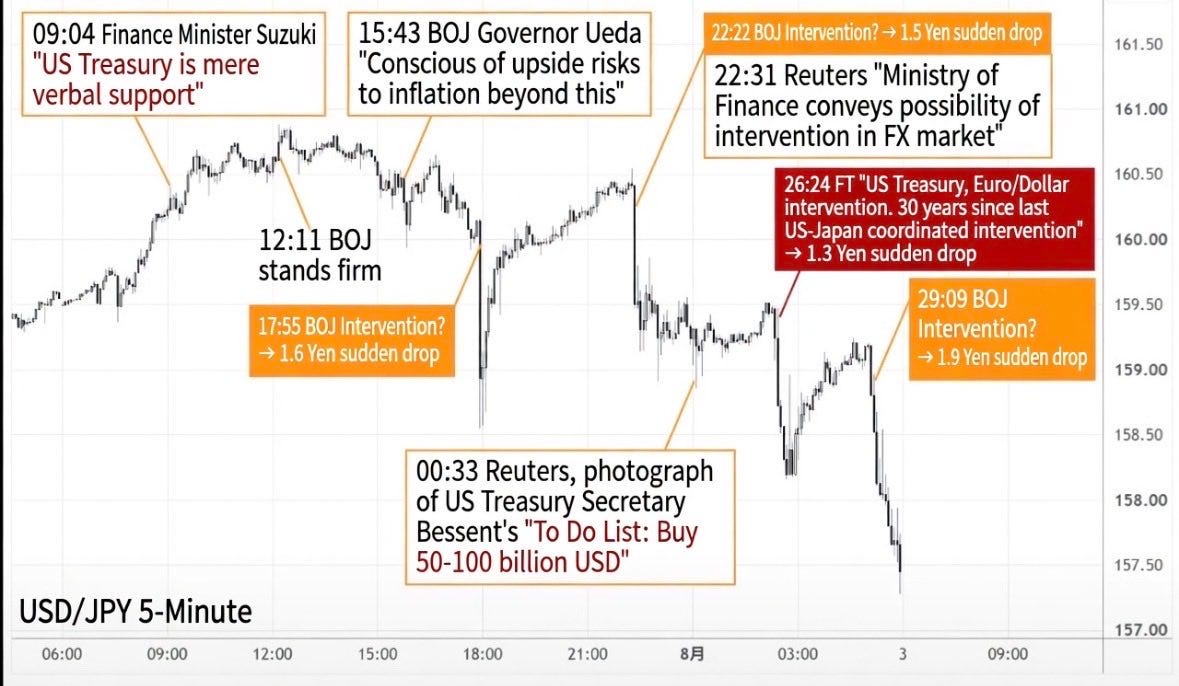
Việc Scott Bessent sử dụng New York Fed để hỗ trợ đồng yen quan trọng hơn quy mô của một giao dịch ngoại hối đơn lẻ. Nó cho thấy Bộ Tài chính Mỹ hiểu rằng biến động tại đầu dài của đường cong không chỉ bắt nguồn từ nỗi lo lạm phát quen thuộc, mà còn từ những dòng vốn đang dịch chuyển trong hệ thống tài chính toàn cầu. Yet day-of developments showed that words have limited impact. Statements by Japan's Finance Minister regarding US support and the BOJ Governor's inflation warnings caused USD/JPY to fluctuate, but were not enough to reverse the trend. Deeper drops only materialized when the market began suspecting actual yen-buying flows.
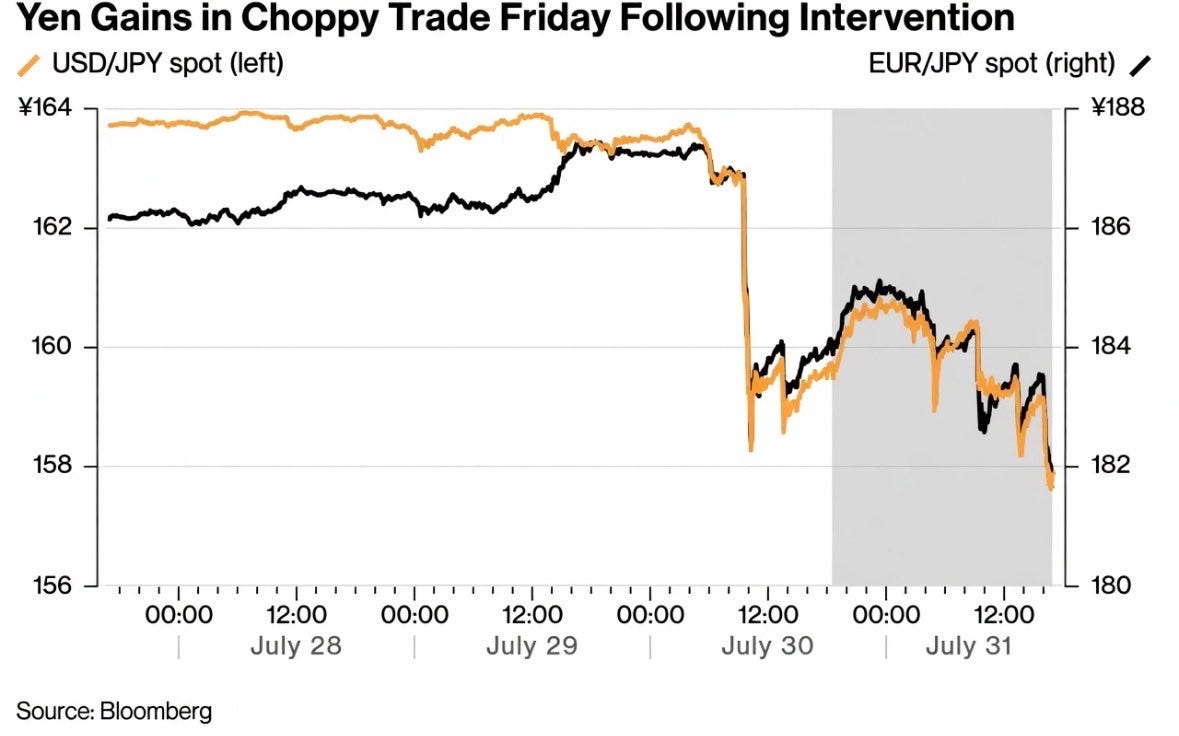
Five-minute chart data for USD/JPY showed multiple sudden drops ranging from 1.3 to 1.9 yen around times interpreted by the market as intervention windows. Subsequently, Reuters reported that Japan's Ministry of Finance had signaled readiness to act, while the Financial Times reported that the US Treasury had also participated via the New York Fed. From levels above 161, USD/JPY eventually retreated toward nearly 157.5.
Image
Image
USD/JPY fell in multiple sudden drops following intervention signals from Japan and reports of US participation. Verbal remarks drove initial volatility, but larger drawdowns emerged around times when the market suspected actual trades. - Source: Reuters, Financial Times, and market data.
Not every decline on the chart could be immediately confirmed as a government trade. Japan typically publishes intervention data with a lag, forcing the market to infer from exchange rate movements, cash flows, and contemporaneous reports. Nonetheless, the sequence of reactions still signaled a critical shift: shorting the yen was no longer a trade guided solely by US-Japan rate differentials. The first tipping point came when the New York Fed initiated rate checks. The fact that the US execution arm asked major banks for quotes signaled that the Treasury was no longer sitting on the sidelines. Afterwards, the Financial Times reported that the New York Fed sold euros to buy yen on behalf of the US Treasury. If fully confirmed in official data, this would mark the first time Washington and Tokyo coordinated to buy yen to support the Japanese currency since 1998.The New York Fed was reported to have asked major banks to check EUR/JPY rates, indicating Washington was monitoring yen weakness across multiple currency crosses and preparing for potential action.
The critical change lay not in the absolute size of the trade, but in the fact that Washington had deployed real assets into the campaign. The US Treasury was no longer just stating that the yen was too weak; it accepted shrinking a portion of its euro-denominated reserves to increase its yen assets.
Nor did the US need to deploy funds matching Japan's scale to command a major impact. Even if Japan deployed over $50 billion and Washington bought only $5–$10 billion, the US contribution remained comparatively modest. Yet the appearance of a new player altered the entire calculus for yen sellers: Tokyo was no longer acting alone: yen-buying operations could be coordinated across Asian and New York trading hours. The scope was no longer restricted to USD/JPY: the US Treasury could utilize euro assets and trade in EUR/JPY.
The next move is harder to predict:
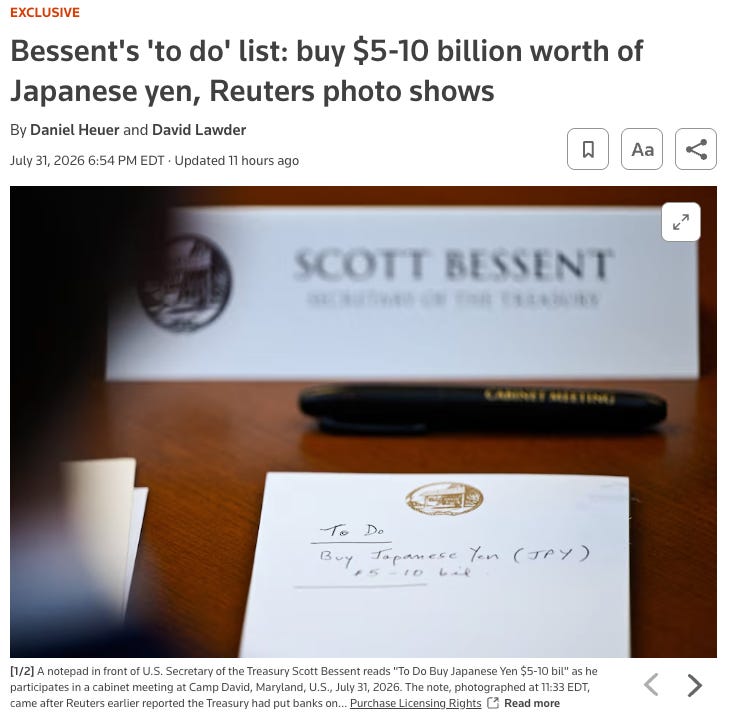
rate checks may precede trades without providing certainty on timing or size. FUN FACT - Bessent's sticky note
Image Image
A note spotted in Treasury Secretary Scott Bessent's notebook indicated that a yen-buying scale of $5–$10 billion had been under consideration. This scrawl does not confirm the final amount executed, but reinforces the conjecture that Washington had prepared to deploy reserve assets rather than merely issuing warnings.
A relatively small trade can still pack a punch when originating from a player the market had not factored in. Previously, yen sellers primarily monitored Japanese reserves, intervention history, and Tokyo's tolerance thresholds. Once the US Treasury joined the fray, those metrics were no longer sufficient. Investors also had to weigh:
the US Treasury Secretary's strategy;
the size and asset composition of the Exchange Stabilization Fund;
the likelihood of further trades by the New York Fed; the degree of coordination between Washington and Tokyo.
The US also had its own distinct interests. A too-rapid depreciation of the yen could impact the US through multiple channels. A stronger dollar pressures US exporters, while Japan's Ministry of Finance or Japanese investors might need to sell overseas assets to raise funds for yen defense. If yen-borrowing trades grow too unwieldy, an abrupt reversal could even spark sell-offs across multiple global markets. An orderly weakening of the yen is primarily a domestic economic issue for Japan. But a yen targeted by one-sided speculation can escalate into a systemic risk for the entire financial architecture.
This explains why the US Treasury could buy yen while the FOMC maintained a hawkish stance on inflation: monetary policy seeks to maintain enough pressure to drive inflation down;
exchange rate policy aims to prevent rate differentials from spawning an oversized and uncontrollable speculative position.
Two distinct objectives, albeit stemming from the same US-Japan rate gap.
→
The US did not need greater resources than Japan; it simply needed to make the cost of betting that Tokyo stood isolated prohibitively high.
Washington's participation thus marked a transition from verbal backing to tangible asset support. But what made this campaign even more exceptional was the specific asset class the US chose to sell.
3.4. Why did selling euros broaden the intervention to the entire yen-funded trading system?
If the sole objective was to push USD/JPY down, the most direct path would be selling dollars and buying yen. The reported sale of euros by the New York Fed on behalf of the Treasury suggested the campaign targeted a broader issue: the yen was being utilized as a funding currency for numerous global trades, not just within the dollar pair.
First and foremost, selling euros to buy yen did not mean the US was opening a massive speculative position against the single European currency. The US already held euro-denominated reserve assets. The trade merely trimmed euro holdings while augmenting yen holdings.
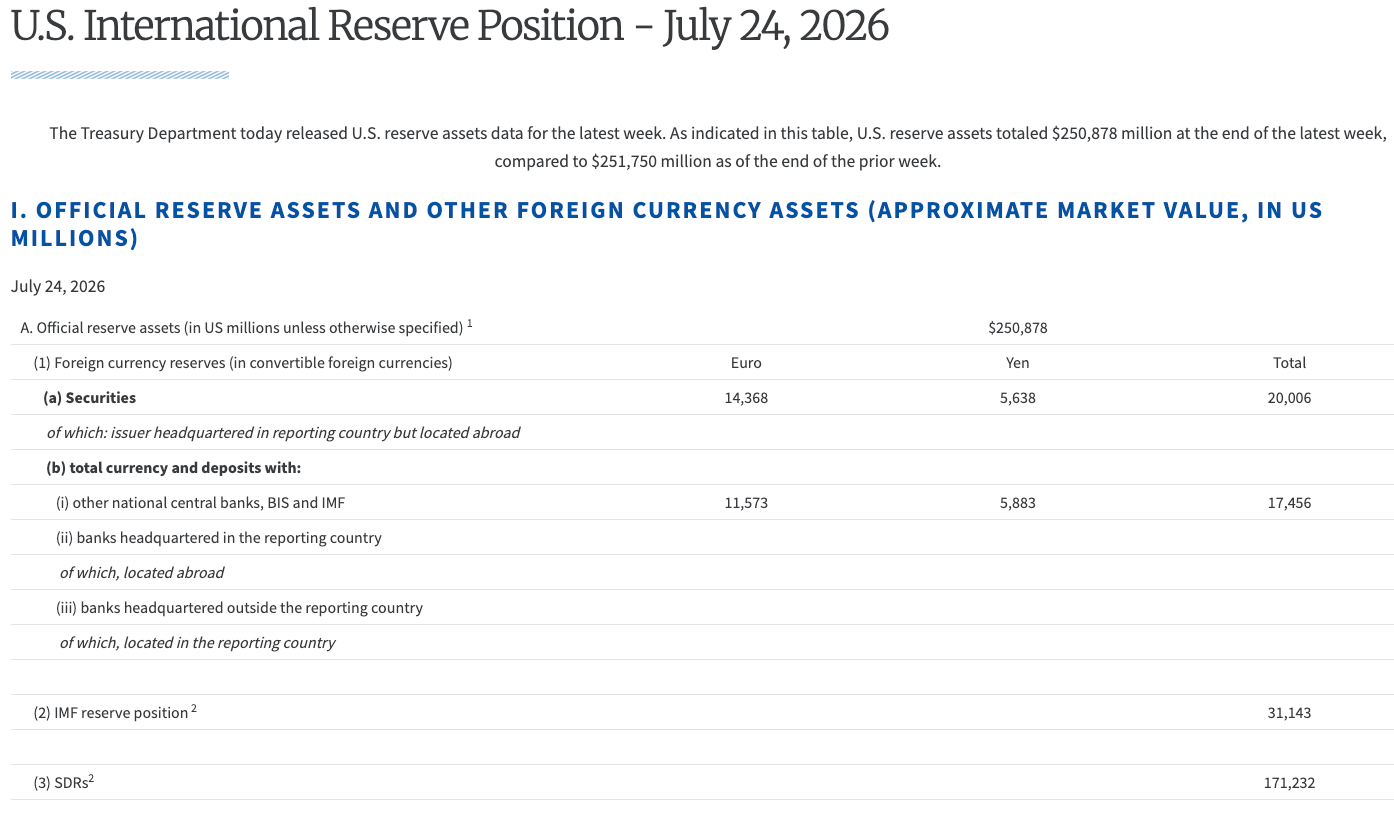
Việc Scott Bessent sử dụng New York Fed để hỗ trợ đồng yen quan trọng hơn quy mô của một giao dịch ngoại hối đơn lẻ. Nó cho thấy Bộ Tài chính Mỹ hiểu rằng biến động tại đầu dài của đường cong không chỉ bắt nguồn từ nỗi lo lạm phát quen thuộc, mà còn từ những dòng vốn đang dịch chuyển trong hệ thống tài chính toàn cầu. Data from July 24 showed US reported foreign currency assets included:
approximately $14.37 billion in euro-denominated securities;
approximately $11.57 billion in euro deposits;
approximately $5.64 billion in yen-denominated securities;
approximately $5.88 billion in yen deposits.
These figures aggregate assets tied to the Treasury's Exchange Stabilization Fund and Federal Reserve accounts. Consequently, one cannot automatically assume all euro holdings resided in an account freely deployable by the Treasury. US foreign exchange reserves comprise euro and yen securities and deposits. Selling euros to buy yen can be executed as a compositional adjustment in reserve assets rather than requiring additional dollar funding. -
Source: U.S. Treasury. The US Treasury has not disclosed the official rationale behind selecting EUR/JPY. Nonetheless, the trade structure produced three clear impacts:Avoiding direct signals that the US wants a weaker dollar If Washington sold dollars to buy yen, the market might interpret it as the US actively seeking to devalue its own currency. Utilizing euros as the funding source helped sidestep that sensitive messaging.Preventing yen short positions from migrating to other currency pairs
A stronger yen across multiple crosses exerts pressure on myriad strategies relying on the yen as a funding currency, rather than just impacting dollar-yen trades. Yen-funded trading in reality extends far beyond the simplistic paradigm of 'borrowing yen to buy US Treasuries.' Yen can be borrowed to invest in:
European corporate bonds; emerging market bonds;equities;
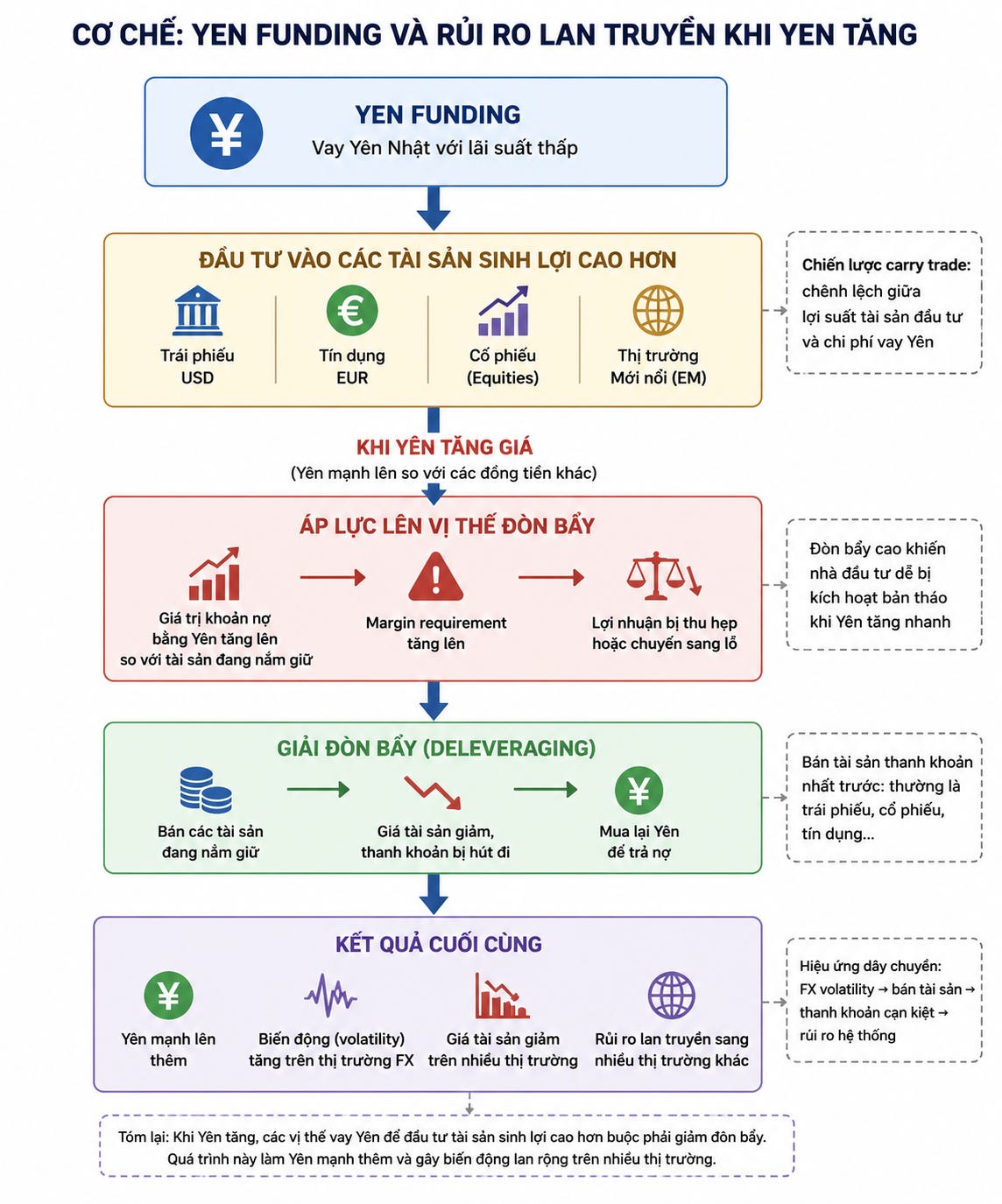
These positions do not necessarily manifest directly as USD/JPY. But all of them hinge on two assumptions: that the yen remains weak and FX volatility stays sufficiently low. When the yen rallies sharply, the reversal mechanism kicks in:
the value of yen liabilities rises relative to held assets;
margin requirements increase; fund risk limits contract;investors must buy back yen;
to raise liquidity, they liquidate assets acquired via yen funding. An exchange rate shock can thus spill over into bonds, credit, and equities.
However, this does not mean a flight from the yen carry trade has begun. Corporate bond yield spreads have not widened uncontrollably, equity indices have not reflected a wave of global deleveraging, and the Treasury market continues to operate normally.
Currently, EUR/JPY trading mainly amplifies tail risk, forcing investors to pay higher insurance premiums for the likelihood of continued government intervention. ->
Selling euros to buy yen turns a campaign to defend USD/JPY into a warning for the entire system of yen-funded trades. The perimeter of defense has been expanded. The next question is whether governments can alter the factors driving yen weakness, or merely buy time before interest rate differentials, oil prices, and capital flows resume their dominance over the market.
3.5. EUR/JPY broadens the risk of a yen carry trade reversal The yen carry trade is often described very simply: investors borrow yen at a low interest rate, convert it into a higher-yielding currency or asset, and pocket the spread.
In reality, this system is much broader. Yen funding can be used to buy dollar bonds, euro credit, assets in emerging economies, equities, or various other complex investment strategies. Therefore, a position does not necessarily appear directly in the form of selling USD/JPY.
When the yen surges, the reversal process typically unfolds in three steps:
Yen-denominated debt becomes more expensive
Investors need more dollars or euros to buy back the same amount of borrowed yen.
Volatility and margin requirements rise
Việc Scott Bessent sử dụng New York Fed để hỗ trợ đồng yen quan trọng hơn quy mô của một giao dịch ngoại hối đơn lẻ. Nó cho thấy Bộ Tài chính Mỹ hiểu rằng biến động tại đầu dài của đường cong không chỉ bắt nguồn từ nỗi lo lạm phát quen thuộc, mà còn từ những dòng vốn đang dịch chuyển trong hệ thống tài chính toàn cầu. Investors sell assets and buy back yen
Buying back yen drives the currency higher, while selling assets exerts pressure across multiple markets.
If the government only intervenes in USD/JPY, part of the trade can shift to EUR/JPY. The New York Fed's reported sale of euros to buy yen makes the campaign harder to evade: the yen is supported simultaneously against both the dollar and the euro.
Image
Image
The yen's rally across multiple crosses shows that pressure is not concentrated solely in the USD/JPY pair.
Even so, there is still insufficient evidence that a global flight has begun:
corporate bond yield spreads have not widened uncontrollably;
equity indices have not reflected widespread debt reduction;
Treasury market liquidity remains functional;
funding stress has not simultaneously spilled over into multiple asset classes.
Intervention currently mainly raises the probability of a bad scenario, rather than confirming that it has occurred.
-> Intervention in EUR/JPY broadens the scale of the yen's advance, but a yen carry trade reversal only becomes a financial accident when funding pressure forces multiple markets to deleverage together.
This is why investors need to monitor asset correlation and liquidity conditions rather than merely looking at end-of-day closing prices. PART IV - HOW LONG CAN INTERVENTION KEEP THE YEN AFLOAT?
4.1. Intervention alters the pace, but not yet the equilibrium The fall in USD/JPY from near 164 to the 157–158 zone is sharp enough to inflict losses on yen shorts, but not enough to prove that the Japanese currency has entered a sustainable uptrend.
Intervention has altered the pace, volatility, and risk profile of the exchange rate. However, most of the long-term drivers of yen weakness remain intact.
Interest rate differentials:
short-term rates in Japan remain significantly lower than in the US, making it attractive to borrow yen to invest in higher-yielding assets.
Oil import bills:
high energy prices force Japanese companies to buy more foreign exchange to pay for imports, increasing demand to sell the yen.
Foreign assets:
households, insurance companies, pension funds, and Japanese institutions still hold massive amounts of overseas bonds and equities.
The path of US interest rates:
the Fed has not shifted into a deep enough rate-cutting cycle to erase the dollar's yield advantage.
Fiscal uncertainty and Japanese government bonds:
larger JGB supply and the fiscal outlook prompt investors to demand higher yields to hold Japan's long-term assets.
Intervention can still forge a new defensive zone. After authorities demonstrate readiness to act near 164, investors will find it harder to short the yen with the same leverage as before. Each return of the exchange rate to elevated levels will carry the risk of another large yen-buying intervention.
This makes yen-selling trades less attractive, even if the fundamentals have not changed.
However, this mechanism also has its limits. If interest rate differentials remain wide, a strong yen will gradually create a fresh entry point for carry trades:
Investors borrow yen at low costs.
Việc Scott Bessent sử dụng New York Fed để hỗ trợ đồng yen quan trọng hơn quy mô của một giao dịch ngoại hối đơn lẻ. Nó cho thấy Bộ Tài chính Mỹ hiểu rằng biến động tại đầu dài của đường cong không chỉ bắt nguồn từ nỗi lo lạm phát quen thuộc, mà còn từ những dòng vốn đang dịch chuyển trong hệ thống tài chính toàn cầu. Investors bet that authorities cannot spend tens of billions of dollars every time the exchange rate rebounds.
Intervention can thus change the speed at which the exchange rate returns to equilibrium, but it is unlikely to change the equilibrium itself if US and Japanese monetary policies continue to move in opposite directions.
This tool is most effective when serving as a bridge: buying time for the BOJ to raise rates, oil prices to cool, or the Fed to shift to a softer stance.
->
Authorities have proven they can make yen sellers lose money; they have not proven the yen can sustain its strength without narrowing the interest rate differential.
Intervention buys time. The value of that time depends on how the BOJ uses it.
4.2. The BOJ must support the yen without disrupting the JGB market
The BOJ faces a difficult dilemma. To sustainably support the yen, the central bank must convince the market that Japanese interest rates will keep rising and the gap with the US will narrow.
Yet each rate hike also pushes up JGB yields, increasing domestic funding costs and weighing on a system accustomed to near-zero rates for years.
At its July 31 meeting, the BOJ kept the overnight rate around 1%, while one member voted to raise it to 1.25%. This decision avoided creating another shock immediately after the FX intervention, but the dissent and tougher inflation language show that policy momentum still tilts toward continued normalization.
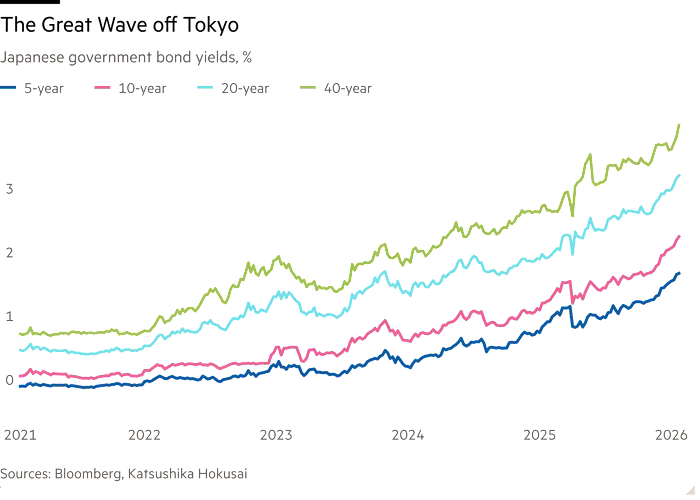
The greatest difficulty lies in the long end of the JGB curve. Yields on 20-year, 30-year, and 40-year bonds have approached the 4% region, while the 10-year yield hovers around 3%.
The sharp rise across long tenors indicates that the market is pricing in more than just one or two rate hikes. Investors are also demanding extra compensation for:
imported inflation; government bond supply;
the fiscal outlook;
the BOJ's diminishing role as a price-insensitive buyer.
JGB yields on the 20-year, 30-year, and 40-year tenors are rising toward the 4% area, while the 10-year yield is nearing 3%. The steepness at the long end makes it difficult for the BOJ to support the yen via a hawkish stance without exerting additional pressure on the bond market.
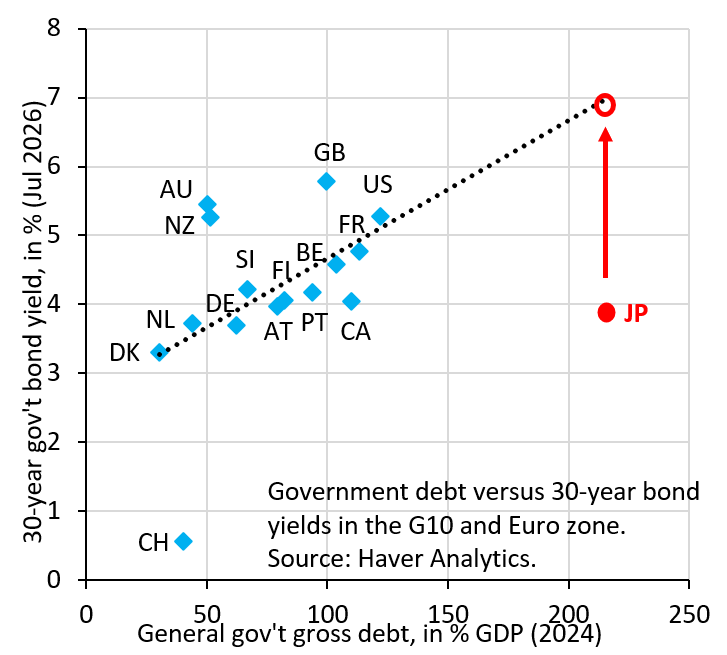
The deeper issue is that current yields may still fail to fully reflect Japan's public debt scale. Compared to other developed economies, Japan is a clear outlier: public debt exceeds 200% of GDP, yet the 30-year bond yield sits at only around 3.9%.
A simple trendline from peer countries implies that Japan's yield could be close to 7%, roughly 300 basis points higher than reality. This result is not an exact forecast, let alone proof that yields will hit double digits if the BOJ stops buying bonds. However, it suggests the BOJ's balance sheet may still provide a substantial layer of support for the JGB market.
Image
Image
Japan has the highest public debt in the sample, but its 30-year yield is significantly lower than the level implied by the trendline. This gap suggests that BOJ bond-buying still plays a vital role, although the comparison does not fully control for inflation, domestic savings, and investor composition. -
Source: Robin Brooks.
The BOJ must therefore balance three risks:
Hiking rates too slowly
The yen could remain weak, imported inflation prolonged, and the government forced to intervene in FX more frequently.
Hiking rates too quickly
JGB yields, mortgage rates, and corporate borrowing costs will surge. Banks and insurance companies may also sustain valuation losses on their bond portfolios.
Buying JGBs too aggressively
Market liquidity improves, but this action could be misconstrued as the BOJ returning to easing, thereby fueling downward pressure on the yen.
Therefore, the BOJ can remain hawkish on inflation while supporting JGB market liquidity. The central bank does not necessarily have to choose between hiking rates and staying entirely on the sidelines.
A more balanced approach is to:
continue raising short-term rates in incremental steps;
buy JGBs only when trading becomes disorderly;
support auctions and liquidity rather than defending a fixed yield target;
avoid sending signals that yield curve control has returned.
This distinction is vital. If the BOJ attempts to defend a specific yield level, the market may interpret it as a return to easing by the central bank. In that case, the two policies would send conflicting messages: the Ministry of Finance buys yen to strengthen the currency, while the BOJ injects liquidity in a way that weakens the yen.
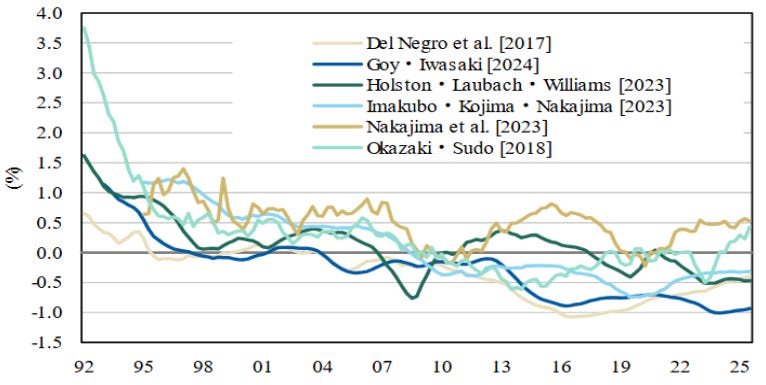
Việc Scott Bessent sử dụng New York Fed để hỗ trợ đồng yen quan trọng hơn quy mô của một giao dịch ngoại hối đơn lẻ. Nó cho thấy Bộ Tài chính Mỹ hiểu rằng biến động tại đầu dài của đường cong không chỉ bắt nguồn từ nỗi lo lạm phát quen thuộc, mà còn từ những dòng vốn đang dịch chuyển trong hệ thống tài chính toàn cầu. Japan's neutral real interest rate models also show that the room for rate hikes is not limitless. Four out of six models estimate neutral real rates to be negative, with a median near -0.5%.
Japan's estimated neutral real rate models range from nearly -1% to +0.5%, with most results falling below zero. The wide dispersion indicates that r-star should be viewed as a policy zone rather than a precise point. -
Source: Del Negro et al.; Goy-Iwasaki; Holston-Laubach-Williams; Imakubo-Kojima-Nakajima; Nakajima et al.; Okazaki-Sudo.
If inflation stabilizes at 2%, this implies a neutral nominal rate of about 1.5%, though estimates span a wide range from roughly 1% to 2.5%.
This suggests the BOJ may have room for about two more 25 basis point hikes before rates approach certain neutral estimates. A longer tightening cycle will require clear evidence that wages, domestic demand, and core inflation have undergone a structural shift.
->
The BOJ must be hawkish enough to make yen borrowing less appealing, but not so hawkish that supporting the exchange rate triggers a crisis at the long end of the JGB market.
The US can help Tokyo buy time. Only the BOJ can alter interest rate differentials enough to make that time useful.
4.3. Intervention could spill over to US Treasuries through three channels
The link between Japan's support for the yen and the Treasury market is often described through a simple chain: Tokyo sells US Treasuries for dollars, then sells dollars to buy yen, driving Treasury yields higher.
This channel may exist, but not every intervention forces the Japanese Ministry of Finance to sell US bonds during the very same session. Foreign exchange reserves are also held in deposits, short-term instruments, and assets that can serve as collateral to raise dollars. Japan can also pre-position cash or sell assets after FX trades have taken place.
Vì vậy, việc yen tăng và Treasury bị bán cùng lúc chưa đủ để xác nhận Bộ Tài chính Nhật đã trực tiếp gây ra toàn bộ biến động. Tuy nhiên, thị trường vẫn đặc biệt nhạy cảm với khả năng này vì quy mô tài sản liên quan rất lớn.
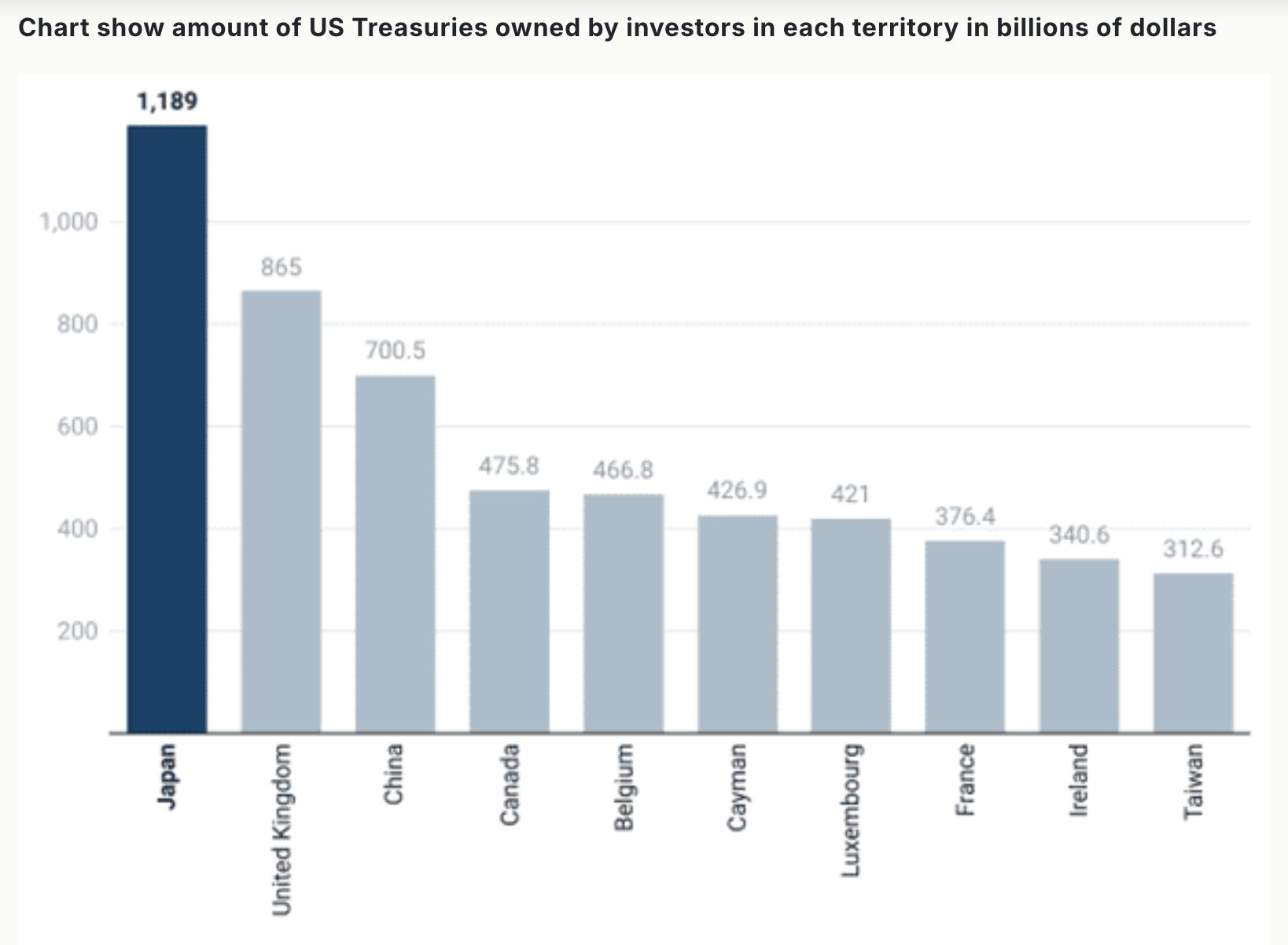
Nhà đầu tư tại Nhật đang nắm khoảng
Image Image
Nhà đầu tư tại Nhật Bản nắm giữ khoảng 1.19 nghìn tỷ USD Treasury, lớn nhất trong các thị trường nước ngoài được thống kê. Số liệu được phân loại theo nơi lưu ký hoặc lãnh thổ của nhà đầu tư, nên không nhất thiết phản ánh chính xác chủ sở hữu cuối cùng.
Hoạt động hỗ trợ yen có thể truyền sang Treasury qua ba con đường.
Thứ nhất là quản lý dự trữ quốc gia
.
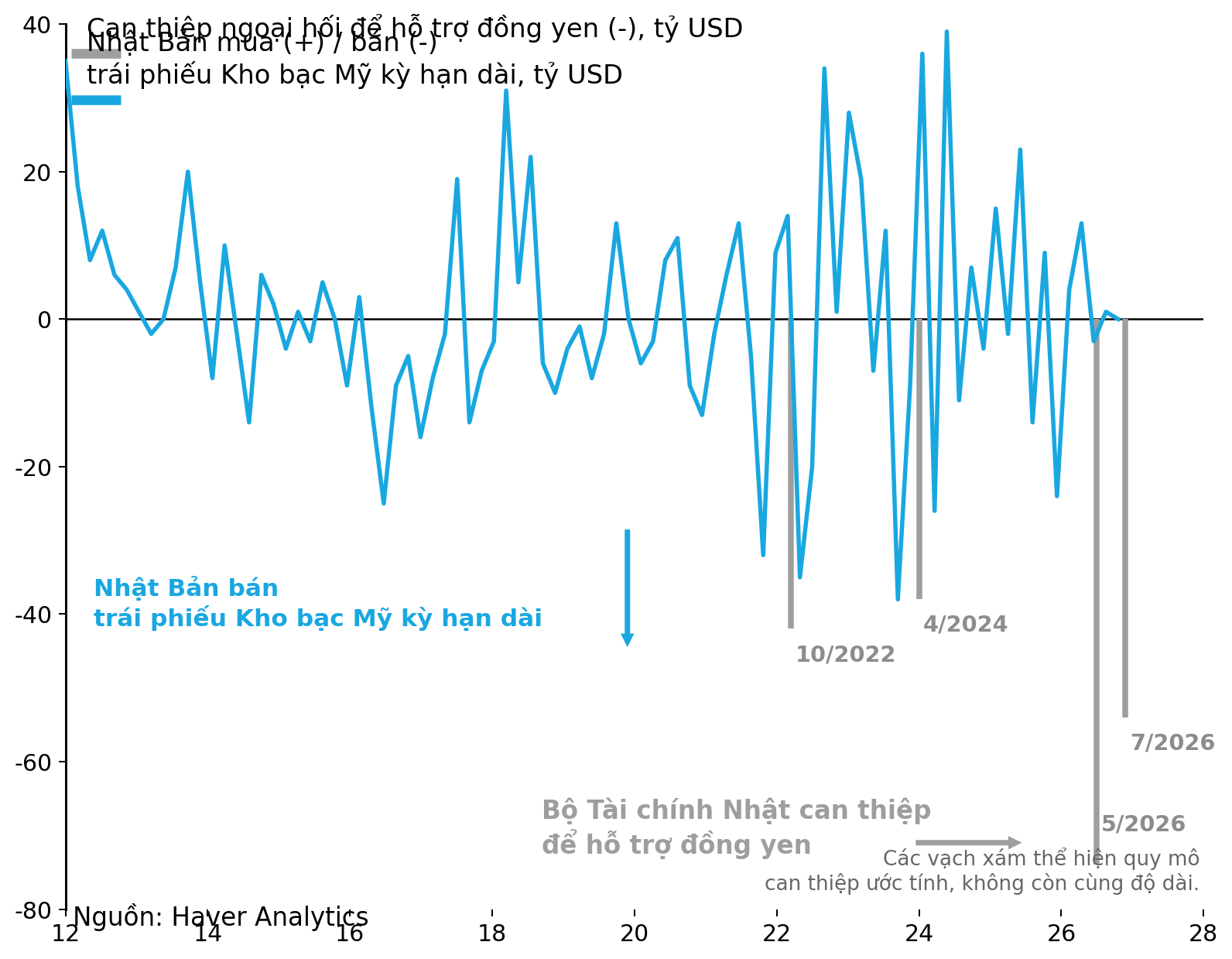
Bộ Tài chính Nhật có thể chuyển một phần tài sản bằng dollar thành tiền mặt để mua yen. Dữ liệu lịch sử cho thấy những tháng Nhật Bản can thiệp mạnh vào tháng 10/2022, tháng 4/2024 và năm 2026 cũng trùng với các đợt nhà đầu tư Nhật bán ròng Treasury dài hạn.
Đợt tháng 5/2026 thể hiện mối liên hệ rõ nhất trên biểu đồ: quy mô can thiệp tăng mạnh, trong khi dòng mua ròng Treasury dài hạn của Nhật giảm sâu xuống vùng âm. Điều này phù hợp với khả năng một phần tài sản bằng dollar đã được chuyển thành tiền mặt để hỗ trợ tỷ giá.
Tuy nhiên, đây vẫn chỉ là mối liên hệ theo thời gian. Số liệu Treasury bao gồm nhiều nhóm nhà đầu tư Nhật, còn dữ liệu theo tháng không cho biết chính xác ai đã bán, vào ngày nào và số tiền đó có được sử dụng trực tiếp cho can thiệp hay không.
Việc Scott Bessent sử dụng New York Fed để hỗ trợ đồng yen quan trọng hơn quy mô của một giao dịch ngoại hối đơn lẻ. Nó cho thấy Bộ Tài chính Mỹ hiểu rằng biến động tại đầu dài của đường cong không chỉ bắt nguồn từ nỗi lo lạm phát quen thuộc, mà còn từ những dòng vốn đang dịch chuyển trong hệ thống tài chính toàn cầu. Nguồn: Haver Analytics.
Thứ hai là việc các định chế Nhật tái phân bổ danh mục
.
Đây có thể là kênh chậm hơn nhưng kéo dài hơn hoạt động chính thức của chính phủ.
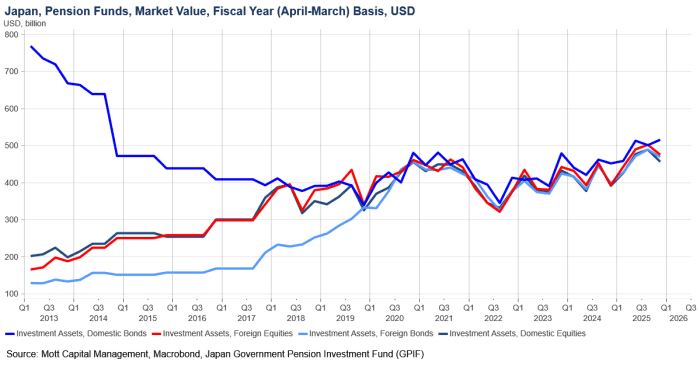
Danh mục của các quỹ hưu trí Nhật cho thấy giá trị tài sản nước ngoài đã tăng mạnh trong hơn một thập kỷ qua. Trong khi giá trị trái phiếu trong nước giảm sâu so với đầu thập niên 2010, trái phiếu và cổ phiếu nước ngoài dần trở thành những thành phần lớn trong danh mục.
Nếu yen mạnh hơn, lợi suất JGB trở nên hấp dẫn hơn và BOJ tiếp tục nâng lãi suất, các quỹ hưu trí, công ty bảo hiểm và ngân hàng Nhật có thể:
giảm mua thêm Treasury;
không tái đầu tư toàn bộ số trái phiếu đáo hạn;
chuyển một phần vốn về JGB; tăng phòng vệ tỷ giá đối với tài sản bằng dollar.
GPIF không trực tiếp thực hiện can thiệp và cũng không đại diện cho toàn bộ nhà đầu tư Nhật. Tuy nhiên, quy mô của quỹ cho thấy một đợt tái phân bổ rộng hơn có thể tạo ra dòng cầu yen lớn hơn nhiều so với một giao dịch chính thức riêng lẻ. Opinion: Japan's $1.8 trillion pension giant might bring money home. That could jolt U.S. stocks and the Fed. - MarketWatch
Opinion: Japan's $1.8 trillion pension giant might bring money home. That could jolt U.S. stocks and the Fed. - MarketWatch Giá trị trái phiếu và cổ phiếu nước ngoài trong danh mục các quỹ hưu trí Nhật đã tăng mạnh, trong khi trái phiếu trong nước giảm từ mức cao đầu thập niên 2010 trước khi phục hồi gần đây. Việc đưa một phần vốn trở lại tài sản bằng yen có thể hỗ trợ tỷ giá và làm giảm dòng vốn chảy sang Treasury. -
Nguồn: Mott Capital Management, Macrobond và GPIF. Thứ ba là sự đảo chiều của các giao dịch vay yen
. Đây là kênh khó quan sát nhất nhưng có thể tạo ra biến động nhanh nhất.
Một quỹ vay yen không nhất thiết là nhà đầu tư Nhật và cũng không nhất thiết chỉ mua Treasury. Nguồn vốn này có thể được dùng để đầu tư vào trái phiếu doanh nghiệp, cổ phiếu hoặc tài sản tại các thị trường khác. Khi yen tăng mạnh, giá trị khoản nợ bằng yen tăng lên, yêu cầu ký quỹ lớn hơn và quỹ phải giảm vị thế.
Trong quá trình đó, Treasury có thể bị bán đơn giản vì đây là một trong những tài sản dễ chuyển thành tiền mặt nhất. Việc bán không phản ánh sự suy giảm của chất lượng tín dụng Mỹ, mà phản ánh nhu cầu huy động thanh khoản để mua lại yen hoặc bổ sung tài sản bảo đảm.
Điều này cũng giải thích vì sao lợi suất Treasury đôi khi vẫn tăng trong một giai đoạn né tránh rủi ro. Nếu cú sốc bắt nguồn từ đòn bẩy và ký quỹ, nhà đầu tư có thể bán cả tài sản an toàn lẫn tài sản rủi ro.
Tác động cuối cùng không hoàn toàn một chiều. Nhà đầu tư Nhật có thể giảm mua Treasury khi JGB trở nên hấp dẫn hơn, nhưng họ cũng có thể quay lại nếu lợi suất Mỹ đủ cao hoặc chi phí phòng vệ tỷ giá giảm nhờ chênh lệch lãi suất Mỹ–Nhật thu hẹp. Điều quyết định không chỉ là yen mạnh hay yếu, mà là lợi suất sau phòng vệ của Treasury so với tài sản trong nước.
→
Rủi ro lớn nhất đối với Treasury chưa chắc đến từ việc Bộ Tài chính Nhật bán trái phiếu để mua yen. Nó có thể đến từ sự kết hợp giữa quản lý dự trữ, tái phân bổ của các định chế Nhật và việc nhà đầu tư toàn cầu bán những tài sản thanh khoản nhất khi nguồn vốn yen đảo chiều.
Can thiệp vì thế liên kết thị trường ngoại hối với thị trường trái phiếu ngay cả khi không thể xác định một lô Treasury cụ thể đã được chính phủ Nhật bán ra.
KẾT LUẬN - NHẬT BẢN, BRETTON WOODS 2.0 VÀ SỰ KẾT THÚC CỦA KỶ NGUYÊN CARRY
Việc Scott Bessent sử dụng New York Fed để hỗ trợ đồng yen quan trọng hơn quy mô của một giao dịch ngoại hối đơn lẻ. Nó cho thấy Bộ Tài chính Mỹ hiểu rằng biến động tại đầu dài của đường cong không chỉ bắt nguồn từ nỗi lo lạm phát quen thuộc, mà còn từ những dòng vốn đang dịch chuyển trong hệ thống tài chính toàn cầu. Nhật Bản nằm ở trung tâm của sự dịch chuyển đó. Trong nhiều thập kỷ, nền kinh tế này xuất khẩu lượng tiết kiệm khổng lồ ra nước ngoài. Lãi suất trong nước gần bằng 0 khiến đồng yen trở thành nguồn vốn rẻ cho nhà đầu tư toàn cầu, trong khi các ngân hàng, công ty bảo hiểm và quỹ hưu trí Nhật tích lũy lượng lớn trái phiếu Mỹ cùng những tài sản nước ngoài khác.
Hệ thống này giúp giữ lợi suất toàn cầu thấp hơn, hỗ trợ giá tài sản và tạo điều kiện cho nhiều chiến lược dựa trên đòn bẩy phát triển. Nhưng nó chỉ vận hành ổn định khi ba điều kiện cùng tồn tại: BOJ giữ lãi suất thấp, yen không tăng quá mạnh và nhà đầu tư tin rằng nguồn vốn Nhật sẽ tiếp tục chảy ra nước ngoài.
Cả ba điều kiện hiện đều bắt đầu lung lay.
Nếu Tokyo phải bảo vệ yen thường xuyên hơn, Bộ Tài chính Nhật có thể phải chuyển một phần dự trữ ngoại hối thành tiền mặt. Các định chế tư nhân cũng có thể giảm tài sản nước ngoài, tăng mua JGB hoặc nâng tỷ lệ phòng vệ tỷ giá. Cùng lúc đó, những quỹ vay yen có thể phải bán các tài sản thanh khoản nhất để đóng vị thế khi đồng tiền Nhật tăng mạnh.
Không phải mọi đợt can thiệp đều dẫn trực tiếp đến việc Nhật bán Treasury. Nhưng khi quốc gia có lượng nắm giữ trái phiếu Mỹ lớn nhất trong nhóm nhà đầu tư nước ngoài bắt đầu thay đổi cách quản lý dự trữ và phân bổ vốn, đầu dài của đường cong không thể đứng ngoài quá trình điều chỉnh.
Đó là lý do thời điểm này mang ý nghĩa lớn hơn một biến động thông thường của USD/JPY. Nó gợi nhớ đến một phiên bản mới của Plaza Accord: không nhất thiết là một hiệp định chính thức nhằm hạ giá dollar, mà là sự phối hợp giữa các chính phủ để ngăn chênh lệch chính sách tạo ra một vị thế tiền tệ quá lớn và mất trật tự.
Ở nghĩa rộng hơn, đây có thể là giai đoạn đầu của một
Bretton Woods 2.0
- một trật tự trong đó dòng vốn, dự trữ ngoại hối và quan hệ giữa các bảng cân đối quốc gia được tổ chức lại sau nhiều năm dựa vào lãi suất thấp, nới lỏng định lượng và nguồn vốn yen rẻ.
Cách nhìn này cũng giải thích vì sao không nên gán mọi mức tăng của lợi suất dài hạn cho lạm phát. Kỳ vọng lạm phát dài hạn chưa mất neo, trong khi chênh lệch lợi suất tín dụng chưa cho thấy thị trường đang chuẩn bị cho một chế độ lạm phát và vỡ nợ hoàn toàn mới. Phần đáng kể của đợt tăng lợi suất có thể đến từ những lực khác:
Treasury phải phát hành nhiều hơn;
BOJ dần giảm vai trò người mua trái phiếu không nhạy cảm với giá;
nhà đầu tư Nhật có thể tái phân bổ vốn;
giao dịch vay yen trở nên rủi ro hơn;
và người mua trái phiếu Mỹ yêu cầu mức bù cao hơn để hấp thụ lượng vốn dài hạn ngày càng lớn.
một nguồn tiết kiệm truyền thống đang bớt ổn định, trong khi những người đi vay lớn nhất lại cần nhiều vốn hơn trước. Điều này tạo ra một nghịch lý cho các ngân hàng trung ương. Nếu lợi suất dài hạn tăng vì dòng vốn, nguồn cung và phần bù kỳ hạn, tiếp tục giữ lãi suất chính sách quá cao có thể tạo ra hai lớp thắt chặt cùng lúc. Nhưng việc giảm lãi suất quá sớm cũng có thể khôi phục giao dịch vay yen và làm áp lực tỷ giá quay trở lại.
Một nền kinh tế toàn cầu đã phụ thuộc vào nguồn vốn rẻ trong nhiều năm không thể tháo bỏ đòn bẩy chỉ trong một đêm. Quá trình này cần được quản lý đủ chậm để tránh gây bán tháo đồng loạt, nhưng đủ rõ để thị trường hiểu rằng thời kỳ vay yen gần như miễn phí và nắm giữ tài sản dài hạn với phần bù rất thấp đang kết thúc.
Warsh muốn giá vốn được thị trường quyết định nhiều hơn. Bessent lại đang cố bảo đảm rằng quá trình định giá đó không biến thành một cú đảo chiều mất trật tự của toàn bộ hệ thống giao dịch bằng yen. Hai cách tiếp cận không hoàn toàn mâu thuẫn: một bên muốn giảm sự phụ thuộc vào hướng dẫn của ngân hàng trung ương, bên còn lại muốn ngăn quá trình chuyển đổi diễn ra quá nhanh.
→
Câu chuyện lớn không phải chỉ là Fed cứng rắn hơn hay Nhật Bản mua yen. Đó là sự kết thúc dần của một trật tự trong đó nguồn vốn yen rẻ, nới lỏng định lượng và dòng tiết kiệm Nhật giúp giữ lợi suất toàn cầu ở mức thấp.
Mỹ đang cố thoát khỏi thời kỳ trì trệ kéo dài bằng đầu tư, năng suất và mở rộng năng lực sản xuất. Nhật Bản đồng thời phải tái cấu trúc chính sách tiền tệ, thị trường trái phiếu và vai trò của mình trong hệ thống tài chính thế giới.
Vì vậy, đây chưa chắc là khởi đầu của một chế độ lạm phát mới. Nó có thể là khởi đầu của một chế độ vốn mới - nơi thị trường, thay vì ngân hàng trung ương, ngày càng quyết định mức lợi suất cần thiết để cân bằng tiết kiệm, đầu tư và rủi ro toàn cầu.
Thanh khoản thị trường được cải thiện, nhưng hành động này có thể bị hiểu là BOJ quay lại nới lỏng, qua đó gây thêm áp lực giảm giá lên yen.
Vì vậy, BOJ có thể cứng rắn với lạm phát nhưng vẫn hỗ trợ thanh khoản của thị trường JGB. Ngân hàng trung ương không nhất thiết phải lựa chọn giữa nâng lãi suất và hoàn toàn đứng ngoài.
Một cách tiếp cận cân bằng hơn là:
tiếp tục nâng lãi suất ngắn hạn từng bước;
chỉ mua JGB khi giao dịch trở nên mất trật tự;
hỗ trợ đấu giá và thanh khoản, thay vì bảo vệ một mức lợi suất cố định;
tránh gửi tín hiệu rằng cơ chế kiểm soát đường cong lợi suất đã quay trở lại.
Sự khác biệt này rất quan trọng. Nếu BOJ cố giữ một mức lợi suất cụ thể, thị trường có thể hiểu rằng ngân hàng trung ương đang quay lại nới lỏng. Khi đó, hai chính sách sẽ phát đi hai thông điệp trái ngược: Bộ Tài chính mua yen để làm đồng tiền mạnh hơn, còn BOJ bơm thanh khoản theo cách khiến yen yếu đi.
Ngược lại, nếu BOJ chỉ hành động khi nhu cầu đấu giá suy yếu, chênh lệch giá mua–bán mở rộng hoặc các ngân hàng trung gian không còn sẵn sàng giữ trái phiếu, họ có thể bảo vệ hoạt động của thị trường mà không ngăn quá trình định giá lại.
Các mô hình về lãi suất thực trung tính của Nhật cũng cho thấy dư địa nâng lãi suất không phải vô hạn. Bốn trong sáu mô hình ước tính mức lãi suất thực trung tính vẫn âm, với trung vị gần -0.5%.
Các mô hình ước tính neutral real rate của Nhật Bản trong khoảng gần -1% đến +0.5%, với phần lớn kết quả nằm dưới 0%. Độ phân tán lớn cho thấy r-star nên được xem là một vùng chính sách thay vì một điểm chính xác. -Nguồn: Del Negro và cộng sự; Goy–Iwasaki; Holston–Laubach–Williams; Imakubo–Kojima–Nakajima; Nakajima và cộng sự; Okazaki–Sudo.
Nếu lạm phát ổn định ở 2%, mức này hàm ý lãi suất danh nghĩa trung tính khoảng 1.5%, dù phạm vi ước tính rộng từ khoảng 1% đến 2.5%.
Điều đó cho thấy BOJ có thể còn dư địa nâng thêm khoảng hai lần, mỗi lần 25 điểm cơ bản, trước khi lãi suất tiến gần một số ước tính trung tính. Một chu kỳ tăng dài hơn sẽ cần bằng chứng rõ ràng rằng tiền lương, nhu cầu nội địa và lạm phát cơ bản đã thay đổi mang tính cấu trúc.
→ BOJ phải đủ cứng rắn để làm việc vay yen kém hấp dẫn hơn, nhưng không được cứng rắn đến mức biến việc hỗ trợ tỷ giá thành một cuộc khủng hoảng tại đầu dài của thị trường JGB.
Mỹ có thể giúp Tokyo mua thời gian. Chỉ BOJ mới có thể thay đổi chênh lệch lãi suất đủ để khoảng thời gian đó trở nên hữu ích.
4.3. Can thiệp có thể tác động sang Treasury Mĩ qua ba con đường
Mối liên hệ giữa việc Nhật Bản hỗ trợ đồng yen và thị trường Treasury thường được mô tả theo một chuỗi đơn giản: Tokyo bán trái phiếu Mỹ để lấy dollar, sau đó bán dollar mua yen, khiến lợi suất Treasury tăng.
Kênh này có thể tồn tại, nhưng không phải mọi đợt can thiệp đều buộc Bộ Tài chính Nhật bán trái phiếu Mỹ ngay trong cùng một phiên. Dự trữ ngoại hối còn được nắm giữ dưới dạng tiền gửi, công cụ ngắn hạn và tài sản có thể dùng làm thế chấp để huy động dollar. Nhật Bản cũng có thể chuẩn bị tiền mặt từ trước hoặc bán tài sản sau khi giao dịch ngoại hối đã diễn ra.
Vì vậy, việc yen tăng và Treasury bị bán cùng lúc chưa đủ để xác nhận Bộ Tài chính Nhật đã trực tiếp gây ra toàn bộ biến động. Tuy nhiên, thị trường vẫn đặc biệt nhạy cảm với khả năng này vì quy mô tài sản liên quan rất lớn.
Nhà đầu tư tại Nhật đang nắm khoảng 1.19 nghìn tỷ USD Treasury, cao hơn Anh với 865 tỷ USD và Trung Quốc với khoảng 700.5 tỷ USD. Con số này không hoàn toàn thuộc quyền sử dụng của chính phủ Nhật; nó còn bao gồm tài sản của ngân hàng, công ty bảo hiểm, quỹ hưu trí và nhà đầu tư tư nhân. Nhưng chỉ cần một phần nhỏ trong khối tài sản này thay đổi hướng cũng có thể ảnh hưởng đáng kể đến nhu cầu trái phiếu Mỹ.
Nhà đầu tư tại Nhật Bản nắm giữ khoảng 1.19 nghìn tỷ USD Treasury, lớn nhất trong các thị trường nước ngoài được thống kê. Số liệu được phân loại theo nơi lưu ký hoặc lãnh thổ của nhà đầu tư, nên không nhất thiết phản ánh chính xác chủ sở hữu cuối cùng.
Hoạt động hỗ trợ yen có thể truyền sang Treasury qua ba con đường.
Thứ nhất là quản lý dự trữ quốc gia. Bộ Tài chính Nhật có thể chuyển một phần tài sản bằng dollar thành tiền mặt để mua yen. Dữ liệu lịch sử cho thấy những tháng Nhật Bản can thiệp mạnh vào tháng 10/2022, tháng 4/2024 và năm 2026 cũng trùng với các đợt nhà đầu tư Nhật bán ròng Treasury dài hạn.
Đợt tháng 5/2026 thể hiện mối liên hệ rõ nhất trên biểu đồ: quy mô can thiệp tăng mạnh, trong khi dòng mua ròng Treasury dài hạn của Nhật giảm sâu xuống vùng âm. Điều này phù hợp với khả năng một phần tài sản bằng dollar đã được chuyển thành tiền mặt để hỗ trợ tỷ giá.
Tuy nhiên, đây vẫn chỉ là mối liên hệ theo thời gian. Số liệu Treasury bao gồm nhiều nhóm nhà đầu tư Nhật, còn dữ liệu theo tháng không cho biết chính xác ai đã bán, vào ngày nào và số tiền đó có được sử dụng trực tiếp cho can thiệp hay không.
Các đợt hỗ trợ yen từng xuất hiện cùng thời điểm Nhật Bản bán ròng Treasury dài hạn. Mối liên hệ đặc biệt rõ trong một số tháng can thiệp lớn, nhưng dữ liệu chưa chứng minh quan hệ một–một giữa dòng bán trái phiếu và giao dịch mua yen. - Nguồn: Haver Analytics.
Thứ hai là việc các định chế Nhật tái phân bổ danh mục. Đây có thể là kênh chậm hơn nhưng kéo dài hơn hoạt động chính thức của chính phủ.
Danh mục của các quỹ hưu trí Nhật cho thấy giá trị tài sản nước ngoài đã tăng mạnh trong hơn một thập kỷ qua. Trong khi giá trị trái phiếu trong nước giảm sâu so với đầu thập niên 2010, trái phiếu và cổ phiếu nước ngoài dần trở thành những thành phần lớn trong danh mục.
Nếu yen mạnh hơn, lợi suất JGB trở nên hấp dẫn hơn và BOJ tiếp tục nâng lãi suất, các quỹ hưu trí, công ty bảo hiểm và ngân hàng Nhật có thể:
giảm mua thêm Treasury;
không tái đầu tư toàn bộ số trái phiếu đáo hạn;
chuyển một phần vốn về JGB;
tăng phòng vệ tỷ giá đối với tài sản bằng dollar.
GPIF không trực tiếp thực hiện can thiệp và cũng không đại diện cho toàn bộ nhà đầu tư Nhật. Tuy nhiên, quy mô của quỹ cho thấy một đợt tái phân bổ rộng hơn có thể tạo ra dòng cầu yen lớn hơn nhiều so với một giao dịch chính thức riêng lẻ.
Giá trị trái phiếu và cổ phiếu nước ngoài trong danh mục các quỹ hưu trí Nhật đã tăng mạnh, trong khi trái phiếu trong nước giảm từ mức cao đầu thập niên 2010 trước khi phục hồi gần đây. Việc đưa một phần vốn trở lại tài sản bằng yen có thể hỗ trợ tỷ giá và làm giảm dòng vốn chảy sang Treasury. - Nguồn: Mott Capital Management, Macrobond và GPIF.
Thứ ba là sự đảo chiều của các giao dịch vay yen. Đây là kênh khó quan sát nhất nhưng có thể tạo ra biến động nhanh nhất.
Một quỹ vay yen không nhất thiết là nhà đầu tư Nhật và cũng không nhất thiết chỉ mua Treasury. Nguồn vốn này có thể được dùng để đầu tư vào trái phiếu doanh nghiệp, cổ phiếu hoặc tài sản tại các thị trường khác. Khi yen tăng mạnh, giá trị khoản nợ bằng yen tăng lên, yêu cầu ký quỹ lớn hơn và quỹ phải giảm vị thế.
Trong quá trình đó, Treasury có thể bị bán đơn giản vì đây là một trong những tài sản dễ chuyển thành tiền mặt nhất. Việc bán không phản ánh sự suy giảm của chất lượng tín dụng Mỹ, mà phản ánh nhu cầu huy động thanh khoản để mua lại yen hoặc bổ sung tài sản bảo đảm.
Điều này cũng giải thích vì sao lợi suất Treasury đôi khi vẫn tăng trong một giai đoạn né tránh rủi ro. Nếu cú sốc bắt nguồn từ đòn bẩy và ký quỹ, nhà đầu tư có thể bán cả tài sản an toàn lẫn tài sản rủi ro.
Tác động cuối cùng không hoàn toàn một chiều. Nhà đầu tư Nhật có thể giảm mua Treasury khi JGB trở nên hấp dẫn hơn, nhưng họ cũng có thể quay lại nếu lợi suất Mỹ đủ cao hoặc chi phí phòng vệ tỷ giá giảm nhờ chênh lệch lãi suất Mỹ–Nhật thu hẹp. Điều quyết định không chỉ là yen mạnh hay yếu, mà là lợi suất sau phòng vệ của Treasury so với tài sản trong nước.
→ Rủi ro lớn nhất đối với Treasury chưa chắc đến từ việc Bộ Tài chính Nhật bán trái phiếu để mua yen. Nó có thể đến từ sự kết hợp giữa quản lý dự trữ, tái phân bổ của các định chế Nhật và việc nhà đầu tư toàn cầu bán những tài sản thanh khoản nhất khi nguồn vốn yen đảo chiều.
Can thiệp vì thế liên kết thị trường ngoại hối với thị trường trái phiếu ngay cả khi không thể xác định một lô Treasury cụ thể đã được chính phủ Nhật bán ra.
KẾT LUẬN - NHẬT BẢN, BRETTON WOODS 2.0 VÀ SỰ KẾT THÚC CỦA KỶ NGUYÊN CARRY
Việc Scott Bessent sử dụng New York Fed để hỗ trợ đồng yen quan trọng hơn quy mô của một giao dịch ngoại hối đơn lẻ. Nó cho thấy Bộ Tài chính Mỹ hiểu rằng biến động tại đầu dài của đường cong không chỉ bắt nguồn từ nỗi lo lạm phát quen thuộc, mà còn từ những dòng vốn đang dịch chuyển trong hệ thống tài chính toàn cầu.
Nhật Bản nằm ở trung tâm của sự dịch chuyển đó. Trong nhiều thập kỷ, nền kinh tế này xuất khẩu lượng tiết kiệm khổng lồ ra nước ngoài. Lãi suất trong nước gần bằng 0 khiến đồng yen trở thành nguồn vốn rẻ cho nhà đầu tư toàn cầu, trong khi các ngân hàng, công ty bảo hiểm và quỹ hưu trí Nhật tích lũy lượng lớn trái phiếu Mỹ cùng những tài sản nước ngoài khác.
Hệ thống này giúp giữ lợi suất toàn cầu thấp hơn, hỗ trợ giá tài sản và tạo điều kiện cho nhiều chiến lược dựa trên đòn bẩy phát triển. Nhưng nó chỉ vận hành ổn định khi ba điều kiện cùng tồn tại: BOJ giữ lãi suất thấp, yen không tăng quá mạnh và nhà đầu tư tin rằng nguồn vốn Nhật sẽ tiếp tục chảy ra nước ngoài.
Cả ba điều kiện hiện đều bắt đầu lung lay.
Nếu Tokyo phải bảo vệ yen thường xuyên hơn, Bộ Tài chính Nhật có thể phải chuyển một phần dự trữ ngoại hối thành tiền mặt. Các định chế tư nhân cũng có thể giảm tài sản nước ngoài, tăng mua JGB hoặc nâng tỷ lệ phòng vệ tỷ giá. Cùng lúc đó, những quỹ vay yen có thể phải bán các tài sản thanh khoản nhất để đóng vị thế khi đồng tiền Nhật tăng mạnh.
Không phải mọi đợt can thiệp đều dẫn trực tiếp đến việc Nhật bán Treasury. Nhưng khi quốc gia có lượng nắm giữ trái phiếu Mỹ lớn nhất trong nhóm nhà đầu tư nước ngoài bắt đầu thay đổi cách quản lý dự trữ và phân bổ vốn, đầu dài của đường cong không thể đứng ngoài quá trình điều chỉnh.
Đó là lý do thời điểm này mang ý nghĩa lớn hơn một biến động thông thường của USD/JPY. Nó gợi nhớ đến một phiên bản mới của Plaza Accord: không nhất thiết là một hiệp định chính thức nhằm hạ giá dollar, mà là sự phối hợp giữa các chính phủ để ngăn chênh lệch chính sách tạo ra một vị thế tiền tệ quá lớn và mất trật tự.
Ở nghĩa rộng hơn, đây có thể là giai đoạn đầu của một Bretton Woods 2.0 - một trật tự trong đó dòng vốn, dự trữ ngoại hối và quan hệ giữa các bảng cân đối quốc gia được tổ chức lại sau nhiều năm dựa vào lãi suất thấp, nới lỏng định lượng và nguồn vốn yen rẻ.
Cách nhìn này cũng giải thích vì sao không nên gán mọi mức tăng của lợi suất dài hạn cho lạm phát. Kỳ vọng lạm phát dài hạn chưa mất neo, trong khi chênh lệch lợi suất tín dụng chưa cho thấy thị trường đang chuẩn bị cho một chế độ lạm phát và vỡ nợ hoàn toàn mới. Phần đáng kể của đợt tăng lợi suất có thể đến từ những lực khác:
Treasury phải phát hành nhiều hơn;
BOJ dần giảm vai trò người mua trái phiếu không nhạy cảm với giá;
nhà đầu tư Nhật có thể tái phân bổ vốn;
giao dịch vay yen trở nên rủi ro hơn;
và người mua trái phiếu Mỹ yêu cầu mức bù cao hơn để hấp thụ lượng vốn dài hạn ngày càng lớn.
Làn sóng AI làm quá trình này mạnh hơn. Các tập đoàn công nghệ từng là những cỗ máy tạo tiền mặt và cung cấp tiết kiệm cho thị trường nay đang trở thành những người đi vay lớn. Trung tâm dữ liệu, chip, điện năng và hạ tầng truyền tải cần được tài trợ ngay hôm nay, trong khi lợi ích về năng suất và dòng tiền có thể chỉ xuất hiện sau nhiều năm.
Nhật Bản có thể giảm cung vốn cho thế giới đúng lúc Big Tech, chính phủ Mỹ và hạ tầng năng lượng cùng tăng nhu cầu vốn. Đầu dài vì thế trở thành nơi hai thay đổi cấu trúc gặp nhau: một nguồn tiết kiệm truyền thống đang bớt ổn định, trong khi những người đi vay lớn nhất lại cần nhiều vốn hơn trước.
Điều này tạo ra một nghịch lý cho các ngân hàng trung ương. Nếu lợi suất dài hạn tăng vì dòng vốn, nguồn cung và phần bù kỳ hạn, tiếp tục giữ lãi suất chính sách quá cao có thể tạo ra hai lớp thắt chặt cùng lúc. Nhưng việc giảm lãi suất quá sớm cũng có thể khôi phục giao dịch vay yen và làm áp lực tỷ giá quay trở lại.
Một nền kinh tế toàn cầu đã phụ thuộc vào nguồn vốn rẻ trong nhiều năm không thể tháo bỏ đòn bẩy chỉ trong một đêm. Quá trình này cần được quản lý đủ chậm để tránh gây bán tháo đồng loạt, nhưng đủ rõ để thị trường hiểu rằng thời kỳ vay yen gần như miễn phí và nắm giữ tài sản dài hạn với phần bù rất thấp đang kết thúc.
Warsh muốn giá vốn được thị trường quyết định nhiều hơn. Bessent lại đang cố bảo đảm rằng quá trình định giá đó không biến thành một cú đảo chiều mất trật tự của toàn bộ hệ thống giao dịch bằng yen. Hai cách tiếp cận không hoàn toàn mâu thuẫn: một bên muốn giảm sự phụ thuộc vào hướng dẫn của ngân hàng trung ương, bên còn lại muốn ngăn quá trình chuyển đổi diễn ra quá nhanh.
→ Câu chuyện lớn không phải chỉ là Fed cứng rắn hơn hay Nhật Bản mua yen. Đó là sự kết thúc dần của một trật tự trong đó nguồn vốn yen rẻ, nới lỏng định lượng và dòng tiết kiệm Nhật giúp giữ lợi suất toàn cầu ở mức thấp.
Mỹ đang cố thoát khỏi thời kỳ trì trệ kéo dài bằng đầu tư, năng suất và mở rộng năng lực sản xuất. Nhật Bản đồng thời phải tái cấu trúc chính sách tiền tệ, thị trường trái phiếu và vai trò của mình trong hệ thống tài chính thế giới.
Vì vậy, đây chưa chắc là khởi đầu của một chế độ lạm phát mới. Nó có thể là khởi đầu của một chế độ vốn mới - nơi thị trường, thay vì ngân hàng trung ương, ngày càng quyết định mức lợi suất cần thiết để cân bằng tiết kiệm, đầu tư và rủi ro toàn cầu.