Account migration portal from Viet Hustler to Tạp Chí Phố Wall:
Enter your Viet Hustler account email
Receive a coupon via email for your unused Viet Hustler balance
Use the coupon to register for a Tạp Chí Phố Wall account
https://tapchiphowall.com/viethustler

If you missed our recent top articles:
“If I seem unduly clear, you must have misunderstood what I said.” - Alan Greenspan
“Confidence in a central bank, once lost, is very costly and time-consuming to rebuild.” - Paul Volcker, 1979
When a Fed Chair wants to speak less, yet must manage a committee more divided than it appears, operate two policy transmission engines running in opposite directions, and face a type of inflation whose origins are largely beyond the reach of the tools in his hands.
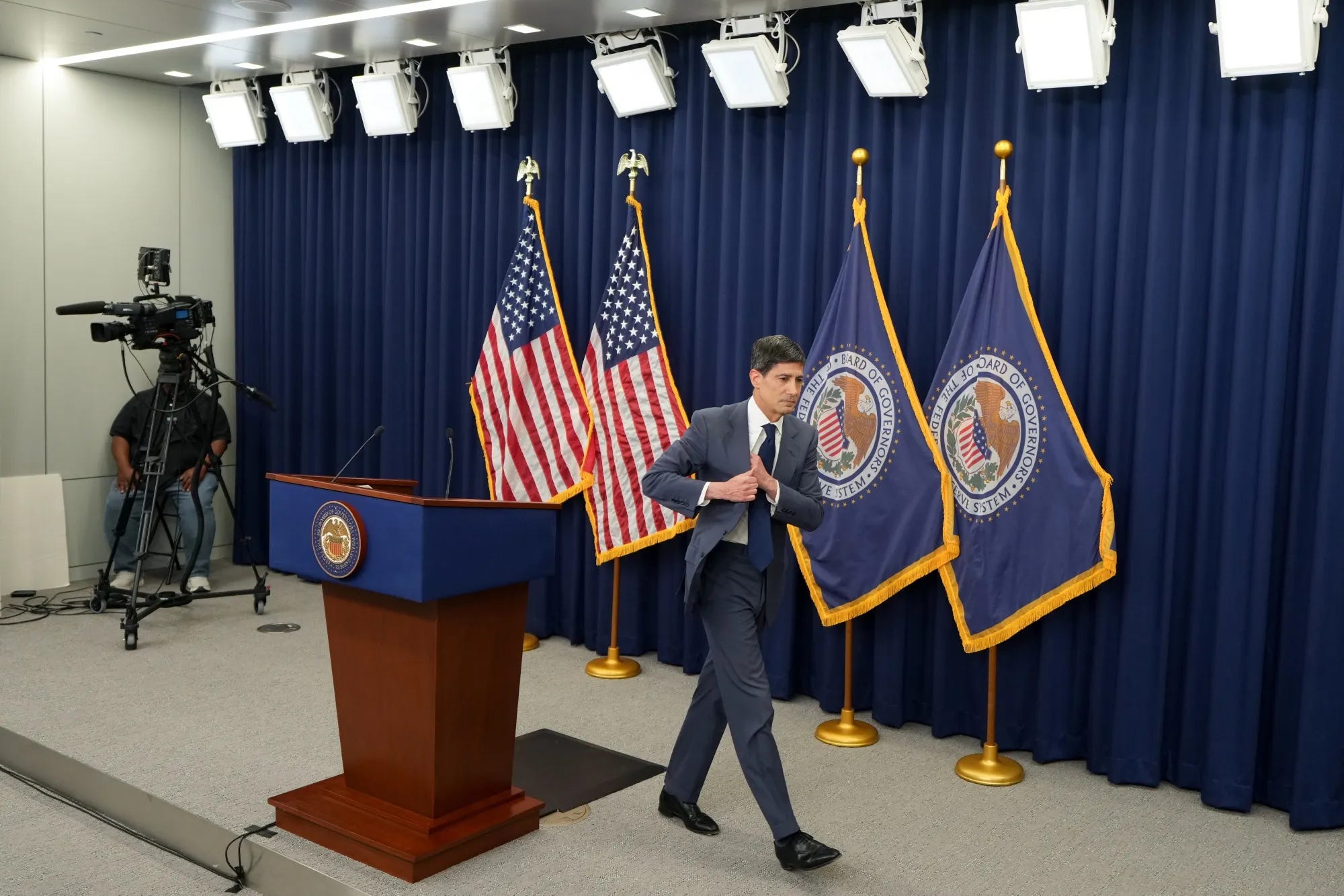
On June 17, 2026, Kevin Warsh stepped up to the microphone for the first time as Fed Chair. In less than an hour, he did three things that would normally take a central bank years to dare: he cut the length of the statement by nearly three-fifths, refused to contribute his own dot to the interest rate projections, and announced five task forces capable of rewriting how the Fed operates for the next decade.
The market's initial reaction, and that of most commentary in the following 48 hours, was to read this event as a simple hawkish surprise: 2-year yields jumped to a 16-month high (4.22%, up 17 basis points in the session), the Nasdaq Composite fell 1.34%, the dollar rose nearly 1%, and gold and Bitcoin declined. That is a correct reading, but not a deep enough one. If we stop there, we miss three far more complex layers lying just beneath the headline, and these are the three layers this week's article aims to peel back to the root.

The first paradox, lies in the very structure of the communication overhaul. Warsh wants a quieter Fed, less transparent about the future, and less “hand-holding” of the market. But to achieve this, he must operate through a collective committee - the FOMC - where superficial consensus (a 12-0 vote, with no disclosure of individual votes, for the first time in recent history) may be masking a level of internal division deeper than at any point in years. A “quieter” Fed does not automatically mean a “more consensual” Fed, and the gap between those two concepts is where the real operational risk lies.
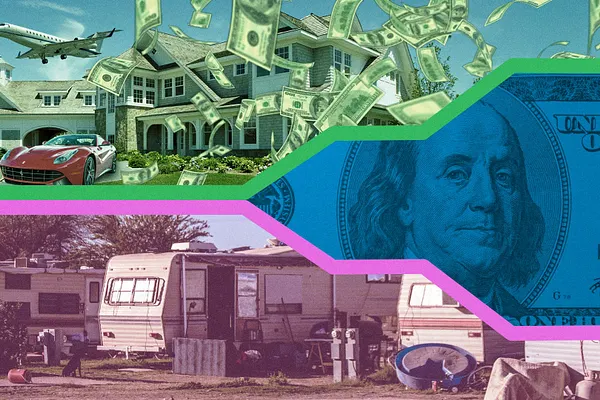
The second paradox, lies in Warsh's own answer when asked if current policy is restrictive. He said: it is uneven. Restrictive for housing. Not restrictive for stocks and corporate credit. This is a rare admission, and it reveals an uncomfortable truth: the Fed is trying to operate a single policy rate for an economy that has split into two different transmission engines, running at two different speeds, sometimes moving in nearly opposite directions.
The third paradox, and perhaps the most dangerous one in the long term - lies in the central promise of the speech: “This committee will deliver price stability.” That promise only has meaning if the Fed actually possesses the tools to influence the sources of current inflation. But if you break down the structure of U.S. inflation in mid-2026 - tariffs, the oil shock from Iran, AI infrastructure costs, service inflation - most of those layers are beyond the reach of a short-term interest rate. Warsh is promising to deliver something that the tools in his hands can only partially provide.
This week's article covers five parts, each peeling back a layer of the three paradoxes above:
Part I - Anatomy of the communication revolution: from statement length and the dot plot to structure
Part II - Five task forces and the institutional reform roadmap
Part III - Internal infighting: the FOMC voting mechanism, why a 12-0 vote without detailed disclosure may be a sign of deeper division than consensus, and the three-way pressure from the White House - the FOMC - the market.
Part IV - Two transmission engines: why housing is “frozen” while Wall Street is still partying, and why that is not a random paradox but a predictable consequence of the current policy structure.
Part V - Inflation drivers: a clear classification framework for each layer of inflation, who the “author” of each layer is, and how much of the problem the Fed actually controls that it has promised to solve.
Part VI - Synthesis, three scenarios for the next 6 weeks, and a dashboard to track each week.