Note: Recently, many readers have not been receiving Viet Hustler articles because the automated email system has been flagging them as Spam due to declining engagement rates. Viet Hustler and Tạp Chí Phố Wall continue to operate in parallel with no changes.
Account migration portal from Viet Hustler to Tạp Chí Phố Wall:
Enter your Viet Hustler account email
Receive a coupon via email for the unused balance from Viet Hustler
Use the coupon to register for a Tạp Chí Phố Wall account
You must manually cancel/turn off auto-renew for Viet Hustler on Substack
https://tapchiphowall.com/viethustler

If you missed the best recent articles:
The AI Token Economy, Tokenmaxxing & The AI Physical Bottleneck
6 Signals to Determine the Strength of the U.S. Economy in 2026
“DRAM and NAND industry demand continues to significantly exceed industry supply. We expect tight conditions to persist beyond calendar 2027.”
- Micron CEO, earnings call on June 24, 2026
There are statements in earnings calls that sound like brief updates for investors, but are actually summaries of an entire economic cycle.
The quote above from the Micron CEO is important not because it says HBM is in short supply. The market already knows that. What is more important is that he is not just talking about HBM, nor just about GPUs or data centers. He is talking about both DRAM and NAND - the two foundational memory layers found in PCs, smartphones, servers, SSDs, automobiles, industrial equipment, and almost all modern consumer electronics.
In other words, the shortage is no longer confined to a high-end segment of AI infrastructure. It has spread to the foundation of the entire memory industry.
And even more notably: even one of the world's three largest memory manufacturers says they do not yet see a clear point when supply can catch up with demand.
There was a small technical detail that occurred in early June 2026, but it says much more about the AI economy than many GDP figures or labor market reports.
NVIDIA - the world's most important buyer of AI components - quietly cut the amount of auxiliary memory in its next-generation AI servers by half: from 192GB to 96GB per module. This is not HBM, which is the ultra-fast memory layer placed next to the GPU and considered the “blood” of AI accelerators. What was cut is the auxiliary memory layer around the CPU - the type of memory that memory manufacturers themselves recommend using as much as possible in technical documentation.
The seller says: demand is far exceeding supply, tightness could persist beyond 2027, and we do not yet see an equilibrium point.
The buyer says: I have to cut back on memory.
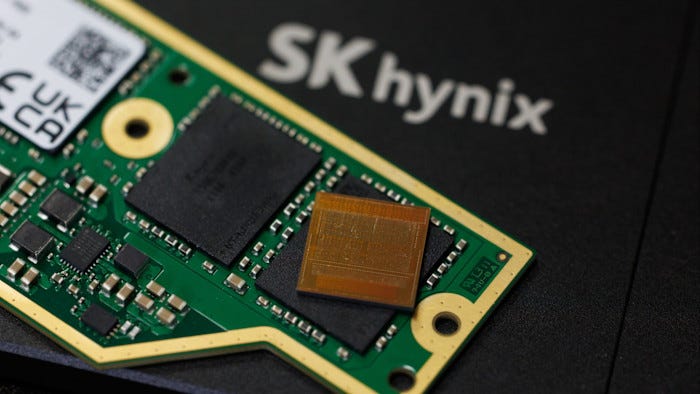
That paradox is the starting point for the bigger story of this week's article: in the AI era, memory is no longer a cheap, boring, and easily replaceable component. It is becoming a strategic asset - where AI software directly hits the physical limits of wafers, packaging, yield, power, cooling, and fab construction cycles.
For many years, the market talked about AI in the language of compute: more powerful GPUs, higher FLOPS, larger clusters, and smarter models. But the deeper one goes into AI infrastructure, the more important question is not just whether the chip can calculate fast enough. The question is whether data can be delivered to the chip fast enough, close enough, and in sufficient volume.
If the GPU is the engine, memory is the fuel system. And when the fuel system is clogged, no matter how powerful the engine is, it has to wait.
This is the first paradox.
AI is seen as software on the surface, but to run that software, the world must build a massive physical foundation: GPUs, HBM, DRAM, NAND, data centers, power, cooling, transformers, copper, substrates, interposers, advanced packaging, and fab capacity. AI can scale with model architecture, code, and capital spending. But memory supply cannot scale with a line of code.
This is the second paradox.
In semiconductor history, memory is one of the clearest examples of the law of technology: price per GB decreases, capacity increases, and users get more RAM, more storage, and more performance with each generation of devices. But HBM is reversing that logic. It is faster, closer to the GPU, and has more bandwidth, but it also consumes more wafers, more packaging capacity, more testing steps, and more production resources than standard DRAM.
As HBM is prioritized for data centers, the rest of the memory market is beginning to be relatively squeezed.
This is the third paradox.
AI is often seen as a long-term deflationary force because it promises higher productivity. But before that productivity appears on a large enough scale, the economy must pay upfront with things that have very slow physical supply: memory, power, land, transformers, cooling systems, copper, advanced packaging, and fab capacity. In the short term, the very process of building AI infrastructure can create new cost pressures.
Therefore, the AI story of 2026 is no longer simply: “Will AI change the world?”
The answer is almost certainly yes.
The more accurate question is: Who controls the physical bottlenecks behind AI, who pays the premium to secure capacity, and who ultimately bears the cost when memory is no longer as cheap as it once was?
In this week's article from Viethustler, I will cover four parts:
Part I - The return of the memory wall: why AI needs not just compute, but more memory bandwidth than ever before.
Part II - Why memory supply cannot react quickly: an industry concentrated among a few players, fabs that take years to build, and supply discipline learned through actual bankruptcies.
Part III - HBM disrupts the economics of the memory industry: when a product once considered a commodity becomes the center of profit, pricing power, and capacity allocation.
Part IV - From memory shortage to macroeconomics: why the memory shock could spread from data centers to laptops, smartphones, SSDs, power, CPI, and ultimately the monetary policy challenge.
The more important point is: before AI makes the economy cheaper, it is forcing the economy to rebuild a more expensive layer of physical infrastructure.
And within that infrastructure, memory may be one of the first places to show the true limits of the AI revolution: not the limits of algorithms, but the limits of supply chains, materials, power, and capacity.