If you missed the best recent articles:
From the dawn of the market to now, investors have always sought the answer to the question:
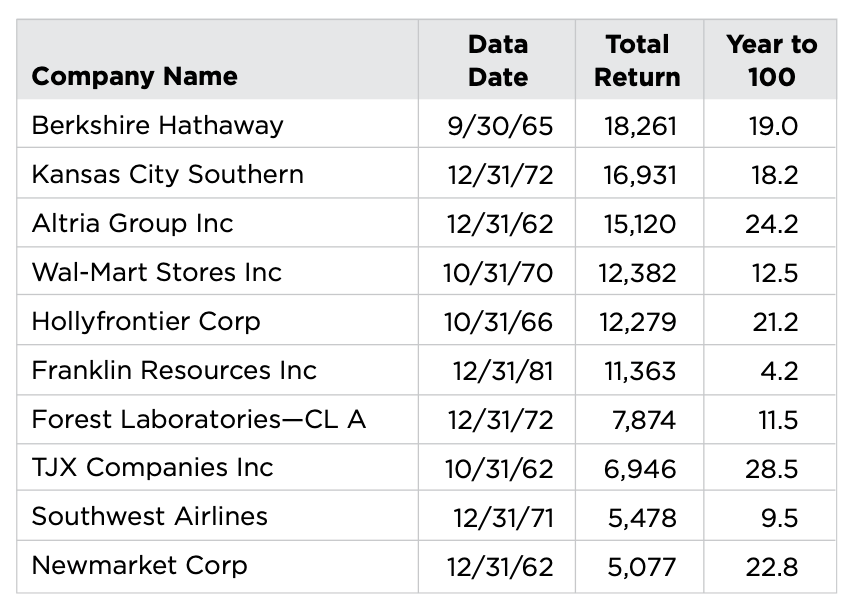
How to find stocks that can increase 100 times (100-bagger)?
This is not a pipe dream.
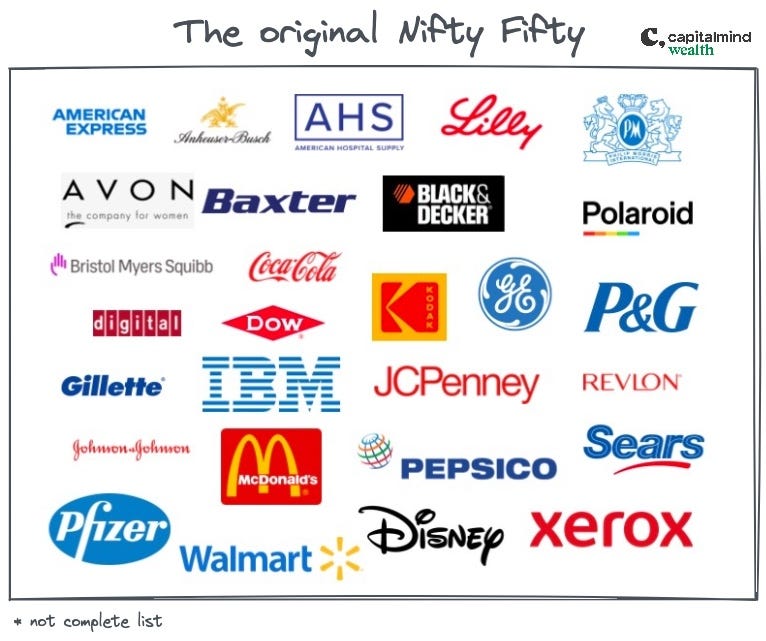
In the 1960s, when photocopiers and cameras exploded, the stock market produced “giants” like IBM, Polaroid or Xerox – similar to Nvidia, Google, Amazon of today's AI era.
In the early 1970s, Wall Street named that group of miraculous growth stocks Nifty Fifty – the "Magnificent 7" version of the analog era.
Fact: even if Walmart accounts for 2% of the Nifty 50 portfolio, and the other 49 stocks go to 0, the return would still be 13%/year – higher than the S&P 500 (10.7%)
→ That is the power when a portfolio owns a true “100-bagger”.
But the common point of those 100-baggers is not just financial growth. They are all companies that disrupt the old order (disrupters).
From Amazon overturning retail, to Old Dominion Freight Line changing the transportation industry.
And now, in the outdated, bureaucratic, and non-transparent US health insurance industry, a name is quietly doing something similar: Oscar Health.
With the “direct-to-consumer health insurance” model (direct-to-consumer), Oscar is redefining how people access healthcare, from products to experiences. Backed by big names like Google Capital, Khosla Ventures, Tiger Global…, Oscar Health is truly growing exceptionally:
Membership increased from 100,000 to 1.7 million in 7 years
Revenue from $200 million to $9.2 billion
Medical Loss Ratio decreased from 95% to 81%
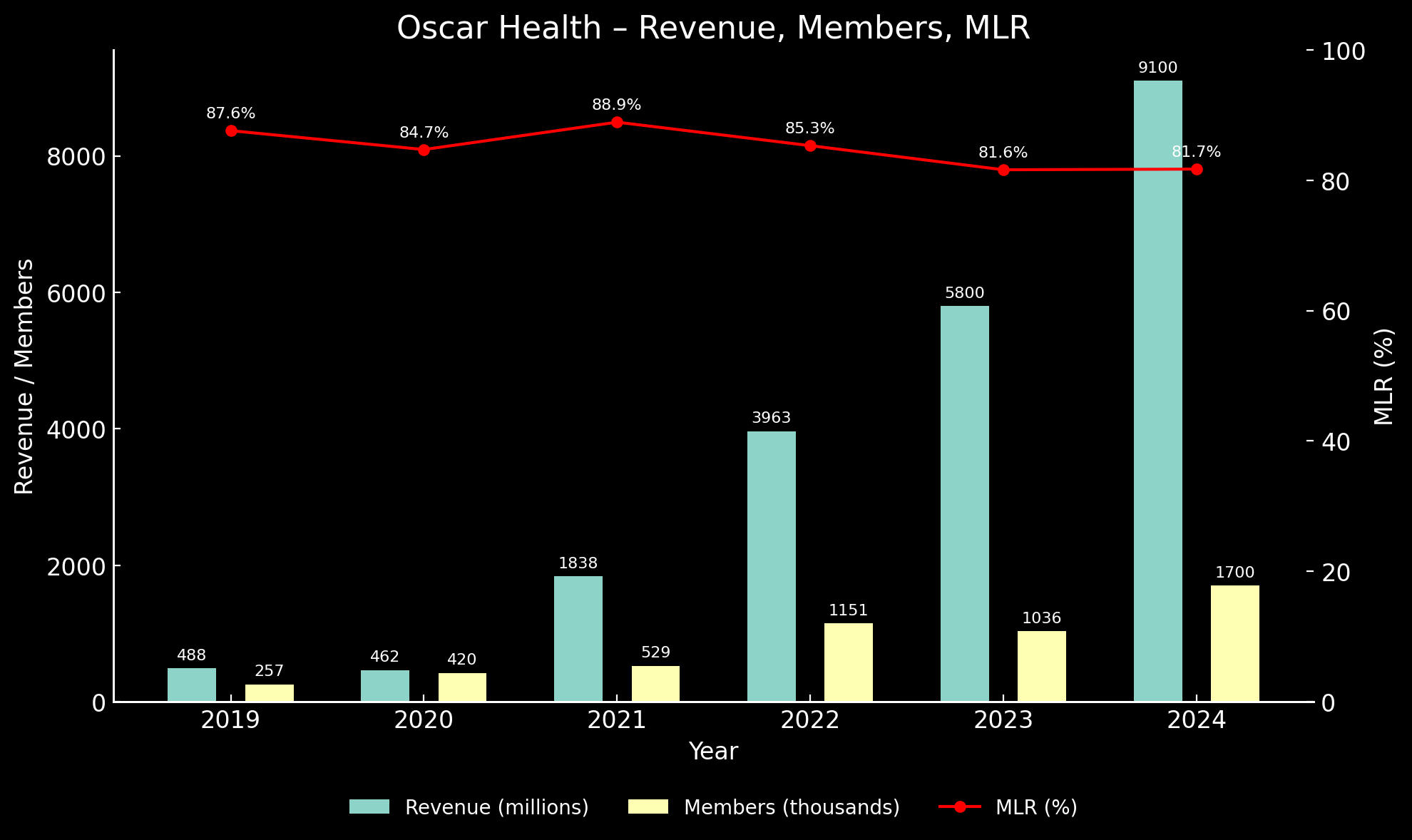
The only question: Can Oscar Health continue to maintain this growth momentum?
In this article, Viet Hustler will dissect the US insurance industry, Oscar Health's business model and valuation – to find out if this could be a true “100-bagger” or just a beautiful dream.
US Insurance Industry: A System in Crisis
Oscar Health – Formation Journey & Leadership Team
Oscar Health's Business Model
Competitive Advantage Analysis
Financial Health Analysis
Future Prospects
Preliminary Valuation
Investment Risks