If You Missed Our Best Recent Articles:
“There is no preset path for policy. Decisions will be made meeting by meeting, based on the totality of the data.”
Fed Chair Jerome Powell said at the December FOMC press conference.
And that's precisely why the Fed cut rates-but still hasn't settled on a direction for 2026.
December FOMC wasn't a clearly directional meeting for the next cycle. On the contrary, it revealed the Federal Reserve cut rates but failed to unify around a policy logic for 2026.
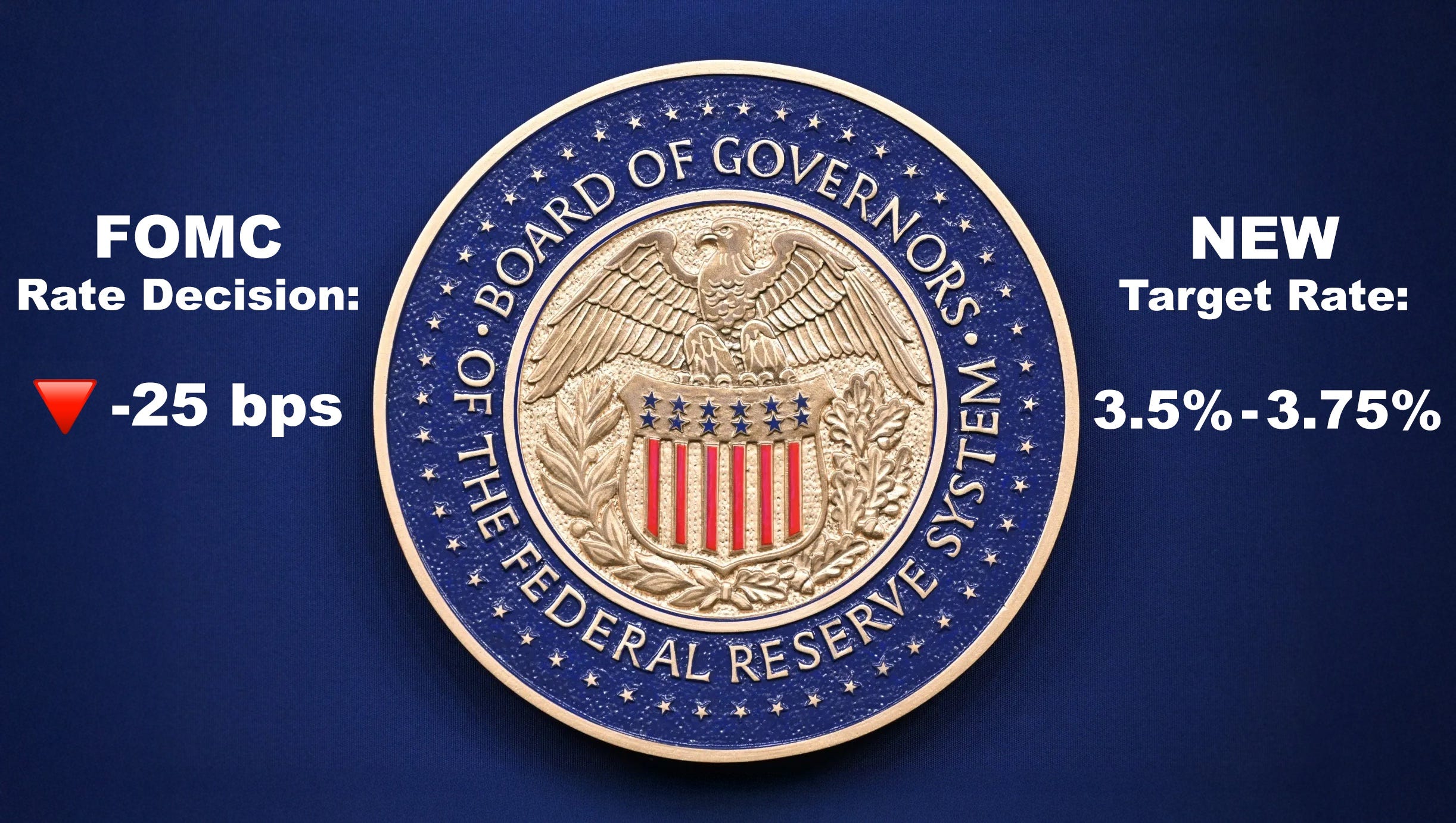
The 25 basis point cut, lowering the fed funds range to 3.5–3.75%, met market expectations. Yet behind this 'textbook' decision lay rare internal divisions: dissenting votes spiked, the dot plot fragmented sharply, and Chair Powell's messaging emphasized labor market risks over reinforcing inflation control.
The December FOMC's key insight isn't the policy move, but the breakdown between models, messaging, and decision drivers. Traditional quantitative rules no longer explain the rate path, as institutional and political constraints take center stage.
In this article, Viet Hustler dissects six analytical sections to explain why December FOMC marks a policy fracture, and what it implies for the Fed's 2026 monetary challenge:
Part I – December Policy Paradox: Why the Fed is more upbeat on growth, less downbeat on inflation, yet lowered the rate path-and why standard models like the Taylor Rule can't justify it.
Part II – Dot Plot: From Forecasting Tool to Internal Politics Map: What the December dot plot reveals about FOMC divisions, eroding consensus, and why it's no longer the market's compass.
Part III – Two Parallel Feds: Policy logic clashes between the Washington Fed and regional banks' Fed, and how these mindsets collided head-on at December FOMC.
Part IV – Asymmetric Reactions and Policy Error Risks: Why the Fed is hypersensitive to labor risks but lenient on sticky inflation, and what it says about dual mandate limits in today's economy.
Part V – What December FOMC Says About 2026: Why no clear easing cycle was signaled, why 'pause' is now the default, and why market expectations are diverging from the Fed's view.
Part VI – Viet Hustler Forecast: How many cuts in 2026? The role of midterm pressures, 'shadow Fed Chair,' and risks of easing beyond the data.