If You Missed Our Best Recent Articles:
“The collapse of the rial is not a sudden event. It is the gradual loss of confidence in money as a store of value - because the plumbing that connects Iran to global liquidity has been systematically shut down.”
“The collapse of the rial is not a sudden event. It is the gradual loss of confidence in money as a store of value - because the plumbing that connects Iran to global liquidity has been systematically shut down.”
- Christian Odendahl, Chief Economist at European Policy Centre
Some economies don't collapse from negative growth, nor do they break from an instantaneous shock. They decay in a more insidious way: currency gradually exits the trust system before any macroeconomic indicator hits bottom.
Iran in 2026 isn't facing a “crisis” in the conventional sense. Its economy is operating in an entirely different state: monetary mechanisms persist in form but have lost their coordinating function. Money still circulates, banks remain open, policies are issued - but intertemporal trust has evaporated.
In standard economic models, crises typically originate from growth, fiscal policy, or the banking system. For Iran, the fracture point arrives earlier: in the ability to preserve money's value across periods, in access to foreign-exchange liquidity, and in the link between the domestic currency and global pricing systems.
At first glance, 2025's developments might be chalked up to “political unrest,” “sanctions,” or “exchange-rate chaos.” But that framing misses the core issue: this isn't a market reaction to a shock, but the endpoint of a monetary structure that ceased functioning long ago.
When USD no longer circulates like a circulatory system, the exchange rate stops being the price of money and becomes the fee for liquidity access. When forex reserves sit on balance sheets but can't be mobilized, monetary policy loses its steering role. And when money no longer holds value over time, the economy stops running on signals - and shifts to survival reflexes.
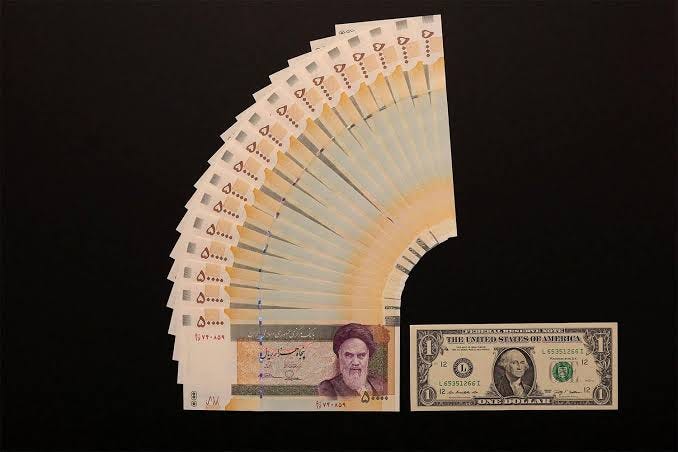
In that state, inflation isn't a variable to explain. It's a mechanical outcome. Protests aren't the cause of crisis. They're a lagging indicator. And social unrest doesn't need incitement. It emerges when nominal incomes no longer match real living costs.
This article doesn't approach Iran through a political lens or a short-term market shock. It examines Iran as a monetary system unmoored, where all remaining macro variables merely reflect the aftermath.
In today's piece, Viethustler walks through the following seven sections:
Part I – When USD Shortage Turns Currency into Reflex
Part II – USD Isn't Just an Exchange Rate; It's the Liquidity Circulatory System
Part III – When Currency Is Stretched into Disguised Fiscal Policy
Part IV – Multiple Exchange Rates, Shadow Economy, and Signal Breakdown
Part V – Dollar Shortage: The Disintegration Mechanism of an Empire
Part VI – Crypto: A Liquidity-Limited Solution
The conclusion doesn't forecast when or how Iran will “collapse.” It highlights a systemic rule: an economy can persist long after its currency has lost function, but it will operate in an increasingly irreversible state.