If You Missed Our Best Recent Articles:
“Financial security is an important part of national security.”
“Financial security is an important part of national security.
- Xi Jinping, speaking on national security and financial stability
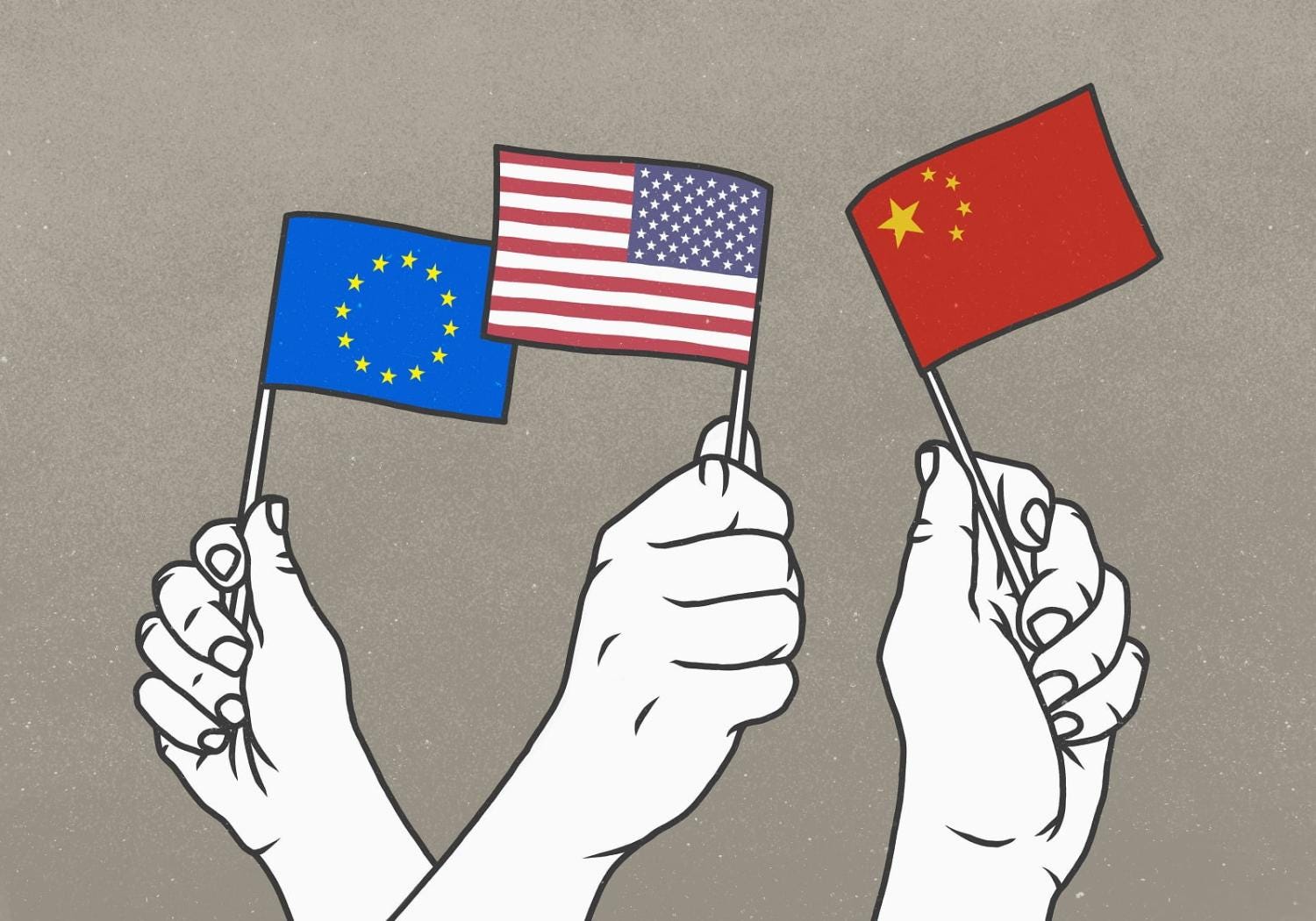
In periods of geopolitical tension, the idea of 'dumping US Treasuries' often surfaces as a notion of devastating financial attack. Under this view, if a large enough holder triggers mass selling, US rates would spike, the dollar would collapse, and the US financial system would plunge into crisis. This underpins the concept of financial weapon -power supposedly derived from the scale of USD asset holdings.
This logic sounds reasonable.
But it only holds in a static model-where the seller can stand aside from the shock they themselves create.
The current financial world doesn't work that way.
In a system where the USD serves as reserve asset, collateral, and central pricing unit for global trade, energy, and credit, there is no such thing as 'one-way' selling. Any shock large enough at the system's core rebounds onto the initiator's own balance sheet.
That's why the core question isn't:
“If China or Europe dumps, how much does the US suffer?”
But rather:
Who can endure longer after the shock they themselves trigger?
At the scale of trillions of dollars, financial assets cease to be tactical leverage. They become structural constraints. When USD assets loom large enough on a national balance sheet, selling is no longer pressure tactic, but self-inflicted endogenous loss.
In that structure, 'financial weapon' exists as theory. But not as viable operational option.
Not for lack of political will. But because the system structure doesn't permit it.
In today's piece, Viethustler breaks it down in 5 parts:
Part I – China: The $3.3 Trillion Trap and Impossible Trinity Bind
Part II – What Really Happens in a Dump? Two-Way Shocks and Mutual Destruction Logic
Part III – Europe: The $10 Trillion 'Weapon' That Can't Fire
Part IV – Escaping the USD Trap: Why Only the Slow, Silent, Defensive Path
Part V – Conclusion: The Fragile Financial Stalemate and Future Trajectories
The bottom line isn't US 'invincibility.' Nor China or Europe 'lacking leverage.'
It's a colder systemic finance reality: In an order where reserve currency dictates endurance order, power lies not in the strongest blow-but in surviving longest after it.