Big Retail Doesn't Just Sell Goods – They Sell US Bonds in Every Tap-to-Pay
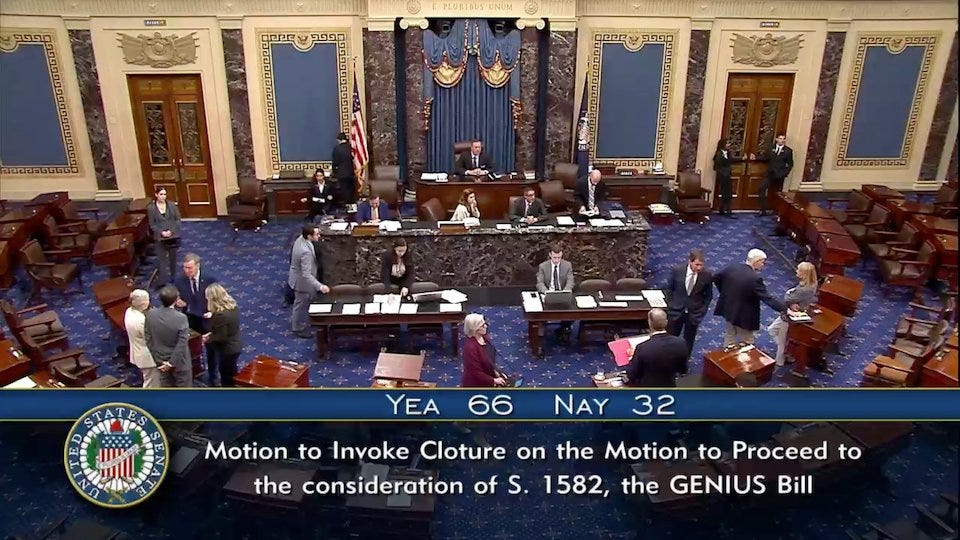
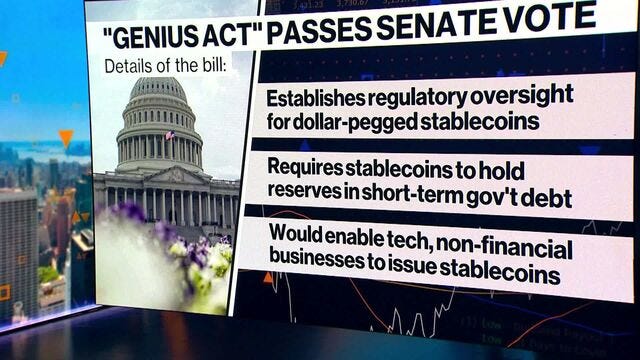
One night in June 2025, in the cold red glow of the national debt clock on 44th Avenue in Manhattan, the US public debt figure surged by another 100 billion USD in just a few minutes – equivalent to the combined budgets of many countries. At the same time, in Washington, the wooden gavel of the Senate President sounded dryly: GENIUS Act passed with a 66–32 vote, marking an unprecedented legal turning point for the stablecoin market.
No applause. But with that quiet nod, the United States has "changed the fate" of stablecoin: from a speculative tool, anonymously swapping value on blockchain to a 24/7 retail capital absorption channel for Treasury bonds, operated like a decentralized public debt mobilization machine reaching every mobile wallet.
From that moment, every newly minted USDC, every PYUSD swiped for payment, even every loyalty point quietly converted by Walmart or Amazon into “Wal-Coin” in the POS system – no longer a 1:1 USD stamp between blockchains – but an order to buy short-term T-bills from the US Government.
The GENIUS Act did not invent stablecoin. This act tames it. And in that process, Washington doesn't need to touch the Federal Reserve's printing press – just snap its fingers to summon millions of mobile wallets – each turning into mini-MMF pumping blood into public debt, day and night, without rest.
In today's article by Viet Hustler, we will go through the entire sophisticated policy strategy hidden behind this law that sounds friendly to “digital finance”. Each chapter will analyze:
Stablecoin – from technological structure to the three main types (fiat-backed, crypto-backed, algorithmic), and its increasingly vital role in the DeFi ecosystem.
The transformation process from meme-token to “mainframe liquidity”, from the Terra/UST fever to congressional hearings.
GENIUS Act – the “golden shackles” legal framework, four control locks, and the fiscal philosophy hidden behind the yield ban.
QE 3.0 Model – Mobile wallets become short-maturity T-bill banks, mint-redeem mechanism tied to public debt demand.
Infrastructure Race – from BlackRock, DTCC to Walmart, Amazon, Coinbase – “tokenized T-bill” architecture and retail payment map.
Who benefits – who bears the risk – and three “smoldering fuses” threatening the financial system.
Endgame – Stablecoin as “US-Debt-Coin” – and the question: Do you choose to stand in the flow of digital coupons or be swept away by it?
This is not just the story of legalizing digital currency. This is policy blueprint to turn stablecoin into the fiscal blood filter machine of 21st-century America.
And the wallet in your pocket – could be one of those capillaries.
Viet Hustler is a reader-supported publication. To receive new posts and support my work, consider becoming a free or paid subscriber.
1. Context Opening a New Financial Dawn
The US money market is entering a profound restructuring era. Treasury bonds are no longer just traditional securities traded during business hours, but also “digitally wrapped” into ERC-20/SPL tokens, traded 24/7 on public blockchains.
This reality reflects a larger movement:
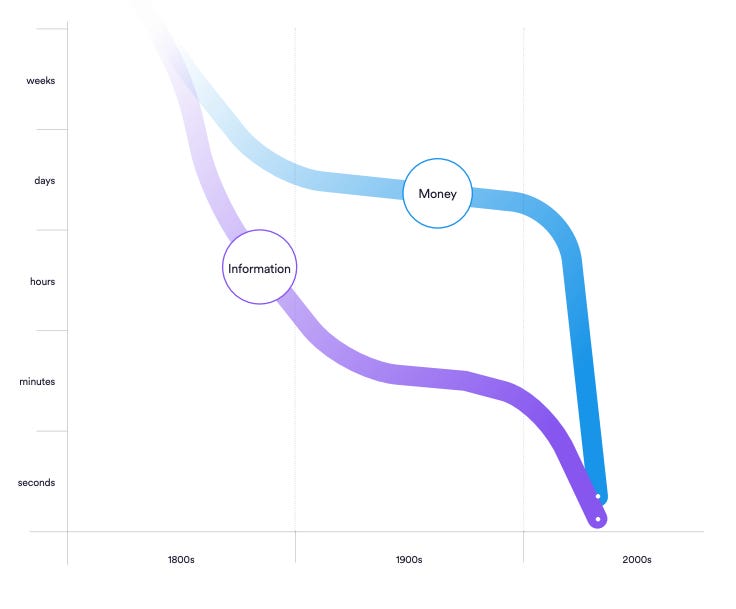
Over more than 200 years, information has shortened transmission time from weeks to seconds.
Money, however, has lagged from days – and only now, thanks to blockchain and stablecoin, enters a nearly instantaneous era.
Stablecoin is the new “blood conduit” of the financial system: it allows value to move cross-border 24/7, with settlement time shortened from days to just seconds.
More importantly, it opens the possibility of tokenizing US public debt – turning T-bills into “micro debt vouchers” that can circulate directly between hundreds of millions of mobile wallets worldwide. This allows the US Treasury to access an automatic, low-cost, steady retail capital source – without relying on the Fed or cumbersome periodic auctions.
In parallel, global digital payment infrastructure is also being restructured to connect directly to the T-bill market:
Major e-wallets like PayPal, Coinbase Wallet, Robinhood Crypto begin integrating real-time “collection – distribution of coupons” functions.
Even loyalty points (loyalty cards) of giant retail corporations like Walmart or Amazon can become a direct means of connection to the T-bill market.
As a result, Big Tech is charging traffic fees like BOT on highways, while the US Treasury enjoys a stable, continuous stream of T-bill demand originating from the increasingly expansive network of mobile wallets.
1.1 Definition and Classification of Stablecoins
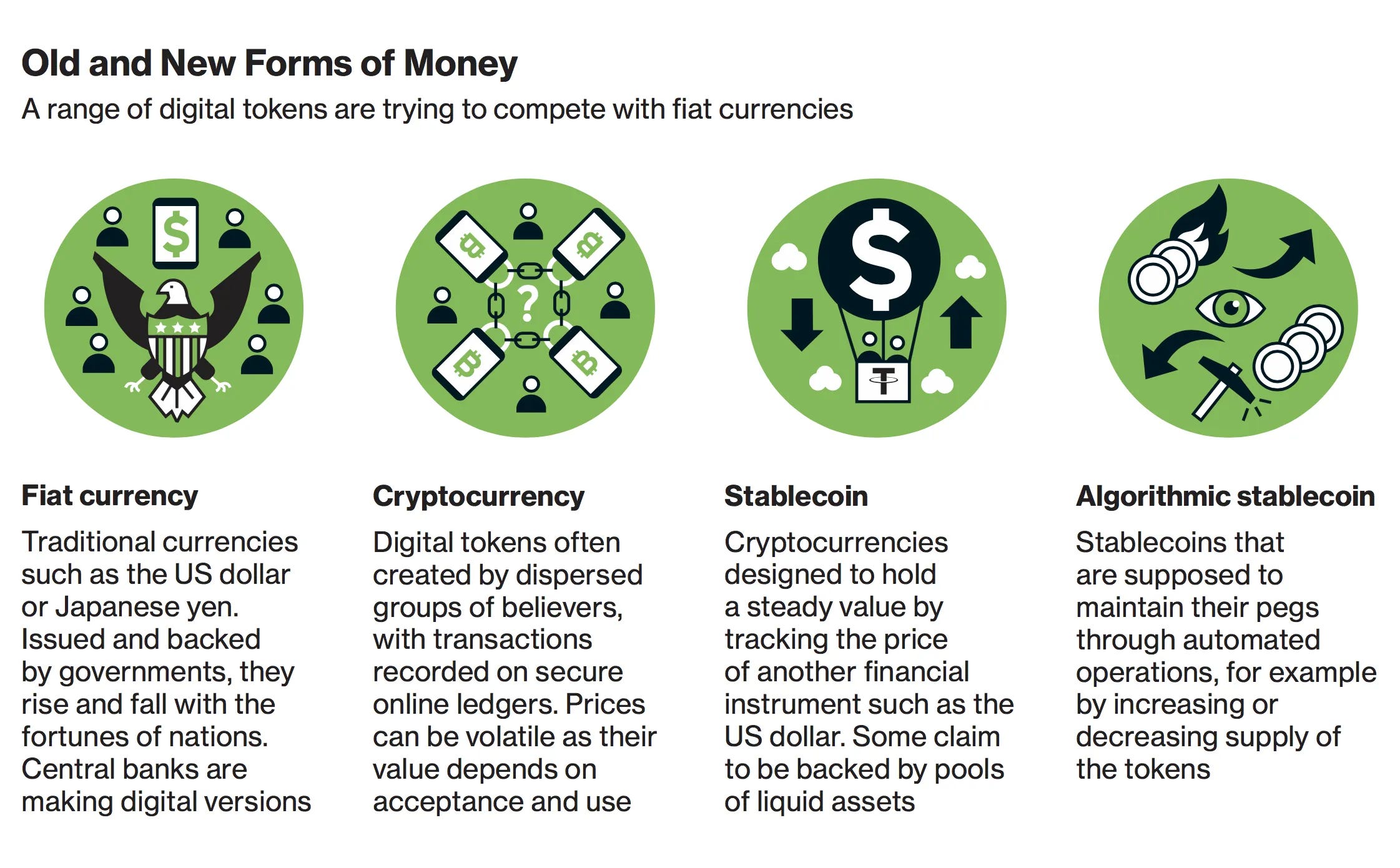
Stablecoin is a special type of cryptocurrency designed to maintain stable value. Unlike popular cryptocurrencies like Bitcoin which have high price volatility, stablecoins aim to minimize price fluctuations almost to 0. Their value is usually pegged (peg) to a fiat currency, such as the US dollar.
Thanks to their nearly fixed value, stablecoins are much more suitable for digital transactions than traditional cryptocurrencies. In the traditional financial ecosystem, stablecoins are like money market funds (money market fund) or savings/checking accounts – serving as safe value storage in the cryptocurrency world.
To ensure stability, variousstablecoin issuing organizations often collateralize (collateralize) their tokens with cash USD, US government bonds (Treasury securities), repurchase agreements (repo), or other short-term assets.
Why do we need stablecoins? While cryptocurrencies like Bitcoin or Ether offer advantages in cross-border payments without intermediaries, they have highly volatile prices. This reduces their usefulness as a stable medium of exchange. Stablecoins solve this problem by pegging their value to more stable assets – usually fiat money – to ensure unchanging value over time and encourage user adoption in everyday transactions.
How do stablecoins work? Stablecoins are digital assets designed to hold stable value, usually pegged to a traditional currency like the US dollar. Unlike Bitcoin or Ethereum which fluctuate sharply, stablecoins provide a “safe harbor” for crypto investors – a place to park capital without converting to real cash.
However, note that the term “stable” does not mean absolute guarantee. Stablecoin prices on secondary exchanges can still deviate slightly from the peg. Moreover, maintaining 1:1 value depends on the transparency and redemption capacity of the issuer's reserves.
They are also used as a convenient “bridge currency” between exchanges and between digital assets.
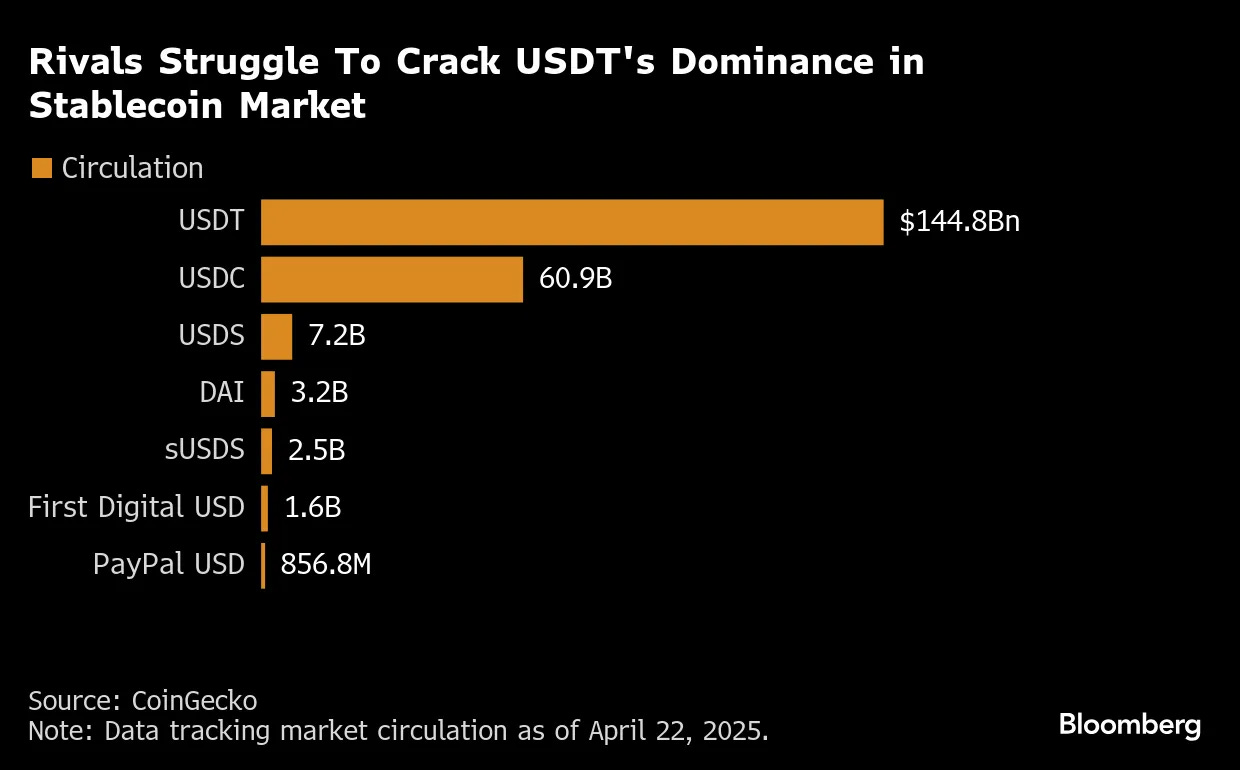
Two of the most famous and widely used stablecoins are Tether (USDT) and USD Coin (USDC). Thanks to low price volatility and high compatibility with blockchain networks, they are widely used in decentralized finance (DeFi) and cross-border payments.
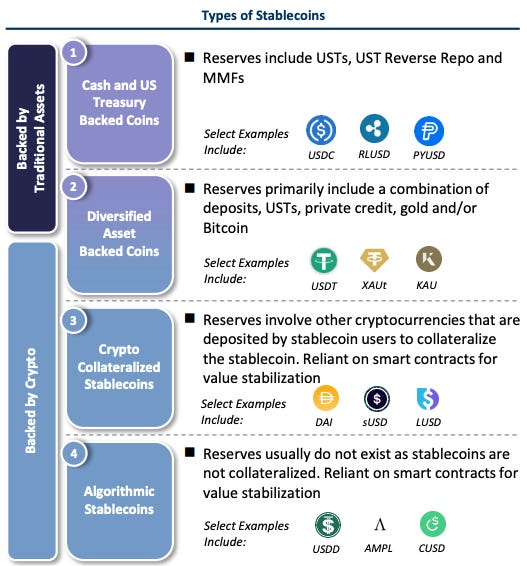
Stablecoins are understood as digital currencies designed to maintain stable value (usually pegged at 1 USD). This hybrid phenomenon consists of four main families:
1️⃣ Cash and US Treasury Backed Coins Fully backed by cash or ultra-liquid assets such as short-term T-bills, reverse repo, or money market funds (MMF). Typical examples: USDC, RLUSD, PYUSD. This type is particularly favored by the US GENIUS Act, as reserves are nearly 100% directly invested in short-term Treasury debt.
2️⃣ Diversified Asset-Backed Coins Backed reserves consist of multiple asset types: bank deposits, T-bills, private credit, gold, or Bitcoin. Examples: USDT, XAUt, KAU. This type is more flexible but still maintains full collateralization ratios.
3️⃣ Crypto-Collateralized Stablecoins Uses other digital assets (like ETH, BTC) as collateral via smart contracts. Stablecoin value is ensured by overcollateralization and automatic liquidation mechanisms. Examples: DAI, sUSD, LUSD.
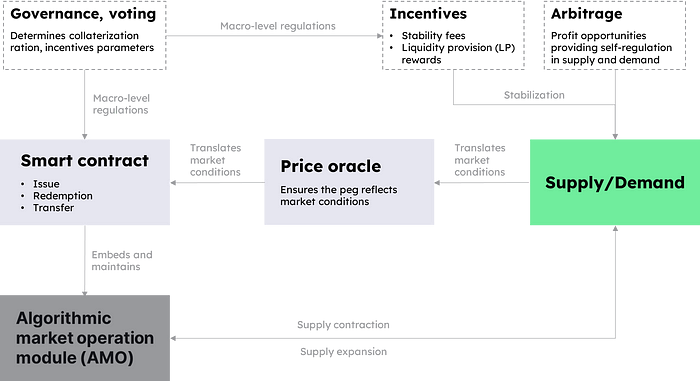
4️⃣ Algorithmic Stablecoins No direct reserve assets. Value is regulated by algorithms, smart contracts, and market incentives (seigniorage shares). Examples: USDD, AMPL, CUSD. This group once promised innovation but carries high systemic risk, like the collapse of Terra/UST.
1.2 Collateralization Mechanism and Reserves of Stablecoins
Stablecoins are not naturally “stable”. 1:1 price stability with the US dollar (or another reference asset) is only maintained if the issuer is always ready to redeem them for real money at the promised rate. To ensure that commitment, they must maintain full and safe collateral asset reserves.
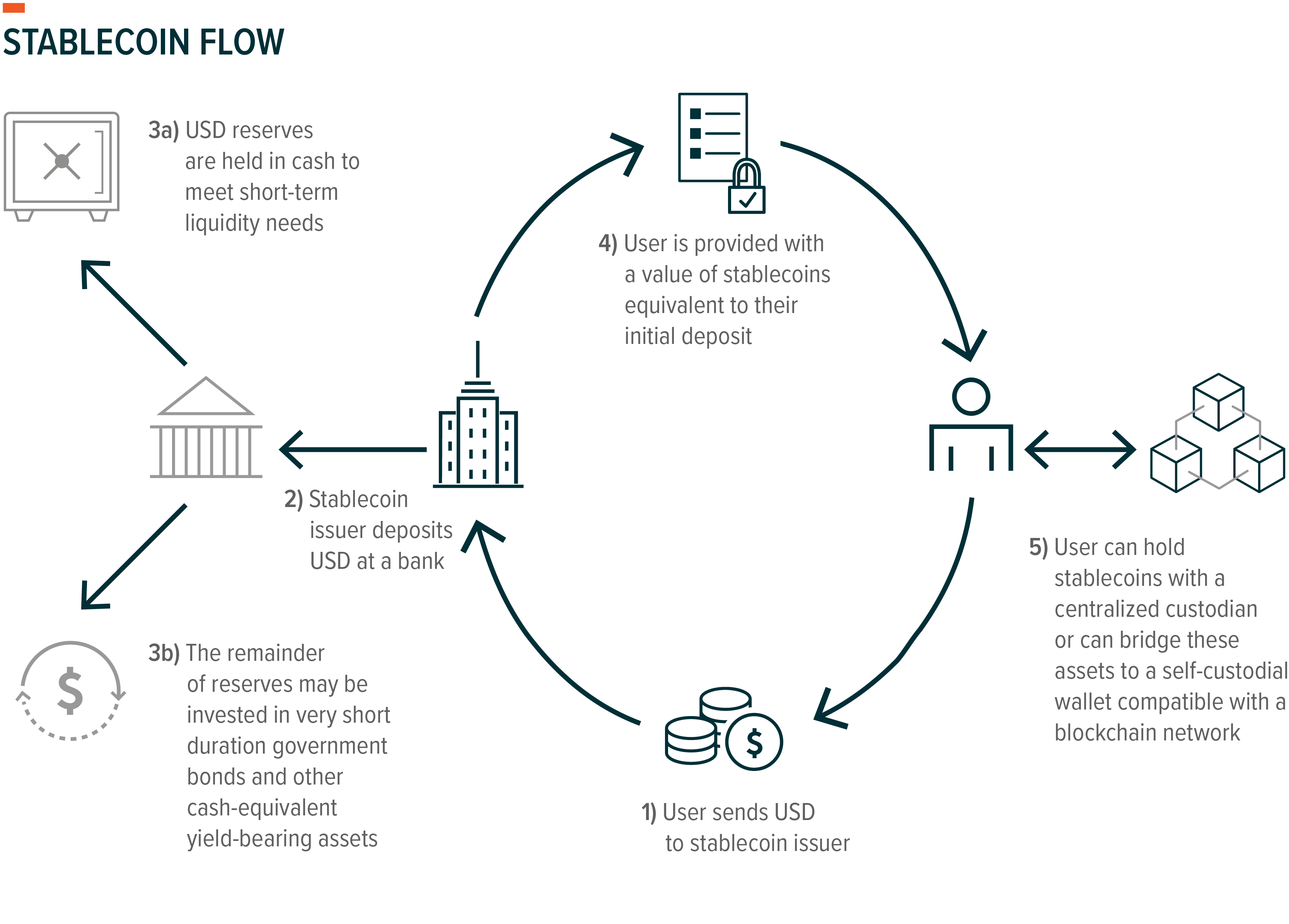
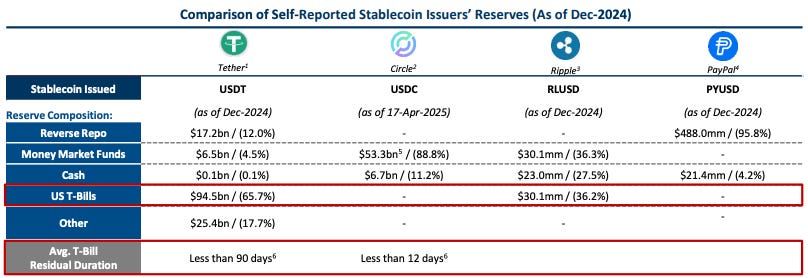
In essence, stablecoins are like a digitized certificate of deposit, backed by safe and highly liquid assets. When users deposit USD to mint new USDC or USDT, the stablecoin issuer receives that money and immediately invests it in low-risk reserve assets – mainly consisting of short-term US Treasury bonds (T-bills), collateralized repurchase agreements (repos), cash, and money market funds (MMFs).
Stablecoins adhere to strict 1:1 rules: each token issued on the blockchain must be backed by equivalent value in the reserve fund. This maintains confidence that users can always redeem stablecoins for real USD.
The operation process has two main steps:
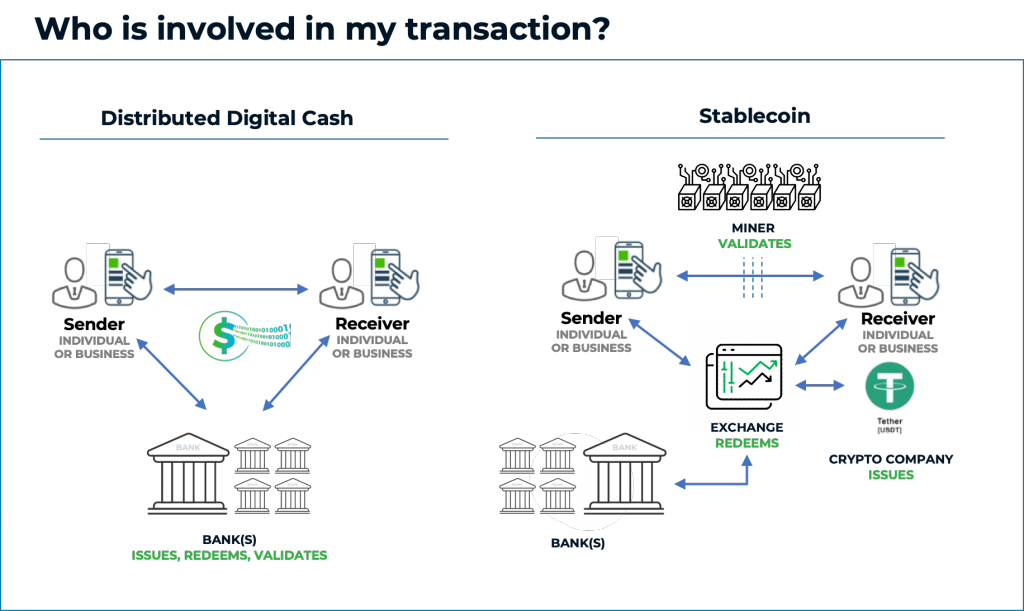
Mint (Issuance): Users deposit fiat money (e.g., USD) to the issuing organization. Issuer receives the money into the reserve bank account and issues the corresponding amount of stablecoin on the blockchain.
Redeem (Redemption): When users want to exchange stablecoin for USD, issuer burns the tokens on the blockchain and transfers cash from the reserve account to the user's bank account.
The goal is to ensure that each circulating stablecoin always has at least 1 USD in real assets “in the vault” to support redemption. At the same time, the issuer seeks yield from the reserves – typically coupon interest from T-bills or short-term repo yields.
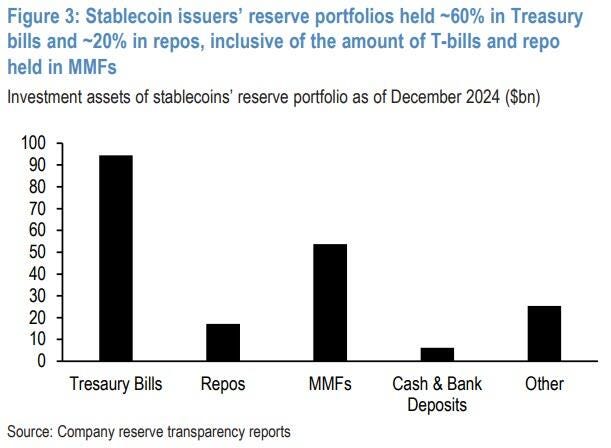
Example illustrating the reserve portfolio: End-of-year 2024 data from transparency reports of major stablecoin issuers shows:
Approximately 60% of the reserve portfolio is Treasury Bills – short-term U.S. Treasury bonds, highly liquid, extremely low credit risk.
Approximately 20% in repos – short-term repurchase agreements collateralized by government securities.
The remainder allocated to money market funds (MMFs), cash/bank deposits, and a small other portfolio.
Observations:
Stablecoins essentially transform 24/7 retail capital from consumers' phone wallets into the U.S. public debt market.
Every time a user mints more USDC/USDT = a new mini T-bill purchase order for the U.S. Treasury.
This is a global “capital distribution network” – automatic, continuous, without needing QE or the Fed's balance sheet.
1.3 Main applications of stablecoin – real-world scenarios
Stablecoin is not just a token for crypto trading but is becoming payment infrastructure and a global financial management tool.
1. Value Transfer – Cross-border value transfer 24/7/365
As an on-chain asset, stablecoin can be transferred directly from wallet to wallet, regardless of domestic or international transactions. This is particularly useful in scenarios:
Payments: Lower transaction time and fees than traditional methods.
Remittances: Replaces correspondent banking networks, reducing costs and latency – especially for less common corridors (e.g., US – Mexico, Africa).
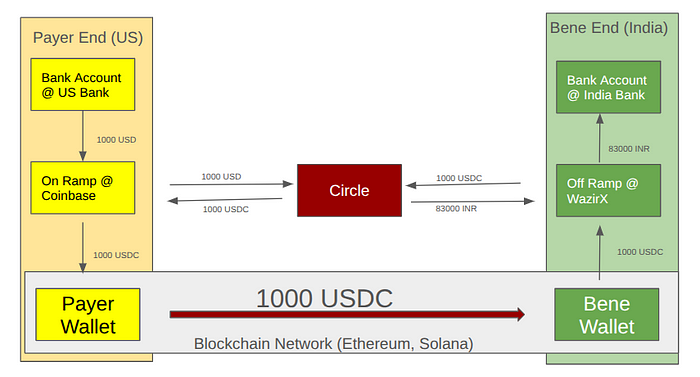
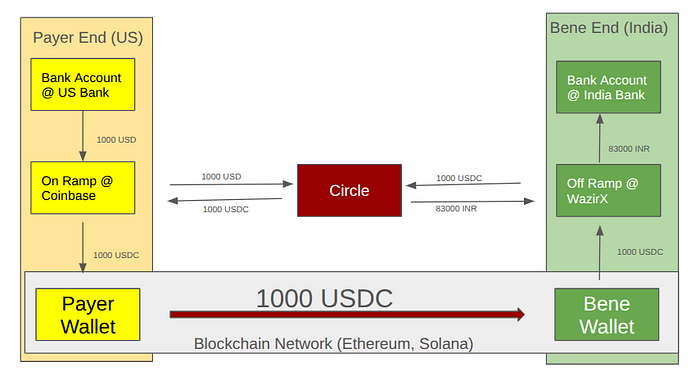
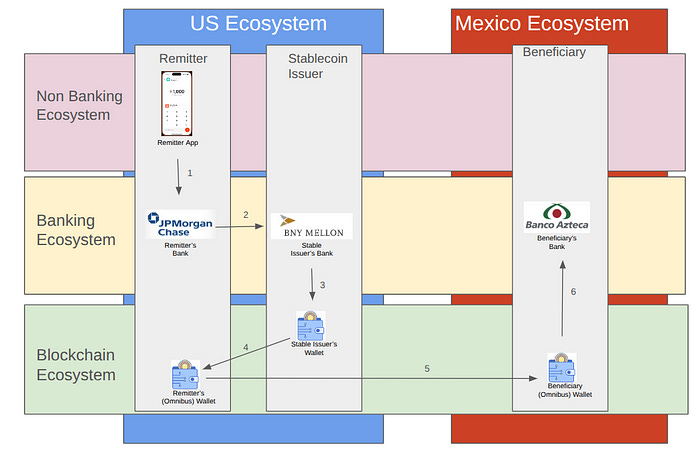
Typical example: Sender deposits USD at bank → bank transfers to stablecoin issuer → issuer mints and distributes stablecoin to wallet → recipient withdraws to local currency via local off-ramp service.
2. Store of Value – Stable value preservation in high-inflation economies
Stablecoin maintains a 1:1 peg to USD or other strong currencies, very important for people in countries with double-digit inflation.
According to Visa, about 1.4 billion people live in economies with inflation >10%.
Retail use-case: People convert local currency to stablecoin to preserve value.
Corporate treasury: Businesses in emerging markets convert POS revenue to stablecoin and transfer back to headquarters multiple times a day, minimizing FX risk.
3. Illustrated transaction structure
(1) Initiate transaction Sender opens a stablecoin-supported remittance app (e.g., fintech app), enters the USD amount to send and recipient info. The app performs identity verification (KYC) and AML/CFT compliance checks before allowing the transaction.
(2) Debit sender's bank account When the transaction is approved, the app sends a payment instruction to the sender's bank. The bank debits the USD from the sender's account and transfers to the bank account of the stablecoin issuing organization (issuer).
(3) Mint stablecoin When the issuer receives fiat money in its bank account, they “mint” (issue new) the corresponding amount of USDC on the blockchain. This stablecoin is deposited into omnibus wallet (pooled) of the remittance app, used to serve multiple transactions of multiple customers.
(4) Transfer stablecoin on-chain The app transfers the corresponding amount of USDC from the sender's omnibus wallet to the omnibus wallet of the payout service provider in Mexico (off-ramp provider). This is a public blockchain transaction that occurs 24/7 and is usually completed in a few seconds with very low fees.
(5) Convert and deposit local currency for the recipient The off-ramp provider in Mexico receives USDC and sells USDC for Peso through the market or partner banks. Then they deposit the corresponding amount of Peso into the local bank account of the beneficiary. The final recipient only sees the Peso amount deposited into their account – without needing to know about blockchain or stablecoin.
4. Global stablecoin payment growth trends
Besides the role of store of value and remittances, stablecoin is strongly expanding in practical payment forms.
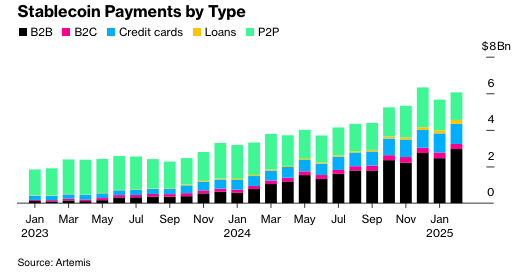
The chart below shows that stablecoin payment values have grown steadily from early 2023 to early 2025 across various segments:
B2B: Payments between businesses
B2C: Retail payments between businesses and individual customers
Credit Cards: Card payment integration
Loans: Disbursement and repayment
P2P: Peer-to-peer transfers between users
➡️ Stablecoin is increasingly accepted as cross-border digital payment infrastructure, helping to expand USD demand in global trade and services.
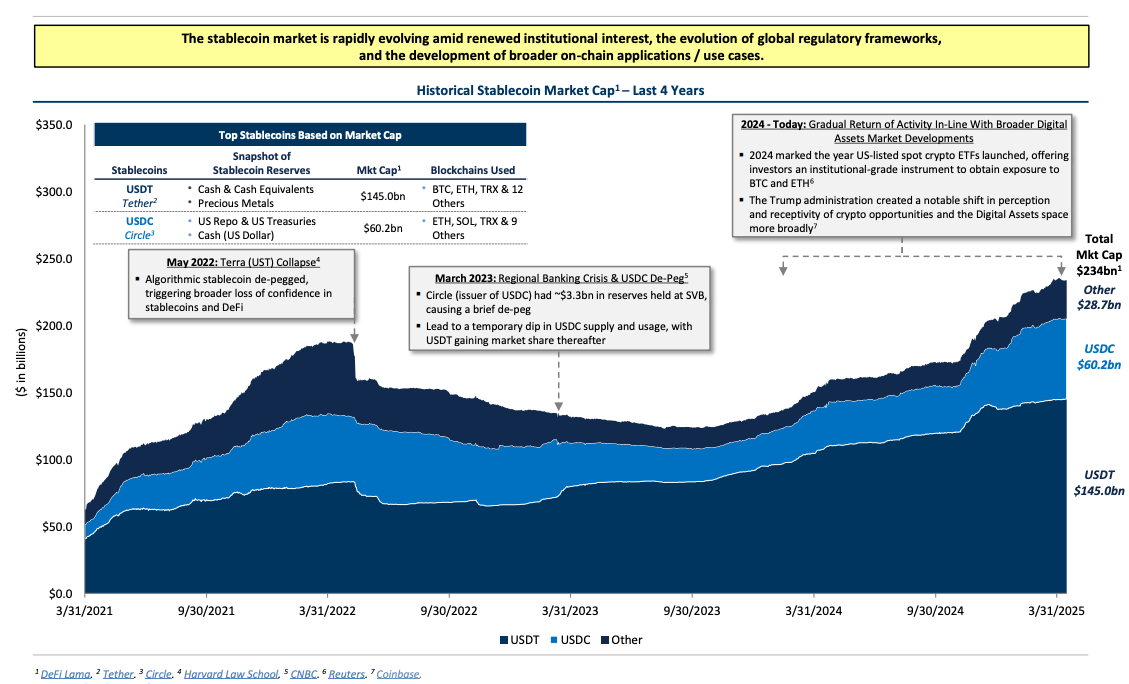
1.4 Who is dominating the stablecoin market?
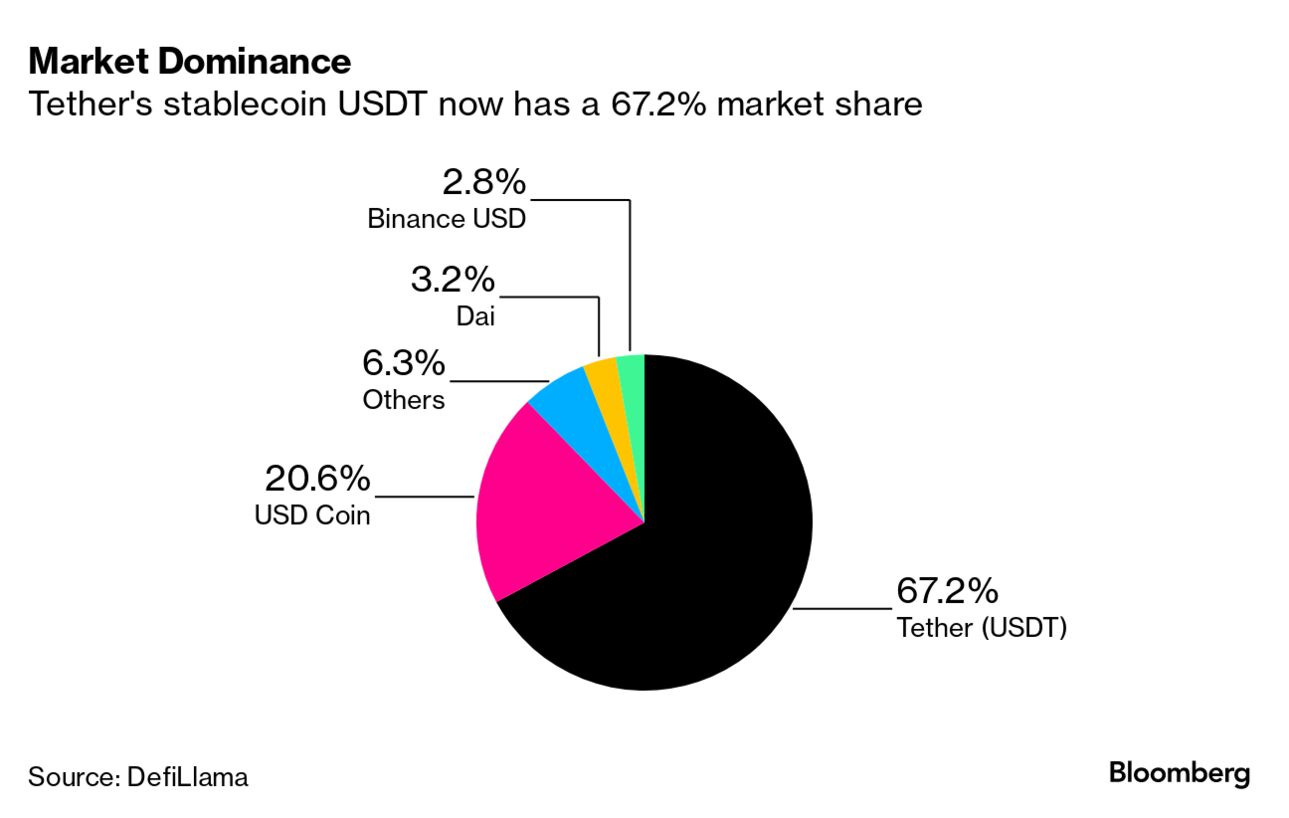
The current stablecoin market is strongly dominated by two giants:
Tether (USDT)
Circle (USDC)
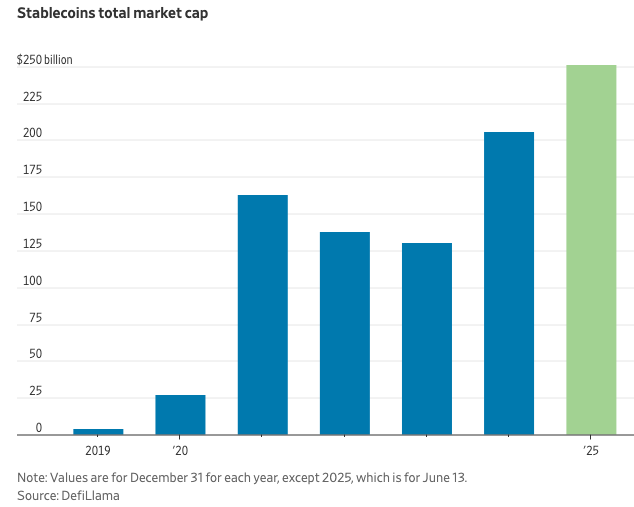
These two together account for over 80% of the global stablecoin market cap (~255 billion USD as of 6/2025).
✅ USDT remains the world's largest stablecoin, with circulation exceeding $150 billion, although operated from overseas (El Salvador). ✅ USDC is more transparently managed and audited (audit), often preferred by US financial institutions.
In addition, the process of adopting stablecoin also attracts many financial and tech giants.
PayPal officially launched its own stablecoin in 2023 – the first milestone for a major financial company launching a USD stablecoin. Not stopping there, PayPal becomes a strategic partner of many large fintech companies to promote stablecoin integration in retail payments and e-wallets.
A prime example is Fiserv Inc., the major US banking technology corporation, announced the launch of FIUSD, their own stablecoin, expected at the end of 2025. FIUSD will be compatible with other stablecoins like PYUSD (PayPal) and use infrastructure provided by Paxos and Circle. Fiserv serves about 10,000 financial institutions and 6 million POS locations, creating near-instant deployment scale.
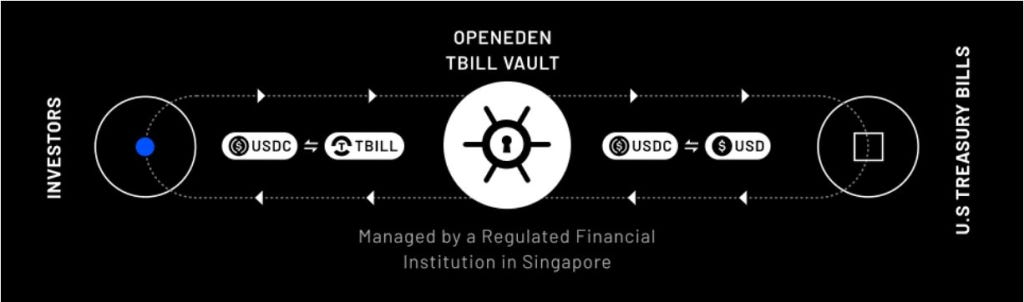
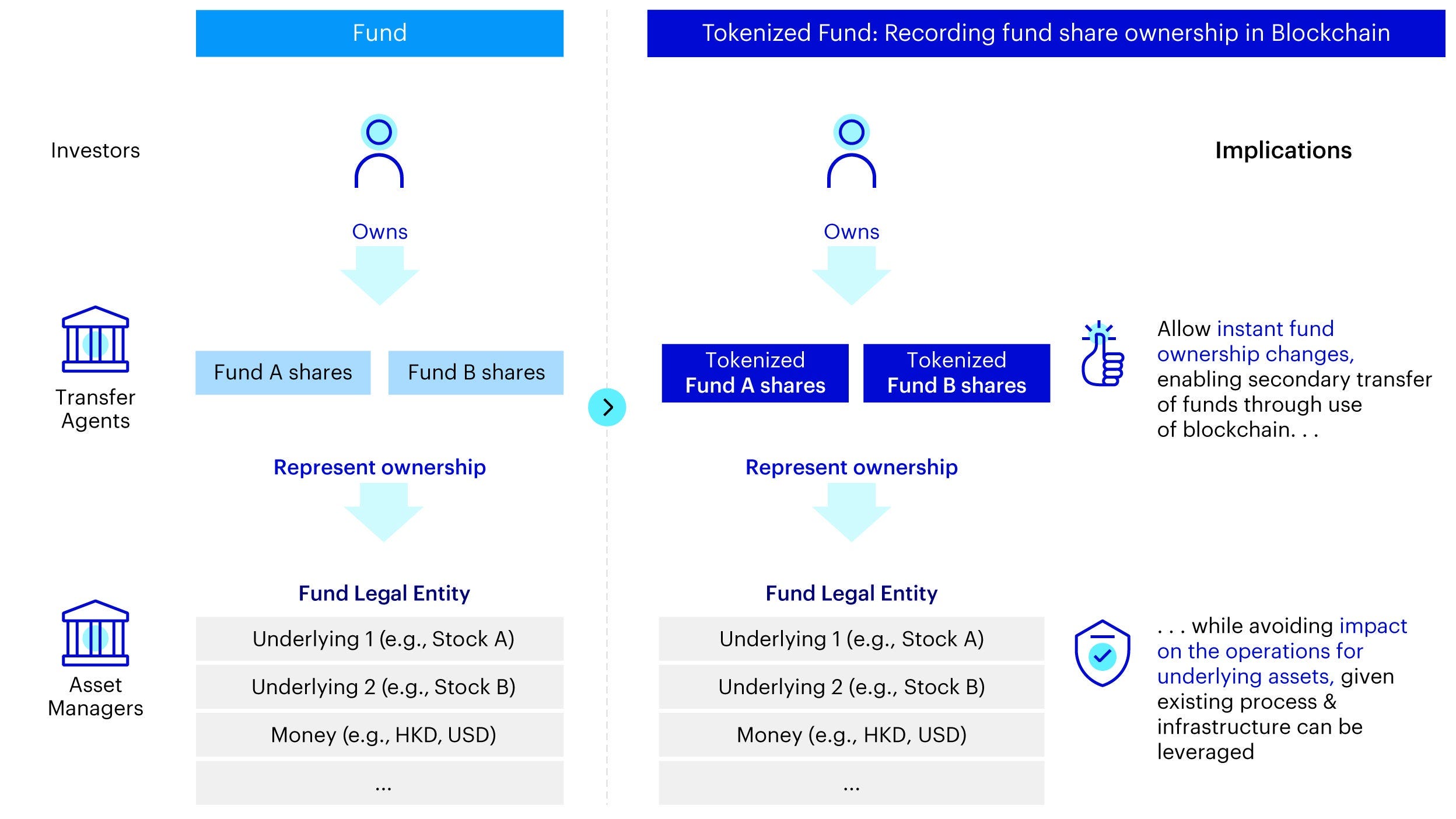
Alongside that, BlackRock, Franklin Templeton and traditional asset managers have developed tokenized money market funds, turning them into “collateral” to serve transactions on the blockchain.
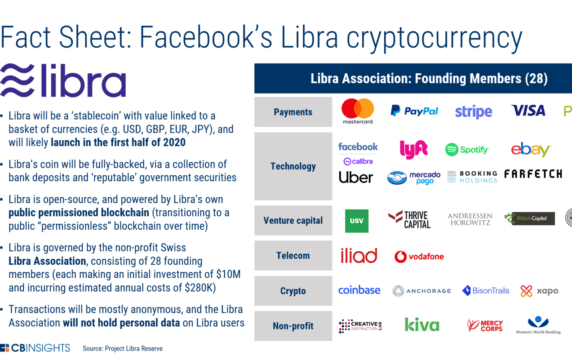
Notably: Facebook (Meta Platforms) once tried to launch Libra/Diem from 2019 but was blocked by global legal pressure, illustrating that policy barriers remain very large.
2. From the “meme-token” phenomenon to formal liquidity infrastructure
2.1 Phase 2021 – 2023: Period of experimentation and crisis
In the early phase of the 2020s decade, stablecoins exploded from a niche tool in the crypto world into a financial product with cumulative market cap exceeding 250 billion USD by the end of 2023. This growth was largely driven by demand for DeFi trading, blockchain remittances, and decentralized money market activities. In imagery, this was the “crypto dawn” phase – when stablecoins swelled like fast-fizzing beer foam in a DeFi glass.
However, four major events put this ecosystem on the operating table of legislators:
May 2022: The collapse of Terra/UST – an algorithmic stablecoin – caused tens of billions USD in damage and spread a wave of shattered trust across the entire market.
US Treasury Secretary Janet Yellen immediately issued the strongest US government response to date on stablecoins. She told the House Financial Services Committee (12/5/2022):
“The terrifying collapse of Terra reveals the risks of self-pegged USD tokens. I wouldn't call it at this scale a real threat to financial stability, but they are growing very fast and carry risks similar to those of traditional banks that we have known for centuries.”
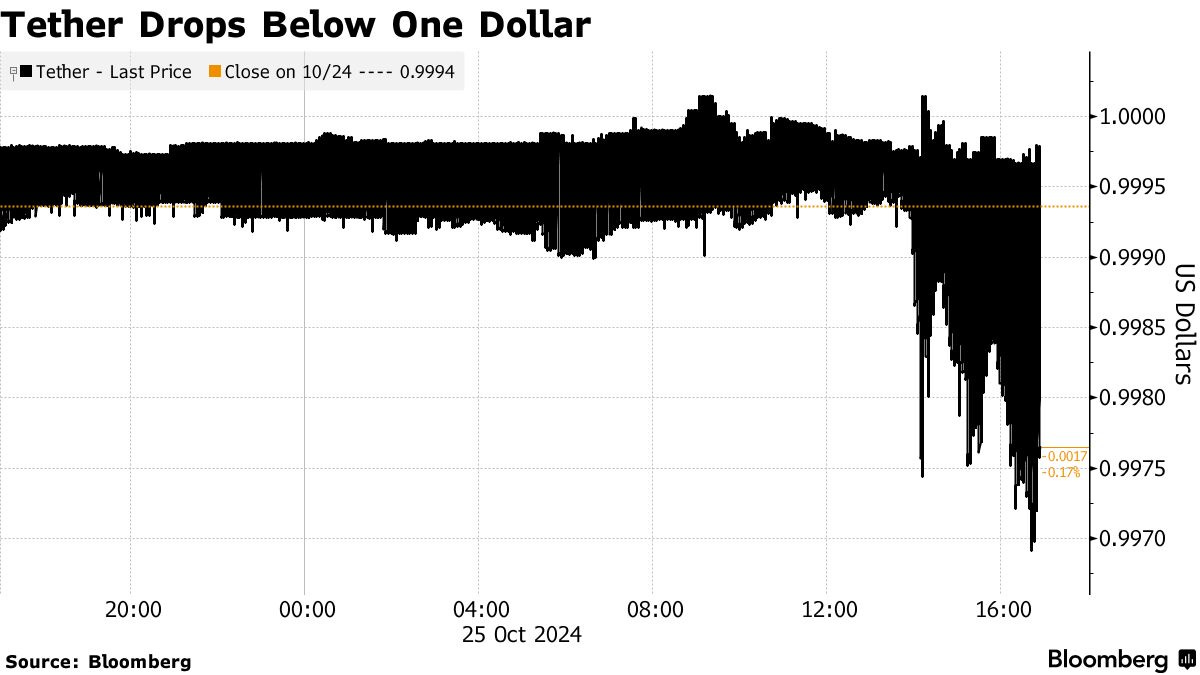
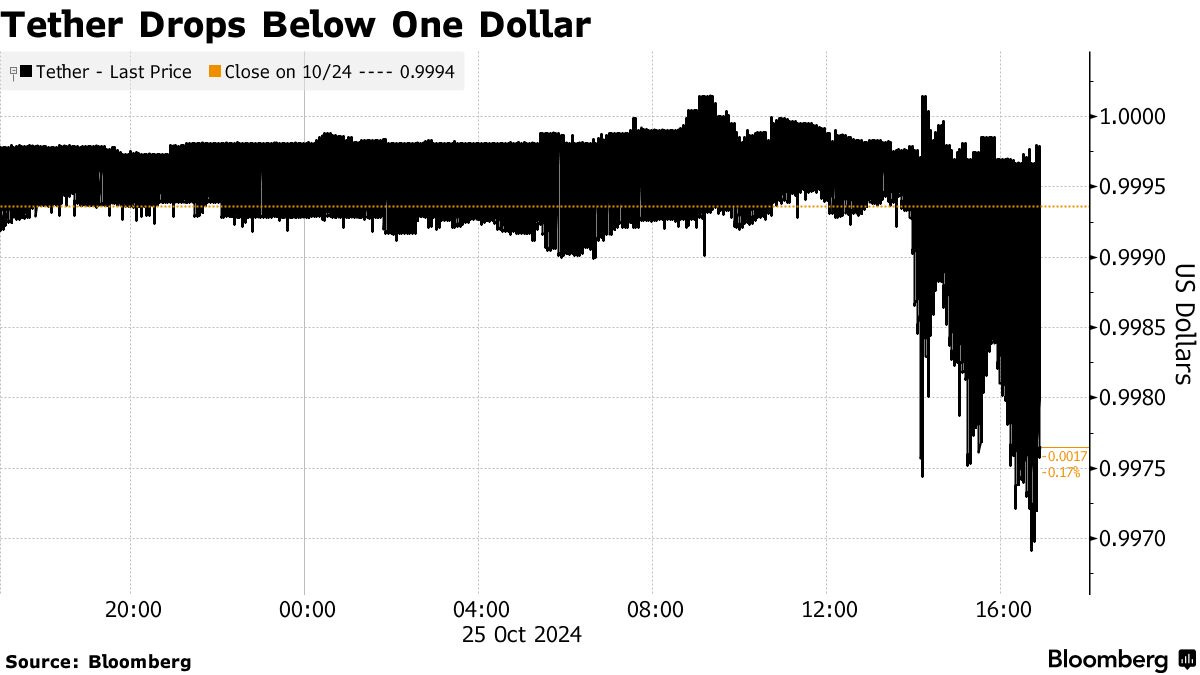
November 2022: FTX bankruptcy. Spreading panic across the entire ecosystem, causing Tether and many other stablecoins to de-peg as investors raced to withdraw to cash.
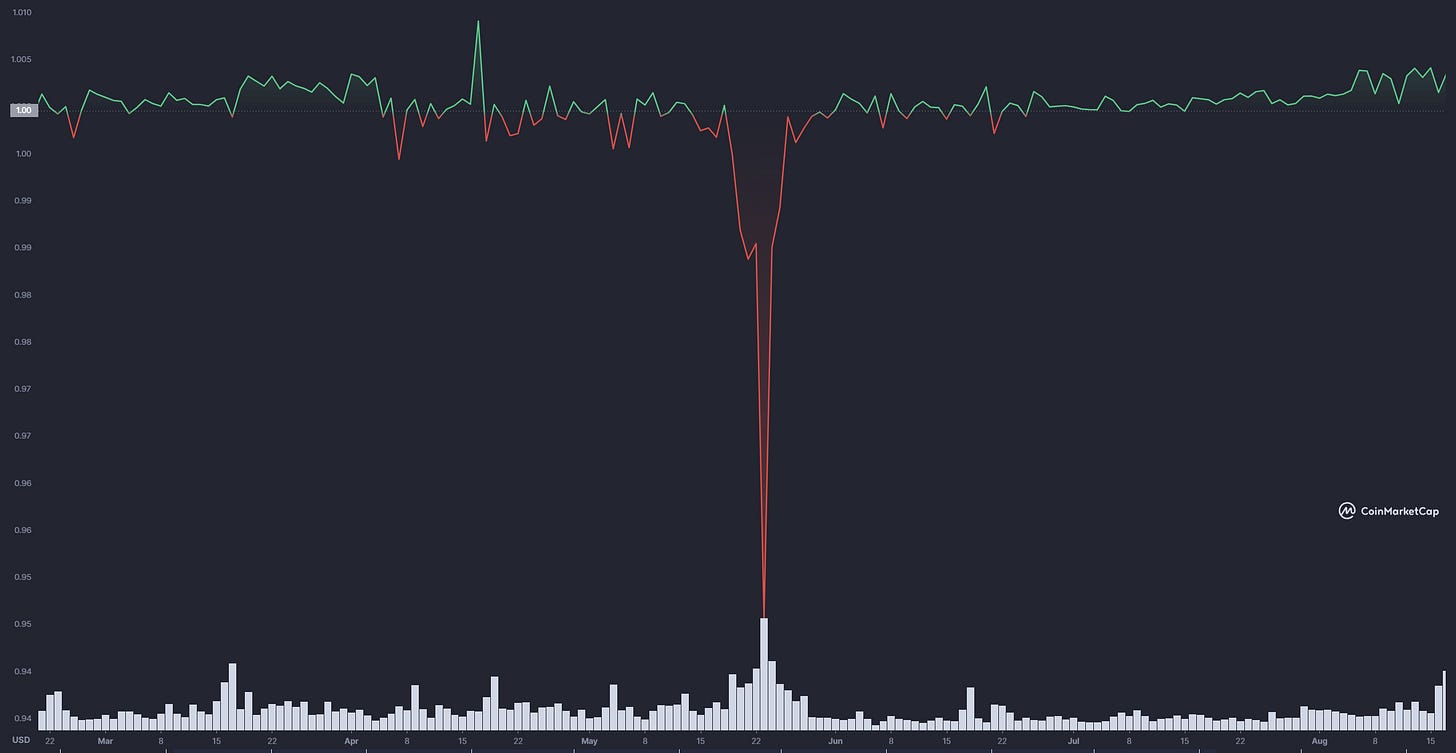
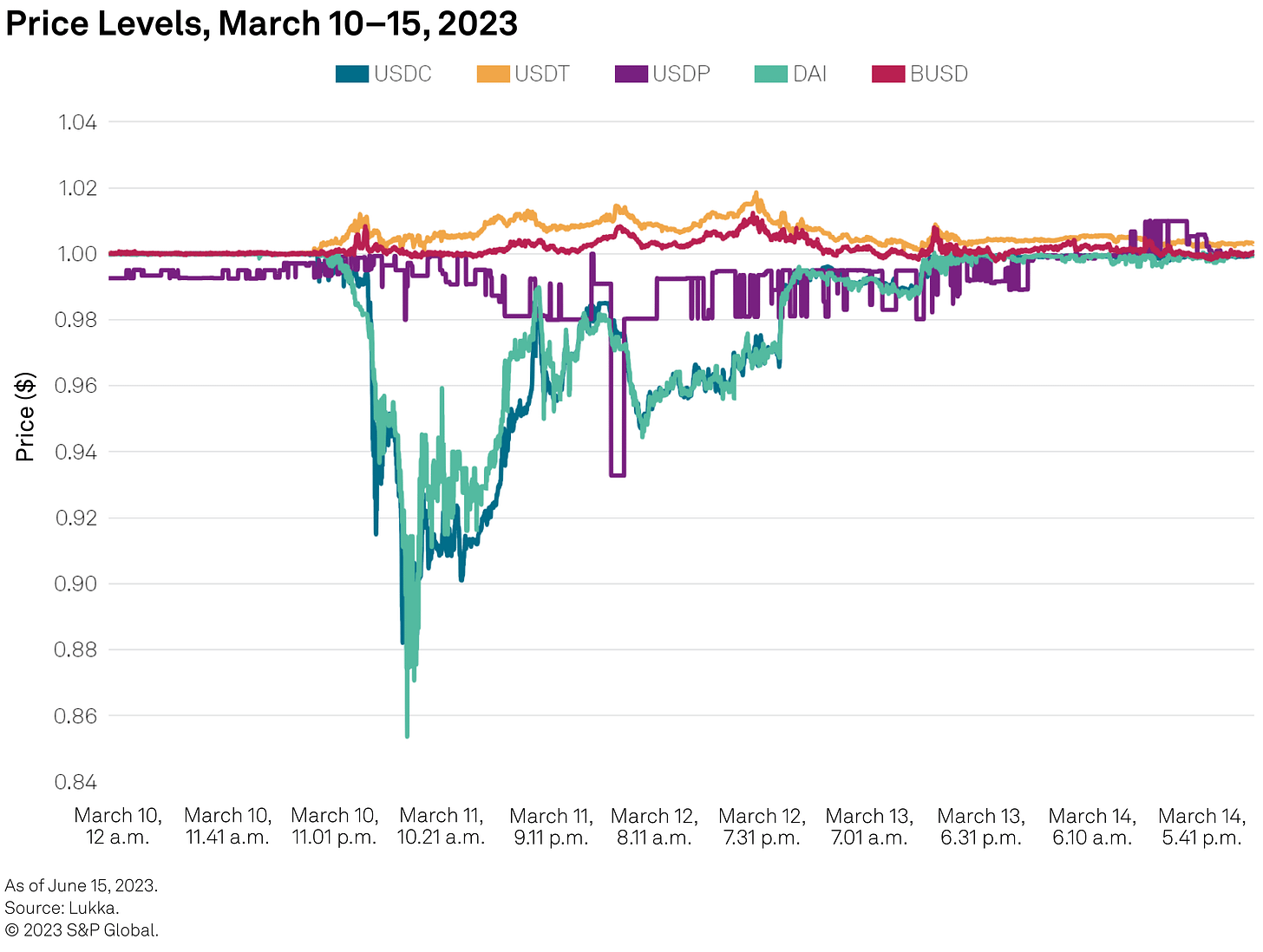
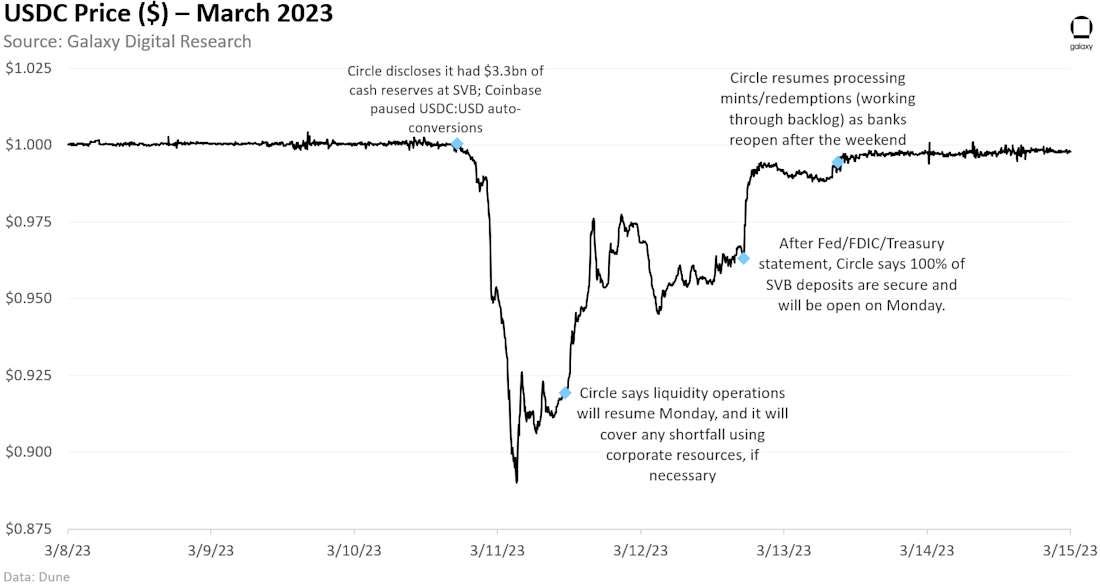
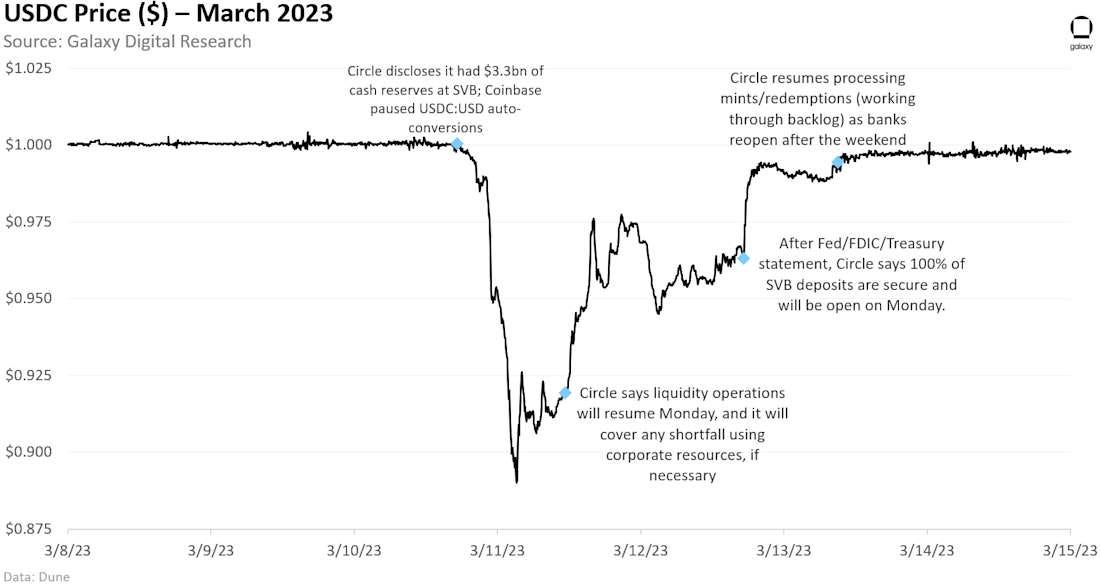
March 2023: Silicon Valley Bank collapses. USDC temporarily lost its peg because a large portion of USDC's collateral assets deposited at SVB were frozen, shocking investor confidence.
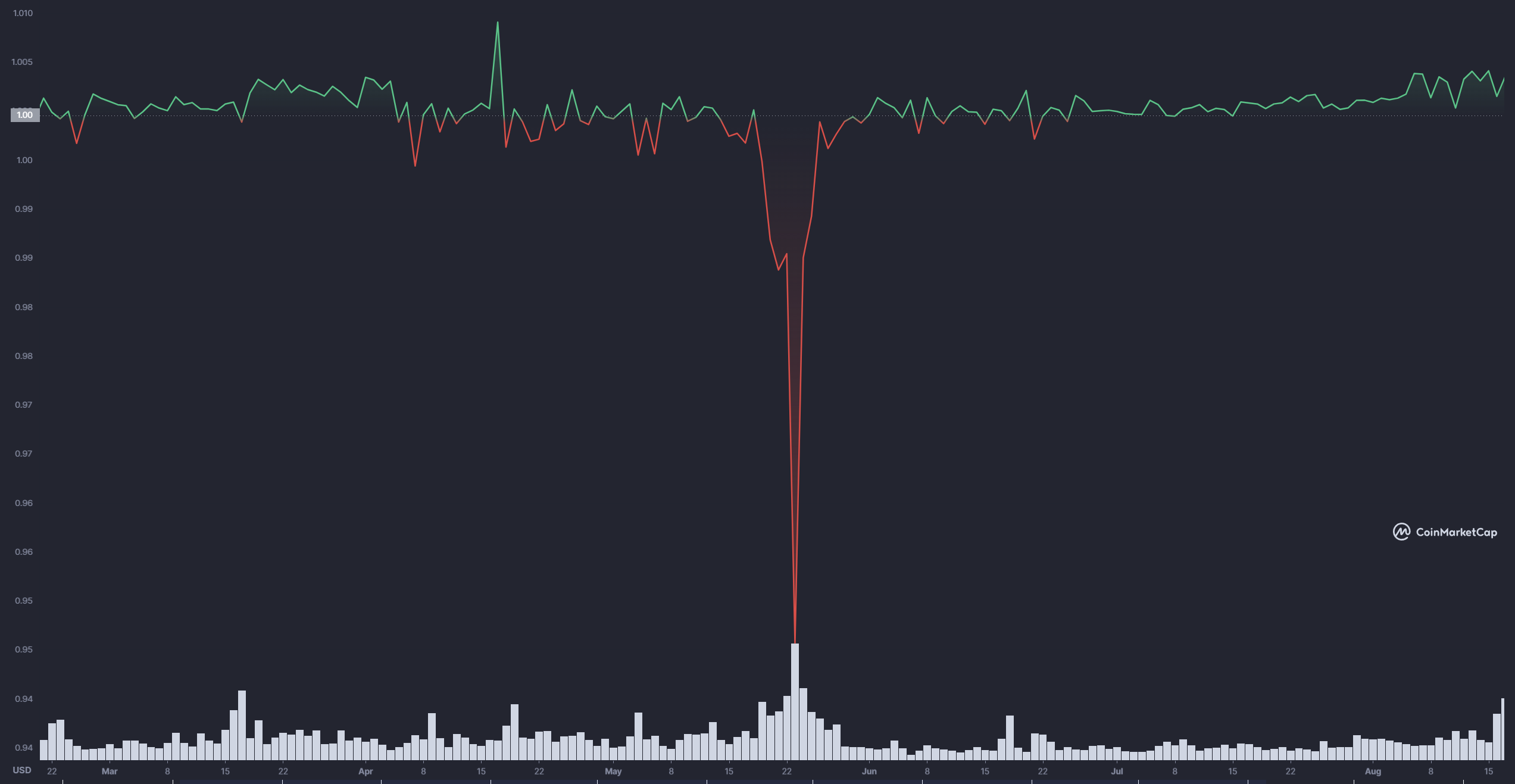
June 2023: Curve Finance hacked. A major stablecoin liquidity provider was attacked, causing Tether to temporarily lose its peg on the Curve’s 3pool platform.
Treasury Secretary Yellen then called on Congress to enact laws requiring stablecoin issuers to become insured deposit-taking institutions under bank supervision.
These two shocks turned Discord servers into... congressional hearing rooms. Software developers, usually wearing t-shirts and chatting memes, now had to step into the spotlight of the Senate Banking Committee, trembling hands holding code samples, explaining liquidity, reserves, and audits before rows of frowning senators. From a nearly lawless DeFi tool, stablecoins suddenly became a concern systemic – requiring Washington to define, regulate, and tightly control.
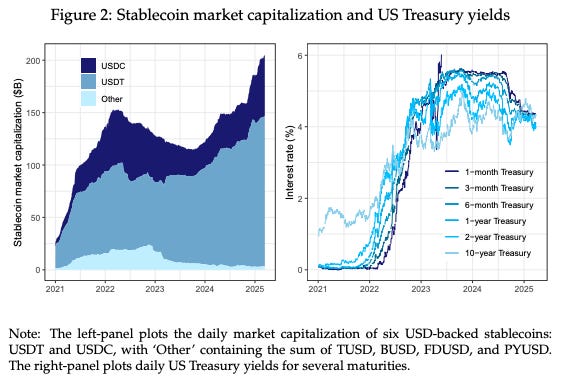
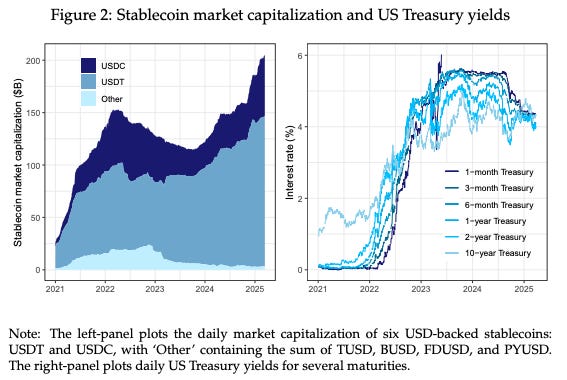
Despite enduring shocks like the Terra/UST collapse and the post-FTX confidence crisis, the stablecoin market still demonstrated remarkable resilience. According to ARK, despite crypto price volatility, stablecoin issuers quietly became one of the largest buyers of short-term US bonds – with Tether and Circle reporting holdings of ~98 and ~22 billion USD T-bills at the beginning of 2025, respectively.
2.2 Phase 2024 – 2025: Stabilization and “Federalization” of stablecoins
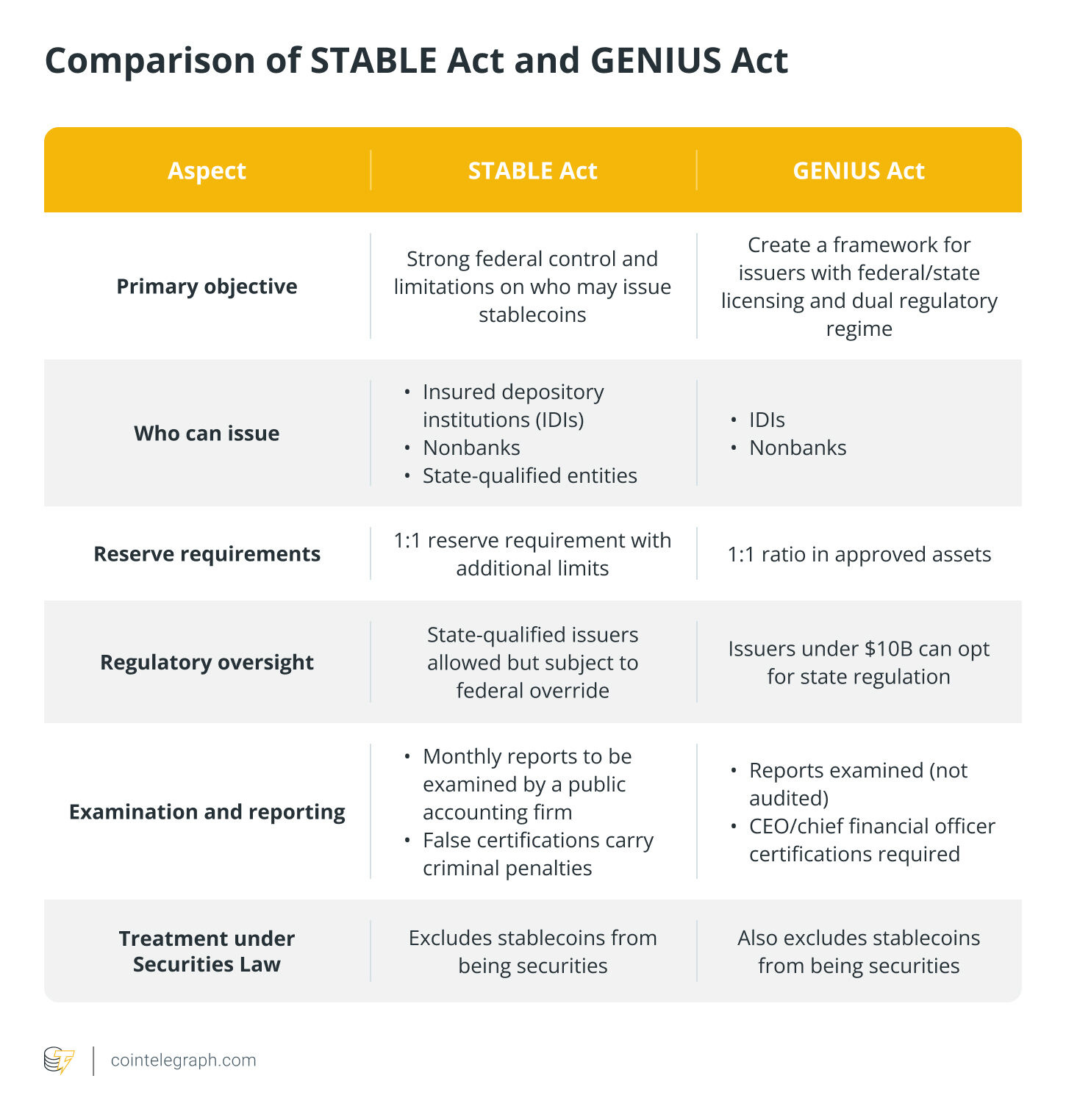
The outcome of those hearings and debates was the birth of two landmark laws:
STABLE Act (H.R. 4766): passed in the House, establishing a minimal and strict definition – “each issued stablecoin must be backed 1:1 by real reserve assets, no more no less.”
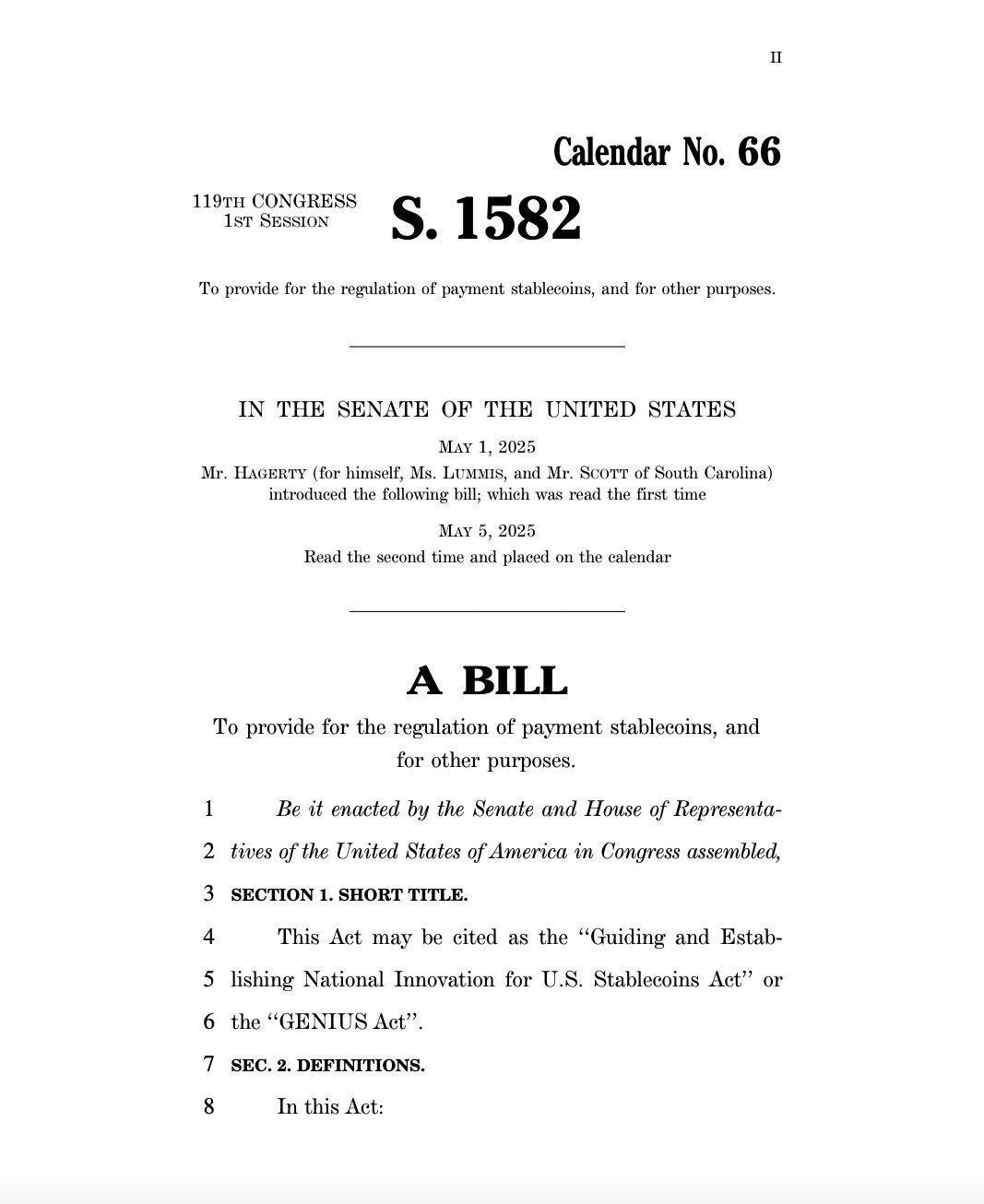
GENIUS Act (S.394/2025): passed in the Senate in June 2025 by a 66-32 vote, officially bringing stablecoins under federal oversight with more detailed and stricter provisions.
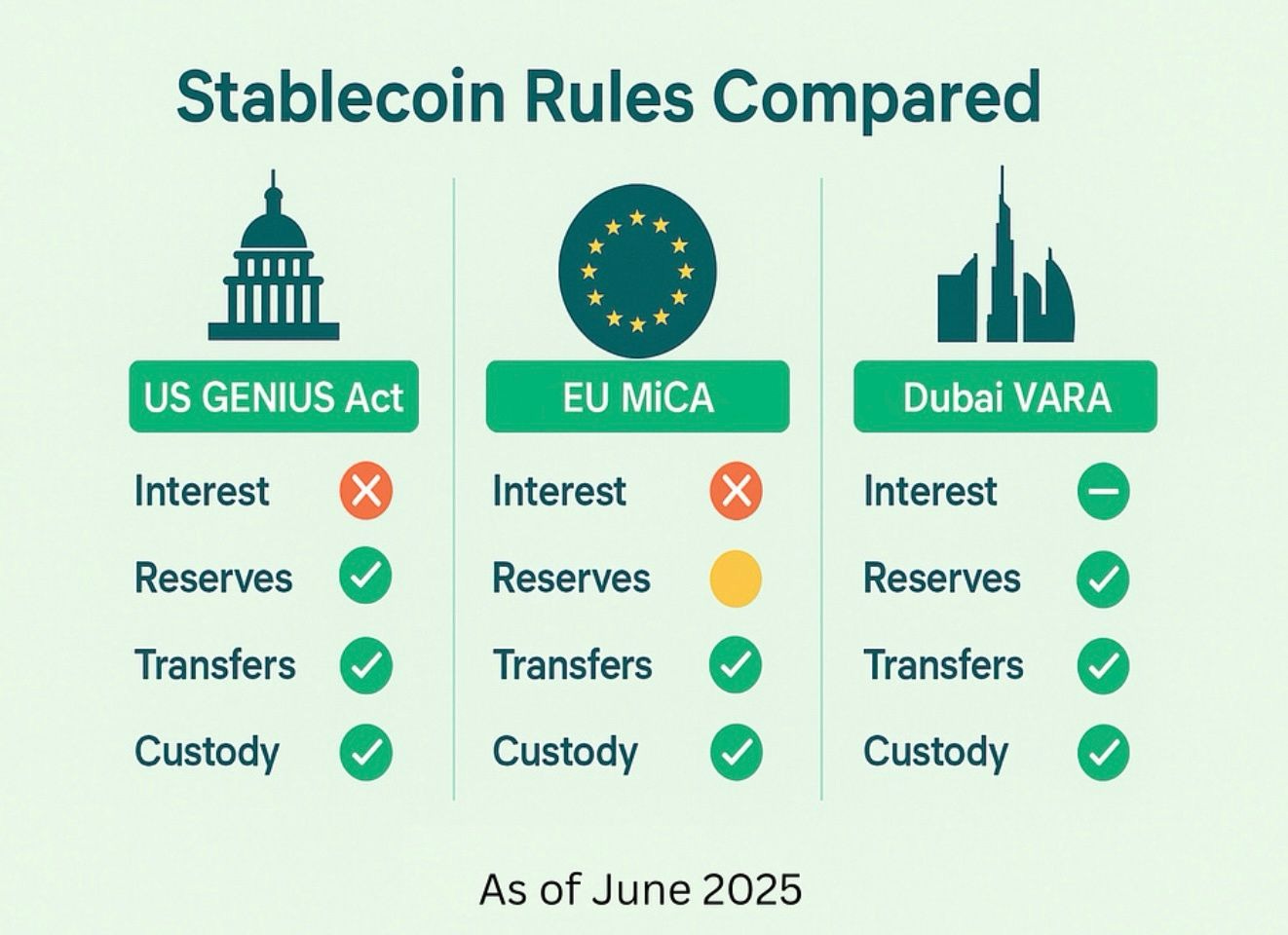
The GENIUS Act not only sets strict reserve and transparency requirements, but also sends a clear policy message: Stablecoin is no longer considered “wild crypto” but will be regulated on par with traditional financial products.
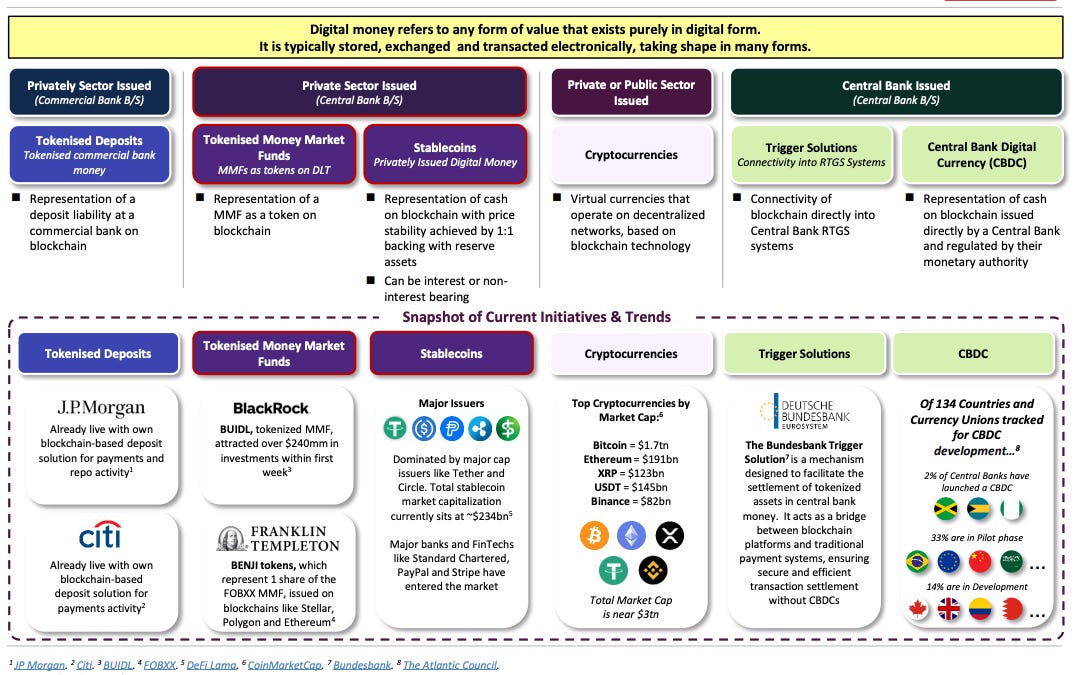
To better understand the policy ambition behind the GENIUS Act, look at the digital currency ecosystem chart below. Stablecoin does not stand alone as an undisciplined “cryptocurrency,” but is classified on par with:
Tokenised Deposits: Commercial bank deposits digitized on blockchain.
Tokenised Money Market Funds: Tokenized money market funds that enable circulation and use as on-chain collateral.
CBDC (Central Bank Digital Currency): Digital currency issued and managed directly by the central bank.
Placing stablecoin alongside these tightly regulated financial products shows Washington's strategic ambition: to tame stablecoin, turning it into a formal link in the US payment structure and public debt management.
2.3 Payment costs and competitive advantages of stablecoin
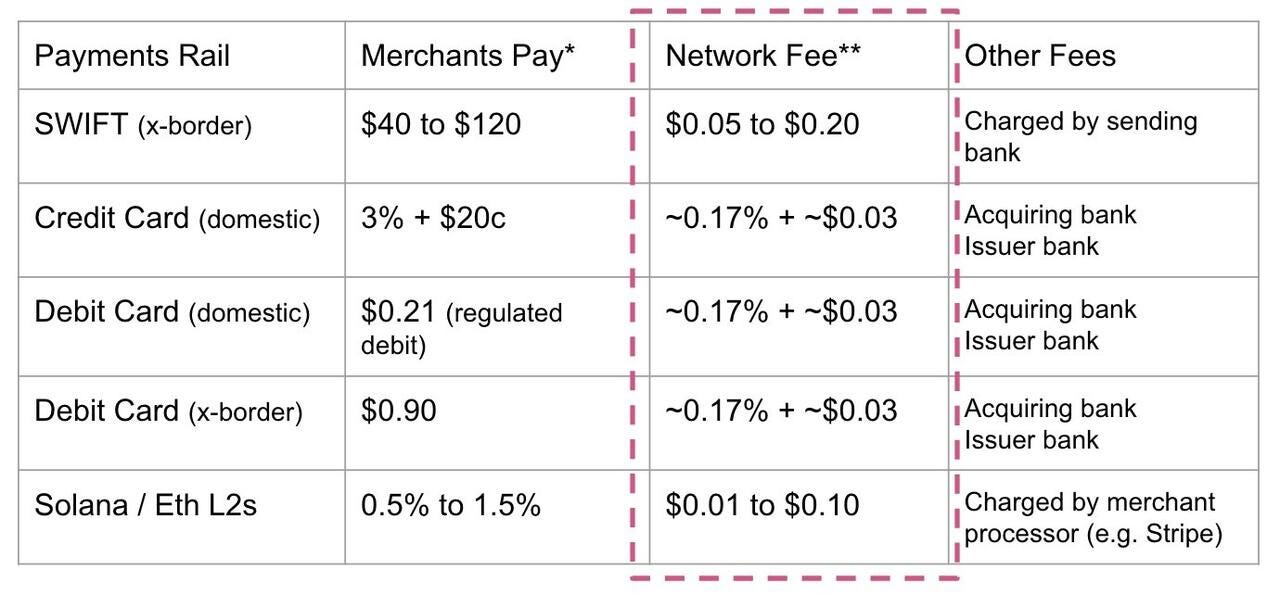
Beyond its potential to act as a “capital pipeline” for the US Treasury, stablecoin is also viewed by policymakers and businesses as a solution to reduce retail and cross-border payment costs, especially in developing markets.
Fed Governor Christopher Waller argues that stablecoin can expand payment use cases thanks to cost savings and efficiency, especially in developing countries where international remittance fees are often very high and traditional banking infrastructure is underdeveloped.
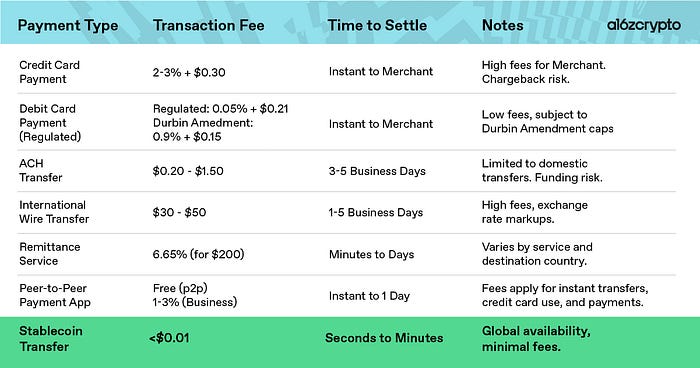
The chart below clearly illustrates the fees that merchants and users must pay when comparing traditional “payment rail” with blockchain networks like Solana or Ethereum Layer 2:
Clearly, blockchain networks supporting stablecoin have very low network fees, with potential to help merchants save significant costs compared to traditional banking or credit card systems. Besides cheaper network fees, stablecoin transactions occur almost instantly and operate 24/7, improving cash flow and liquidity for small businesses.
Even Bank of America CEO Brian Moynihan acknowledged at the Economic Club of Washington DC that his bank could participate in issuing its own stablecoin, pegged to USD, to meet customers' new digital payment needs.
➡️ This shows that stablecoin is not only a “mini T-bill buying machine” for the US Treasury, but also a real competitive tool in retail and cross-border payments, promising pressure to reduce fees across the entire financial industry.
3. GENIUS – THE GOLDEN FETTERS TIGHTLY BINDING STABLECOIN
3.1 Origins and policy objectives
GENIUS Act (Government-Enabled Nationwide Issuance of USD-backed Stablecoins Act – S.394/2025) is the first federal law to establish a comprehensive legal framework for payment stablecoins in the US.
The draft was initiated at the end of 2024, right after the shock USDC de-peg and congressional hearings on “systemic risks.” On 17/6/2025, the US Senate passed it with a 66-32 vote, demonstrating rare bipartisan support for a sensitive tech-finance topic.
While the House is also advancing STABLE Act (Stablecoin Transparency and Accountability for a Better Ledger Economy Act of 2025), both bills aim for one goal: financial stability, consumer protection, ensuring USD sovereignty on-chain.
Many experts believe the GENIUS Act will be the “main skeleton” in the final consolidated text, due to its detail and political consensus.
The main strategic objectives of the GENIUS Act include:
Preventing a “UST 2.0” from shaking the T-bill market.
Affirming USD sovereignty on-chain, without needing CBDC.
Expanding the liquidity pool: turning stablecoin into a 24/7 capital supply channel for the Treasury.
“Stablecoin must not become shadow banks; they will be the digital nerves of USD – directly connecting to the spine of the Treasury.” - Senator Cynthia Lummis
➡️ The GENIUS Act appears as a laurel wreath of legal legitimization for stablecoin, but in reality, it is golden fetters anchoring it to the US public financial structure.
Every new USDC, USDT token minted is now not just a DeFi tool – it is a mini T-bill purchase order, sucking in retail capital 24/7 for the Treasury.
Washington doesn't need the Fed to print more money. Just need people to tap-to-pay – and the system automatically pumps blood into public debt.
3.2 Governance mechanism: The “Four Golden Locks” of GENIUS
Authority to issue cease-and-desist orders, civil penalties, require dissolution.
No-interest payment rule (Zero Yield Rule): Stablecoins are not allowed to promise yield, wrap coupons, or advertise as investment products.
Federal law preempts state law (Federal Pre-emption): all disputes resolved in D.C.
3.3 Policy Implications and Subtle Message
GENIUS Act is not just a set of rules for governing digital assets, but a sophisticated fiscal and monetary policy tool. Hidden behind the strict provisions is a very clear policy message:
“Issuing stablecoins? Completely allowed – but must absolutely comply with the no-interest rule. That sweet yield is a privilege reserved by policy for commercial banks and the Treasury.”
This approach has two parallel objectives:
Prevent competition with the commercial banking system:
By prohibiting interest payments (zero yield rule), stablecoins cannot become “shadow deposits” sucking cheap capital from the banking system. It forces stablecoins into pure payment instruments, unable to replace traditional deposits or money market funds.
There is a fundamental principle about fiat money applied here: circulating medium should not bear interest. If a payment instrument pays interest, it becomes a secondary financial product (investment product) bound by a series of regulations, making it unsuitable for instant payments.
In other words, stablecoins need a solid foundation, with risk close to zero. They should not mix investment or interest-saving elements. Those who want interest should use savings accounts or other investment instruments (like savings deposits at commercial banks)
Additionally, paying interest on stablecoins would force issuers to find ways to “produce” additional yield – often by taking higher credit risk or longer maturities, contrary to the 100% reserve requirement in short-term safe assets like T-bills ≤ 90 days.
→ This is the clear dividing line: Stablecoins are not money market funds, not interest-bearing savings – but backed digital cash.
Turn stablecoins into a capital mobilization channel for the US Treasury: Stablecoins are allowed free issuance, but 100% reserves must be cash or short-term T-bills (≤90 days). This turns every stablecoin into a mini T-bill purchase order, automatically channeling retail capital 24/7 from phone wallets to the Treasury, without needing Fed to launch additional QE.
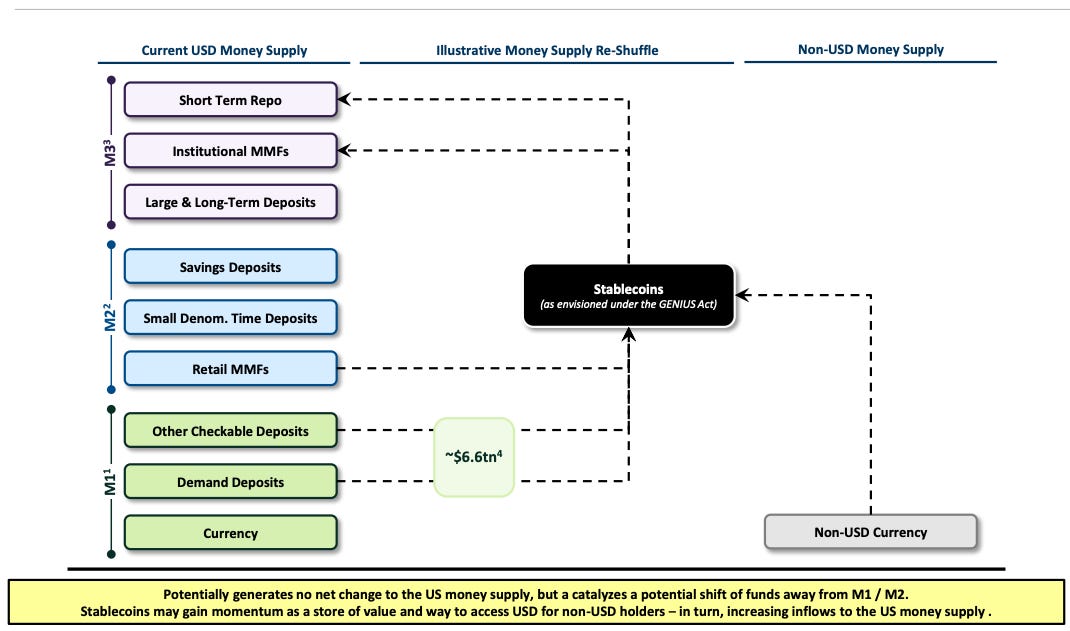
To better visualize Washington's ambition, see the diagram of USD money supply reallocation below:
Every time consumers top up USD into phone wallets to get stablecoins (USDC, USDT...), that money doesn't sit idle in commercial banks as demand deposits. Instead, the GENIUS Act requires stablecoin issuers to use 100% of that capital to buy short-term Treasury bonds (T-bills ≤ 90 days).
The result is:
Every new stablecoin mint transaction = a new T-bill purchase order for the US Treasury.
This process happens automatically, 24/7, according to actual consumer demand without needing the Fed to pump money through QE.
➡️ People just swipe their phones to pay (tap-to-pay) → more stablecoin issued → US Treasury sells more short-term debt → draws retail capital into T-bills.
In summary: Mobile payment infrastructure and stablecoins have turned every phone wallet into a “mini T-bill ATM” that automatically pumps capital into US public debt, without the central bank needing to print more money or launch quantitative easing (QE) programs.
➡️ GENIUS Act does not increase total USD money supply, but redirects capital flows from M1/M2 (checking deposits, savings, retail MMFs) to T-bill-backed stablecoins. At the same time, stablecoins are capable of attracting foreign currency capital, acting as a “gateway” for non-USD holders to access USD – thereby naturally increasing demand for US T-bills.
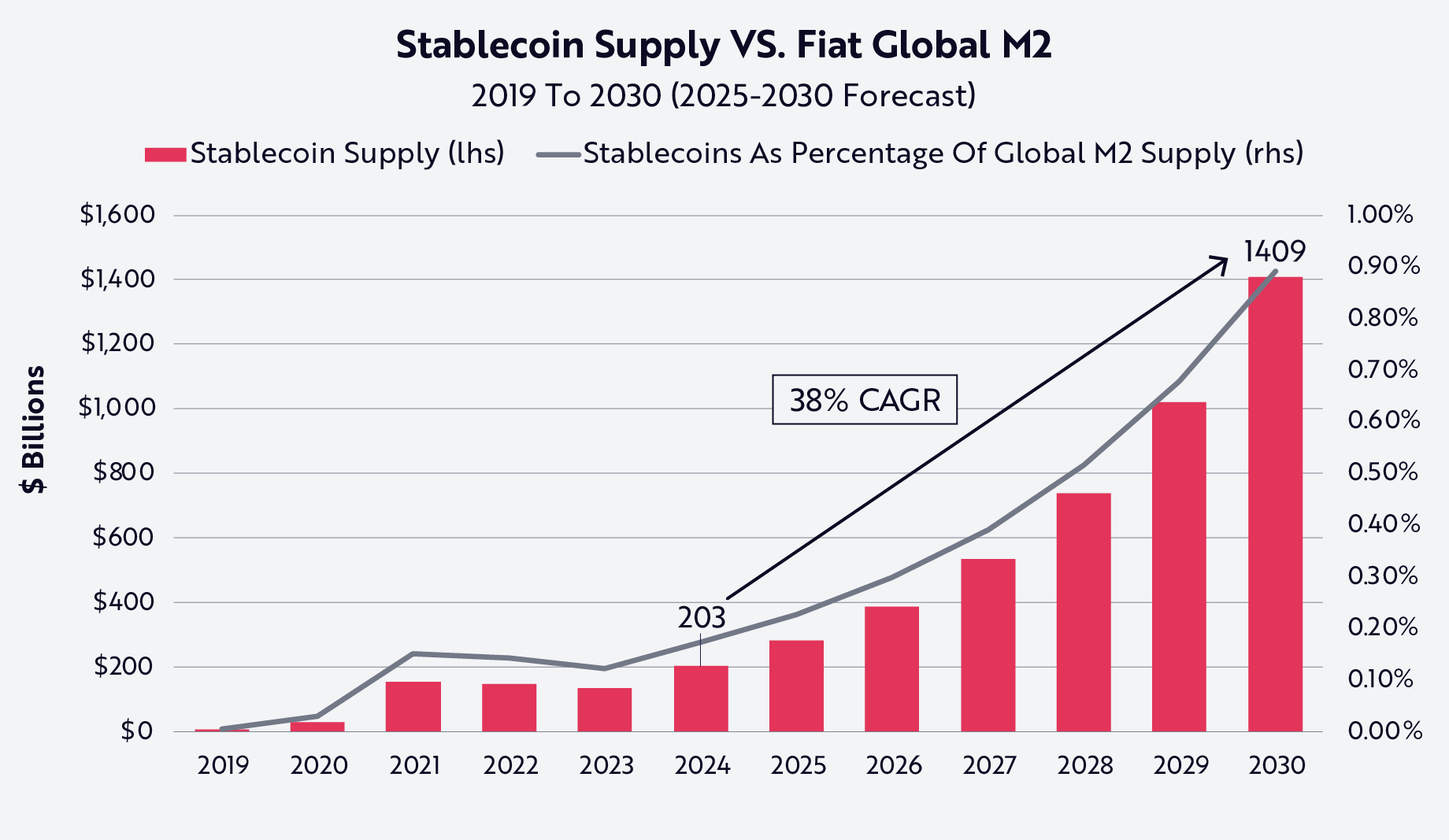
The following chart illustrates the scale of retail capital that the GENIUS Act aims to redirect:
Forecasts suggest global stablecoin supply could grow at a CAGR of ~38% in the 2025–2030 period, surpassing the 1.4 trillion USD mark and approaching nearly 1% of global M2 supply. This is the massive “retail capital lake” that Washington wants to channel directly into the US T-bill market.
And the biggest implicit message:
GENIUS Act does not just regulate stablecoins. It is a sophisticated policy design to transform stablecoins from DeFi speculation tools into a formal pipeline for the US federal budget, ensuring stable, continuous, and globalized capital flows for US public debt.
Since the President signed the law, stablecoins have officially “changed fate” – from DeFi toys to cold, precise saline tubes accurate to the basis-point, sustaining the US public debt machine. This is just the opening act for the era of crowd-sourced QE – where phone wallets become government capillaries, and consumers become invisible sponsors of US public debt.
4. QE 3.0 – WHEN PHONE WALLETS BECOME SHORT-TERM T-BILL BANKS
4.1 Current configuration: Stablecoins as “Mini-MMF” in your pocket
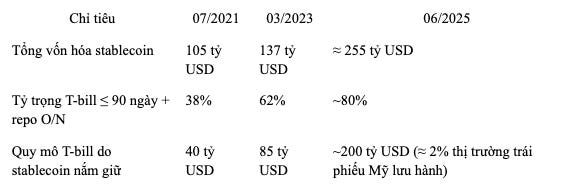
In three years, the reserve structure of the stablecoin market has shifted dramatically, turning it into a miniaturized money market fund (MMF) model directly on phone wallets:
Source: Circle attestations, Tether assurance, ChainArgus on-chain, SIFMA, TBAC Q2/2025.
This means: stablecoins have quietly absorbed a scale equivalent to the Fed's 2019 Reverse Repo Facility. With 3-month T-bill rates holding around 5.1–5.2%/year, Treasury is collecting ~10 billion USD/year in coupons-without sharing a single cent with token holders.
4.2 Automatic pumping mechanism: Mint – Redeem → Buy T-bills
Stablecoin operations have now become a 24/7 short-term bond financing process:
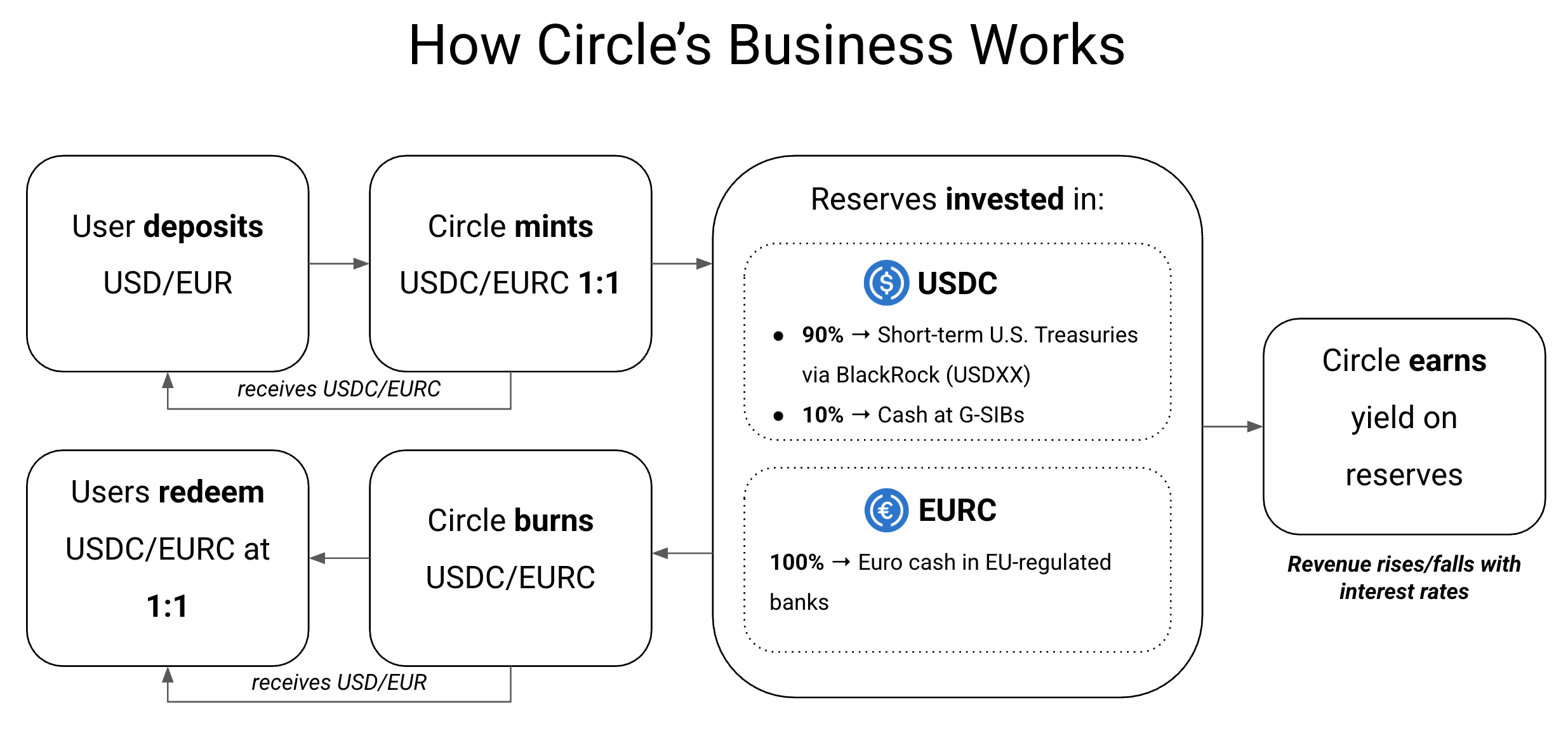
Users deposit USD/EUR into Circle/Tether → issuer mint USDC/EURC 1:1 → immediately distributed to phone wallets, instant circulation.
Issuer wires to custodian bank (BNY Mellon, Signature Bridge) → swaps via Primary Dealer to buy 4–13 week T-bills or overnight repo.
When users redeem, issuer sells reserves to return USD/EUR. T-bill coupons flow straight to Treasury, while issuer keeps ~12–35bp spread to cover costs.
USDC/USDT tokens are minted and distributed directly to phone wallets → instant circulation.
Daily/weekly coupons received are transferred straight to Treasury General Account; issuer only keeps ~12–35bp spread to cover operations and compliance.
➡️ Circle earns money from yields on reserves: the higher the interest rates, the larger the coupon income. But user acquisition costs (rewards, distribution) also increase.
Result: Every newly minted USDC or USDT is an automatic T-bill buy order, executed continuously 24/7 without needing cumbersome periodic auction processes.
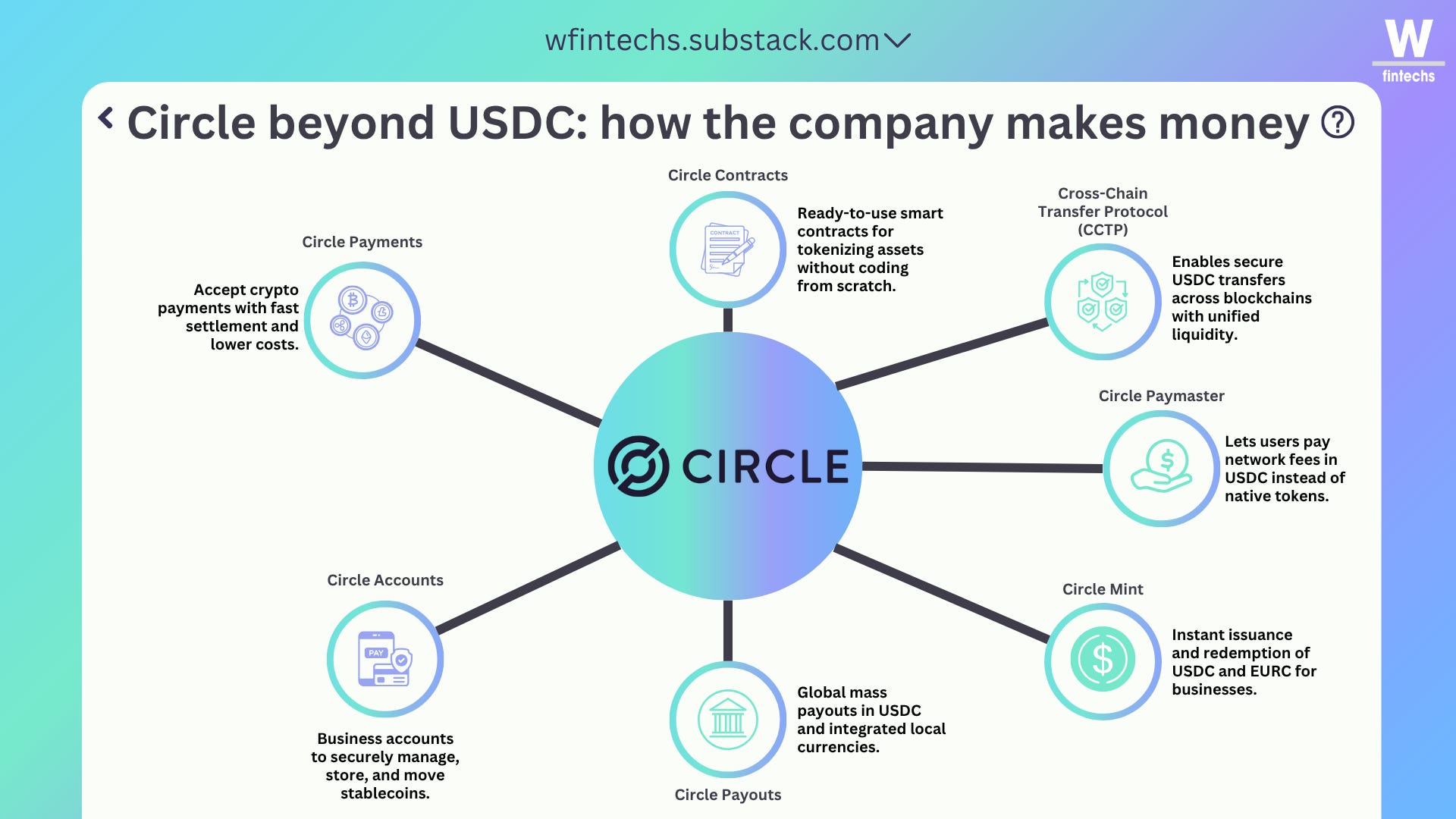
How else does Circle make money?
Besides the spread from T-bill, Circle (issuer of USDC) also earns distribution and service fees. When interest rates are high, they enjoy more coupons but also have to spend heavily to "lure" users to hold USDC instead of MMF or high-interest bank accounts. Coinbase once paid up to ~4.1% to USDC holders.
Conversely, when interest rates are low, users are more willing to hold USDC without large rewards. Cash cycles faster (spending, transfers), Circle reduces distribution costs, retaining most of the profits.
With an IPO market cap of nearly 22 billion USD, Circle is making a big bet: turning stablecoin from a DeFi tool into a global retail payment rail – and into a "mini T-bill bank" in everyone's pocket.
4.3 Treasury Ambition: “2 Trillion USD Straw”
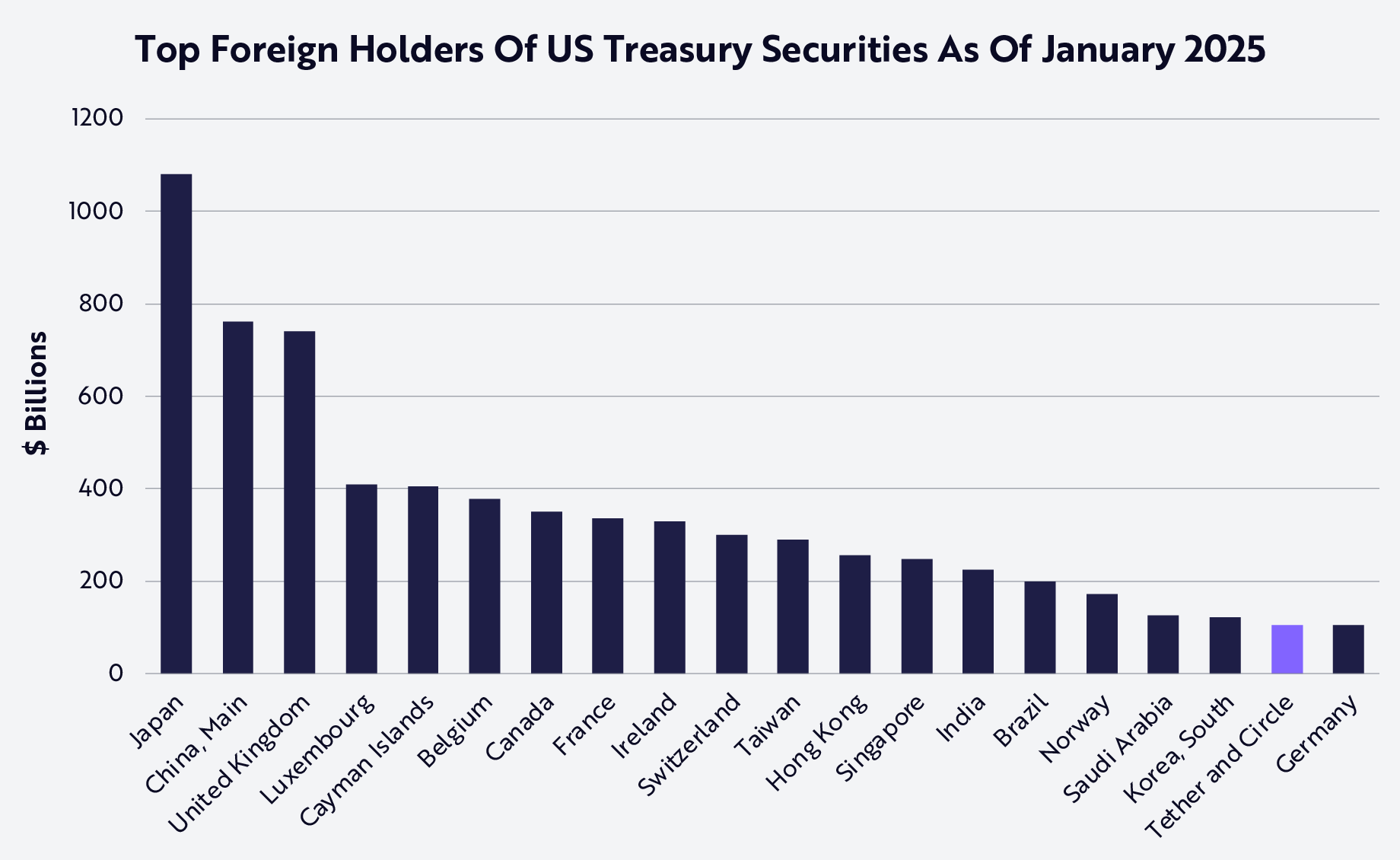
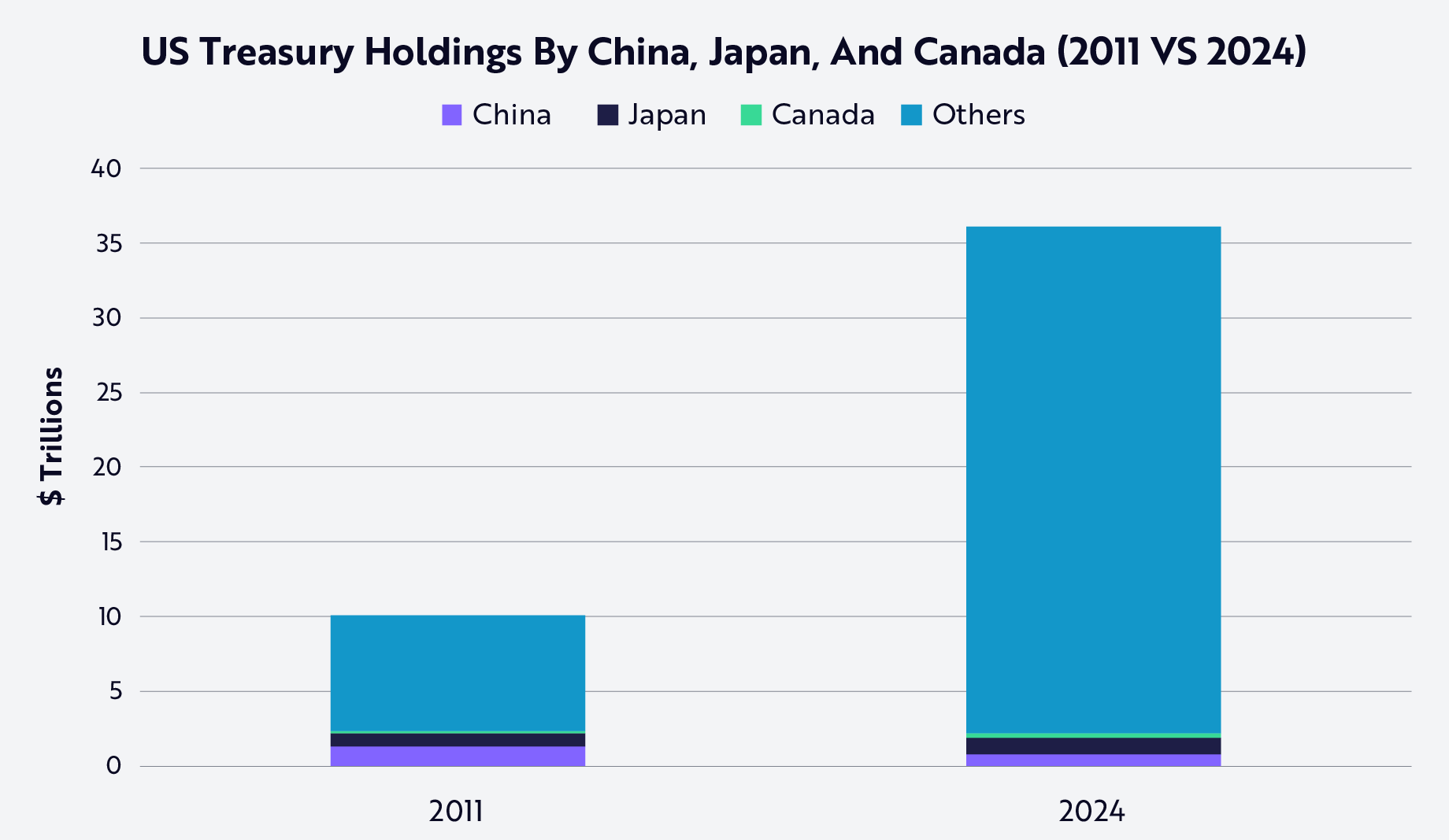
Amid a sharp decline in traditional international demand (China, Japan, Canada), stablecoin emerges as a replacement buying force. According to ARK, Tether and Circle have become major short-term T-bill holders, with total holdings of nearly 120 billion USD – putting them in the top 10 largest US creditors.
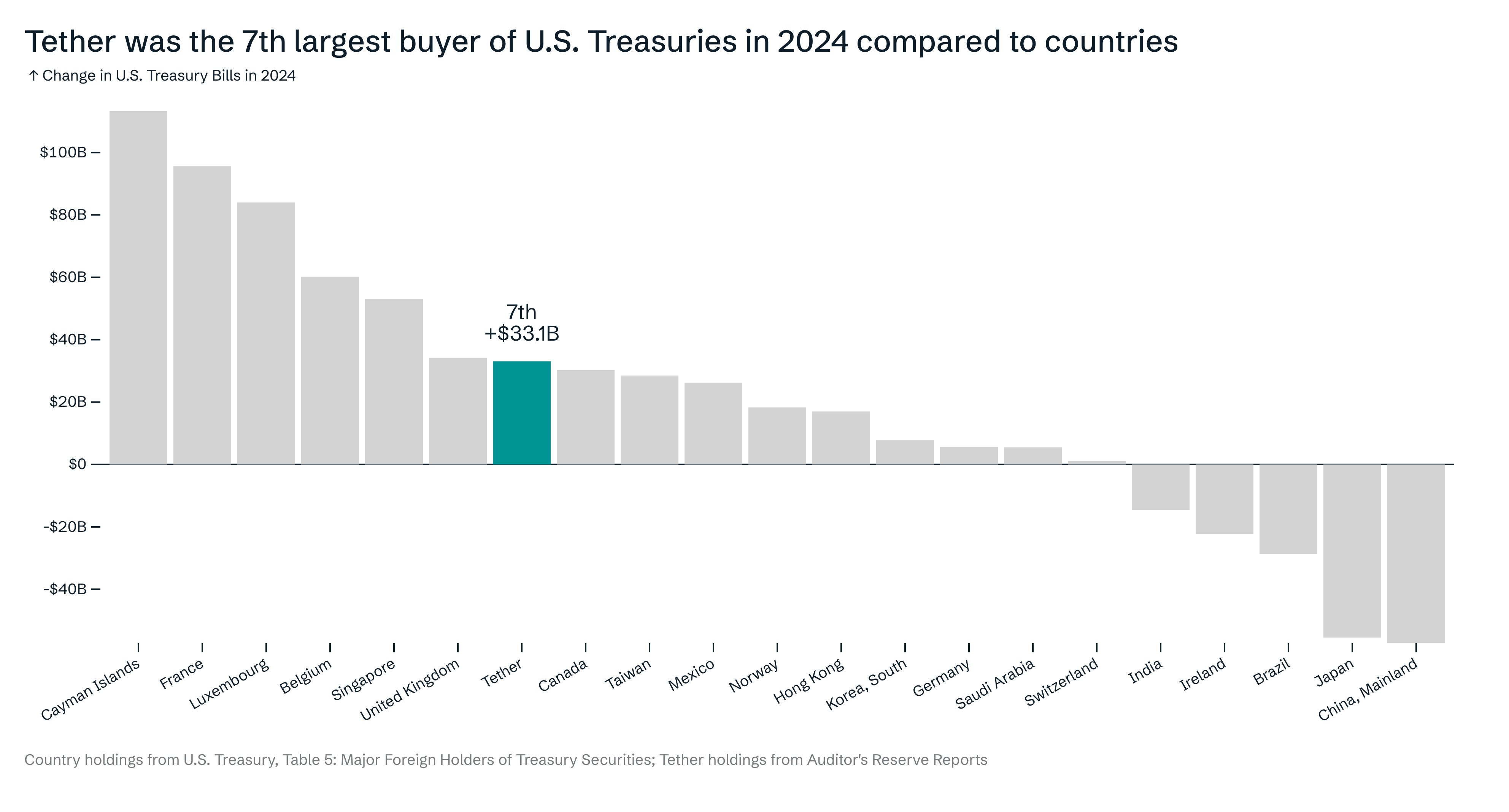
In 2024, Tether was the 7th largest global T-bill buyer, only behind players like UK and Singapore. Meanwhile, China and Japan were net sellers.
If this trend continues, in just 5 years stablecoin could accumulate hundreds of billions USD in T-bills – replacing the role of foreign central banks and supporting the US Treasury in selling more debt without Fed easing.
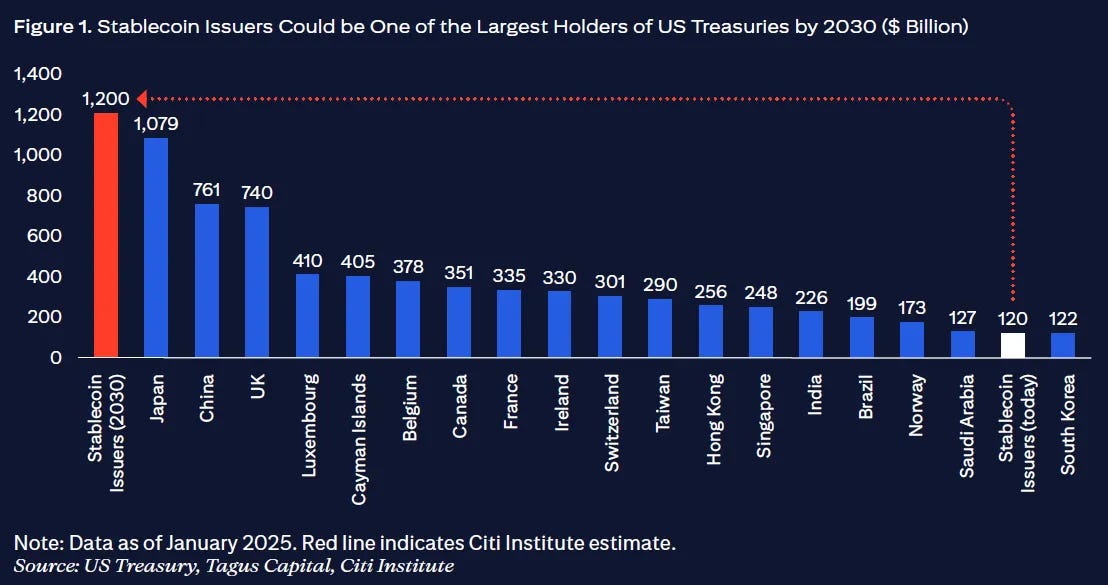
To better visualize the scale of this ambition, see the chart below:
The chart above forecasts that stablecoin issuers could hold up to 1.2 trillion USD in T-bills by 2030 – surpassing Japan, China, and becoming the largest investor after Americans themselves. This turns stablecoin into an unofficial pillar for the US public debt market.
US Treasury officials don't just see stablecoin as a new payment method but as a natural, sustainable, and massive source of demand for short-term Treasury bonds (T-bill).
US Treasury Secretary Scott Bessent stated at TBAC 4/2025:
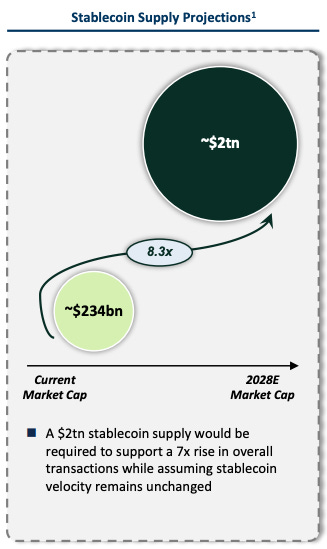
“If stablecoin reaches 1 trillion USD market cap by 2028, Treasury will have an additional 500–600 billion USD automatic demand for T-bills. A tighter scenario: 2 trillion USD tokenized = nearly 30% of total outstanding T-bills.”
Mark Cabana (Bank of America) added very directly: “USDC increases by 10 billion USD = Treasury sells an additional 10 billion bills. This is QE without the Fed, without balance sheet expansion, without touching RRP.”
Key takeaway: The largest source of increased demand for US Treasuries in the future won't come from the Fed, foreign central banks, or pension funds – but from stablecoin itself.
Each new USDC or USDT issued is equivalent to a new dollar flowing directly into T-bills – automatically performing the function of buying short-term public debt 24/7 according to real consumer demand.
A clear regulatory framework for stablecoin (like the GENIUS Act) becomes extremely good news for T-bill demand, as it turns phone wallet networks and daily transactions into mini “T-bill ATM” machines distributed worldwide.
➡️ In other words, when people talk about “digital dollar,” they're really talking about a stealth short-term duration buyer for the US Treasury.
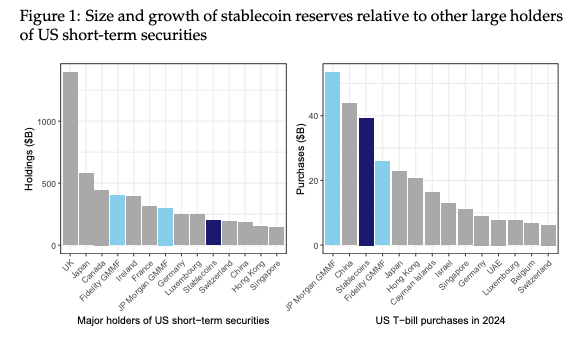
For a clearer view, see the chart below comparing the reserve scale and T-bill purchase speed of stablecoin with other major players in the US short-term market:
Left: Stablecoin issuers have now become a mid-sized short-term T-bill holding group, on par with major banks and foreign governments.
Right: 2024 T-bill purchase speed shows stablecoin as one of the fastest-growing sources of T-bill issuance demand – just behind large money market funds like JPMorgan GMMF.
4.4 Positive “Side Effects” for Washington from the Stablecoin Boom
Stablecoin becoming an automatic demand channel for T-bills brings the US Treasury a series of very specific and practical policy benefits:
First, reducing borrowing costs. When stablecoin is fully backed by short-term T-bills, demand for T-bills becomes steady and nearly continuous 24/7. This automatic demand pressure suppresses short-term yields at the front-end of the curve (front-end yield), helping the Treasury save on debt issuance costs. Estimates suggest 4–13 week T-bill yields could be “compressed” down by an additional ~15–20 basis points (bp) compared to a no-stablecoin-demand scenario
According to a recent study by Bank for International Settlements (BIS), increased demand for stablecoin backed by short-term US Treasury bonds could lower short-term debt yields and affect financial market structure. (The GENIUS Act, as passed in the Senate, clearly stipulates that stablecoin may only be backed by T-bills with maturities of no more than 3 months.) This not only maintains stability for stablecoin but also allows the US Treasury to reduce borrowing costs by issuing more short-term debt.
Second, draining liquidity from Reverse Repo Facility (RRP). When users deposit USD into stablecoin, funds leave other short-term money markets – including the Fed's RRP channel for absorbing excess liquidity. Retail capital flowing directly into T-bills via stablecoin reduces the volume the Fed must absorb via RRP, thereby easing central bank liquidity management pressure.
Third, stabilizing short-term bond auction outcomes. Stablecoin demand operates continuously 24/7 with extremely high dispersion (millions of phone wallets worldwide), creating steady and consistent buying power even when traditional financial markets are volatile. This reduces “tail risk” – i.e., the risk of weak T-bill auction sessions with abnormally high yields. The presence of stablecoin demand acts as a natural “buffer,” ensuring smoother T-bill auctions with less volatility in Treasury borrowing costs.
In other words, stablecoin is not just a digital payment tool. With 100% backing by short-term T-bills, they become an indispensable part of the US public debt financing strategy, helping Washington borrow more cheaply, better manage system liquidity, and protect the stability of the short-term T-bill market.
4.5 Phone Wallets = “T-Bill Banks” in the Digital Era
Wide coverage: PayPal (≈ 435 million accounts), Coinbase Wallet, Robinhood Crypto, Amazon One – turning every app into micro MMF kiosks right on the smartphone.
Effective maturity of USDC ≈ 34 days, shorter than even Fidelity Government MMF.
No FDIC insurance: Holders accept issuer risk, but are reassured by audits, reports, and OCC charter – a kind of “unofficially named MMF.”
4.6 Three Development Scenarios (2025–2028)
In the “Base”, stablecoin market cap reaching 1 trillion USD will draw an additional ~450 billion USD in new capital to the T-bill market. Demand for 4–13 week T-bills becomes steady and continuous, “compressing” short-term yields below the IOER (Interest on Excess Reserves) level by about 5–10 basis points. This is exactly the scenario the US Treasury desires: sustainable demand, helping reduce borrowing costs without major volatility.
In the “Turbo”, stablecoin market cap expanding to 1.6 trillion USD could pull in an additional 800 billion USD in retail capital into T-bills. Strong buying pressure causes funds to flow out of the Fed's Reverse Repo (RRP) tool to chase T-bill yields, reducing RRP size and forcing the Federal Reserve to maintain system liquidity in “QT-lite” mode – meaning slowing the pace of quantitative tightening to avoid choking credit.
In the “Moon”, when stablecoin market cap reaches 2 trillion USD, the T-bill market could attract up to 1 trillion USD in retail capital. Massive buying pressure causes money market funds (MMF) to bleed liquidity, as investors withdraw funds to pour into stablecoins (which in turn must buy short-term T-bills). This could distort short-term deposit yields and trigger political reactions – small banks and MMF associations will lobby the US Congress to draft “GENIUS II” to tighten stablecoin regulations further, protecting bank system capital sources and financial stability.
Summary Conclusion
GENIUS Act has turned every phone wallet into a short-term T-bill bank:
Operates 24/7, no branches needed, no FDIC insurance.
Does not inflate the Fed's balance sheet.
Directly injects bond demand for the Treasury, compresses borrowing costs, and by default turns consumers into permanent financiers of US public debt.
This is the portrait of blockchain-era QE 3.0.
5. TOKEN-T-BILL & “RETAIL ARMY” – CAMPAIGN MAP
Stablecoin not only turns phone wallets into T-bill banks for retail, but also opens up retail and institutional fronts where tech and finance giants build new infrastructure to tokenize treasury bonds and restructure the payment value chain. Below are the four main tactical steps being implemented by the parties.
5.1 Tokenizing T-bills: BlackRock and the Collateral Revolution
Who is leading: BlackRock partners with Securitize.
Featured product: BUIDL Fund, reaching ≈ 3 billion USD AUM, issued on Ethereum.
Specifications: Minimum lot ~5,000 USDC, rolling maturity 4–10 weeks.
Mechanism: T-bills are “sliced” into ERC-20 tokens, usable as collateral on platforms like Crypto.com, Deribit.
Strategic objectives:
Remove the 5,000 USD minimum investment denomination barrier.
Reduce funding time from T+2 to T+minutes, accelerate margin and repo speed.
Create ultra-short-term “ammunition” collateral stockpile to serve DeFi and CeFi liquidity.
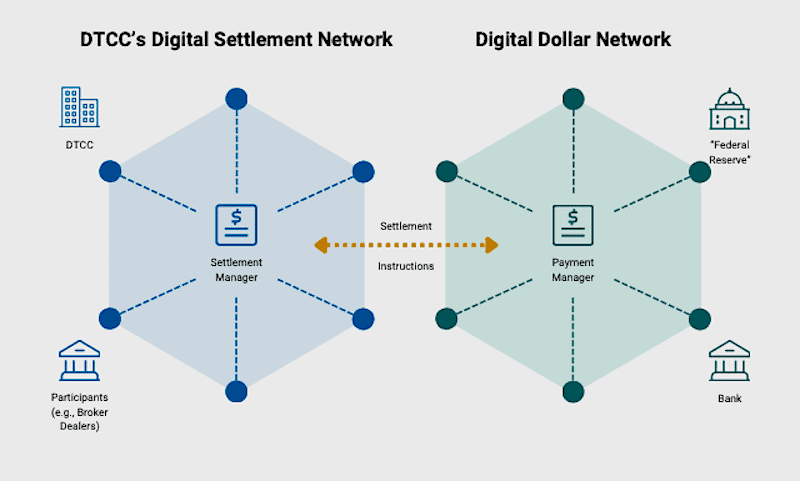
5.2 Notional Compression and 24/7 Trading: DTCC and Canton Network
Who is building: DTCC partners with Digital Asset.
Testing achievements: 100+ UST token transactions completed on Canton Network.
Operational infrastructure: Real-time collateral transfer between custodian banks like BNY Mellon, State Street.
Features:
T-bill notional compressed to 1 USD.
24/7 clearing and settlement while still complying with Reg-T.
SEC/FINRA-compliant private-chain infrastructure, directly connecting custodian bank systems.
5.3 Supermarket-Logo Stablecoin: Walmart, Amazon and the Retail Revolution
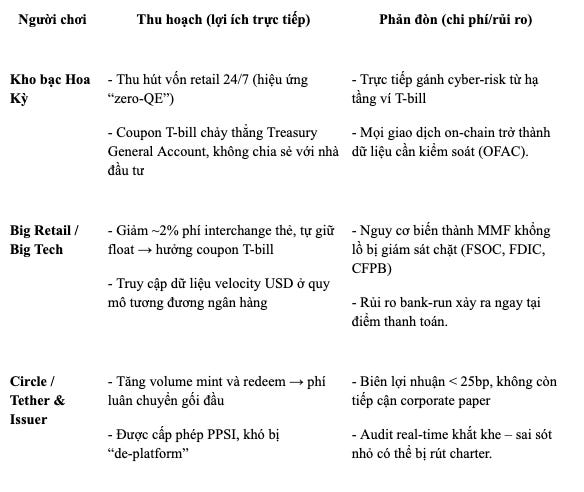
Not just stopping at pilot internal pilots, Walmart and Amazon are researching issuing their own stablecoins in the US to directly replace most cash and card payment flows – which are currently costing them billions of USD in interchange fees each year.
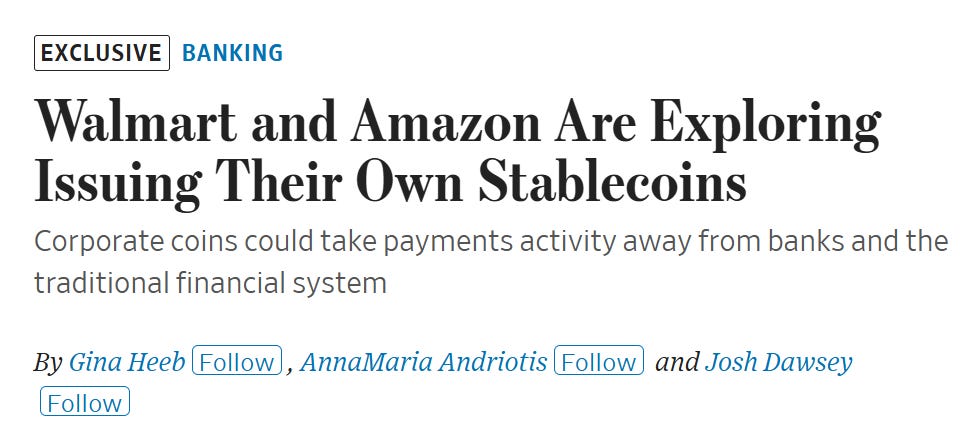
According to Wall Street Journal (June 2025), these two retail giants along with Expedia and some other multinational companies have seriously discussed plans to issue their own stablecoins or join a consortium issuing a common stablecoin.
Operating mechanism:
Convert loyalty points to USD-stablecoin backed by T-bill coupons.
POS payments, reduce cross-border payment and logistics fees.
Main benefits they target:
Cut payment fees: avoid Visa/Mastercard card fees which reach up to 1–3% per transaction.
Instant payments: instead of waiting 1–3 days for sales money to “clear” through the banking network, stablecoins can settle 24/7 almost instantly.
Convenient for international supply chains: easily pay foreign suppliers, reduce costs and delays of correspondent banking networks.
Hold reserve float equivalent to 5–8 days of sales – scale of billions of USD coupons/year.
“Push to instant payments is inevitable and represents a risk to Visa and Mastercard.” – TD Cowen analyst.
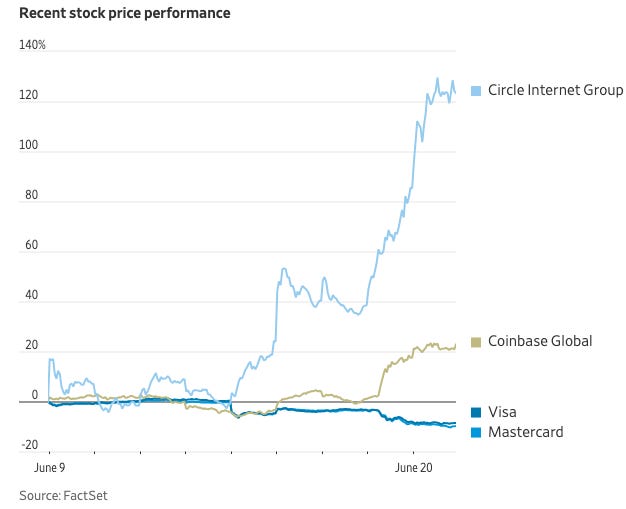
After the US Senate passed the GENIUS Act, stocks of crypto companies like Circle Internet Group and Coinbase Global surged sharply – reflecting market expectations that stablecoins will explode and capture payment market share.
Meanwhile, Visa and Mastercard witnessed their worst trading month in years, with stocks dropping sharply right after news of the US Congress accelerating the stablecoin bill. This is clear evidence of the strategic threat that retail stablecoins pose to the traditional card payment system.
📌 In summary: Stablecoins with Walmart or Amazon logos are no longer a distant vision – but a strategic lever to:
Cut payment costs,
Control transaction data,
Increase profit margins,
And build a separate payment ecosystem independent of banks and traditional card networks.
📌Do stablecoins have enough power to “usurp” credit cards?
Consumer payments (consumer payments) are not just technology.
Credit and debit cards are not just rails: they are a closed ecosystem where almost every American has a card, every store accepts them.
Benefit-sharing mechanism: cards give rewards to users, banks earn interest and fees, networks handle disputes and fraud prevention.
Merchants are the ones bearing interchange fees, so they always want cheaper rails. This is why Walmart, Amazon… are excited about the idea of their own stablecoins: cut 1–3% Visa/Mastercard fees.
Stablecoins still have incentive lessons:
Credit cards attract users thanks to cashback and reward points – stablecoin currently does not share T-bill coupons directly with holders because prohibited by yield laws (GENIUS Act).
Stablecoin issuers can have interest sources from T-bills to fund rewards, but this benefit currently goes to them, not automatically shared with merchants or consumers.
If merchants issue their own stablecoins (Wal-Coin, Ama-Coin), they can control rewards – like Starbucks holding prepaid funds and utilizing float.
In addition: credit issue.
Stablecoin is essentially pre-paid.
To compete with credit cards, they need to build a lending system.
Coinbase has launched a credit card linked with American Express – showing that crypto will still need to leverage traditional card networks.
More realistically:
Stablecoin has great potential for cross-border and B2B, where cards don't compete well.
Stablecoin rails can gradually take market share in backend (back-end) transactions, especially in emerging markets.
But in the US, “front-end” consumer payments will be hard to change overnight – cards will still be an important bridge for stablecoin to enter consumers' wallets.
➡️ Stablecoin has a big opportunity to become cheap, 24/7, cross-border payment rails – but to “dethrone” credit cards, they need to solve the puzzle of incentives, rewards, security, and acceptance networks.
5.4 API USDC 24/7: Coinbase and Shopify – New Payment Layer
Who is collaborating: Coinbase Payments and Shopify (2 million merchants).
Service features:
“Pay with USDC on Base” with fee < 9bp by default.
Merchants receive stablecoin, automatically swap to fiat in ≤ 30 seconds.
Strategic benefits:
Capture micro fees, increase transaction data flows.
Position USDC as default rail for e-commerce.
5.5 Big Bank Consortium – Wall Street Giants Are Not Standing Aside
Not only Big Tech like Amazon, Walmart, or fintechs like Coinbase, Shopify rushing into the stablecoin race – the largest US commercial banks are also quietly preparing their own weapons.
According to the Wall Street Journal, a group of traditional financial institutions including JPMorgan Chase, Bank of America, Citigroup and Wells Fargo has begun discussing the possibility of issuing a joint interbank stablecoin (joint stablecoin).
Main objectives: counter the risk of being “eroded” on payment fees and deposits when stablecoin becomes 24/7 payment rails on smartphones, siphoning retail capital and transactions away from traditional banking systems.
✅ Participating companies in negotiations include Early Warning Services (Zelle system) and The Clearing House (operating real-time payments RTP network). ✅ Idea: design a “banking industry” stablecoin that members and partners can all use for instant money transfers. ✅ Motivation: enhance cross-border payment capabilities, reduce costs and latency compared to correspondent banking networks.
Although still in the idea stage, this plan reflects the growing concerns of the banking sector: if non-bank stablecoin issuers – especially Big Tech – dominate the market, they will be sidelined from the new payment rails.
“Banks have been bracing for the possibility that stablecoins could become widely adopted under President Trump and siphon away the deposits and transactions they handle.”
– WSJ
The political context also plays an important role: ✅ The Trump administration has shown clear support for crypto – especially stablecoin – viewing it as a means to bolster USD demand and sell public debt in the form of T-bills.
✅ GENIUS Act – federal regulatory framework for stablecoin – has passed procedures in the Senate.
✅ This bill has certain restrictions on tech companies issuing stablecoin, but does not completely ban them – creating fierce competitive space.
Even some local, small community banks are considering teaming up to form their own separate stablecoin consortium – but challenges in capital, technology, and regulation may let Wall Street “swallow” the advantages in this race.
➡️ Stablecoin has gone far beyond a niche fintech product – becoming a strategic front where Big Tech, Big Retail and Big Bank are all forced to participate, or face the risk of being excluded from the digital payment value chain.
➡️ ➡️ ➡️ Stablecoin has stepped out of the DeFi floor:
It is now sitting right at the supermarket checkout counter", donning the employee hat" "U.S. Treasury".
"6. BENEFIT-LOSS MAP & SMOLDERING SYSTEMIC RISKS"
"The expansion of stablecoin's role as" "on-chain T-bill liquidity infrastructure" "not only brings benefits to participants, but also harbors far-reaching macroeconomic and policy risks. This section systematizes" "benefits – costs – potential threats" "of each major actor group in the ecosystem."
"Imagine the classic scene of a" "bank run" "outdated: crowds jostling outside bank counters, panicked customers withdrawing all cash fearing bank bankruptcy."
"On blockchain, no need to jostle. Everything happens 24/7, globally, with just a few taps on a smartphone:"
"“Redeem (redeem for cash) USDC now!”" "“Burn USDT, withdraw to USD!”"
"Within minutes, tens of billions USD in stablecoin could be demanded for simultaneous reverse redemption to cash. No trading hour limits, no “doors close at 5 PM.”"
"Issuers (Circle, Tether) will be forced to dump short-term maturing T-bills for cash to pay customers – just like banks dumping bonds when customers line up to withdraw. But on blockchain, this dump doesn't take a day or an hour – it happens almost instantly."
"Result?"
"⚡️ T-bill yields 4–13 weeks could “gap up” 100–150 basis points in just one session."
"⚡️ MMF funds, repo markets shaken by domino effect."
"⚡️ Fed forced to play “dealer of last resort” to rescue short-term liquidity."
"Run-on-Chain is the digital, borderless, no-closing-hours version of" "bank run"". It doesn't need sidewalk rumors – just a tweet, a hack rumor, or an OFAC blacklist."
"A FUD (Fear, Uncertainty, Doubt) wave spreading on Twitter can trigger a virtual bank run – but with very physical real consequences for US bond yields."
"👉" "That's the hidden price America accepts by turning stablecoin into a new “blood pipeline” for the budget, without needing to expand the Fed's balance sheet."
"(2) Data & Cyber Doomsday – Surveillance and Cybersecurity Catastrophe"
"Stablecoin, especially Tether, has been used by many criminal organizations and sanctioned regimes as a parallel financial channel:"
"Money laundering networks can pool illicit cash, load into Tether at 2–3% cost (lower than traditional 10–15% laundering fees), then transfer cross-border without oversight."
"Russian oligarchs and sanctioned groups can move hundreds of millions USD abroad, buy real estate or weapons through stablecoin."
"An international investigation (based on the UK's Operation Destabilise) exposed how this laundering network connects European drugs, Russian hackers, sanctioned tycoons, and even arms transactions."
"These are the latent political and legal risks that could make stablecoin a target for sanctions or stricter regulation – increasing systemic instability when large capital flows flee or get suddenly blocked."
"(4) Transformation of the Banking System's Capital Structure"
"Even if stablecoin does not directly withdraw money from the banking system, it can" "transform stable retail deposits (insured retail deposits)" "into large corporate deposits, not fully insured (uninsured corporate deposits)."
Mechanism:
When users withdraw money from FDIC-insured accounts <250,000 USD to buy stablecoin, that money does not disappear from the banking system but usually returns as stablecoin reserves.
However, those reserves may sit in large, less insured bank accounts, turning into “hot money” deposits that can be suddenly withdrawn.
“Attracting capital from stablecoin issuers turns retail deposits – which are a stable source of funding – into more volatile, harder-to-control deposits.” - Analysis by the European Central Bank (ECB)
✅ Illustrative example (Silicon Valley Bank 2023):
Circle (USDC issuer) once held over 3 billion USD at SVB.
When rumors spread, Circle quickly withdrew the money, but the transaction was not completed when SVB was shut down by regulators.
USDC fell below 1 USD on many exchanges.
Only when the US government guaranteed all SVB deposits was the situation saved.
✅ Systemic consequences:
Large capital flows may concentrate in large banks, which are required to hold extremely liquid assets.
Small, community banks may lose stable retail funding, facing greater risks in liquidity management and cost of capital.
Banks will have to raise deposit rates to retain customers, reducing profit margins.
The race among large banks to collectively issue stablecoins has been reported by WSJ, showing they don't want to be left behind in this game.
6.3 Policy message summary
The US Treasury has turned the network of phone wallets and stablecoins into a cheap retail funding source, operating 24/7, automatically sucking up small change from consumers worldwide and pouring it straight into the short-term T-bill market.
This helps compress the US Treasury's borrowing costs, flattening short-term T-bill yields by an additional 10–15 basis points (bp) due to steady retail investment demand. With stablecoin scale in hundreds of billions USD, this is an extremely attractive natural capital absorption tool for the US budget – a form of hidden QE without the Fed expanding its balance sheet.
❗️But in return, each stablecoin wallet is also a “micro bomb” pre-installed under the public debt floor:
If there's a loss of confidence incident (de-peg, hack rumors, OFAC sanctions), tens of billions USD could be withdrawn en masse in a few hours.
Issuer forced to dump short-maturity T-bills to return cash → pushing 4–13 week T-bill yields up 100–150 bp in one session.
Contagion effects could cause liquidity shocks to money market funds (MMF), small banks, and the repo market, forcing the Fed to intervene as “dealer of last resort”.
In other words:
Stablecoin brings immediate fiscal benefits, but in exchange for smoldering systemic risks.
It makes the US financial system more dependent on crowd psychology behavior in phone wallets.
And it forces Washington to prepare contingency plans for “run-on-chain” liquidity shocks – a new risk in the 21st century.
7. CURTAIN CALL: STABLECOIN IS NO LONGER “CRYPTO” – BUT US-DEBT-COIN
“In USD history, there are always times when people worry it will lose its global reserve status, and a new mechanism always emerges to reinforce it. Stablecoin is the ‘new mechanism’ for the 2020s.
- US Treasury Secretary Scott Bessent, at the Senate hearing in June 2025
The GENIUS Act is not purely a “blockchain legalization” step. It is a sophisticated policy design that locks stablecoin into the role of pure payment instrument (Payment Instrument) – while stripping direct yield rights, turning retail capital flows into natural demand for US Treasury bonds.
Since the law was passed, every USDT or USDC in a phone wallet is no longer just a tool for swapping between chains – but a hidden T-bill purchase ticket in QR-code form, trading 24/7 but priced according to the US Treasury auction schedule.
7.1 A “New Spatial Dimension” of the Dollar
GENIUS-generation stablecoin is precisely Eurodollar 3.0, but deployed on blockchain:
Pegged 1:1 to USD – with 100% reserves in cash and T-bills ≤ 90 days.
Operates 24/7, cross-border – no branches needed, no Fedwire needed.
Integrates Treasury coupons – but interest flows to Treasury, not to investors.
This is a micro network for payments and government debt purchases – where every phone wallet acts as a “mini MMF” pumping cheap capital to Washington without expanding the Fed's balance sheet.
7.2 Hidden Risks – And New Responsibilities
“This stablecoin moonshot also has a clear dark side:
Run-on-Chain: A panic of sufficient scale (hack rumors, OFAC blacklist) could force issuers to dump short-term T-bills → yield curve front-end “gaps up” more than 100–150 bp in just a few hours.
Control & Supervision: Blockchain creates immutable transaction records – every stablecoin transaction is potential KYC/AML data for financial supervisory authorities.
Cyber Risk: Phone wallet T-bill = “digital gold vault” containing coupons and metadata, becoming a top target for hackers, ransomware, and financial espionage.
Stablecoin operational power is now not just smart contract governance, but also the responsibility to protect the stability of short-term US Treasury interest rates.
7.3 Policy Gateways Still Open
National debt-coin: The US has tokenized T-bills – but Japan, EU, GCC may soon develop “JGB-coin”, “Bund-coin”, “Petro-bill” for cross-border debt asset systems.
CBDC vs. US-Debt-Coin: The Fed is still cautious with e-cash, but Treasury has taken the lead on blockchain. The race “who really issues money” remains undecided.
Silent interest rate redistribution: Coupons flow to Treasury, micro fees flow to Big Retail – while users think they are holding “digital cash”.
Final Message
Money has never been “free” – it only changes the form of debt.
Stablecoin in the GENIUS era is no longer crypto, but “US-Debt-Coin” – a dollar with the soul of a T-bill. Stablecoin is no longer crypto. It is an encoded US public debt contract.
Final Personal Opinion: In the GENIUS era, stablecoin is no longer crypto in the original anarcho-libertarian sense. It has become “US-Debt-Coin” – an encoded dollar, but carrying the soul of a T-bill.
This is what clarifies why the Trump administration strongly supports crypto – especially stablecoin. Stablecoin is mainly backed by US Treasury bonds. Every new dollar flowing into stablecoin forces the issuer to buy more T-bills as reserves.
Since the 2020 OCC policy, US commercial banks have been allowed to issue and custody stablecoin. The consequence is that capital flowing into the crypto market ultimately supports the US Treasury in selling more short-term debt. It keeps Bitcoin and stablecoin “anchored” to USD, blocking the scenario of Bitcoin completely decoupling from the dollar system.
This is not just a fintech story. It is a clever policy design: strengthening USD demand, financing US public debt, and protecting the global position of the dollar in the digital age.
Stablecoin is becoming “Trojan horse” of US T-bills – both a global payment tool and an automatic retail capital suction channel for the Treasury. When the world talks about “de-dollarization”, stablecoin provides a tool covert re-dollarization: even as international trade seeks to reduce USD, hundreds of millions of people and businesses still hold USDT or USDC for trading, value storage, and ultimately – financing US public debt.
This is precisely “petrodollar 2.0” on blockchain: a mechanism ensuring global USD and T-bill demand flows, helping Washington maintain reserve currency status – not through oil, but through phone wallets and smart contracts.