If You Missed the Best Recent Articles:
“Economic cycles don’t die of old age. They die of imbalances.”
- Rudi Dornbusch, MIT economist
Every time the US economy nears year-end, the familiar question returns: when will the recession hit? Long-term cycle models, inverted yield curves, or collective memories of 2008 are quickly trotted out as irrefutable proof that a big crash is just a matter of time. But as Dornbusch emphasized, economic cycles don't die of old age. They break only when imbalances grow large enough to erupt.
The economy doesn't age or die. It gets killed
The key question today isn't how long the cycle has lasted, but rather: what imbalances actually exist-and are they big enough to break the system? When posed seriously, the 2025–2026 picture looks nothing like the doomsday scenarios being peddled. The labor market is cooling but not cracking, inflation is easing without a deep downturn, consumer spending is polarizing but not collapsing, AI investment is expanding supply capacity rather than inflating demand, and policy is shifting from headwind to tailwind.
In this piece, Viet Hustler isn't out to prove the US economy is “fine.” The more modest-and realistic-central thesis:
2026 won't be a boom year, but it won't be a recession either. It's a controlled slowdown, with risks centered on volatility and reallocation-not collapse.
To clarify, this article breaks it down into six analytical sections, each tackling a core fear driving recession worries:
Part I – Labor Market: Why low unemployment remains the strongest backstop, and why the “no-hire, no-fire” state is fundamentally different from pre-recession dynamics.
Part II – Inflation & Monetary Policy: Why price pressures are sticky but not forcing the Fed to retighten, and why rate cuts have slow but deep effects.
Part III – Consumers: Why polarized spending is the real vulnerability, but not yet enough to drag GDP negative.
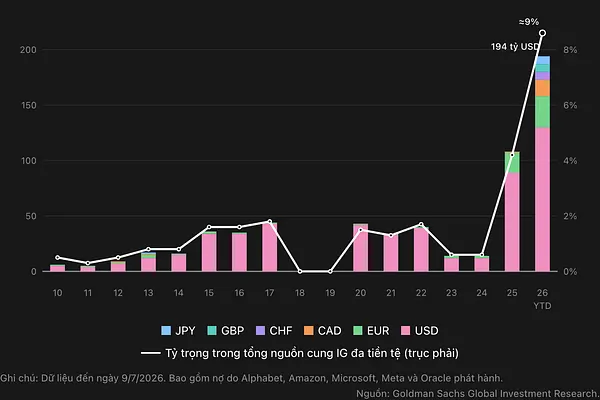
Part IV – AI & Capital Investment: Why the current investment cycle is thickening GDP rather than bloating it, and why that doesn't fuel inflation.
Part V – Fiscal & Trade: Why policy impulses are arriving late but on beat, and why tariffs are losing their role as a headwind.
From that vantage, the right question is no longer “will there be a 2026 recession?”, but rather “how is the US economy slowing-and why is this time different?” That's the central question this piece dissects step by step.