If you missed the best recent articles:
In the era of online learning, when it comes to language learning, it's not hard to immediately think of the green owl - the iconic logo of Duolingo.
Duolingo is now the default app for tens of millions of people, turning a once dry activity into a daily entertainment habit – where streaks, leaderboards and 'mini' lessons create engagement levels that few competitors can replicate.
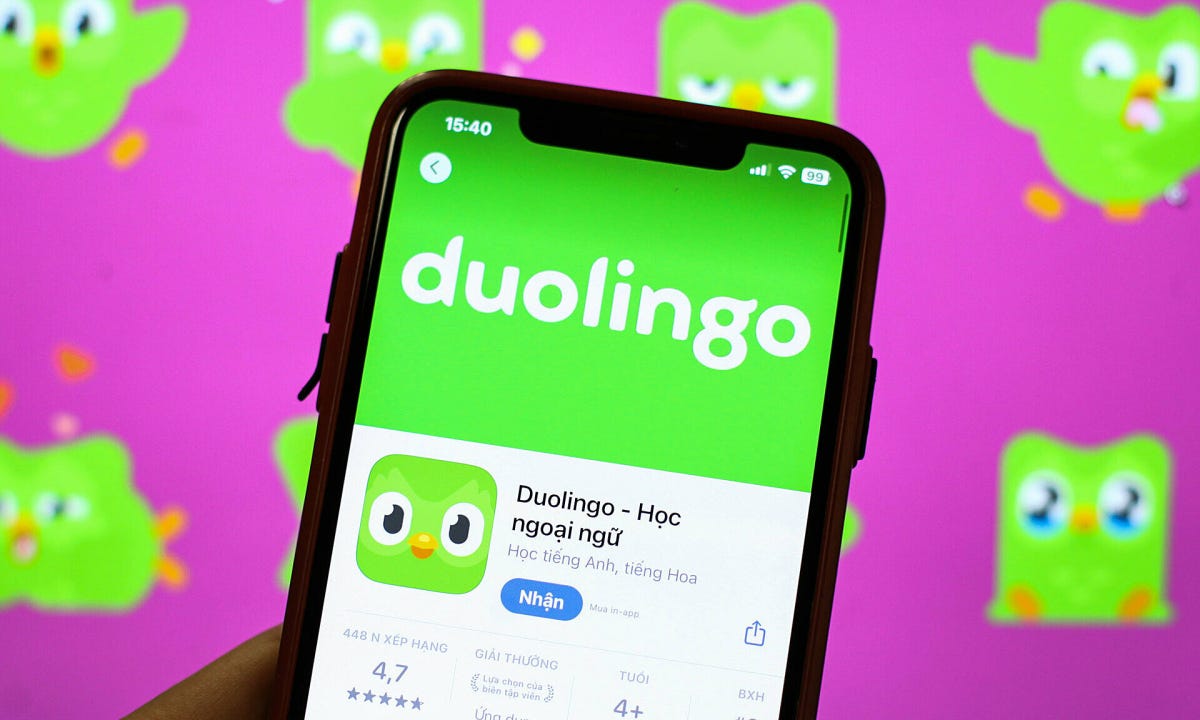
But today's Duolingo is no longer just a simple language learning app. Since its founding in 2011, the company has expanded into English Proficiency Test, reading-writing programs for children, mathematics and even chess, reflecting its ambition to become a comprehensive digital education platform.
A user-centric strategy, combined with global reach and brand strength, has helped Duolingo maintain explosive growth since its IPO day:
Revenue CAGR over 40%,
FCF margin over 30%,
And becoming one of the fastest-growing consumer-facing tech companies in the market.
However, the big question for investors is whether the fun design and global scale truly create a sustainable competitive advantage.
Duolingo is at the intersection of many powerful long-term trends – rising demand for English learning, the shift to online education, and increasing personalization thanks to AI. At the same time, there is the risk of being encroached upon by new technologies, especially real-time translation tools – a factor that has caused Duolingo stock to drop about 40% from its May 2025 peak.
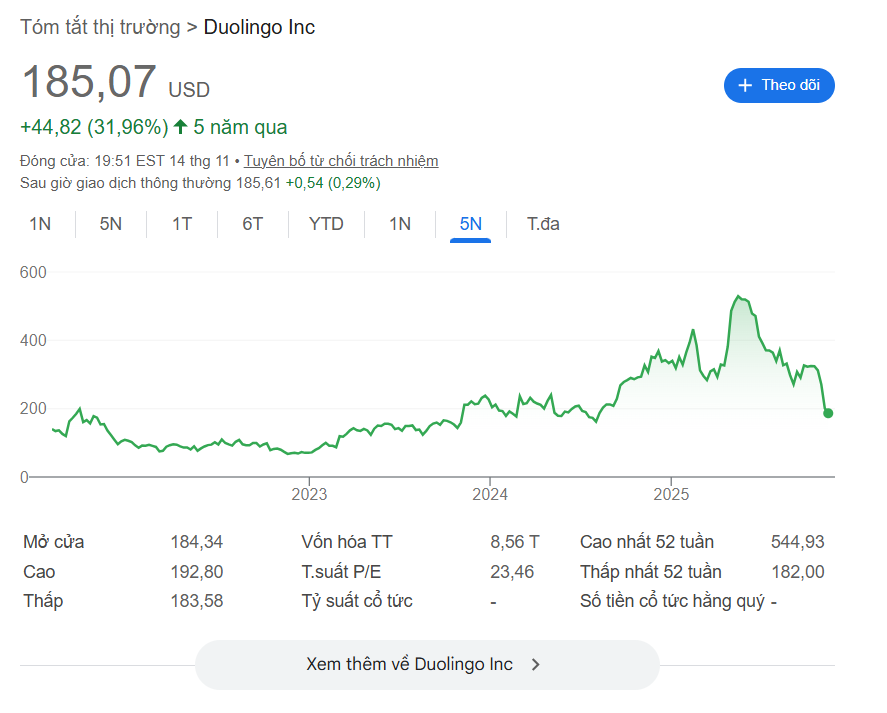
Positioning Duolingo in the intersection of education and technology will be key to assessing whether the growth runway ahead is long enough to justify the current valuation.
In today's analysis, Viet Hustler will dive deep with readers into the business model, financial health, competitive advantages and long-term prospects of Duolingo.
Overview of Duolingo
Duolingo's Business Model
Competitive Advantage Analysis
Financial Health Analysis
Future Prospects
Preliminary Valuation