If you missed the best recent articles:
- Alan Greenspan, statement in 1998
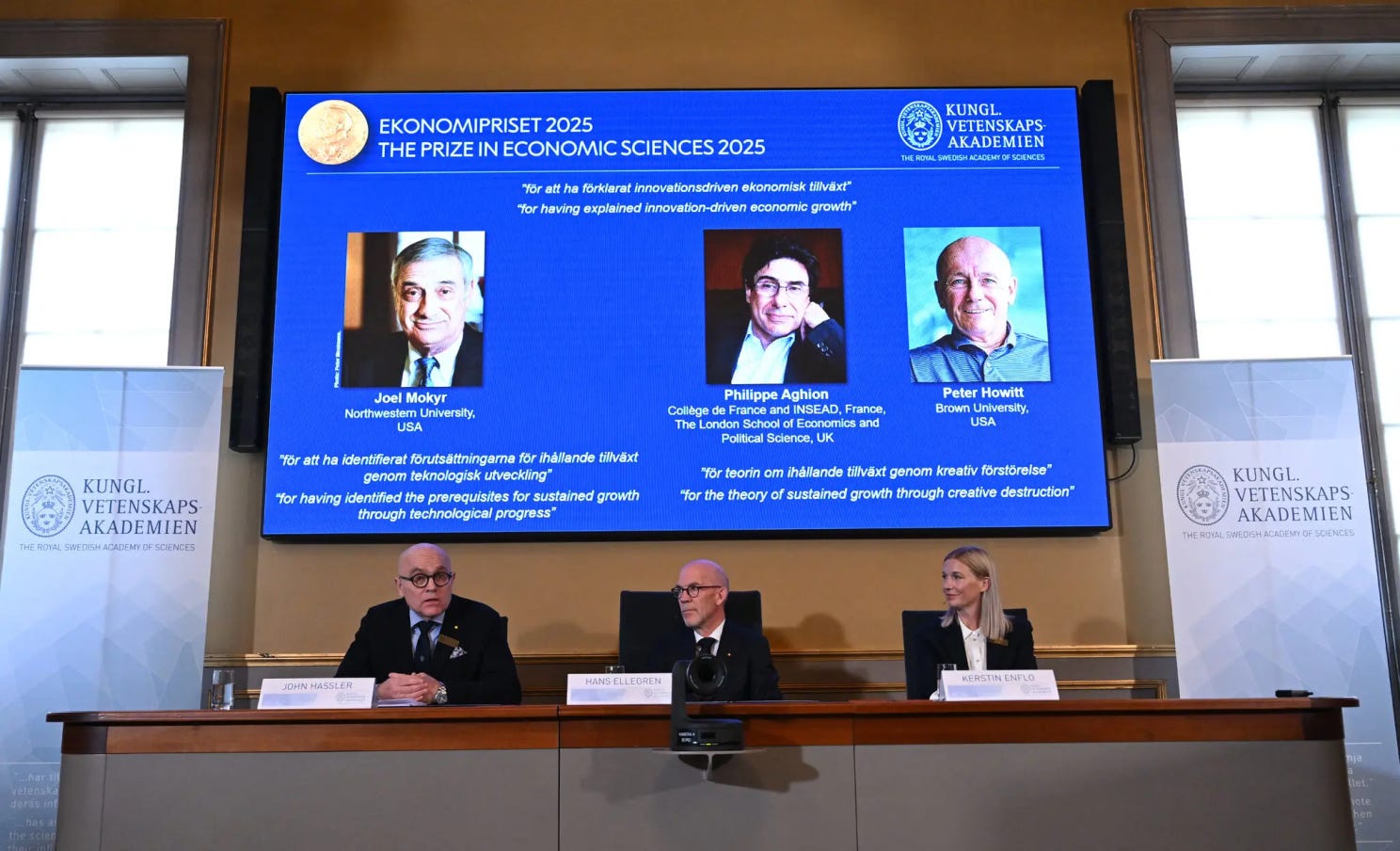
On 15/10/2025, in Stockholm, the Nobel Committee named three scholars: Joel Mokyr, Philippe Aghion, and Peter Howitt. A knowledge historian, a pair of theorists – a seemingly unexpected combination that resonates like the grand synthesis of over two centuries of debate: where does growth come from, and why is it never sustainable without innovation. But in 2025, that message transcends the lecture hall, becoming a mirror for the AI era: GPUs hunted like new coal, data as new oil, Big Tech building trillion-dollar market cap fortresses, while long-term productivity dims and inequality swells.
Article content
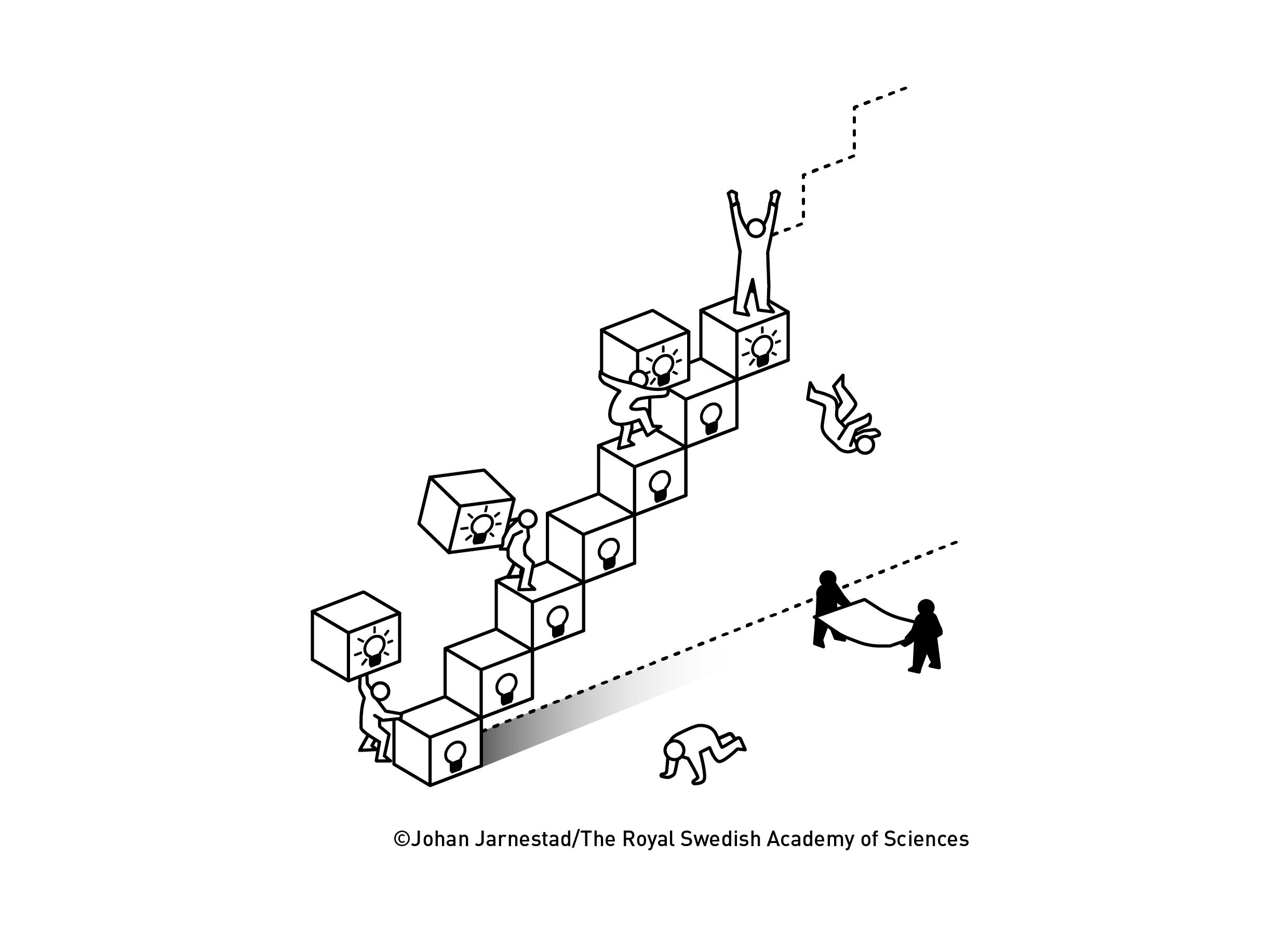
“dual knowledge” : only whenknow why knowing why know how knowing how Today, AI faces the same test. On one side are corporations' closed “walled gardens,” on the other the open-source community. The big question is not “how strong AI is,” but “how far AI spreads.” For when the knowledge bridge is blocked, AI is just a lab game; when the bridge is open, it becomes the 21st-century general-purpose technology – like steam, electricity, or internet – accompanied by infrastructure, standards, education, and rule of law.
This week, we’re not just recounting academic honors. Viethustler and I will take you through 5 “idea axes” to view Nobel 2025 through the AI era lens:
Mokyr & Dual knowledge – the bridge between
know why knowing why and knowing howAghion–Howitt & Creative destruction – R&D cycle, temporary monopoly, then replacement: modeling Schumpeter's gale.
Big Tech & creative stagnation risk – when Microsoft, Nvidia, Apple build “fortresses” of data and GPUs, will the creative cycle be locked?
Historical flow – from Marx (capital digs its own grave), Schumpeter (entrepreneur rides the storm), Solow (technology black box) to Nobel 2025.
Three policy messages – R&D as public investment, antitrust as competition shield, flexicurity as social anchor against inequality.
1. Part I: 2025 Economics Nobel: When “creative storm” meets AI era
On 13/10/2025 in Stockholm, the Nobel Committee announced the year's most prestigious Economics Prize to Joel Mokyr, Philippe Aghion, and Peter Howitt – three scholars who laid the foundation for how we understand innovation, long-term growth, and “creative destruction.” This is also the last prize in this year's Nobel season, worth 11 million Swedish krona (≈1.2 million USD).
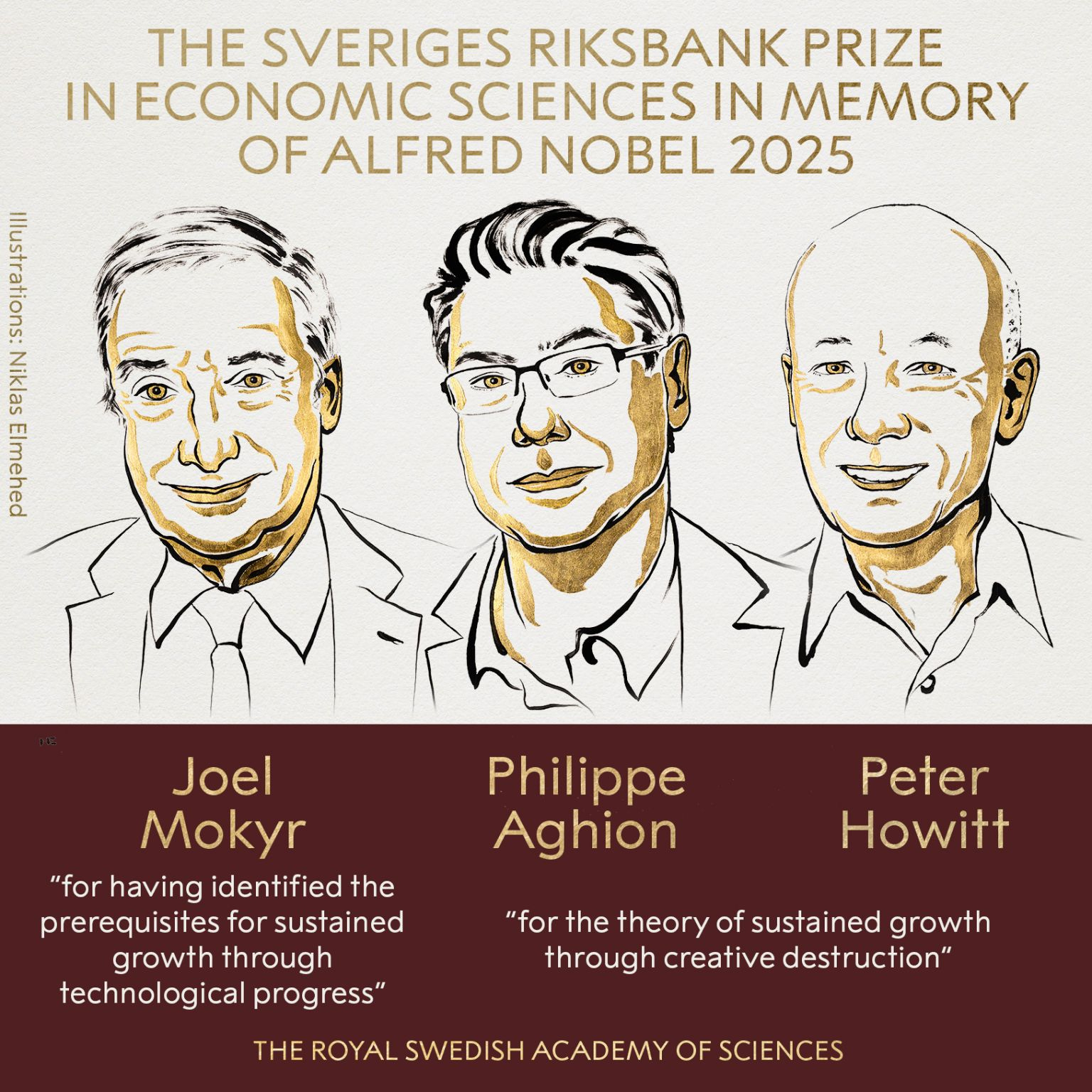
At the academic level, this is a special trio:
Joel Mokyr
, Dutch–American economic historian (Northwestern, Tel Aviv), receives half the prize for a four-decade research program onhistory of knowledge – explaining why the West broke out of the poverty loop. Famous for distinguishing macroinventions and and , along with the “dual knowledge” concept (propositional vs. prescriptive knowledge).Philippe Aghion
Philippe Aghion Peter Howitt (Brown) share the other half thanks to the “creative destruction” model (1992), now the workhorse model workhorse model of endogenous growth – explaining why the economy can grow steadily at the macro level while being chaotic with tsunamis of business creation–destruction at the micro level.
At the epochal level, the message of Nobel 2025 rings like a bell:
First, growth has never been a given. The Swedish Academy emphasizes: “Most of human history is stagnation, not growth. Progress only exists when society knows how to nurture and protect it.” In other words, innovation requires suitable institutions and culture; otherwise, the creative spiral easily breaks.
Second, the award reflects current political tensions. Mokyr warns that the Trump administration's education and science reforms could become “a great own goal” – self-destructing America's research position, no different from the Ming dynasty's ban on scientific exploration. Aghion openly calls tariffs and de-globalization “the dark cloud covering growth”, while Howitt argues that trying to bring old manufacturing back to the US only shrinks the market and hampers innovation.
Third, this award has special significance in the AI era. Nobel Committee emphasizes that the work of the three scholars shows how new ideas and creative destruction reshape the economy over centuries – from steam engines, electric motors, internet, to today's AI. The comparison is very vivid: mainframes were replaced by PCs, PCs gave way to the Web, the Web was surpassed by smartphones, and now the entire technological order faces the challenge from AI.
In the context of the AI explosion, Nobel 2025 not only honors history or theory, but also poses a vital question for the 21st century:
Humanity steps into AI era – where technological innovation both promises explosive growth and sows the seeds of inequality and power concentration.