In case you missed our recent top stories:
The $700 Billion AI Capex Race: Who is Profiting and Who is Burning Cash?
Private Credit: It’s Not 2008 - But It’s the Most Dangerous Since 2008
“Man and not nature initiates, but nature in large measure controls.”
- Halford Mackinder
Some wars are measured by the number of missiles launched.
Some wars are measured by the number of warships deployed.
But there are other wars, deeper and more dangerous, that must be measured by the flows they block: the flow of oil, of dollars, of goods, of trust, and ultimately, of industrial power.
Hormuz is such a place.
On a map, this strait is merely a narrow strip of water - about 33 miles at its narrowest point - situated between Iran and the Arabian Peninsula. But in the global economic system, Hormuz is more than a location. It is the pressure valve of the world economy. When that valve is open, oil flows, goods move, inflation is contained, and central banks can assume global supply chains are operating as usual. When that valve is tightened, everything begins to reprice: oil prices, exchange rates, shipping costs, inflation expectations, monetary policy, and even corporate decisions on where to locate factories.
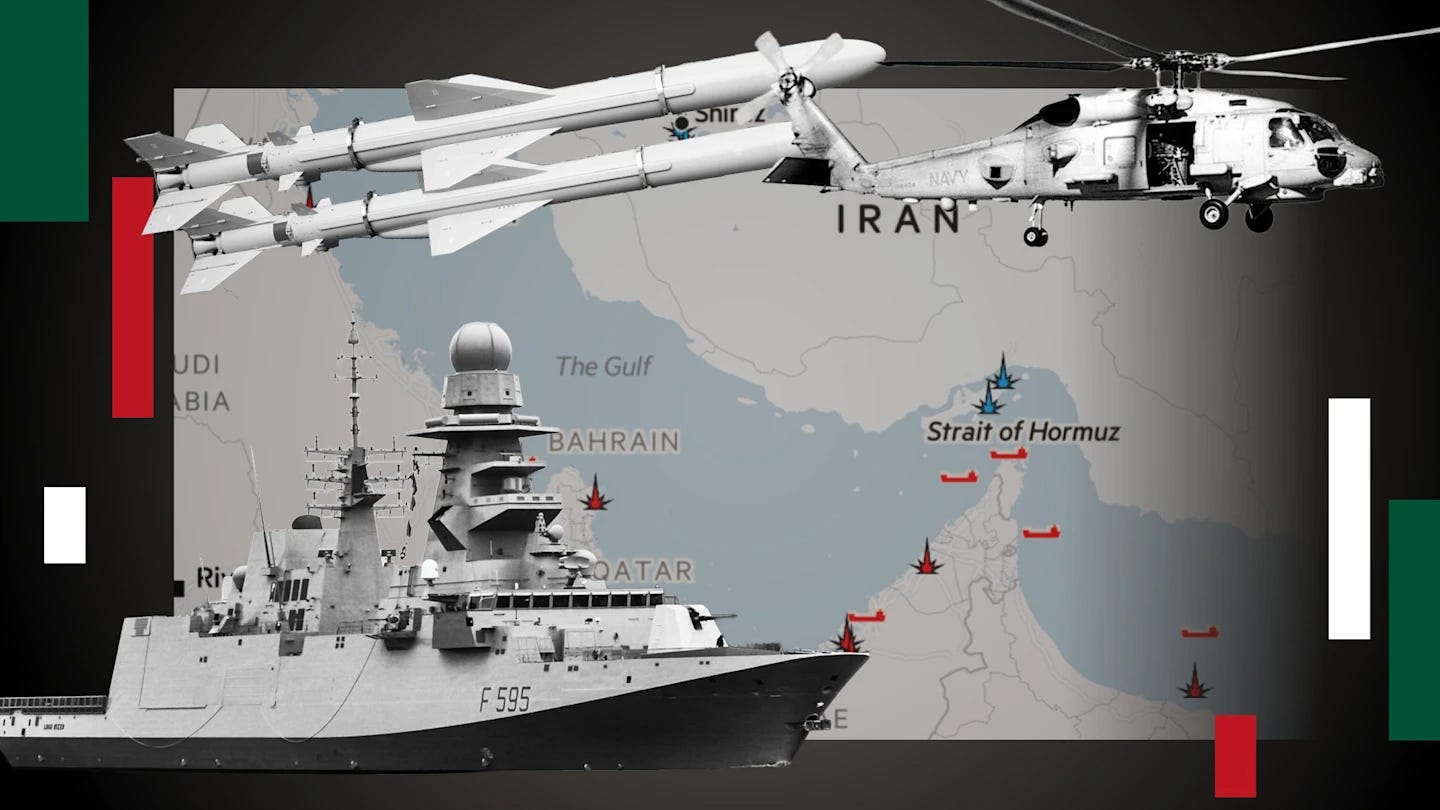
This week, the big story is not just whether the Hormuz blockade is 'successful'.
The more critical question is: what happens when the same geopolitical shock both throttles a strategic rival and provides the economic and political justification for the U.S. to accelerate domestic reindustrialization?
This is what makes Hormuz 2026 different from previous oil shocks.
If the 1970s oil shock was a reminder of how much the West depended on the Middle East, this Hormuz shock poses a different question: can the U.S. turn global supply chain fragility into a case for domestic industrial power?
On one side of the chessboard is Iran.
An economy already eroded by sanctions, inflation, a weakening Rial, and depleted social trust now faces a different form of pressure: not just paper embargoes, but a direct naval blockade at the physical chokepoint of its oil exports. When oil cannot leave port, revenue fails to reach the budget. When storage fills up, wells must be shut in. As the Rial plunges, citizens and businesses flee the local currency before the government can even release new data. This is a financial war, but one enforced by warships.
On the other side is the United States.
A manufacturing sector that has endured over two years of contraction is suddenly facing a completely different environment: Middle Eastern oil is more expensive, global shipping is riskier, Asian supply chains are less certain, and the logic of 'offshore production, cheap shipping, low inventory' is no longer self-evident. In this context, reshoring is no longer just a political slogan. It is becoming a new cost calculation: if the world can be easily locked at a single strait, then producing closer to home is no longer a waste, but insurance.
But this is where the equation becomes complicated.
Tehran will not necessarily concede just because Iran is in pain.
A rising manufacturing PMI does not mean the U.S. has truly reindustrialized.
High oil prices do not guarantee a sustainable revival of American factories.
Beneath the positive manufacturing headlines lies a warning that is hard to ignore: input costs are surging, manufacturing employment remains weak, and part of the new demand may simply be businesses front-loading purchases to avoid further price hikes. In other words, what is happening is not a clean 'boom.' It is more like a form of growth distorted by war: there are orders, investment, and political momentum - but also inflation, disruptions, and many questions about sustainability.
Therefore, the question this week is not simply: what is the Hormuz blockade doing to oil prices?
The more accurate question is:
Through what mechanisms is the Hormuz blockade creating two parallel structural shifts - cumulative economic pressure on Iran on one side, and a new catalyst for U.S. manufacturing on the other? And what will determine whether these two shifts become sustainable trends or merely the temporary aftershocks of a geopolitical crisis?
To answer this, the article will cover four parts:
Part I - What the blockade is doing to Iran: scale, three transmission channels, and the limits of pressure.
Part II - The oil supply shock: who is hurting, who is profiting, and why volatility is lower than expected.
Part III - Industry returns to the U.S.: recovery signals, stagflation warnings, and the question of whether this is a true revival or just a defensive bounce.
Part IV - Three scenarios for the remainder of 2026: an agreement, a prolonged stalemate, or uncontrolled escalation.
Hormuz, therefore, is not just a story about a strait.
It is where the world is seeing an old truth return in a new form: power lies not only with those who control money, technology, or the military - but also with those who control the chokepoints of global flows.
And in 2026, that chokepoint connects the Persian Gulf directly to the Rust Belt.