If you missed the best recent articles:
Recently, a series of analysts and news sites have sounded the alarm that the US stock market is overvalued.

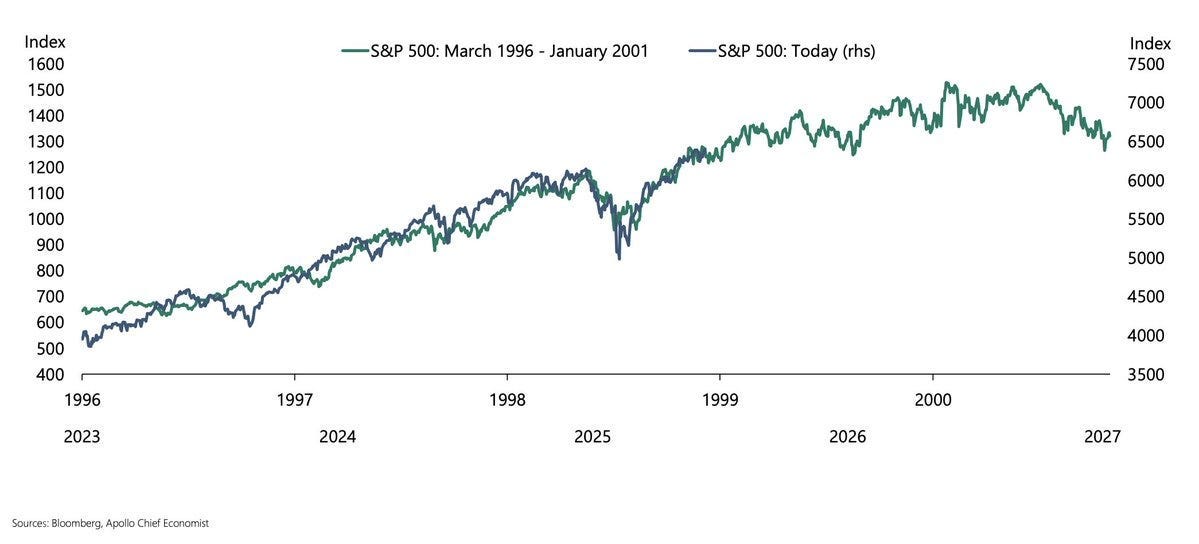
Torsten Slok - Partner & Chief Economist at Apollo even compared the current path of the S&P 500 to the dot-com bubble period 1996–2000 – and the charts look almost identical.
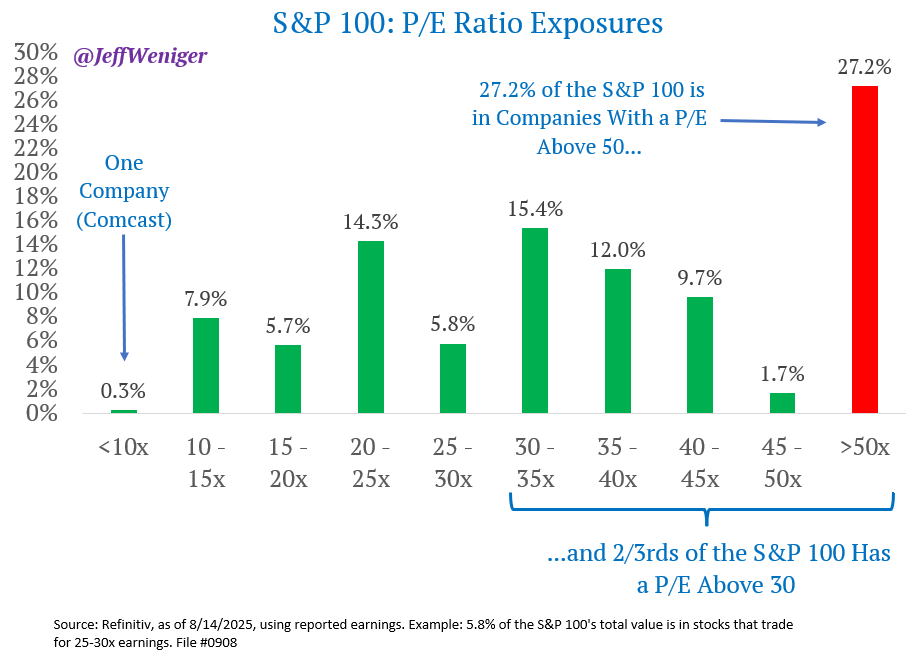
On the other hand, 27% of the S&P 100's value is in companies with P/E over 50.
Conversely, there is only one company with P/E under 10.
But there are also positive anomalies.
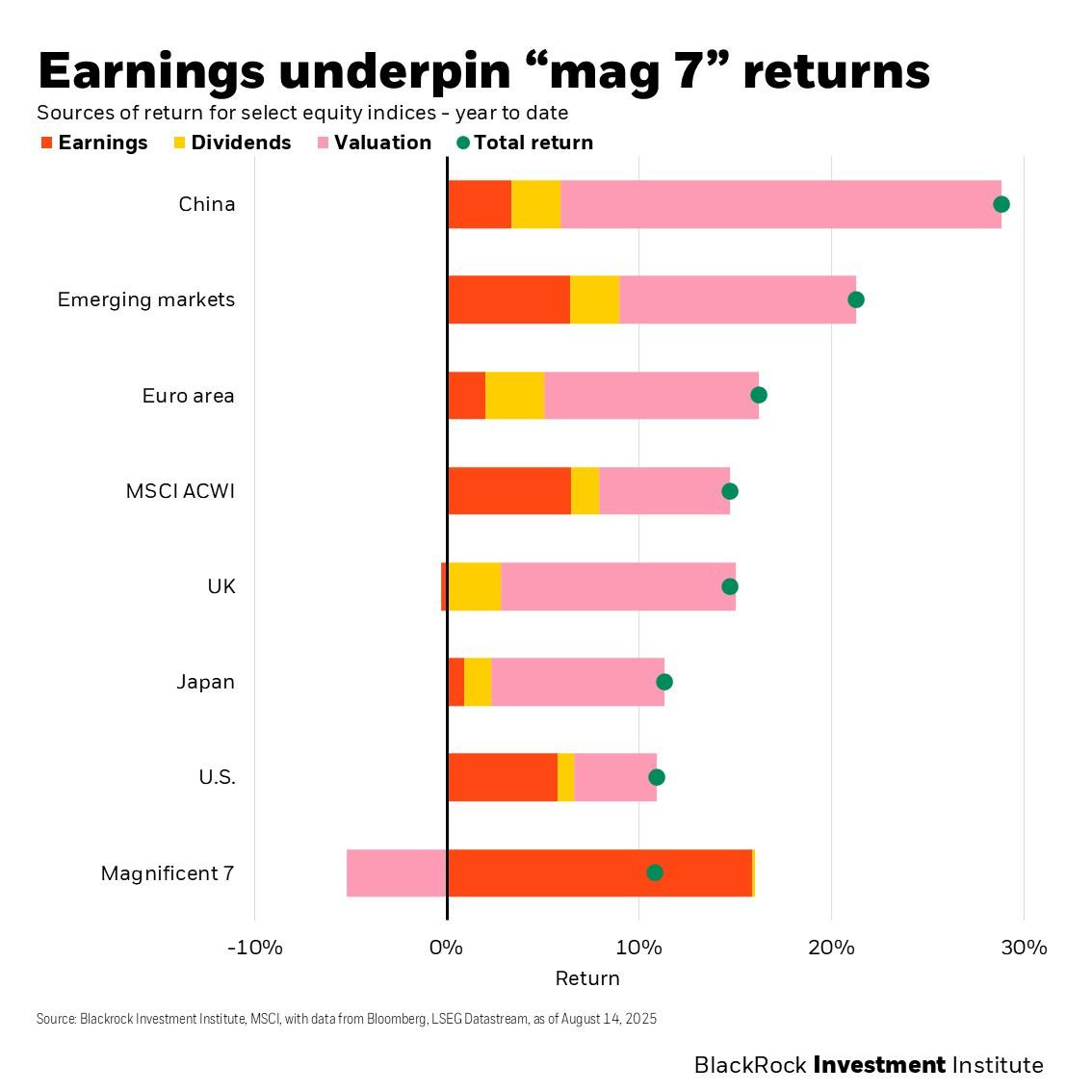
BlackRock shows that the Magnificent 7 group has actually become “cheaper” this year due to surging profits.
In other words, the price momentum comes not only from expectations but also from actual profits. This is hard to call a bubble.
Conversely, other major markets – from China, Japan, UK, US to Emerging Markets – are all more expensive in terms of valuation.
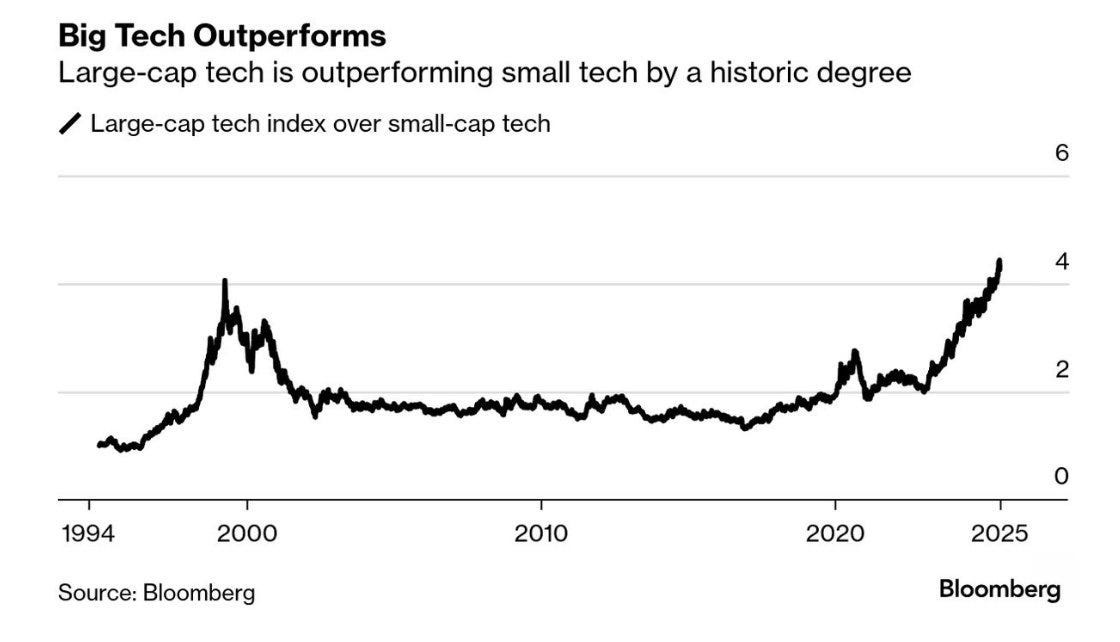
Another notable point: Big Tech is far ahead of small caps with historical performance gaps. This gap shows capital concentrating almost entirely into one group of stocks.
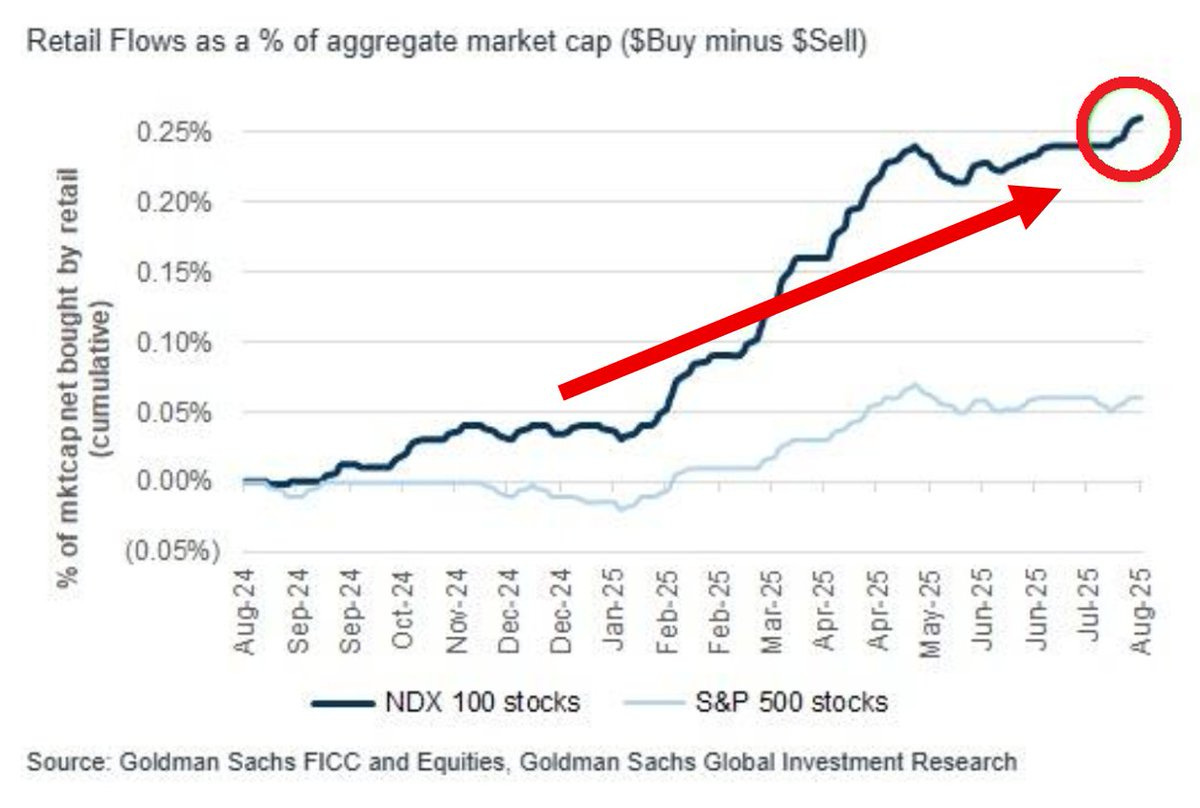
Big Tech's strong gains come from retail investors pouring over 3 billion USD/day into tech stocks – a record high.
They are the group that “buy the dip” earlier this year and benefited greatly from the spectacular recent recovery.
But if too many expectations pile up on Big Tech and crypto, the question is: what happens when there's no more room for further growth?
This is when alternative investment (alternative investment tools) emerges as an answer. Asset management corporations focused on real assets (real assets) – from infrastructure, renewable energy, to private equity – have continuously outperformed for over a decade.
A prime example: Brookfield Corporation (BN) – often called the “Berkshire Hathaway of Canada”.
Since Bruce Flatt became CEO in 2002, the stock has increased 15-fold, outperforming both the S&P 500 and Berkshire Hathaway.
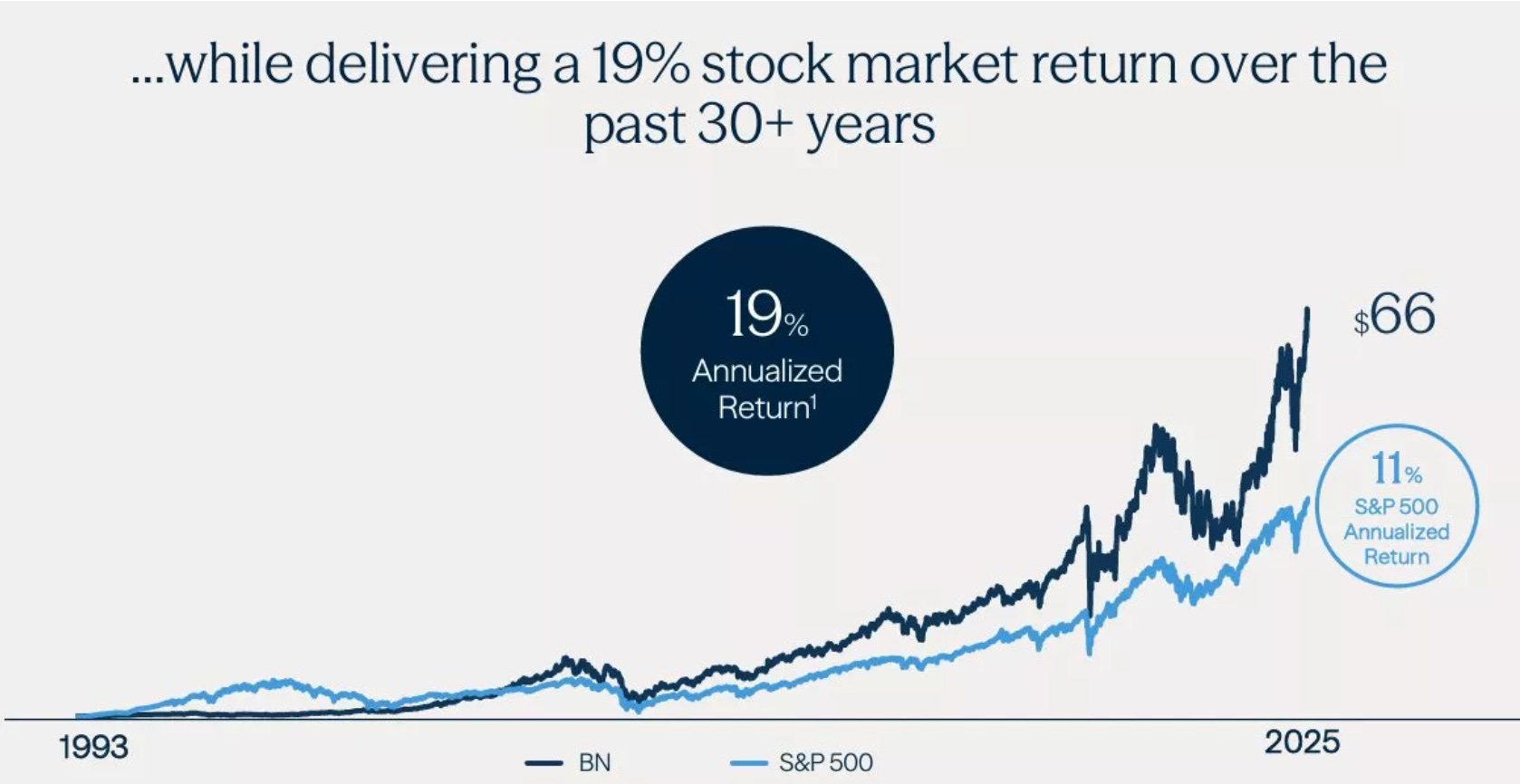
Brookfield is not just a paper growth story.
This is a corporation that owns a global strategic infrastructure asset ecosystem:
2 semiconductor factories
25GW renewable energy fleet
Network of 306,000 telecom towers and 32,000 km of railways.
In addition, the company currently holds 160 billion USD in deployable capital, both acquiring assets and actively buying back shares.
In today's blog post, Viet Hustler will analyze Brookfield Corporation with readers – to understand the business model, competitive advantages, and long-term investment prospects of this corporation.
Overview of Brookfield Corporation
Brookfield's Business Model
Competitive Advantage Analysis
Financial Health Analysis
Future prospects
Investment risks
Preliminary valuation