Due to a sudden health issue, the 7th article on CoreWeave is delayed and will be posted this evening. On behalf of Viet Hustler, Steve apologizes to readers for the above incident.
If you missed the best recent articles:
“When it comes to public finances, credibility is key.”
“Fiscal credibility is not words in the law-it's the interest rate you have to pay tomorrow morning.”
- The IMF once emphasized that just trust in the budget plan alone can help reduce borrowing costs by up to 40 bps. But in London 2025, the picture is reversed: gilts are bearing the highest premium in the G7, as if the market is “punishing” the UK for lacking a convincing fiscal story.
Autumn 2025, London becomes the epicenter of global bond market tension again. 30-year gilts yields hit 5.75% – highest since 1998 – while the pound slides the most in months. Chancellor (Chancellor of the Exchequer - temporarily translated as UK Treasury Secretary) Rachel Reeves enters the Autumn Budget in a dire dilemma: borrowing interest costs ballooning, budget headroom shrinking, market confidence fragile after every Labour internal politics flare-up.
In a tense parliamentary session ahead of the Autumn Budget, television cameras captured the moment Chancellor Rachel Reeves in tears behind Prime Minister Keir Starmer. It was not just a symbol of personal pressure, but also an image projecting fiscal impasse: spending cuts face party opposition, tax hikes betray the manifesto, additional borrowing sees the market immediately punish with yield.
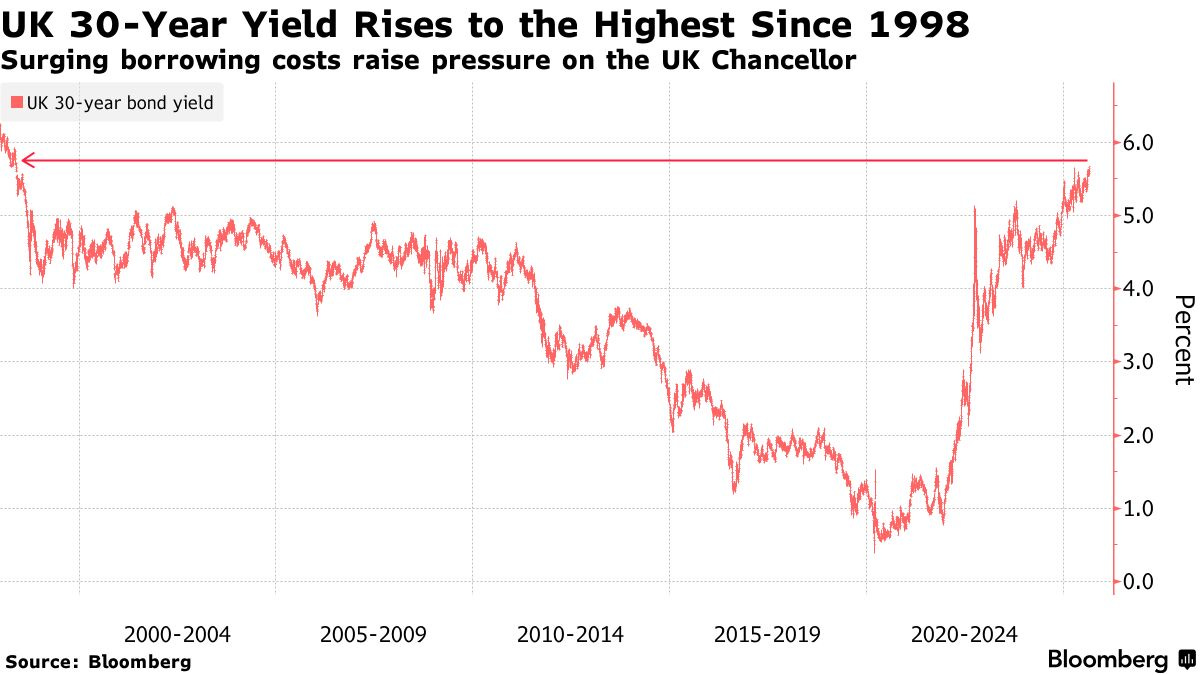
Once considered a “safe haven” on par with Treasuries (US) or Bunds (Germany), gilts are now called “the sick man of the G7”: vulnerable, overreacting to any government slip-up. The US has USD as global reserve currency, Japan has mountains of domestic savings, while the UK must borrow on international markets – direct competition in a high interest rate world with increasingly selective capital flows.
The ghost of the 2022 mini-budget still haunts: just one spending or tax misstep is enough to make gilts jump tens of basis points, dragging the pound, housing market, and even FTSE 100 (UK's main stock index - akin to S&P 500) into turmoil. For investors, UK fiscal trust is not measured by “fiscal rules” on paper, but by the yield curve the next morning.

In this article, VietHustler dives deep into:
UK Fiscal Picture 2025 – high debt, sticky inflation, and interest costs erosion.
Why gilts became the “sick man” of the bond market – four daggers stabbing the yield curve simultaneously.
Crisis roots – reliance on foreign capital, unfavorable debt structure, interest cost doom loop.
Way out for gilts – smarter issuance, genuine fiscal discipline, and long-term productivity boost.