In the final installment of the Global Economic Outlook series, Viet Hustler has made the following assessment: Public debt will be the biggest economic risk in the next 10 years… and the story has just begun.
As of 2023, the total US debt has reached >USD 33,118 billion, equivalent to USD 255,353 in debt per US taxpayer. National debt is not just a government issue, but a burden on every citizen!
Only a few hours left (from the time Viet Hustler prepared this article) before the US government has to shutdown most public activities if the two ruling parties cannot agree on a public spending plan.
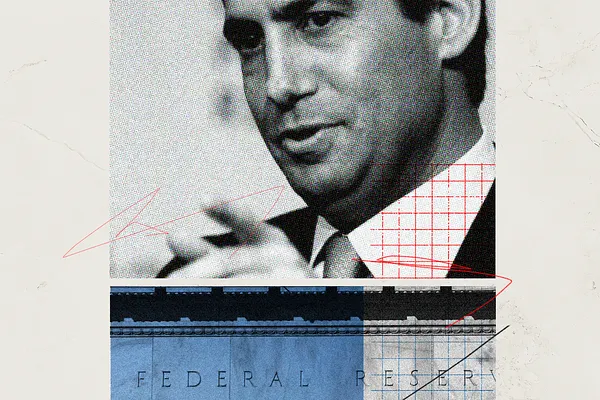
On this occasion, Viet Hustler will discuss the issue of US public debt, the reasons why US public debt has exploded in the past over a year, and the risks to the US economy if the public debt issue becomes persistent in the coming time.
Sunday Podcast: Forecasting Macroeconomic Trends in the Next 10 Years
Following the series of Global Economic Outlook articles (4 installments) posted on Viet Hustler. Steve will host a podcast with Linh Hà, a familiar writer of Viet Hustler, on hot topics revolving around the changing trends of global economic conditions mentioned in the recent Macroeconomic articles on Viet Hustler. The Podcast will be live on Discord at 12pm Central Time on Sunday 10/01 and will include the following content:
Federal Reserve and direction after September?
Bank of Japan and decisions that shake the world economy
China's economy - where to go?
Public debt crisis - where is the red alert level?
5 forecasts on macroeconomic changes in the next 10 years
Things to know about the current US public debt situation
US government bond yields have surged dramatically in the past 2 weeks.
US 10Y T-Bond yield has reached a peak of 4.8% in the past week.
Following that, the US dollar index (DXY) has surged above the 106 level.
Bond yields for the week have been updated in Viet Hustler's market report: date 09/28, 09/27, 09/26.
(Therefore, the weekend Macroeconomic article will not mention each number again.)
According to Goldman Sachs, the current high bond yields are largely due to the market's reaction to the government's fiscal and monetary policies:
Monetary policy (mainly the effect of inflation): the most hawkish interest rate hiking cycle in history.
Fiscal policy: Government spending deficit (expenditures - revenues) has reached 6% GDP.
In the past 2 years 2021-2023: while stocks have grown 33%, long-term Treasury bond ETF funds have lost ~-50%.
The amount of money the government uses to pay public debt interest has exceeded the amount spent on national defense…
(not because defense spending has decreased like in the late 1990s but because the cost of interest payments on debt has exploded in the past over a year)
Risk of government shutdown (closing most activities except basic public operations) in a few hours if the government cannot negotiate a public spending plan.
Update on negotiations between the 2 parties here.
The important thing that Viet Hustler wants to emphasize is this is not a phase of rising short-term bond yields but could be the beginning of adjusting borrowing costs to equivalently high levels in the long term.
It seems that the US will really achieve the interest rate “higher for longer” situation, but not just the Fed Fund Rate, but their own borrowing rates!
Why has there been an explosion of public debt in the US in the past 2 years (and predicted to continue exploding in the near future)?
In macroeconomics, there is a rule that
even if the starting debt-to-GDP ratio is high, the country can still continue to borrow (to finance economic activities) if the GDP growth rate (g) is higher than the borrowing cost (average borrowing rate - r),
that is:
If g > r: the country's economic growth potential will ensure debt repayment capacity and gradually the public debt/GDP ratio will decrease (orange line).
But if g < r: the economy's revenue will not be able to cover the borrowing costs, thus, the debt-to-GDP ratio will explode (green line).
However, since after the Great Recession of 2008, US economic growth has been severely hampered compared to before.
Also since the Great Recession 2008-2010 + Covid pandemic, the US government has spent a large amount of money to stimulate the economy to grow back…
… this also contributes to the fiscal budget deficit, pushing borrowing costs higher than growth rates (in the context of cumulative debt reaching a record high ~33,118 billion USD).
The US is currently spending 44% of GDP each year, equivalent to World War II.
Just the interest payment costs alone account for 20.7% of government revenue.
Most importantly, the average borrowing rate (r) 2.84% > potential GDP growth (~1.7%) (upper chart from FRED).
Therefore, with borrowing rates higher than growth (r>g), US public debt will have a higher explosion potential, projected to reach ~200% of GDP by 2050.
And even more difficult, the national debt increase (compared to 1950) is increasing higher (and faster) than the US GDP increase!
The threat from the US public debt crisis
The public debt crisis could bring the risk of stagflation if the government cannot handle it properly
The only solution the US government can offer now is the debt buyback plan (Treasury Buyback) starting from 2024.
Buying back US government Treasury bonds will increase liquidity in the market, no different from QE.
Meanwhile, the Fed's plan in the recent FOMC meeting is still to maintain the spirit of tight monetary policy next year.
Related articles: Global economic outlook final issue (first part of the article).
=> If at that time, inflation still cannot return to 2%, will reversing the tight monetary policy increase the risk stagflation (combo of economic stagnation + high interest rates + inflation still not controlled) in the US or not?
FYI: 5Y Swap contracts are showing the market expects long-term inflation above the Fed's (and ECB's) 2% target.
=> It can be said that the US government is confused in this crisis!
The public debt crisis could lead to banking financial crises.
This is not the first time Viet Hustler warns about the linkage between public debt crisis and banking financial crisis:
Periods of increasing public debt crises worldwide always come with banking and financial crises.
Causes:
Credit institutions (pension funds, mutual funds, insurance, banks…) hold a large amount of government bonds as a form of safe assets, and collateral to borrow in the interbank market and repos.
=> Public debt crisis will cause bond yields to rise sharply, exacerbating unrealized loss from holding bonds by credit institutions.
Case study:
Lesson from the Baring crisis: In 1890 when Argentina and Uruguay declared a delay in repaying Sterling-denominated debts, not only banks in Buenos Aires declared bankruptcy, but Baring Brothers bank (major creditor of Argentina), one of “Europe’s six power” in the European banking system at that time, also declared bankruptcy.
Market interest rates will remain high in the long term
This is the impact of the “bear steepening” situation in the financial market amid a weakening economy (source MacroAlf):
The “bear steepening” trend occurs when interest rates rise higher across all bonds but bonds with later maturities experience a higher interest rate increase speed (higher delta) - the green bar chart below.
=> therefore shifting the entire expected Fed funds interest rate curve higher in the long term - the chart above (Market-implied Fed Funds).
Market expects higher rates from Fed:
… simply because Fed will extend the high interest rate cycle to curb inflation if the government implements a buyback program (reversing Fed's QT) (opinion of Viet Hustler),
… while Fed is confident in soft-landing with the motto “this time is different” (this time the economic situation is vastly different from previous inflation episodes - according to MacroAlf).
However, Fed's extension of the high interest rate cycle in the long term will force businesses, after their old debt matures in the next 2 years, to borrow at high interest rates.
=> Fed's soft-landing plan will fail, even leading to a fairly severe recession because this time, the government cannot “continue borrowing” to fund economic growth stimulus projects!
CONCLUSION
The United States faces for the first time the risk of public debt crisis and government default when: fiscal deficit has reached 6% GDP + interest payment costs for current outstanding debt have exceeded defense spending. Meanwhile, over the past more than 1 year, US borrowing interest rates have risen much higher than GDP growth rate (r > g), which explains the increasing Debt/GDP ratio, and is projected to rise to 200% by 2050.
In reality, the greatest risk to the US and global economy once the US defaults is unpredictable, because the role of the US economy is too large globally, not simply like the defaults of other countries.
However, in the short term, the high accumulated public debt situation may cause the 3 biggest problems for the US economy:
Risk of stagflation if the US government's fiscal policy does not align with Fed's monetary policy.
Risk of global financial crisis from US public debt crisis.
Risk that long-term interest rates will be adjusted higher. Causing difficulties for businesses, and possibly leading to prolonged economic recession (and the government will not have enough money to implement economic stimulus policies).
The only solution the US government currently has is the debt buyback program to start in 2024. However, as Viet Hustler pointed out above, this program could lead to stagflation if inflation is still high at that time and Fed is still maintaining QT. And even if using money to buy back debt, that money also comes from taxpayers' money.
At a certain point, the alarming US government budget deficit will burden the American people themselves: The US may have to increase taxes along with plans to cut government spending!


Comments (0)
No comments yet
Be the first to comment
Login to comment