MACROECONOMICS

Global Economic Perspective (Final Installment): Financial and Economic Trends in the Next 10 Years

Viet Hustler's Predictions on Trends of Macroeconomic Changes in the Next 10 Years

In the previous 3 installments, Viet Hustler analyzed the impacts from the macroeconomic situation and interest rate policies in Europe, China, and Japan on the US and the world economy in general. The final installment of the Global Economic Perspective series will return to the US after FOMC September 2023. At the same time, Viet Hustler will quickly analyze the pressure from the current Fed monetary interest rate policy on other major central banks, including ECB (Eurozone), BOJ (Japan), and PBOC (China).

Finally, which is also the main purpose of this article concluding the Global Economic Perspective series, Viet Hustler will provide some comments on the overall financial and economic trends in the next 10 years. These opinions are based on observations by the Viet Hustler author group on the recent global macroeconomic situation. Most of this economic information has been consistent throughout the 4 articles of the Global Economic Perspective series over the past nearly 1 month.

Viet Hustler is a reader-supported publication. To receive new posts and support my work, consider becoming a free or paid subscriber.
However, the following comments and predictions are purely personal opinions, may contain errors, and are solely for reference for readers. This is not to be considered investment advice, therefore Viet Hustler is not responsible for any economic/investment activities of readers based on these predictions.

Disclaimer: the following predictions are not investment advice!

Pressure from Fed Policy on Other Central Banks

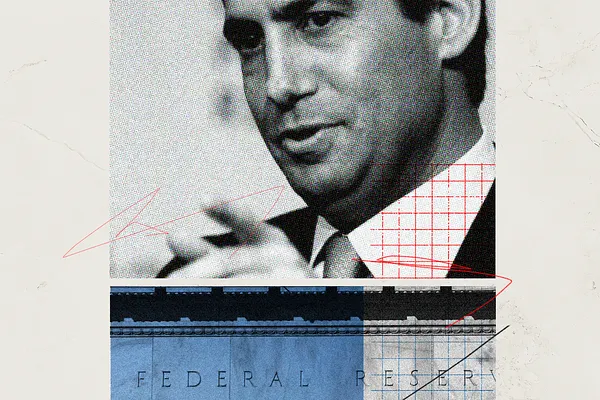
FOMC September 2023 and Powell's Cautious Steps

  • As predicted in Installment 1 of the Global Economic Perspective Series, after the September meeting just passed, Fed keeps interest rates unchanged (at 5.25% - 5.50%), while its counterpart ECB continues to raise interest rates by another +25bps. 

  • Many sources comment that this is a “hawkish pause” due to:

    • FOMC statement clearly states 3 views: inflation is still high, while the economy is still growing solidly and low unemployment

      => creating room for Fed to raise interest rates further!

    • Dot-plot also indicates that FOMC members expect to possibly raise interest rates by another +25bps by the end of this year and keep interest rates high for longer.

    • The market also predicts up to 50% chance that Fed may raise interest rates one more time this year and keep rates high longer before Pivot.

Image
  • However, Viet Hustler's view is that: September 2023 FOMC statement is hedging and Fed is taking quite cautious steps both in words and actions.

    • Although affirming that inflation is still high, economy is still growing, and unemployment is still low so Fed still has room to raise rates. But in the FOMC statement itself, Fed also affirms that they are considering the policy lag and cumulative effects of multiple rate hikes:

    • Fed shifts to slower rate hike pace (more spaced out): pausing rate hikes in June and September. 

    => Clearly, Fed still wants to continue observing the cumulative effects of previous rate hikes (because interest rate policy effects have a certain lag).

What causes this caution from Fed?

First, about the direction of inflation:

  • Although overall US CPI rose in July-8, the CPI increase is likely mostly due to summer vacation effect combined with high gasoline prices (pressuring transportation/airfare costs).

  • Core CPI has shown signs of improvement (especially housing prices). 

  • Details: Viet Hustler's Summary of August 2023 CPI Report.

  • Especially core PCE index (Fed's preferred price growth measure), for the first time since October 2022, has fallen below 4%:

    Image
  • Upcoming, inflation direction will become clearer from September, especially as people start resuming student loan payments.

  • Of course, preparing for inflation rebound scenario remains Fed's top priority.

    • Fairly high August CPI data increase also caused Fed's dot plot to shift to “higher for longer”.

      (peak interest rates could be higher in 2023, later pivot with cuts lower than 50bps next year compared to the June/2023 projection).

      Image

Next, talking about the pressure of interest rates on financial markets:

  • Although the Fed raised the growth forecast for this year and next, it persists with the soft landing plan:

  • But there is a comment from Nick Timiraos (WSJ chief economics correspondent) that Viet Hustler thinks is very accurate: “Almost every hard landing looks at first like a soft landing”.

    a.k.a. Most recessions due to tight monetary policy initially look like soft landings (for the Fed?).

    Image
  • The truth is, businesses have not yet fully felt the pressure from interest rates, and of course, the Fed certainly knows this: 

    • Nearly ~USD 2,000 billion in corporate debt will only mature in 2024-2025.

      No alt text provided for this image
      • Most of these old debts were previously borrowed at extremely low interest rates during the Covid QE period. 

    • Therefore, businesses will only start to feel interest rate pressure when they begin to refinance with new debts at higher interest rates.

  • What allows the Fed to be confident in the “soft-landing” is that only about 16% of corporate debt will mature in the next 2 years. 

    • Corporate cash balances are at historically high levels due to the previous generous QE policy.

      => Companies can use that cash to reduce debt instead of refinancing, and wait until the Fed cuts rates.

  • However, if the Fed keeps rates “higher for longer” with a slower rate-cutting path in 2024-2025. Certainly, some businesses will inevitably suffer losses due to credit crunch.

Pressure from Fed policy on other major central banks

Japan

  • With the “higher for longer” signal from the Fed and the sharp rise in US 10Y T-bond yields causing the JPY to weaken, it could prompt “market intervention” by the BoJ more strongly (more than just adjusting YCC) in the near future.

  • One of those possibilities is that bond market pressure will force the BoJ to abandon the current slow YCC exit process and immediately raise short-term rates out of the negative -0.1% zone.

    • While previously, the BoJ governor signaled considering rate hikes only from the end of this year when sufficient economic data is available (Global Economic Outlook Part 2).

China

  • China is striving to promote growth through financial channels including actions such as: easing credit lending conditions, increasing public spending, allowing renegotiation of mortgage loan terms and reducing debt repayment requirements

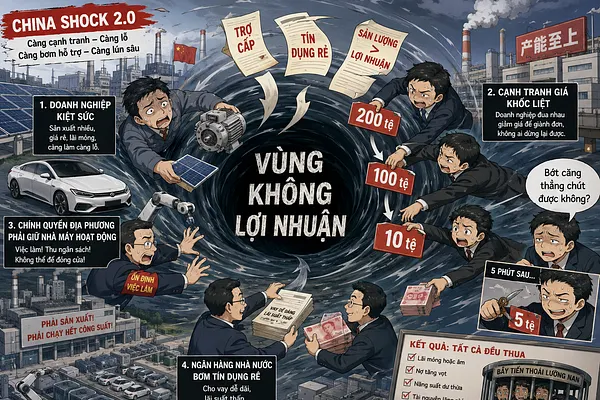
  • However, China has no intention of confronting the reality of structural difficulties including the economy's dependence on infrastructure and real estate investment activities (financed by debt).

  • The greatest pressure the Fed is exerting on the PBOC is on the forex front: 

    • The excessive gap between the PBOC's loose monetary policy and the tightening policies of the US (and ECB) is gradually widening

      => Beijing will face a tough currency battle to defend the CNY value. 

Eurozone

  • The hawkish stance of the Fed in the recent FOMC meeting (even though the Fed did not raise interest rates like the ECB) caused the EUR to depreciate rapidly immediately afterward:

  • However, the current EUR/USD exchange rate is not the main concern of the ECB in the coming time, but rather the possibility of the Eurozone disintegrating:

    • … if the ECB maintains its hawkish stance (more than the Fed), due to stubborn inflation in the bloc and the slow and limited spillover effects of monetary interest rate policy on the entire bloc comprising 19 member countries.


Some predictions by Viet Hustler on new economic and financial trends in the next 10 years

Disclaimer: The predictions below are only the personal opinions of the Viet Hustler author group, and are for reference only. These are not to be considered investment advice, therefore Viet Hustler is not responsible for any economic/investment activities of readers based on the predictions below.

1. Yen Carry Trade activities will gradually be replaced by Yuan Carry Trade

For many consecutive years, the JPY has held the supreme position in Carry Trade activities due to the BOJ's “super loose” monetary interest rate policy:

  • For many years, the yield of the Yen has always been lower than other currencies,

    … even lower than currencies that don't have much global value (like currencies in developing countries).

  • And especially in the past year, when interest rates in the US and European markets are increasingly high, while the BoJ persists with negative interest rate policy,

    => the yield of the Yen has hardly changed while other currencies have increased over the past year:

  • This creates conditions for Carry Trade activities of investors: they exploit the interest rate differential between the two economies to borrow where interest rates are low (Japan) and invest where interest rates are high (like the US, Europe…)..

    • The volume of Yen Carry Trade transactions always has a certain correlation with the global stock market, and is one of the important indicators of the global stock rally potential.

      Image
  • Therefore, if the BoJ abandons the negative interest rate policy in the near future and directly raises short-term interest rates in the Japanese market:

    • The wave of “repatriation” (repatriation) of capital flows from Japanese investors will cause financial markets to lose a large amount of liquidity.

    • But another impact is that the investment yields of arbitrage investors will decrease because they lose the source of cheap borrowing in Japan.

However, they may find another cheap borrowing market: China! 

  • If the predictions from Viet Hustler in episode 3 of the series Global Economic Perspective are correct, then China is walking on the same path as Japan nearly 10 years ago.

  • There is a possibility that the mild deflation and deflation in China will be maintained for a long time due to its own economic vulnerabilities (the economy's dependence on construction and debt-financed real estate).

  • This will put pressure on the PBOC, forcing this central bank to loosen its monetary interest rate policy to stimulate the economy over a long period. While interest rates in other markets (possibly including Japan) are rising high.

  • Carry Trade traders will soon sniff out the source of cheap capital in China: Yuan Carry Trade will soon replace Yen Carry Trade to become the super-profitable currency arbitrage investment activity. 

  • In addition, with decreasing consumer demand and labor productivity that has stopped increasing, capital flows from China will flow abroad to places with higher investment returns.

2. China will lose its export dominance.

  • The West's wariness of China amid a series of large and small trade wars leads to 2 possibilities:

    • China's painstakingly built One Belt One Road plan to facilitate trade with Europe is likely to fail:

      • In this month's G20 meeting in India, Italian Prime Minister Meloni announced Italy's withdrawal from China's One Belt One Road initiative.

        Image
    • China is redirecting its export goods pathway to the Southeast Asia and Latin America markets:

      Image

      (Although, some goods from China to the above 2 markets are only for the purpose of transiting through the US and Europe to avoid trade war impacts. But these small-scale activities will not last long if the US and Europe continue to tighten goods origin controls.)

  • However, the purchasing power of the Southeast Asia and Latin America markets cannot match that of the US - Europe market.

    • Southeast Asia and the Indian subcontinent themselves are gradually becoming major processing and export hubs to the US and Europe.

  • Therefore, China will gradually lose its position as the world's factory to other developing markets.

3. US Dollar and rare metals (gold) will simultaneously become important “reserve currencies” globally:

  • First, Viet Hustler has previously analyzed the role of the USD in international trade, financial investment, and foreign exchange reserves:

  • => One thing is certain: even under the pressure of de-dollarization, the USD remains solidly the “international currency”, financing most trade activities and financial transactions. 

  • However, the public debt burden of most governments worldwide is shaking public faith in major governments. 

    • And faith in the value of the USD is entirely based on faith in the government that issues it.

    • However, public debt crises from the world's leading government, the US, are shaking the position of the USD.

  • Therefore, in the coming time, Viet Hustler predicts that the trend of reserving gold and investing in rare metals will increasingly grow, alongside other foreign exchange reserves.

  • This simply stems from the risk-averse psychology of investors.

4. Public debt crisis will be the biggest economic risk in the next 10 years

A chart showing the breakup of the world economy, organized by the size of each country's gross domestic product.

CONCLUSION

Last week's FOMC meeting was perceived by the market as a “hawkish pause” action from the Fed, and Viet Hustler does not deny this. However, Viet Hustler believes the Fed is deliberately hedging: on one hand cautious about the possibility of inflation rebounding, on the other hand slowing the rate hiking process to observe the lagged effects of interest rate policy on the economy.

This hawkish stance of the Fed immediately impacts the values of the most important currencies in the financial market: USD appreciates against EUR, while JPY and CNY continue to depreciate.

Compared to BOJ or PBOC, the current ECB cares little about the value of EUR. Simply because ECB is aligned with the Fed in raising interest rates. In the coming time, ECB will be even more hawkish than the Fed, so what concerns them is greater than the EUR exchange rate: fragmentation risk in the Eurozone could even cause this common currency bloc to disintegrate.

However, BOJ and PBOC are struggling to defend their domestic currency values while maintaining loose monetary policy to stimulate the economy. Even with inflation over 3% in Japan, decades of deflation and disinflation have led BOJ to persist with its ultra-loose interest rate policy. Meanwhile, China risks following Japan into a “lost decade” if PBOC fails to address the key structural issue in its economy: over-reliance on exports, construction, and real estate fueled by massive debt.

Finally, concluding the 4-part series on Global Economic Perspective, Viet Hustler provides 4 main predictions on economic and financial trends in the next 10 years, including:

  1. Yen Carry Trade activities will be replaced by Yuan Carry Trade, simply because China may be treading the path Japan took over a decade ago.

  2. China will lose its export dominance to emerging economies in Southeast Asia, the Indian subcontinent, and Latin America. 

  3. US Dollar and rare metals (gold) will simultaneously become important global “reserve currencies” (although USD remains the primary currency in global economic transactions).

  4. Public debt will be the biggest economic risk in the next 10 years, triggering a series of currency and banking crises (twin crisis and tri-crisis)…

Disclaimer: The above predictions are solely the opinions of the Viet Hustler author team and are for reference only. This is not considered investment advice, so Viet Hustler bears no responsibility for any economic/investment activities by readers based on these predictions.

Viet Hustler is a reader-supported publication. To receive new posts and support my work, consider becoming a free or paid subscriber.
Login to read the full article

Create an account to access premium content.

0

Comments (0)

No comments yet

Be the first to comment