If You Missed These Top Recent Reads:
"Monetary policy works with long and variable lags - but energy prices work immediately."
- Milton Friedman (paraphrased from research on transmission mechanism, 1961)
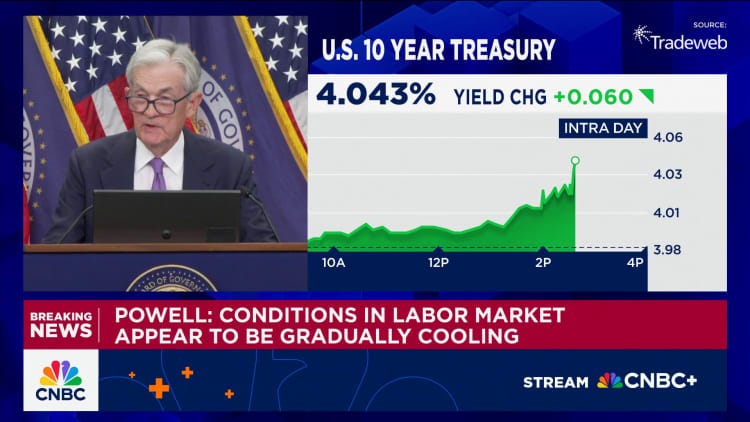
March 2026. An FOMC meeting unfolds as usual - rates held steady, statement offers no surprises, Powell fields press questions with his familiar cautious tone.
But as trading closed, 2-year Treasury yields had risen nearly 10bps from pre-FOMC levels. Swaps pricing easing for all of 2026 neared zero. And on Polymarket, odds of “no Fed rate cuts in 2026” climbed toward 30% - from negligible levels just six weeks prior.
Nothing changed. But everything changed.
That's the fascinating thing about financial markets: they don't reverse because of data. Not because of a single CPI report, dot plot, or FOMC meeting.
They reverse because of something far more elusive - a shift in how markets understand the way the world works.
Throughout 2025, markets believed in a certain structure: the Fed steering the cycle, inflation cooling, and easing just a matter of time. Goldilocks wasn't perfect, but good enough for risk assets to keep climbing. Good enough for dip-buying to persist.
Then the Iran war began. Oil didn't fall. Inflation expectations stopped declining. And gradually - not through a single shock, but via a steady string of small adjustments - markets started asking a question no one had really posed before:
Can the Fed still cut rates?
Not 'how many cuts will the Fed make.' Not 'June or September cuts.' But a more fundamental question - whether monetary policy remains an active variable, or has become a reactive one constrained by forces beyond the Fed's control.
When that question shifts, the entire asset pricing structure must follow.
What makes this moment different isn't the shock's magnitude - oil at $103 isn't a crisis by historical standards. What makes it different is its structure. A typical energy shock arrives and fades. Markets 'look through' it, the Fed waits, and the cycle rolls on. But when the shock lingers long enough to seep into expectations - when services inflation sticks high, goods cease to be a disinflation force, and 5y5y inflation swaps start decoupling from oil - the 'look through' mechanism breaks down.
Inflation no longer needs oil to persist. It just needs markets to believe it will.
And that's when the Fed is truly trapped.
In today's post, Viethustler breaks down seven charts - each one an angle, a puzzle piece. Put them together, and the answer to the central question emerges on its own: can the Fed still cut rates?
Part I – War and Oil Prices:
markets don't price outcomes, they price shock duration Part II – Oil and Recession:
when 'relatively cheap' is still enough to choke growth Part III – Inflation Expectations:
when the oil-inflation link starts to break Part IV – The End of Goldilocks:
when growth, inflation, and policy stop moving in sync Part V – SEP and Risk Distribution:
when the 'base case' ceases to exist Part VI – Rate Expectations:
when markets wipe easing scenarios Part VII – Short-Term Yields:
when markets no longer believe the Fed can cut PART I – OIL AND WAR: MARKETS AREN’T PRICING THE ENDGAME, THEY’RE PRICING THE TIMING OF THE SHOCK