The market is witnessing two opposing trends in investment portfolios:
Part of the market is still all-in betting on the growth trend of stocks led by the Magnificent 7 group
Meanwhile, some remaining large investors are maintaining unprecedented cash holdings or withdrawing from the tech stock frenzy. Typical examples are:
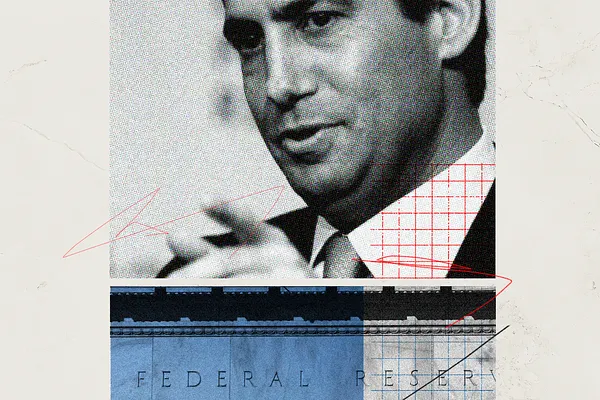
Warren Buffett is maintaining a cash balance of ~USD 168 billion
Jeff Bezos sold a total of USD 8.5 billion Amazon shares.
We are in the weekend Macroeconomics section, so this Sunday's article from Viet Hustler will only start with the cash reserve trend in the market. Because this trend is how investors and businesses bet on the outlook: recession or no recession of the US economy.
The article includes 3 main arguments:
Cash reserve trend: how the market is betting on the US financial-economic situation
Sticky inflation and the effectiveness of monetary policy
Labor productivity: the rose-paved path for the Fed
Disclaimer: Some of the views below are just the personal opinions of the author group, and are not investment advice at all.
Soft-landing vs hard-landing: economists' views vs market
Cash reserves: what is the market betting on in the macroeconomic outlook?
Warren Buffett's Berkshire Hathaway just reported a record cash balance of up to USD 167.6 billion in Q4/2023.
Meanwhile, Berkshire Hathaway is still investing profitably as revenue increased by +USD 37.4 billion in 2023 (~ +21% y/y).
There's no reason for Berkshire Hathaway to let money sit idle without earning returns.
US companies also have idle cash reserves up to USD 4,400 billion
This record cash balance has far exceeded the pre-Covid cash accumulation rate.
In addition, a large amount of money is also flowing into Money Market Funds (MMF - investing in bonds with maturity under 1 year) - another form of cash:
FYI: This also keeps T-bill demand high: most of the massive T-bills issued over the past year were bought back by MMF.
But whether holding cash or investing in MMF, this action also contradicts the common thinking of investors: that is, not letting money sit idle!
Usually, holding cash always comes with the threat of inflation.
With high inflation over the past nearly 2 years, even taking money to the bank for interest (or investing in MMF), the value of money eroded by inflation is still faster than the profit from deposit interest rates (or previous MMF yields).
FYI: Viet Hustler's Fanpage also reports a series of insider trading:
when the founders of large companies dump shares of their own companies… to get cash (currently no sign of them investing the money anywhere):
Bill & Melinda Gates Foundation sold a large amount of $MSFT shares,
Jamie Dimon sold $JPM shares for the first time (~ USD 150 million) since 2005.
Mark Zuckerberg sold > USD 400 million $META shares even though $META just announced dividend payment
Jeff Bezos sold a total of USD 8.5 billion AMZN shares.
Most recently, yesterday:
Lilly Endowment sold USD 130 million $LLY shares
Alex Karp sold USD 25 million $PLTR
Lisa Su just sold USD 20.4 million in $AMD shares
The Walton family also just sold a total of USD 4.5 billion in Walmart shares.
What is the reason for hoarding cash at record levels despite stocks still surging spectacularly over the past year?
If they are ordinary risk-averse investors, securing a 4-5% return without any risk makes sense.
But Warren Buffett is different; he is an investor willing to take risks - who made his name with business ventures from the late 80s-90s.
The only reason Warren Buffett is holding such a large amount of cash could be
Warren Buffett may be betting on the possibility of recession / market crash and wants to wait to buy large companies at bargain prices if a recession really happens.
4 market signs supporting the possibility of recession (or capital market retreat)
1- Businesses are already facing a wall of maturing debt early.
At the beginning of the year, impending debt maturities caused large businesses to issue bonds en masse to a record level (USD 190 billion in just January)
Within about 1 week, the yield spread between corporate bonds in general and Treasury bonds (credit spread) fell low.
The reason is that the corporate bond market was filled with low-risk bonds, increasing investor demand.
Thus, small businesses also seized the opportunity to issue more bonds to cope with maturing old debt.
But credit spread for small businesses, which followed early, was adjusted within 2 weeks:
Yields on corporate bonds with low credit ratings rose again from after the first week of January 2024 compared to the end of December 2023.
Businesses at all levels issuing more debt en masse is a sign of impending old debt maturities.
In the near future, refinancing for small businesses will still face difficulties as interest rates remain high.
2 - Regional banks' credit card delinquency rate reached an all-time high in Q4/2023:
~8% of credit borrowers have let debt overdue without paying
3- Commercial real estate crisis reaches climax
635 commercial properties were foreclosed in January 2024 because owners could not pay debt: up +17% m/m and +97% y/y
4- Government public debt rises high
Even though stocks are on a growth trajectory, US public debt (USD 34,330 trillion) is still 2.8x the market value of the Mag 7 group:
These are evidences right on the financial market that investors can all grasp.
Therefore, their bet on “hard-landing” based on this evidence is entirely possible!
But economists are increasing predictions on the soft-landing possibility!
The interesting thing between market predictions and economists' predictions:
Previously, when economists worried about recession, the market still bet on soft-landing
Currently, despite large investors betting on market crash risk, economists are turning back to support the Fed's “soft-landing"
Economists are increasing GDP growth forecasts for most major categories: consumption, private investment, and government spending
Of course, the no free lunch principle always exists:
+ Fed raised interest rates at the fastest pace in history, and still maintains peak rates to the present
+ A small banking crisis from March last year
+ Real estate crisis
… yet there are still no signs of labor market weakening and recession…
Then the high likelihood is that soft-landing is being traded off by sticky inflation - inflation becoming more stubborn.
Sticky inflation and the effectiveness of monetary policy
The trade-off between soft-landing and the lagged effectiveness of monetary policy is part of the reality of the current inflation cycle:
High wage growth in the US after Covid was once an inflation risk, which may be the driving force promoting the soft landing possibility
Hourly wages increasing at >+4% y/y rate throughout 2023 to date
Although lower than 2022 (wages up >5% y/y), current wage growth rate + high post-Covid labor demand (figure below) is just enough to help the economy and labor grow at a modest pace - achieving soft-landing in 2023.
However, wage growth >4% y/y is higher than Fed's 3% y/y income growth target (to align with 2% inflation target in the model)
=> this is the premise for sticky inflation - inflation cannot drop below 3%!
Tight monetary policy is being partially reversed by fiscal policy and generous subsidies from the US government
Former New York Fed President Dudley admitted last week that fiscal policies and subsidies have pushed the necessary neutral rate higher…
FYI: Neutral rate is the model-based (unobservable) interest rate for Fed to ensure 2% inflation and full employment.
… making current policy rate look high but not high enough to bring inflation back to 2%!
In reality:
Government spending contributes significantly to GDP growth
Government hiring pace also helps keep the labor market at full employment.
Although these help Fed achieve soft-landing targets in both economic growth and labor market…
… the consequence is still a budget deficit figure of up to -6.2% GDP.
As Viet Hustler warned earlier, Yellen's debt buyback plan this year (announced from November 2023) could help mitigate public debt…
… but contributes to injecting liquidity into the market, reversing Fed's QT process.
Not to mention, a series of government subsidy programs such as:
Tax reduction programs for small businesses.
Recently, the intention to forgive USD 1.2 billion in student debt for over 150,000 Americans from President Biden's administration.
And of course, including the low-interest funding program BTFP that Fed provides to the banking system….
Also contributing to keeping consumer spending high, prolonging Fed's inflation battle.
Labor productivity: the rose-strewn path for the Fed
If there is any “rose-strewn path” for Fed to achieve both inflation target and soft-landing, it is the current US labor productivity boom - a traditional method in classical economics.
Paul Krugman, the famous Nobel Prize in Economics winner, once remarked “labor productivity is not everything, but in the long run it is nearly everything”.
Aggregate productivity index (Total Factor Productivity - TFP ) shows US currently returning to the labor productivity renaissance era:
FYI: In Solow economic model classical, total economic output (Y ) follows the Cobb-Douglas formula as below:
Where, output (Y ) is constrained by labor supply (L ) and capital or infrastructure supply (K - Capital).
However, labor productivity growth (based on the index TFP - A in the above formula) is not limited if there is technological superiority.
A is the main factor to promote economic growth beyond the limits of labor and capital!
In the past, the goal of industrial / technological revolutions was to increase labor productivity in the long term!
US labor productivity increasing higher than the general trend since after Covid is something that did not happen throughout the 10 years before Covid:
In which, labor productivity increased 3.2% q/q (2.7% y/y) in Q4/2023
much higher than the average of the most recent 10 years (~1.5%)
Increased labor productivity can be the catalyst for both strong economic growth (Solow model) and the disinflation trend because:
When output increases without needing to increase labor costs or capital costs, commodity prices will decrease in the long term.
However, usually, whether labor productivity can be maintained in the long term depends greatly on whether there is a major shock such as a technological revolution or not.
Viet Hustler is not sure whether the economic recovery after the Covid pandemic will be considered a positive shock to US labor productivity in the long term.
Therefore, the “labor productivity revival” factor is still an unknown.
CONCLUSION
It can be said that investment categories in the US financial market are gradually prioritizing holding large cash positions, as the market bets on the possibility of a recession. Because seasoned investors naturally see the problems of the financial system including:
businesses are gradually approaching debt maturity cycles,
credit delinquency rates increasing,
non-performing loans in the commercial real estate sector increasing
and the ticking time bomb named “public debt” and “budget deficit”....
The Magnificent 7 group is still leading stock market growth, which may not compensate for the above financial vulnerabilities. This is the main reason investors are sitting on huge cash piles to bet on the risk of collapse of the financial system and the economy.
However, from a macroeconomic perspective:
The classical Solow economic school still believes that the explosive labor productivity data in the US can reinforce confidence in the soft-landing possibility.
Another explanatory direction of modern economics from the perspective of the influence between fiscal and monetary policies suggests that the reason the Fed achieved soft-landing last year is also the cause of the current sticky inflation including:
Wage growth remains high for more than 2 years, reducing the effectiveness of the Fed's interest rate tightening policy on consumer spending…
Fiscal policies and subsidies for businesses, banks, and people also partially reverse the Fed's QT process.
Therefore, currently, the soft-landing possibility is still hanging in the balance.
However, if there is no recession in the next half year and the financial market does not collapse, investors may rush to reverse their current cash-holding positions. At that time, large liquidity will be returned to the market. This will make it even harder for the Fed to bring inflation back to the 2% target by the end of this year.


Comments (0)
No comments yet
Be the first to comment
Login to comment