Last week, the Macro Economics section of Viet Hustler kicked off March with news highlights on 3 major macro events of the global economy occurring around this time.
And in the short 6 days just past, there have been quite a few macro data and important events reinforcing the assessments from last week by the Viet Hustler author team as well as providing much new useful information, including:

US labor report supports the possibility of Fed pivot this year
Li Qiang's growth target comes with new economic development directions at the Two Sessions meeting in China.
Efforts by Chinese provinces on the sidelines of the Two Sessions to address local public debt
And the first information on the progress of Shunto wage negotiations in Japan…
Given the importance of these events this March, Viet Hustler continues to dedicate this week's Macro Economics article to provide detailed updates for readers on the above events - accompanied by some personal opinions from the Viet Hustler author team.
Disclaimer: Some opinions below may be personal and are not investment advice!
US Labor Report: 1 of 2 factors determining the Fed's stance at the March FOMC
Last week was the week of the US Labor Report, and the bright spot of these labor reports is signs of supply-demand balance in the labor market gradually normalizing back to pre-Covid levels (or even slightly negative).
Details at Viet Hustler's daily market articles.
Specifically: Businesses are no longer in a severe labor shortage like the post-Covid period — through the following signs:
(i) Hourly wage growth rate (m/m) has reached the lowest level in nearly 2 years:
However, the bad news is that the rate of US workers being held back on wages / skipped raises is increasing (Atlanta Fed)
(ii) Unemployment rate also rose to the highest in 2 years (3.9%):
Among which, long-term laid-off workers increased slightly (green line):
Notably, the unemployment rate (latest 3-month average - 3MA) in Silicon Valley has risen significantly ~ the tech sector layoff trend continues.
Viet Hustler’s opinion: Although the unemployment rate has risen a bit higher, it's still not strong enough to raise alarms for the Fed…
… when the labor recession indicator Sahm Rules dropped back to 0.27 (alarm level is +0.5%).
However, the unemployment rate is not everything; what's important is….
(iii) Workers' recent struggles to secure a stable full-time job may soon draw the Fed's attention!
Long-term full-time jobs lost over the past year are gradually being replaced by short-term part-time jobs…
… leading to workers having to juggle multiple jobs at once.
Even in February, full-time jobs fell by -187,000; while part-time jobs only increased +51,000 (seasonally adjusted).
The part-time employment ratio has risen to levels comparable to recent recessions: when workers switched to part-time solely due to economic recession reasons.
The quit rate (a measure of labor market tightness) has now fallen to pre-pandemic levels..., ~ the reason helping wage inflation normalize (above).
This ratio most clearly reflects workers' perception that the ability to find a new job has become more difficult.
The labor market's normalization trend (no longer overly tight due to “supply shortage-high demand”) will be a strong driver for the Fed to consider cutting interest rates from mid-year.
Especially as the Fed head - chair J.Powell in last week's testimony consistently expressed an inclination towards still cutting rates in 2024.
However, ahead of the March FOMC (03/20), there are still CPI and PPI reports next week – directly determining how Fed members will view the direction of inflation changes.
Because ultimately, the reason the Fed hesitates to cut rates is fear that inflation remains stubborn (sticky inflation), or even rebounds.
Will inflation decrease in the direction expected by the Fed? The latest forecast from Fed Cleveland leans towards a worse direction:
February aggregate inflation forecast slightly up to +3.12% (vs January: +3.1%)
Core inflation to decrease to 3.7% (vs January: 3.9%)
China: New moves for the economy around last week's Two Sessions
Results of China's Two Sessions last week
Last week, China's Two Sessions opened amid a lack of transparency:
When the prime minister's public press conference - a tradition for nearly 3 decades, was canceled…
Along with cutting the ‘testimony session’ with the prime minister, the number of days for Two Sessions has been decreasing – increasing the lack of transparency of these meetings.
Additionally, many economists criticized Li Qiang's ambitious proposal (5% GDP growth) for not being accompanied by any clear plans….
… except for Li requesting support from all fronts (from all fronts) for the economy.
Meanwhile, consumer confidence hitting rock bottom will reduce the effectiveness of monetary policies to stimulate consumption.
Not to mention, Beijing is trying to minimize public debt from local governments – creating more restrictions on economic stimulus policies to achieve 5% growth.
Because most fiscal and monetary stimulus policies require “spending money” from both central and local governments.
Below are 9 “viral” phrases summarized by People's Daily from China's Two Sessions (Viet Hustler uses Bloomberg translation):
New Three Pillars (新三样)
FYI: This term recalls the “old three pillars” of China's export manufacturing industry in the early reform era: household appliances, furniture, and apparel.
Li Qiang reported that exports of the “new three growth drivers” including electric vehicles, batteries, and solar products increased +30% in 2023 (as Viet Hustler reported last week).
However, Li Qiang also emphasized that focusing on these 3 sectors is not enough to replace China's previous traditional economic drivers like Real Estate (BĐS).
China's push for these new tech products is also increasing tensions with trading partners: with a series of barriers from the US and Europe.
China's goals this year seem to still focus on investing in industrial sectors - replacing investments in real estate, construction, and services.
Ultra-long-term Government Bonds (超长期特别国债):
Li Qiang officially announced the plan to issue CNY 1,000 billion (~USD 139 billion) special government bonds (ultra-long maturity)….
… to serve as funding for upcoming growth stimulus policies.
Consistent Macro Policy Orientation (宏观政策取向一致性)
Not only at the Two Sessions, but this phrase was mentioned in 2 meetings of the Politburo and the Central Economic Work Conference last December.
The reason is that investors complained about policy instability in China.
For example, the game-playing restriction order devastated the gaming industry - then China had to lift this order.
New Quality Productive Forces (新质生产力)
Focus on increasing labor productivity to escape growth limits based only on traditional factors like labor and capital
Read more about the classic Solow economic model (at the end of the article)
In which, labor productivity will be achieved from new drivers: “high-tech, efficiency, and quality”.
Worry-Free Consumption Campaign (放心消费行动)
China's proposal to improve consumer confidence (used since last year):
Improve food safety,
Payback policies to stimulate spending
Improve the lack of transparency between buyers and sellers so that consumers can shop worry-free.
Viet Hustler’s opinion: From an economic perspective, the above measures are not very promising because consumption in China collapsed due to the prolonged decline in people's asset values (mainly Real Estate) (rather than from food safety doubts or price transparency…).
Future industries (未来产业)
Emphasize development quantum technology (quantum tech) and life sciences (life sciences). Specifically:
China will increase spending on scientific research and technology by an additional +10% in 2024.
Commit to mobilizing all resources to promote technological progress - directly competing with the US.
“Invest in China” (投资中国)
Continue efforts to attract foreign investment with the slogan “Invest in China” (Invest in China).
Last year, the Chinese government committed to improving the business environment and issued a list of 24 points to achieve this goal.
But investors still have full doubts about transparency here.
National integrated computing system (全国一体化算力体系)
China aims to build the National Computing System:
… emphasizing its importance in new technological infrastructure (similar to waterway systems or power grids in the old era).
China's plan is the project “Western Data Computing” - build massive data centers in poor provinces along the western corridor to store data generated by internet companies headquartered in the east.
This national unified system is estimated to increase computing speed and information storage capacity.
AI+ Initiative (人工智能+)
China will launch the AI+ Initiative this year.
Details are kept secret because AI is a core competitive field between the US and China.
Viet Hustler’s opnion: Based on the above information, China's economic development direction for next year will include:
Still promote exports: electric vehicles, batteries, and solar energy products
Shift investment from Real Estate construction to new industries.
Strengthen competition in AI, quantum, and natural science technologies with the US
Unify national technology infrastructure through the Integrated Computing System across all regions: from East to West (rich areas => poor areas)
Similar to how China developed high-speed rail systems to poor areas to boost the economy!
On the sidelines of the Two Sessions: Local governments address public debt issues
Alongside the superficial Two Sessions meeting, last week China was still gradually addressing its own issues: local government debt issues!
Provinces with the highest local public debt levels (specifically Liaoning and Tianjin city - Hebei) have met with state-owned banks to discuss debt reduction requests - debt relief.
FYI: Debt relief is a common measure used to address public debt issues - ensuring public organizations can avoid default.
This organization will request a debt haircut on the condition of ensuring debt restructure to repay the remaining portion.
Creditors will still prioritize agreement if the haircut level is reasonable: because at least they are guaranteed to be repaid the remaining debt.
This is a quite clever move because state-owned banks are the easiest to negotiate with since the Chinese government holds shares there.
If these 2 provinces succeed, other provinces may soon carry out similar debt renegotiation activities…
because the public debt burden is increasingly heavy on them, creating pressure that increases borrowing costs day by day (a.k.a. increasing default risk).
Japan: Rengo's bold move in the Shunto wage negotiations
One of the signs indicating that the BOJ may soon end the negative interest rate policy in March or April this year is that Japanese people's income is gradually increasing:
Japanese people's cash income increased +2% y/y in January (a remarkable increase compared to December: +0.8% y/y and forecast +1.2% y/y).
The latest updated information is that Japan's Rengo trade union this year sets a wage increase target of up to 5.85%:
This is a much higher level than the previous +5% information - and also the first time Rengo has set a target exceeding 5% in 30 years.
Last year 2023, Rengo set a wage growth target of 4.49% in negotiations and the final average result was 3.58%.
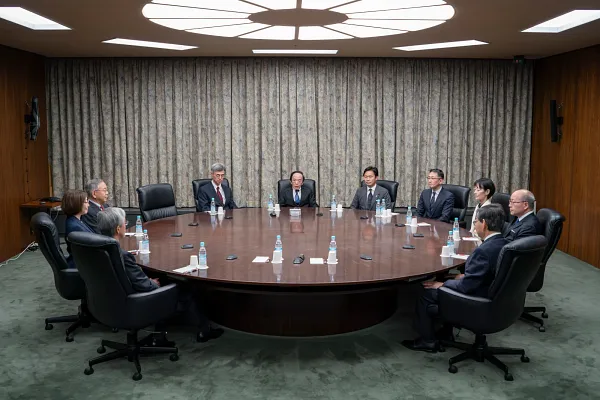
Updated: Rengo's report on Shunto results may be available from the end of this week (03/15) right before the BOJ meeting (03/18-19).
Many sources also report that the BOJ may declare an exit from deflation in the upcoming meeting.
CONCLUSION
Viet Hustler readers may have already realized early on that the entire month of March will revolve around the 3 aforementioned events, including:
FOMC in the US (03/20) final summary of the Fed's stance on monetary policy in the second half of 2024: specifically, whether the Fed will cut interest rates in June or not?
China's government's steps to stimulate the economy during and after the Two Sessions with the 5% growth target hanging over the leaders' heads.
Japan's Shunto wage negotiations show signs of success: the BOJ may soon abandon negative interest rate policy this April.
And last week, one of the 3 important events mentioned above actually took place: The Two Sessions in China. In which, China has essentially declared a tech war on the US: by directly setting goals for the AI+ initiative and spearheading development in Natural Sciences - Quantum Science to compete with the US.
However, from the perspective of addressing the macroeconomic issue of the collapse of domestic consumption, China is not as confident. The consumer confidence improvement policies put forward by China all miss the key point: which is the decline in consumer sentiment due to the severe drop in people's assets. However, we might want to wait a bit longer to see how China will “spend” USD 1000 billion in new debt to stimulate the economy.


Comments (0)
No comments yet
Be the first to comment
Login to comment