MACROECONOMICS

The "clumsiness" of the FED and market confidence in the rate cut plan

Examining the macroeconomic landscape before the "herd" mentality after last week's FOMC

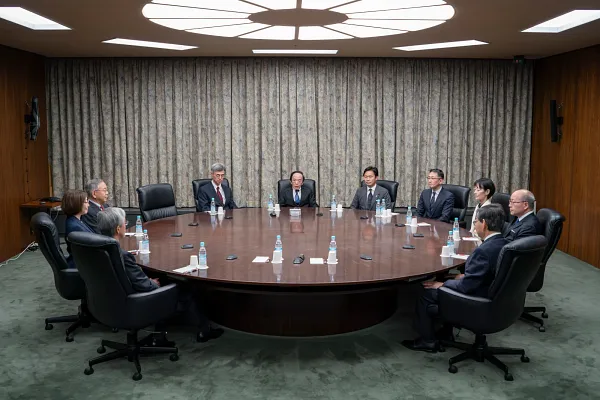
Most press releases or statements from Fed members all have one supreme purpose: that is to guide the market! This is both to prevent the market from experiencing major shocks regarding monetary policy rates, and also to control the impact of “herd behavior” (herd behavior) on the financial market, stemming from the sensitivity of most investors. 

The consequences of misleading guidance messages from the Fed can cause massive waves in the capital markets such as the event Taper Tantrum in 2013…, or systemic financial crises like bankrun…, or create large variances in investor behavior that make the Fed's economic and interest rate forecasts inaccurate. 

Viet Hustler is a reader-supported publication. To receive new posts and support my work, consider becoming a free or paid subscriber.
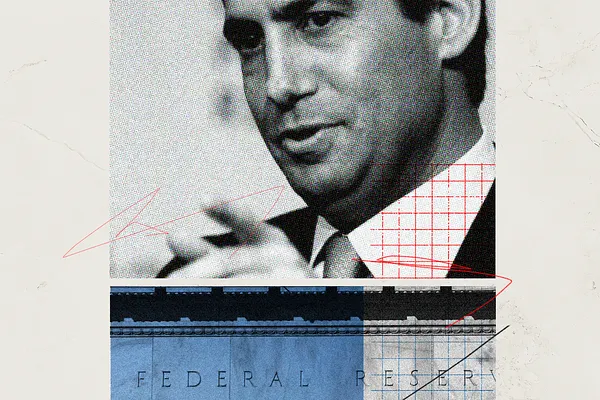
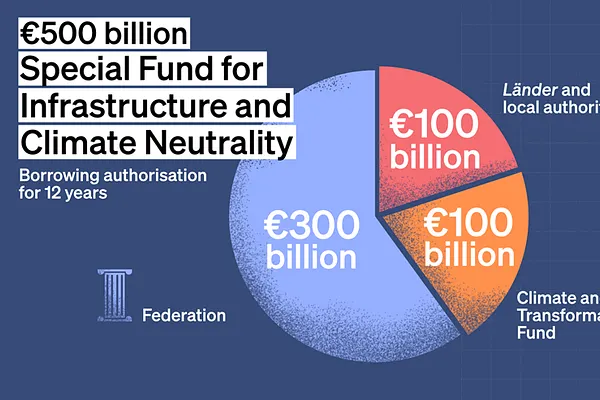
Last week, it was easy to see that Fed members were quite clumsy in guiding the market on their interest rate path. Or simply, the market seems overly excited – beyond the Fed's control.

This week's macroeconomic analysis article from Viet Hustler, in addition to focusing on analyzing the Fed's shift from hawkish to dovish stance and the factors constraining the Fed's interest rate policy, Viet Hustler wants to further emphasize the risk of the Fed losing its market guidance ability. The article is divided into 3 main parts:

  1. The "clumsiness" of the Fed in market guidance: the risk of information cascade

  2. Why did Powell have to hastily change his policy stance from hawkish to dovish in just 2 weeks?

  3. The Viet Hustler author group's personal views on the Fed's choices.

Disclaimer: The opinions below from Viet Hustler are personal views, for reference only and certainly not investment advice! Therefore, Viet Hustler will not be responsible for any investment decisions by readers after this article. 

The "clumsiness" of the Fed in market guidance: the risk of information cascade

The market is overly excited when price-in Powell's dovish stance” - readers can recognize that this message has been repeated in most of Viet Hustler's daily market articles over the past week.

This market attitude actually stems from Powell's 180-degree shift in stance:

  • Early December: Powell still affirmed too early (premature) to discuss rate cuts.

  • Immediately after last week's FOMC meeting, Powell said: The Fed is beginning to consider the timing to ease interest rates. 

And after Powell's statement, the market has deeply and broadly price-in the Fed's dovish stance:

  • Although the dot plot of Fed governors after FOMC indicates about 3 rate cuts in 2024 (-75bps in 2024),

  • But the market is excited when price-in double the rate cut level: -150bps (futures market) to -200bps (overnight index swap) in 2024.

    Image
  • The market even predicts a 10% chance of the Fed cutting rates as early as next month - something quite implausible when core CPI growth is still at 4%.

  • And equivalent to about 6-8 rate cuts in 2024:

To prevent bond and stock speculation based on the belief that the Fed will turn dovish and pivot early, New York Fed Governor William had to do damage control on Friday with a speech: The Fed has not yet discussed rushing to cut rates in last week's FOMC.

But the market doesn't buy William's words much when the Fed's messages become messy… 

And when information lacks direction (which game theory calls information cascade), then investors will only believe what they want and start following the crowd (herd behavior)

  • Retail investors (retail traders) are recklessly buying small-cap stocks and other risky assets + speculating on bonds after dovish signals from the Fed. 

    Image
  • Their “willingness to spend money” index (Dumb Money Confidence) is rising to a fairly high level — only seen 3 times throughout the past 25 years.

    Image

For game theory researchers in financial economics, the consequences of herd behavior (caused by information cascade) are no longer unfamiliar.

  • However, this topic is quite academic and scholarly, interested readers can read here.

Why did Powell have to hastily change his policy stance from hawkish to dovish in just 2 weeks?

Reason 1: Pressure from public debt

  • The interest payment costs for the US government's public debt have risen to USD 949 billion…

    • - and will soon exceed the record USD 1000 billion, or surpass social security costs by early 2024.

    Image
  • US government debt cycle forecast by CBO and BofA:

    • Even if the US cuts all social security costs entirely, public debt could still reach 132% GDP by 2050.

    • Worst case if the base interest rate is maintained more than +2.5% compared to the previous period, public debt could reach 300% GDP in 20250.

    Image
  • Therefore, pressure from the government due to public debt could also force the Fed to consider interest rates (even though the Fed operates completely independently from the Government and the US Treasury).

Reason 2: Pressure from credit crunch and liquidity of the banking system

  • The surge in BTFP in the first week of December (+7.8 billion USD), followed by another increase the next week, is a mystery regarding the liquidity capacity of the banking system.

    Image
  • In particular, the chart below compares the yield of T-bond 30Y and BTFP: 

    • The current T-bond 30Y yield has dropped -100bps from the October peak.

    • Normally, a decrease in long-term bond yields would reduce pressure on banks' unrealized losses, but strangely BTFP still surged at the beginning of December. 

    Image
  • The fact is that unrealized losses of US commercial banks have reached 30.5% of their equity capital:

    • – which is quite understandable when the Fed's base rate is still at 5.25-5.50%.

    Image
  • As planned, BTFP loans will start maturing from March 2024: 

    • whether the Fed will cut interest rates fast enough to end the BTFP program as planned 

    • or there will be a small banking crisis like in March this year (commercial real estate debt and credit card debt variables are still unresolved!).

  • Although most businesses that enjoyed cheap loans during Covid have not yet experienced the difficulties brought by credit crunch, they have seen credit tightening become more severe…

  • Credit crunch will gradually become more apparent to businesses in 2024, as currently loans for small businesses are becoming increasingly “rare”.

Viet Hustler’s opinion:

Even though the Fed will cut interest rates early in 2024, cutting 6-8 times next year as the market expects is unlikely to happen!

The reason is Core CPI is still too high - labor market is still tight, the Fed cannot yet declare victory.

  • November core CPI growth is still at +4% y/y - double the Fed's +2% target:

    Image
  • October core PCE is also not much better (+3.5%):

    • The Fed will closely monitor the November PCE index next week because PCE is the inflation index directly used in the Fed's macroeconomic models…

  • In addition, the labor market is still too tight when:

    • The number of initial unemployment claims last week fell to the year's lowest level (+202,000) after seasonal adjustment:

    • Real wage growth has turned upward again, showing that nominal wage growth is higher than inflation:

  • Workers still have many job options, wages are still rising sharply, meaning inflation remains persistent (wage-price spiral).

And remember that, the Fed's interest rate model shows: for the Fed to cut -1% interest rates, 

  • Inflation (PCE) must fall -1%/1.5 ~ -0.66%.

  • Or the unemployment rate must rise to +1%.

  • Or a combination of falling inflation and rising unemployment…

    Image

Reference article: What is the basis for the Federal Reserve's interest rate decisions? (end of the article)

Although the Fed is still under pressure from financial markets and recession, the Fed would rather let the economy recess and equity markets be subdued than see inflation rise again and have to pay a higher price as in the 1970s-1980s:

CONCLUSION

Once again, Viet Hustler maintains its view that the Fed will not cut rates too deeply 6-8 times (equivalent to -150bps to -200bps) as the market expects. To date, the plan to cut rates 3-4 times in 2024 (as per Dot-plot after FOMC) is a safe plan for the Fed to balance between 

- (1) pressure from public debt (or from treasury and government) + pressure from financial markets and

- (2)  keeping interest rates high enough to ensure inflation does not rise again.

To curb macroeconomic speculation from the market, upcoming Fed members will send tough messages like William on Friday. However, a major concern now is the information cascade that makes the market no longer trust signals (signal) from the Fed, but instead gets excited following the crowd to invest in risky assets and speculate on bonds currently.

Investors abandoning the previous “hold-and-wait” strategy (stop investing and observe the market) for “all-in” (betting big on risky assets) could inflate the value of these assets. Imagine if inflation rises again and the Fed is forced to continue tightening interest rates and money supply, or simply the Fed keeps rates high longer in 2024-2025, how many small asset "bubbles" will burst en masse in the market?

Viet Hustler is a reader-supported publication. To receive new posts and support my work, consider becoming a free or paid subscriber.
Login to read the full article

Create an account to access premium content.

0

Comments (0)

No comments yet

Be the first to comment