If you missed the best recent articles:
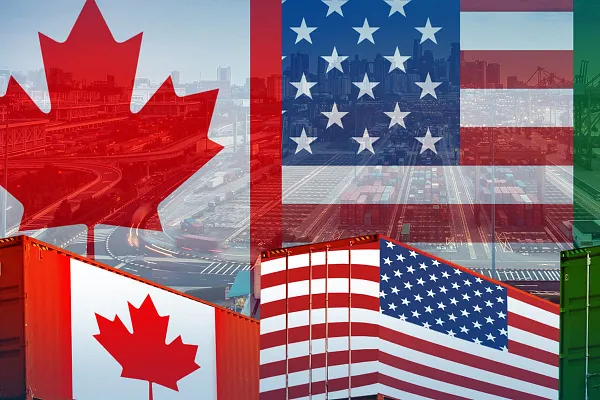
After 4 years, Donald Trump is back in the race for the US presidency with an 'old-yet-new' policy named: Made in the USA - Buy American - Hire American. However, Trump's import tax proposal this time: up to 60% on goods from China and 20% on all goods from other countries… is a bold proposal – reversing over 100 years of free international trade that the US began in the 1940s.
If implemented, the above proposal will have a significant impact on the US economy… much more than the US-China trade war period of 2017-2019… Because, with this tax rate, Trump not only declares war on China… but on all trading partners around the world!
Joining the current vibrant election atmosphere in the US, Viet Hustler dedicates this weekend's article to a comprehensive analysis of the impact of Trump's tariff-based protectionist trade policies on a large economy like the United States.
Along with that, Viet Hustler also presumes to guess Trump's intentions behind the above bold tax rate… and estimates of losses to the US economy in the past as well as the future… that could be caused by the trade war from this policy.
Import Tariffs: Protectionist Trade Policy or Political Pawn?
Economic Impact of Tariff-Based Protectionist Trade Policies
The impact of high import tariffs on the US economy has likely been clearly stated by economists across all recent media:
The first impact is on import prices due to increased import tariffs
Tariffs on imported goods => Imported goods prices increase…
Even, importers use high import taxes as an excuse to raise prices much higher than the actual tax they have to pay…
If the US restricts imports => Producing everything in the US can also be expensive in the initial stage (due to high labor costs).
=> Result: Inflation rises again!
However, it's not just an import issue, but exports may also stagnate!
Simply because other countries will retaliate by raising import tariffs on goods from US.
Although the US has trade deficits with most countries in the world: further reducing exports (without reducing imports due to continued demand for imports) will also contribute to reducing GDP.
Therefore, the benefits of tariff barriers (attracting more factories to be built in the US to create more jobs…) will come much slower than the immediate damages of high tariffs (increased prices of imported goods, reduced US exports….)
Therefore, if Trump is not careful, high tariff quotas will cause a double impact: increased inflation - reduced GDP.
At that time Fed will be unable to do anything: because GDP decreases – forcing Fed to cut interest rates, but increasing inflation requires Fed to raise interest rates!
If the above tax policy is applied, is there a way to avoid the double impact: “inflation + recession”?
The answer is yes!
(1) On the inflation issue:
Inflation, in this case, is mainly due to both imported goods and domestically produced goods having excessively high costs…
However, there is a way for the US to still win in the tariff race, which is: improving labor productivity through technological progress!
… to ensure that the amount of domestically produced goods is still sufficient to meet the needs of all Americans… at low costs and prices!
The US has actually done this very well since mid-2020 - when the AI industrial revolution exploded.
However, “automation” may prevent the US from achieving the expected increase in manufacturing jobs, even if more factories open in the US!
(2) The recession issue:
Net exports have never contributed much to the GDP basket.
If exports decrease but imports also decrease, net exports will remain unchanged.
The concern is: when goods prices increase or unemployment rises, Americans cut spending, leading the economy into recession.
Therefore, if US businesses solve the above issue (1) through technological advances – they will also solve the recession problem!
The economic-geopolitical war behind protectionist trade policies
Trump argues that:
Sky-high import tariffs of 20%-60% – could become a negotiation tool to achieve other economic and geopolitical benefits… rather than for protectionism!
(1) Tactics to negotiate for US businesses to penetrate international markets…
Billionaire Howard Lutnick also agrees with Trump that:
“Ford or GM won't be able to sell cars in Europe… when competing with Volkswagen, Audi, BMW or Mercedes-Benz... But if the US raises tariffs to force the EU to the negotiating table… then nothing is impossible!”
(2) Attracting FDI
Tariff policies on goods that the US wants “made in the USA” are a way to make large foreign companies open factories in the US.
(3) Tactics to negotiate keeping the USD as the strategic reserve currency by other countries!
This is what Trump directly stated in his Bloomberg interview: If a country reduces its USD reserves, Trump may be willing to impose high import tariffs on that country!
FYI: Hedge Funds have collectively bought USD and shorted other currencies, from CNY to Mexican peso — through leverage strategies using options.
(4) From a geopolitical perspective: Trump is using this measure to make China wary in disputes with Taiwan
Looking back at historical data and future predictions.
Past data: US-China trade war 2017-2019
A trade war will certainly cause losses to the US if Trump cannot use it as a negotiation weapon – as in the 2018-2020 period.
In 2016 after being elected, Trump met Xi Jinping at Mar-a-Lago to resolve trade disagreements.
Afterwards: China opened its economy to US companies…
…in exchange for a bilateral trade agreement + the US recognizing the Belt and Road Initiative.
However, subsequent negotiations failed because Washington wanted Beijing to make more concessions.
Immediately, Trump launched a trade war to pressure Beijing:
From July 2018 to August 2019, the US imposed tariffs on more than USD 550 billion in products imported from China.
China retaliated with similar tariffs on more than USD 185 billion in goods from the US.
(Data in the chart above only up to the end of 2017, data in the article provided by Brookings in 2020)
The most severely damaged sector was agriculture: exports of US agricultural products to China plummeted.
At that time, Trump had to hurriedly announce a large agricultural subsidy package…
But agricultural subsidies only focused on central regions.
While East Coast urban areas were more affected due to rising import prices (chart a).
Many other economic regions were also affected by China's retaliatory tax policies (chart b).
Nevertheless, there were a few small bright spots from the above trade war:
During the trade war with China, investment activities in US stocks also increased significantly…
The volatility index for business activities peaked in August 2019.
This can also be seen as a success for Trump in boosting confidence in US-manufactured businesses….
(accompanied by increased capital raised from the market…)
As a result, Trump's “Buy American, Hire American” campaign also contributed to the US unemployment rate reaching its pre-Covid low (3.5%).
Additionally, the trade deficit with China also decreased from 2018 until before Covid. (Source: US Census Bureau)
But objectively speaking: the negative impacts from the above protectionist trade policies often come faster… and possibly more… than the positive impacts
The positive effects of protecting domestic industry based on tariff barriers usually come quite slowly…
because foreign companies relocating and building factories in the US takes time…
… even the positive impact on the labor market may not occur if the US is forced to choose automation to boost labor productivity and reduce costs!
However, the negative effects of high tariffs will arrive very quickly, such as:
Inflation rising again due to increased import prices…
Retaliatory trade actions from other major economies could harm the US…
And sometimes, this negative impact is much harder to withstand… than the benefits from positive impacts…
Predicting future impacts… if Trump's tax proposal is implemented
With a 20% tariff on all goods regardless of origin… the consequences of this domestic protectionist policy on the US economy could be: more bad than good!
Below is a summary of estimates of the impact from import-export tax policies on the US economy from The Budget Lab (Yale University):
Assumed scenario:
10%-20% import tariffs on all goods imported into the United States from any country
60% on goods imported from China
Assumptions in 2 cases:
Other countries do not retaliate against the US…
Other countries retaliate with similar tariffs.
Results:
Estimated GDP will increase by +0.7% => +1.2% mainly due to increased tax revenue and import restrictions… in different scenarios…
However, the larger negative impact comes from the rise in domestic prices in the US: Expected PCE inflation will increase by +1.56 => 2.51% depending on the scenario.
Due to increased inflation, real GDP growth will decrease from -0.5% to -1% depending on the scenario.
High cost increases: real disposable income of US households will also decrease (column 4) in each scenario (in 2023 USD values).
In addition, according to estimates from the Peterson Institute for International Economics, the above tariff shock could cause short-term negative impacts such as:
US GDP will decrease:
And inflation will increase:
… just as the conventional economic theory presented by Viet Hustler at the beginning of the article.
CONCLUSION
The high import tariff policy proposed by Donald Trump, although it has the potential to attract manufacturing factories back to the US and create more jobs, also brings many serious risks to the US economy.
Raising tariffs not only causes goods prices to skyrocket, leading to inflation, but also pushes the US economy into recession risk due to trade retaliation from major global partners.
Although it may achieve some political and geopolitical benefits, the negative economic impacts, especially on people's purchasing power and long-term growth, could far outweigh both short-term and long-term benefits. Therefore, weighing the pros and cons of this protectionist trade policy is extremely important:
And whether the American people can see the long-term benefits of trade protection via tariffs… or will be defeated by the enormous short-term negatives like inflation or recession?
If the above import tariff policy is implemented… the safest measure for the US is to achieve breakthrough technological progress and labor productivity — to minimize prices and ensure sufficient goods to meet domestic demand. If not, the US economy could face much greater challenges than those caused by the previous US-China trade war.


Comments (2)
Hy vọng dream team của Trump làm ăn thành công .. tạo nên công ăn việc làm cho nước Mỹ nói riêng, hòa bình và thịnh vượng cho toàn cầu nói chung.
Cảm ơn Tác giả!!!!
Login to comment