If you missed the best recent articles:
The financial and geopolitical world is entering a period of profound volatility. Increasing tariffs, public debt in major economies continuously setting new records, while competition between superpowers – especially the US and China – is becoming increasingly fierce. These developments make many people feel uneasy, even worried about the future.
However, are what is happening today really new? Or just another chapter in the familiar loop of history?
“History does not repeat itself, but it rhymes’’ - Mark Twain
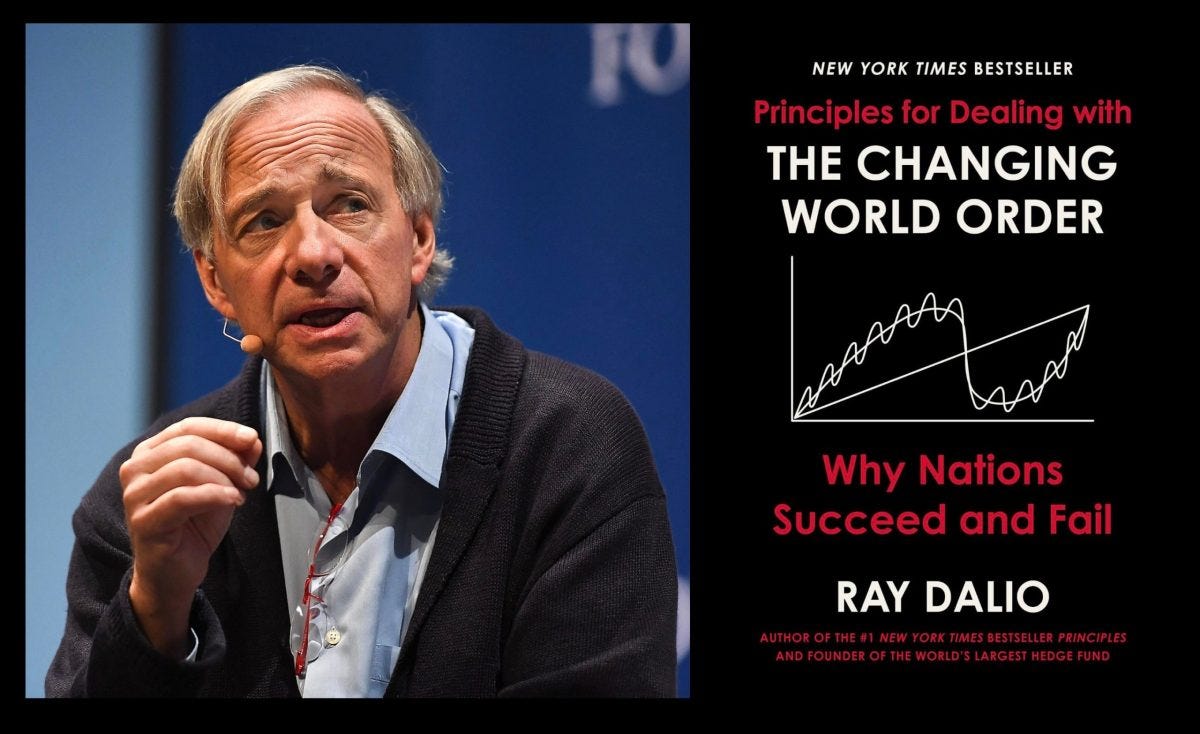
Ray Dalio – founder of Bridgewater Associates, one of the world's largest hedge funds – is not only famous for his success in the investment world, but also for his ability to analyze long-term economic and geopolitical trends.
In over 50 years of research and observation, he has distilled the core principles of historical dynamics through his work Principles for Dealing with the Changing World Order (Principles for Dealing with the Changing World Order). The book is the result of in-depth research on empires over the past 500 years, aiming to answer a big question: Why do superpowers rise and fall, and what does that teach us about today's world?
In this week's blog, Viet Hustler will explore with you how Ray Dalio explains the dynamics of empires through long cycles of rise and decline, analyzes the key drivers reshaping the world, and draws lessons to adapt to inevitable changes in the future.
The Big Cycle and 3 Phases in a Cycle
Where are countries in the cycle?
Lessons from history