MACROECONOMICS

January FOMC: The Weight of the Labor Market and Banking System

Assessment of the influence of the labor market and banking system on the FED's interest rate decision last week

Today (02/04), Powell's interview with 60Minutes will air at 7 PM (ET) - the discussion content focuses on the interest rate cut process and the current state of the banking system. 

After January FOMC, NYBC issues and last week's Non-Farm Payrolls survey (NFP) are making the market look forward to Powell's speech tonight: it will more or less reflect the Fed's stance on interest rates. 

Viet Hustler is a reader-supported publication. To receive new posts and support my work, consider becoming a free or paid subscriber.
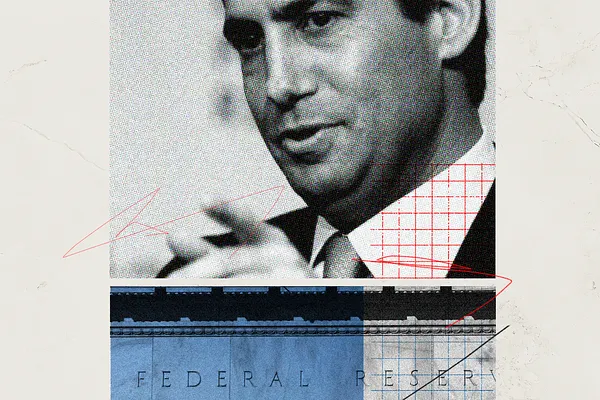
However, readers should note that the interview was pre-recorded on 02/01, when Powell had just observed warnings on the banking system after NYBC stock declined. However, Powell may not have seen the labor data from the NFP survey last Friday (02/02). In reality, the Fed may have a more hawkish stance than Powell's (possibly dovish) words today.

This week's Macro Economics section, Viet Hustler will complete the series analyzing the Fed's direction after the January FOMC that was left unfinished from the previous article. In it, Viet Hustler will focus on discussing 2 main contents:

  1. The weight of labor reports on Fed interest rate decisions.

  2. Viet Hustler's opinion on the Fed's stance towards the current banking crisis (banking crisis).

Disclaimer: The following article contains quite a lot of subjective opinions from the author, for reference only and certainly not investment advice!

The weight of labor reports on Fed interest rate decisions

It can be said that the FOMC statement joins the efforts with previous speeches by Fed members, all sending a message to the market that: 

  • Fed continues to keep interest rates unchanged in January and also does not consider cutting in March.

  • Fed still wants to observe more economic data before deciding.

One day after FOMC (02/01): the market still expects 38% that Fed will cut interest rates from March, but after the labor report on Friday, this probability dropped to <20%.

…. One labor report has more weight than countless words from the Fed! 

The labor report (NFP survey) has been summarized by Viet Hustler in the section Market of the Day (02/02).

In which, the biggest issue is: the increase in the number of jobs (via payroll survey) and hourly wage growth nearly double the expected

  • NFP increase in January: +353,000 (expected only +187,000).

    • December data was also revised upward: from +216,000 to +333,000

Image
  • Average hourly wage growth also reached +0.6% m/m (expected only +0.3% m/m)

    Image

These numbers tell a story: for the Fed, the labor market remains tight and strongly growing!

Of course, the undercurrents beneath the growth facade of the labor market are still there: including the issue of workers holding multiple jobs (multi-job holders).

  • In fact, the number of workers (excluding multi-job holders) has not grown after Covid… while the population still has a certain growth rate.

    Image
  • And there are many other issues with the Labor Report that mostly duplicate those in the December report.

… but the Fed will not be able to act solely based on “undercurrents”….

  • If the labor market continues to maintain overly optimistic data in the next few weeks, the Fed will not have enough reason to cut interest rates on 03/20.

  • Especially when there are only 2 CPI reports and 1 PCE report left from now until 03/20,

    • … the possibility of core PCE dropping from +2.9% to +2% y/y is unlikely to happen after just one report.

    Image
    • FYI: 89% of US household debt has fixed interest rates (especially large and long-term debts like mortgage, car loans... fixed at low rates from before.)

      • This is also part of why the transmission of monetary policy to consumer demand is still sluggish.

        => inflation becomes persistent and difficult to drop to 2% in the short term. 

        Image

Nevertheless, the Fed will closely monitor the labor market to gauge the timing of interest rate cuts to promptly prevent the possibility of recession.

  • Because the Sahm Rule has warned of the possibility of “labor recession” (last week's article).

  • And even if the FOMC Statement declares that the Fed is not in a hurry to cut interest rates, Powell's desire for soft-landing will still incline the Fed to cut rates mid-year.

    Image

Viet Hustler’s opinion: the Fed's attitude towards the banking crisis (banking crisis)

BTFP vs QT: it's time for the Fed to choose one of the two

The statement “the US banking system remains solid” (The US banking system is sound and resilient…) has been completely removed from the latest FOMC Statement.

Perhaps, back in December, the FOMC Statement dared to assert that because “the banking system large” in the US is still extremely resilient because the Fed provided BTFP generously.

  • Large banks to date still have ample cash, keeping them “resilient” even when BTFP stops.

  • While small banks will start to feel the pain when they have to repay these emergency loans from the Fed.

    • If they rush to sell their assets to repay debt, these assets could be undervalued, or ignite a new bank-run.

Image

Previously, Viet Hustler noted: pumping money into the banking system through the preferential BTFP and Discount Window programs is almost a partial reversal of the QT process (which is designed to withdraw liquidity from the financial system - even if it causes large “cracks” like SVB). 

And as we've seen, the Fed's hasty, indiscriminate BTFP lending (allowing even large banks to borrow and then trade arbitrage) has made the QT process less effective:

  • Consumer data remains positive: because household large and long-term loans are still at low interest rates… and banks are not rushing to collect…

  • … the stock market is still rising (though largely due to the AI frenzy, but also because people still have money to go all-in on stocks).

  • And inflation (CPI) is still not dropping below +3% Y/Y.

The Fed's decision to end BTFP from mid-March onwards (and immediately increase BTFP lending rates from last week) is simply a move to return to implementing QT seriously:

  • … ensuring that inflation does not turn around and rise again as in history (especially ahead of the November election).

Of course, the Fed may also soon end QT, but first, the Fed must end BTFP…

  • because the Fed does not want to see the results of its nearly 2 years of QT and rate hikes reversed by BTFP!

The nightmare named SVB, SNB and Credit Suisse… returns

Next week UBS will report Q4/2023 earnings and…. everyone knows what the connection between NYCB and UBS is? 

  • NYCB acquired a large amount of assets (including CRE loans) from Signature Bank, and now these assets are coming back to bite NYCB.

  • Similarly NYCB, UBS previously acquired Credit Suisse - the bank that:

    • before bankruptcy had been insolvent for many months,

    • hid unrealized losses from bonds in the hope of waiting for those bonds to mature to avoid reporting losses….

With normal logic, anyone can question UBS's business report next week….

  • Are the bond losses and bad debts from Credit Suisse the seeds of disease for UBS…

And as Viet Hustler has always emphasized, the seeds of disease in the financial system always spread quickly (contagion risk)….

So, is the nightmare named SVB, SNB, and Credit Suisse… returning? That can absolutely happen, because: 

  1. Banking crisis last year: ultimately stemmed from unrealized losses due to high interest rate environment + tight liquidity condition due to QT + fear from the public leading to bank run.

  • Fed, ECB, and SNB had to hurriedly "reverse part of QT:

    • Fed provided BTFP for nearly 1 year,

    • SNB provided UBS with a liquidity package up to 100 billion USD (with backing from ECB and Fed via Central Bank Swap Line).

    Image
  1. And currently: 

  • policy rates are still high and both ECB and Fed have not cut rates 

  • businesses face a huge wall of maturing debt in 2024 => high bad debt risk for banks 

  • Commercial real estate crisis has officially occurred => old wine in new bottles problem for banks: this is still a high interest rate environment 

  • And Fed is about to stop BTFP!


CONCLUSION

With this week's Macroeconomic article, Viet Hustler has completed the authors' view on the possibility that Fed will consider the rate cut path, by weighing both risks: risks in the labor market and financial market on the scale.

  • Clearly, the labor market has greater influence on Fed because Powell's desire for soft-landing, along with election year pressure, will make Fed not want the US economy to fall into recession.

  • However, as Viet Hustler previously assessed, Fed is unlikely to cut rates in March. Simply because the chance of inflation dropping to the 2% target or labor data suddenly worsening unexpectedly (e.g., unemployment rising sharply) in just 1.5 months is quite low.

  • Regarding the current banking crisis, clearly Fed stopping the BTFP program shows Fed is still prioritizing price stability more. Because Fed does not want the achievements of QT and previous high rate policy to be reversed by BTFP. Especially when Fed's generous subsidies to the banking system over the past year have contributed to making inflation more persistent.

Once again, the above views are purely the personal opinions of the Viet Hustler author group. After Powell's interview today and a series of FOMC member statements next week, the market will probably have more information on Fed's rate path this year.

Viet Hustler is a reader-supported publication. To receive new posts and support my work, consider becoming a free or paid subscriber.

Login to read the full article

Create an account to access premium content.

0

Comments (0)

No comments yet

Be the first to comment