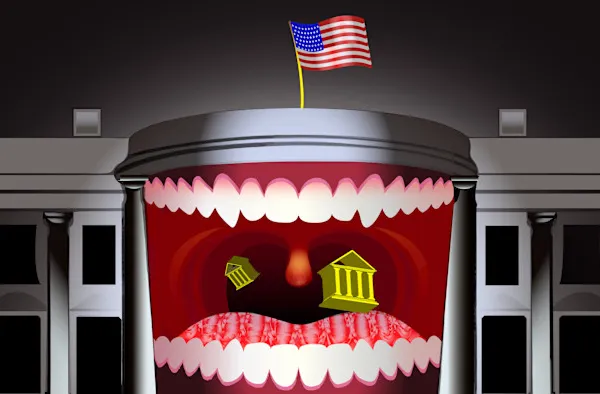
Basic definition of “economics”:
Economics is the study of how people make decisions when faced with scarcity (of goods and services).
“Economics is the study of how humans make decisions in the face of scarcity.”
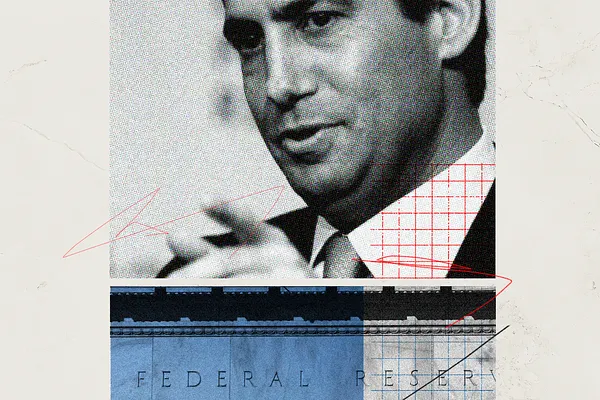
“Scarcity”, scarcity, is the precursor to economics – the factor that determines the law of supply and demand. This is also the cause of economic actions: from micro perspectives like people's spending, saving… to macro decisions like interest rates, wars, and money supply!
Last Friday, US presidential candidate Kamala Harris raised an aspect about “scarcity”, when she stated:
Supply shock due to Covid was the cause of initial inflation (due to goods scarcity) - but blames corporate greed for continuously rising goods prices.
Therefore, Harris's economic proposals in the campaign actually fall into 2 directions: price control + attacking businesses (while being lax on the consumer side).
However, she may not have noticed the first part of the economics definition, which is “the study of how people make decisions” in the face of scarcity.
And the recent inflation situation is no longer due to absolute goods scarcity…
… but the result of decisions from current consumers, when faced with service scarcity from the previous Covid period.
This week's macroeconomics article from Viet Hustler is dedicated to commenting on Harris's policy proposals, with the following main points:
Origin of inflation? What are the problems in the price control policies proposed by Harris?
Lessons from economic history on price control policies similar to those proposed by Harris.
Disclaimer: Some opinions below are the author's subjective opinions!
Video: Guide to Making Money Without Capital Using Apex Funded Account
Making money from Funded Account is no longer new but there are still quite a few people who don't know exactly the steps. In this video, Steve will guide everyone from A-Z on how to create an Apex account, setup the account and the trading rules to make money from Funded Account.
Recap: Price control policies (price control) proposed by Kamala
Real estate market:
Not allowing rental companies with over 50 units to increase prices more than 6% / year.
Not allowing large investors to buy houses in large quantities and then resell at high prices.
Consumer:
Food price control: not allowing businesses to increase profit margins.
Break up or force mergers of food trading businesses.
Healthcare: Insulin price cap at $35 + reduce prices of drugs and healthcare
Taxes: Reintroduce child tax credit (Child Tax Credit), raise tax exemption to $6,000
Details: Viet Hustler article dated 08/16
Short comment from Viet Hustler:
Harris's economic plans target price issues of 3 basic goods: housing (rental housing), food and healthcare. Of which, food is the spearhead!
Proposal focuses on 3 aspects:
Impose price ceilings (price ceiling or annual price increase limits…),
Control businesses' profit margins
Want to prevent consolidation (e.g., in the real estate sector), but also want to achieve economies of scale (requiring food production companies to merge to reduce costs).
And no matter which aspect, focuses on price control and attacks commodity businesses (food, medicine…) by limiting their profit margins.
… while loosening on the consumer side (providing more credit to consumers for buying houses, goods…)
Although there are some positive points, this still bears the hallmark of a coercive price control economic policy…
going against the free market economy of the US to date.
So why does Harris Kamala target price control?
Simply because the topic “inflation - inflation” and inflation control has been a sore point for the US for nearly 3 years.
» This is purely a political ploy to win public favor rather than an economic solution.
But Harris's political ploy, though it may be supported by the masses, is likely to bring unpredictable consequences!
And of course, the American elite may not like this either!
Partly because they are business operators.
But the rest is because they clearly understand the causes of inflation and how free markets operate!
Media reaction:
Origin of inflation and mistakes in Harris's policy proposals
» Origin of inflation
Harris's campaign focuses on blaming businesses for price increases (“price gouging”) causing inflation.
And all of Harris's price control measures target businesses!
However, inflation is the result of supply-demand balance in the market: when demand rises too high compared to supply!
Businesses cannot raise prices if they lack customer demand.
Conversely, only when customer demand is excessively high, making goods relatively scarce:
… Businesses then have the power to demand high prices (“price maker”) and customers must accept (“price taker”).
That is: the cause of any inflation episode comes from
Goods scarcity, or…
Sudden demand surge compared to normal… (actually also cause 1: making goods/services relatively scarce…)
… just as per the economic definition!
So what are the detailed causes of the recent inflation?
(1) Initial phase: post-Covid supply shock making goods “scarce”.
The chart below shows data from September 2022, when inflation began to surge:
The biggest factor influencing inflation at that time was indeed from the supply side (supply-driven) – then gradually shifting to the “demand” side (demand-driven).
The supply shocks (supply shock) at that time causing inflation included:
China's “zero-covid” lockdown policy
Container port congestions: causing transportation and import prices to rise sharply.
Russia-Ukraine war: making some commodities scarce (e.g., energy, wheat…) - but with greater impact in Europe.
However, the above factors affected goods inflation more than services.
But in the later phase of inflation: services were the “sticky” factor in the CPI / PCE inflation basket!
(2) Later phase: changes in consumer demand and consequences of previous QE
As mentioned above, services are the factor making inflation stubborn in the CPI or PCE basket, due to 2 main factors:
Factor 1 - due to changes in people's consumption habits.
After more than 1 year of lockdown, post-Covid, people are ready to spend money on external services and travel more.
The amount Americans spend on airline tickets (a relative measure of how frequently Americans travel) surged post-Covid:
But high inflation, high costs, Fed tightening interest rates causing credit borrowing rates to also rise sharply => where do people get the money to party and travel?
This leads to the second factor - They have abundant cash serving as a consumption buffer!
Viet Hustler has repeatedly emphasized the role of excess savings during Covid in boosting people's willingness to spend.
High wage increases after the economy reopened post-Covid also help people have “more spending money”:
And the deeper reasons for this abundant cash must include:
Fed's previous QE + low interest rates policies
Economic stimulus packages during Covid when the economy fell into a temporary recession in 2020.
» Mistake in Harris's proposal: Can it be simply resolved through price controls?
As mentioned above, the current inflation situation:
Concentrated in the services sector, and…
Mainly due to high demand (no longer a supply shock from businesses).
But Harris's policies hit the wrong target:
Controlling prices of goods instead of service prices…
Focusing on attacking businesses (supply side) rather than restricting demand (consumer side).
Even conversely, her policy proposals are stimulating consumer demand even more with housing subsidy packages, child credits…
Misjudging inflation to propose this economic policy is very dangerous because:
Subsidizing people (for buying houses or food…) only makes them use the money saved from subsidies … to spend on services (items for which they have higher demand post-Covid compared to food or medicine)!
Thereby exacerbating the services inflation problem – prolonging the inflation situation (even possibly reigniting inflation).
Attacking businesses will ignite a recession (when the US is already on the brink of recession).
In reality, most of the high profit margins that Harris mentions come from large companies (S&P500):
And many of them achieved high profits due to technological advances in automation and AI… – rather than from raising selling prices.
Meanwhile, 16% of small businesses across the US are witnessing sales declines in the last 3 months.
So, can Harris still blame businesses for price increases?
And most importantly, historical lessons all show: price control policies similar to Harris's proposal not only fail to control inflation, but can also plunge the economy into the abyss!
Consequences of price control policies: Historical perspective
Price control policies are not entirely bad when applied to public goods: like clean water, electricity, medical vaccines…
But for everyday consumer goods, forcing private businesses to sell at an excessively low price ceiling can cause supply-demand imbalance in the market…
… leading to unpredictable consequences!
Consequence 1: A larger supply shock - due to goods scarcity.
Price control policies can cause supply shortages (supply shortage)!
Reason: Most producers will not want to produce if the profit margin of these items is too low.
Then, what Harris's policy is trying to prevent (supply-side inflation) may return…
… due to sudden supply cuts of goods (supply shock) from businesses.
Case study: Nixon shock (1971-1980s)
In August 1971, US unemployment rose to 6.1%, inflation was only 5.8% at that time…
Along with abolishing the Bretton Woods system (allowing direct USD conversion to gold), Nixon introduced a rather extreme policy:
Imposing a 90-day wage and price freeze to combat inflation (Executive Order 11615", 1971/08/15)."
At that time, the public applauded the government just as Americans applaud Harris today:
They believed the government was saving them from inflation:
Dow Jones in the next trading session rose +33 pts - the largest single-day gain ever.
But not long after, price controls caused producers to lose motivation to sell:
"Livestock breeders stopped transporting their cattle to the market, farmers killed their chickens, and consumers stripped the supermarket shelves clean"
(Description by Yergin & Stanislaw in the book The Commanding Heights: The Battle for the World Economy)
As a result, inflation was only temporarily controlled until Nixon was re-elected (1972) - after that, supply shortages caused US inflation to reach double digits in 1974.
Inflation continued for more than a decade afterward, due to repercussions from the collapse of Bretton Woods, Vietnam War, oil crisis, Fed's monetary interest rate policies under Burns…
Therefore, will the food price control policy proposed by Harris prevent inflation, or worsen the inflation problem later?
Consequence 2: Killing price transparency in the commodity market
The impact of price controls on the balance in the free market (where prices reflect supply-demand laws) is quite clear.
However, market transparency - which the US is doing better than other economies, could also be broken:
Price caps will limit prices at controlled large supermarkets, but also cause producers to cut supply (as mentioned above).
Then, smuggled imported goods flood in at cheap prices to replace official imports and domestic production
=> Could form "black markets"
=> This directly challenges the transparency of the US goods and services trading market…
And also directly reduces the quality of life for the people.
Case study: Comprehensive crisis in Venezuela
In April 2013, Nicolás Maduro was elected president of Venezuela - at that time, it was still a democratic and wealthy country thanks to abundant oil reserves.
Maduro issued a price control law: requiring government supermarkets to sell food at regulated prices - much lower than private stores.
But people could only buy at public supermarkets 2 days/week, based on their ID card numbers.
The regulation was intended to prevent people from speculating on goods - but made basic goods scarce for them.
The result: supermarkets frequently ran out of stock, causing severe shortages for the people.
… and prices in the free market soared – inflation in Venezuela went haywire:
Venezuela's economic collapse became a case study of the worst economy in the world recently:
Alongside other cases like Russia (after the collapse of the Soviet Union) or Greece (after the public debt crisis).
Even Venezuela's economy could not recover like Zimbabwe, which also suffered from similar price control laws (Case study of Zimbabwe).
About ~7 million people fled across the border from Venezuela due to economic collapse and political instability under Maduro's dictatorship.
Of course, Harris's price control policy is not as rigid as the Venezuela case.
But due to the large scale of the US economy, the consequences of implementing this misguided policy could have much broader impacts than Venezuela's case!
CONCLUSION
The price control policy Harris proposed for the presidential campaign could win public favor - when Americans see immediate benefits, with food and medical prices pushed down in the short term.
However, except for a few positive points in child credit policies, Harris's price control-focused policies are full of economic flaws:
First, these policies focus on forcing down prices of goods, specifically food and medical products:
But the current inflation problem is not goods inflation - but services inflation.
Second, these policies attack businesses - blaming high corporate profit margins for high prices.
However:
The crux of current inflation is not on the supply side of goods and services (businesses) - but on the demand side:
when post-Covid services demand has surged!
Only large businesses have high profit margins (partly due to automation)… while small businesses have alarmingly recessionary sales.
Finally, consumer-side subsidy policies will increase liquidity for people - this will only worsen the current inflation problem (driven by consumer spending).
Not to mention, housing purchase subsidies and consumer credits will exacerbate the current US public budget deficit problem.
From an economic history perspective, many examples indicate that: price controls will only make inflation rise faster due to:
(1) The supply cut shock from businesses makes goods even scarcer.
(2) Could promote the development of the black market - making prices even less transparent + destroying the transparent free market that the US has been very successful with!
In fact, government fiscal policies are not suitable (or have many limitations) for controlling high inflation. Instead, let the Fed do their job in this phase!
Video: Guide to Making Money Without Capital Using Apex Funded Account
Making money from Funded Account is no longer new but there are still quite a few people who don't know exactly the steps. In this video, Steve will guide everyone from A-Z on how to create an Apex account, setup the account and the trading rules to make money from Funded Account.


Comments (2)
Bài viết phân tích hay dễ hiểu. Cảm ơn tác giả
Quá bổ ích. Thank admin!!!. Nice working week Ad!!!
Login to comment