MARKET KNOWLEDGE

Understanding Financial Statements Part 2: Income Statement

What is the Income Statement? Analyzing businesses through the Income Statement. Example analysis of Apple's Q4/2023 business results.

Continuing from Part 1 - Understanding the Balance Sheet, the 2nd article in the series Understanding Financial Statements by Việt Hustler will help readers better understand the Income Statement, with real examples from Apple.

Introduction to the Income Statement

In the search for companies with sustainable competitive advantages, Warren Buffet always starts with the company's income statement (KQKD).

Viet Hustler is a reader-supported publication. To receive new posts and support my work, consider becoming a free or paid subscriber.

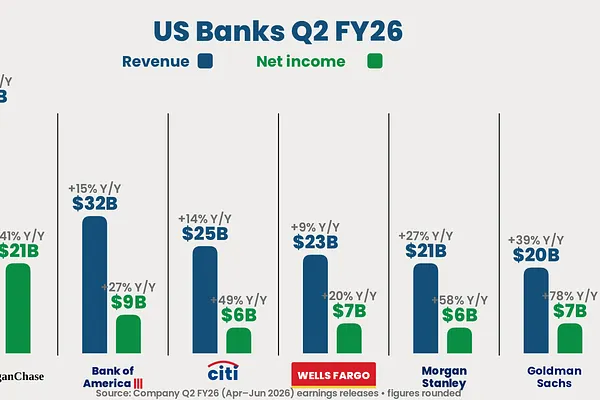
Unlike the balance sheet – which shows the company's assets at a point in time, the income statement tells investors the company's operating results over a period.

  • The income statement is usually released at the end of the quarter (quarterly report), mid-year (semi-annual report), and end of fiscal year (annual report).

The income statement includes 3 basic components:

  1. Revenue (Revenue): the amount of money the company receives during the reporting period

  2. Cost (Cost): the amount of money the company has to spend

  3. Profit (Profit) = revenue - costs (the amount left for the business after paying all expenses).

  • Profit is further divided into levels such as: gross profit, operating profit, net profit (details below).

    • Gross profit (gross profit) = revenue - direct production costs to produce products / services (COGS)

    • Operating income (Operating income) = Gross profit - operating expenses of the business.

    • Net income (Net income) = Operating income - all remaining expenses.

    • Among them, net income is the most important:

Net Income (Net Income) = Revenue (Revenue) - Expenses (Expenses)

Example: Apple's Q4/2023 business results are shown in the chart below.

  • Revenue (gray): 89.5 billion USD - money earned from selling products (iPhone, Macbook, iPad, Watch, Airpod) or from services (subscriptions, app store, transaction fees,…)

  • Cost (red): 49.1 billion USD - costs incurred to generate revenue.

  • Profit (green): the amount left after subtracting costs from revenue

    → Apple's gross profit is: 89.5 - 49.1 = 40.4 billion USD

Structure of a standard income statement

1. Revenue (Revenue): Where cash flows in

Revenue is the lifeblood of all businesses. Revenue can come from various sources, including:

  • Selling goods: The company sells a physical product to customers (e.g.: Apple's iPhone or Starbucks' coffee).

  • Selling services: The company provides services to customers (e.g.: consulting or repair).

  • Selling licenses: The company earns fees by allowing others to use its intellectual property, such as patents or trademarks.

    (e.g.: Marvel has revenue from allowing Miniso to produce Marvel-themed items)

Revenue growth over time is an important aspect to consider.

  • Many legendary investors like Peter Lynch or Ray Dalio emphasize how they look for stable and sustainable revenue growth over many years.

Example: Analysis of Apple's Q4/2023 revenue.

Revenue down -1% year-over-year to 89.5 billion USD (in line with expectations).

  • Revenue from product sales": (=" "75%" "total revenue) down" "-5% Y/Y""."

    • "📱 iPhone (49% total revenue) up +3% Y/Y."

    • "💻 Mac (9% revenue) down -34% Y/Y."

    • "🖊 iPad (7% revenue) down -10% Y/Y."

    • "⌚️ Watch (10% revenue) down -3% Y/Y."

  • "Revenue from Services sales:" "(=" "25%" "total revenue) up" "+16% Y/Y""."

    • "Apple's Services include: App Store, Apple Music, Apple Pay, AppleCare, Apple TV+, Apple Arcade, Apple Fitness+, iCloud+, etc."

    • "And large revenue from Google to maintain the default search engine position on Apple devices (estimated about 20 billion USD/year)."

"Below is Apple's quarterly revenue breakdown table over the past 5 years (by value — billion USD)."

  • "Product segment revenue follows the new product launch plan."

  • "Services revenue also grows steadily."

"By % structure: Apple's Services revenue in Q4/2023 accounted for 25% of total revenue (a record for Q4 periods, only 1% lower than the previous quarter)."

"Just Apple's 22.3 billion USD Services revenue alone was higher than the total revenue of Netflix, Mastercard, Spotify, Electronic Arts, Dropbox and Peloton in the same quarter."

"2. Expenses"

"Expenses are the amounts the company must incur to generate revenue, which can include everything: from employee salaries to rent."

"Types of expenses on the income statement include:"

  • "Cost of goods sold"": Direct costs to produce products or provide services."

    • "Example: For phone and laptop manufacturers like Apple, cost of goods sold includes raw material costs, labor and delivery."

  • "Operating expenses"": indirect costs related to business operations, including:"

    • "Sales & Marketing"": Costs for sales and marketing teams, advertising expenses, events, conferences, etc."

    • "Research and development (R&D)"": to develop new products or improve existing products."

    • "General & Administrative (G&A)"": Business operating costs, e.g.: office rent, factories, utilities, finance and HR."

    • "Depreciation & Amortization"": Non-cash expenses that record the wear and tear of long-term assets (factories, equipment...)."

    • "Other expenses"": e.g. interest expense, corporate income tax)"

"Notes when analyzing business expenses:"

  • "Sales and business management expenses, interest expenses and capital costs are better the lower (or offset each other depending on the case)."

  • "Research and development expenses are always higher for technology and pharmaceutical companies:"

    • "this can either cause them to incur losses (due to no breakthrough products) or make them industry leaders with superior revenue (if they have breakthrough products)."

"FYI: Intel is an example of a company with a low sales and business management expense ratio (vs. profit), but due to high research and development expenses (30% gross profit) the long-term economic benefits of this company drop to average."

"However, if Intel stops research and development, their current products will become obsolete within ten years and the company will have to shut down."

"Example: Analysis of Apple's Q4/2023 expenses"

  • "86.8%: Apple's cost of sales from the Products segment."

    • "Because producing iPhone, iPad requires a lot of material costs, labor, delivery,… while the Services segment does not need these costs."

  • "Selling expenses = 50% gross profit."

    • because Apple always has to focus on developing new products, while spending a lot of money on marketing and its product distribution system

3. Net Income

Net Income is the amount of money a company has left after deducting all expenses from revenue. (The actual profit the company generates).

  • However, it can be a net loss when expenses exceed revenue.

There are two ways a company can increase net income:

  • Increase revenue: launch new products or services, sell more existing products/services, or increase prices.

  • Reduce costs: find ways to save money, such as cutting unnecessary costs or negotiating better prices with suppliers.

The link between Net Income and the Balance Sheet and Cash Flow Statement:

  1. Net income is exactly the Retained Earnings portion in the Equity section on the balance sheet

  2. Net income is also the first item in the Cash Flow Statement, used to calculate cash flow from operating activities (CFO)

Image

Financial ratios from the Income Statement

There are 3 types of profit margins that investors need to pay attention to:

  • Gross Margin

  • Operating Margin

  • Net Margin

They are all expressed as % of Revenue.

Gross Margin

Gross margin is an excellent measure to gauge a company's ability to make money.

It shows the percentage of revenue that the company retains as gross profit (before deducting other expenses such as selling expenses or SG&A costs).

Gross Margin = (Revenue - Cost of Goods Sold) / Revenue

Apple has a gross margin of 45% in Q4/2023

  • Products segment (iPhone, iPad or Airpod) has a gross margin of 37%.

  • Services (digital subscriptions) has a gross margin of 71%.

→ For every USD spent on the Services segment, Apple gets back double the gross profit compared to the Products segment.

  • However, Apple's hardware products serve as the gateway to its digital ecosystem, which delivers much higher margins.

There is a general rule (but with exceptions) that companies with gross margins of 40% or higher tend to be companies with sustainable competitive advantages.

Companies with margins below 40% are often in highly competitive industries where competition threatens overall profit margins (there are also exceptions).

Gross margins less than or equal to 20% are often a sign of an industry with fierce competition, where no company can create a sustainable competitive advantage over rivals. (according to “Financial Statements from Warren Buffett's Perspective”)

Operating Margin

Operating margin is a financial measure that shows the company's profit after accounting for all expenses, except taxes, interest, and special items not related to normal business operations.

It is like the "real" profit that a company earns from its operations after all bills have been paid.

Operating Margin = Operating income / Revenue

Image

Apple's operating margin is only lower than Microsoft's and always higher than Alphabet's as well as Amazon's.

  • This shows that Apple sells hardware products (like iPhone, iPad) with less profit than software like Microsoft

Net Profit Margin

Net profit margin is a financial measure showing how much profit a company earns after accounting for all expenses, including taxes, borrowing interest, and special items.

  • This is the final profit margin that the company can retain (% of revenue).

Net Profit Margin = Net Income / Revenue

Net profit margin is an excellent measure to gauge the amount of money a company keeps in its pocket after all obligations are fulfilled.

However, investors should focus more on operating profit. Why?

  • Net profit margin is affected by non-recurring items that can mislead about the company's business situation.

    • For example: if there is a legal dispute or unexpected income from interest, the company's net profit margin will fluctuate, but this says nothing about the company's business capability

Earnings Per Share (EPS)

Earnings Per Share (EPS) is a financial measure showing how much profit the company earns per share.

  • It is calculated by dividing the company's net income by the number of outstanding shares:

EPS = Net income / Outstanding shares

EPS may not correlate positively with net income when there is a change in the number of outstanding shares.

  • If the company issues additional shares to raise capital, then EPS will increase more slowly than net income.

  • If the company buys back shares with cash, the number of outstanding shares will decrease → EPS will increase faster than net income.

Tracking EPS over time is very important because it is ultimately the factor that impacts stock price.

  • Investors pay for a company's future earning ability, as well as the profits the company delivers to shareholders.

CONCLUSION

Thus, after the first 2 parts, we have grasped the main items and basic methods to analyze the Balance Sheet and Income Statement.

Corporate financial statements also have a very important part, which is the Cash Flow Statement. If the balance sheet and income statement provide investors with a view of assets, capital sources, and profit/loss, then the Cash Flow Statement provides very important information about the company's cash flow. A company can have high profits but still face difficulties or bankruptcy due to insufficient cash flow.

  • We can see this case occurring with real estate enterprises in Vietnam in 2022 when banks reduced credit lines and the state tightened bond issuance regulations, causing real estate group stocks to plummet 60-80%.

This is also one of the upcoming contents in the series ““Understanding Financial Statements” in the coming weeks from Viet Hustler.

Viet Hustler is a reader-supported publication. To receive new posts and support my work, consider becoming a free or paid subscriber.

Login to read the full article

Create an account to access premium content.

0

Comments (0)

No comments yet

Be the first to comment