MARKET KNOWLEDGE

Bank of America ($BAC): Still "Too Big To Fail" With Current Risks?

As the only investment bank with no losing trading days in the first 6 months of the year, how is Bank of America managed and operated?

Continuing the "Business Analysis" series, after exploring "The world's leading online payment platform" - PayPal ($PYPL), this week, Viet Hustler will take you to the giant in the financial sector - Bank of America. As one of the largest banks in the United States, Bank of America has a global operating network, providing diverse financial products and services to individual and business customers. This article will delve into analyzing the business model as well as the current situation of Bank of America, thereby giving readers a more comprehensive view of this financial corporation.

Introduction to Bank of America ($BAC)

Established in 1874, Bank of America Corporation (BofA) is the second largest banking institution in the United States, after JPMorgan Chase, and the eighth largest bank in the world. Bank of America is in the group of 4 “too big to fail” of the US financial system, serving about 10% of total US bank deposits, directly competing with JPMorgan Chase, Citigroup, and Wells Fargo.

  • Bank of America maintains the No. 2 position, by both assets and market cap

With total assets worth 3.26 trillion USD as of 06/30/2024, BofA provides a range of banking and non-banking financial products and services through approximately 3,800 financial centers and 15,000 ATMs nationwide.

Although mainly known as a consumer bank, BofA's investment banking segment is also very developed thanks to the acquisition of Merrill Lynch in 2008. In 2023, BofA ranked No. 1 in M&A with total advisory deal value exceeding 28 billion USD.

Business Model

Bank of America operates in 4 main segments: consumer banking, investment and asset management, global banking, and global markets.

  • Revenue by business segment:

1. Consumer Banking (39% of total revenue and 38% of net income in 2023)

Consumer Banking is BofA's main business segment, contributing nearly 40% of the bank's revenue and tying with JPM for the top in personal deposit volume in the US.

  • BofA has 2 main business lines: deposits and consumer lending, serving two main customer groups: individuals and small businesses.

  • With steady revenue growth of 5.7% per year over the past 10 years, Bank of America will surely maintain its market share in the Consumer Banking segment, especially amid recent crises that have driven people and businesses to seek more solid names.

2. Global Wealth & Investment Management (20% of total revenue and 13% of net income in 2023)

The Global Wealth & Investment Management (GWIM) segment includes two main business lines: Merrill Wealth Management (MLGWM) and Bank of America Private Bank. 

  1. Merrill Wealth Management (MLGWM)

MLGWM focuses on customers with total assets over 250,000 dollars, providing personalized solutions in investment management, brokerage, banking, and retirement products. 

Although known as one of the 4 largest retail banks in the US, BofA is also always in the top financial institutions with the highest assets under management thanks to the 2008 acquisition of Merrill Lynch.

  1. Merrill Lynch Wealth Management is divided into 2 sub-branches:

    • Wealth Management: Mass market investment advisory and brokerage

    • Private Wealth Management: For customers with assets over 10 million dollars

  2. Bank of America Private Bank

Bank of America Private Bank, providing comprehensive asset management solutions, including private banking services, investment management, and special asset management, for high and ultra-high net worth customers.

  • Bank of America Private Bank ranks 6th in the list of private banks with the largest assets under management globally.

3. Global Banking (23% of total revenue and 34% of net income in 2023)

The Global Banking segment includes 4 divisions, each working with different customer segments:

  • Global Corporate Banking

  • Global Commercial Banking

  • Business Banking

  • Global Investment Banking.

BofA provides lending products, cash management, funding solutions, and advisory services to its global customers. This is the second largest business segment but has the highest profit margin and strongest growth for BofA with average profit growth of 17.6% over the past 10 years

  • BofA Securities also won Best Equity Bank and Best Debt Bank awards from Global Finance magazine this year.

4. Global Markets (18% of total revenue and 15% of net income in 2023)

Bank of America's Global Markets segment provides trading services, including research, to institutional customers.

  • Global Markets products include bonds, credit, currencies, commodities, and equities.

  • This segment provides market-making, financing, securities clearing, payments, risk management, and custody services to many institutional customers.

Additionally, many customers start in the global banking segment and end up in the global markets segment. Therefore, these two segments support each other significantly.

Viet Hustler sẽ chính thức đóng lại và chỉ dành riêng cho người đọc trả tiền, nếu bạn yêu thích các bài viết của team, đừng bỏ lỡ cơ hội giảm giá $74.99 cho cả năm kết thúc vào ngày 08/01.

Shareholder Structure

Bank of America currently has 72% of shares owned by institutions. The largest shareholder holding up to 13% of BofA is Warren Buffett's Berkshire Hathaway.

  • Warren Buffett after the SVB collapse:

We are concerned about owning shares in banks except for one single bank. I like Bank of America and the leadership here.

Leadership

The leadership team of Bank of America has extensive experience and high expertise, with an average tenure of 8.6 years. In particular, investors cannot overlook Bank of America's CEO - Brian Moynihan, the captain who turned BofA around from the brink. 

  • Commenting on Moynihan, Warren Buffett said he is a person with grit and reasonable judgment to avoid “stupid things” – like taking excessive risks.

Q2/2024 Earnings Update

1. Earnings Report

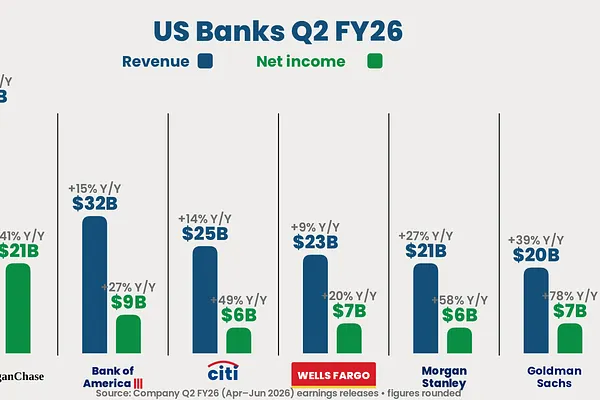
BofA reported mixed Q2/2024 earnings results, beating analysts' expectations for earnings and revenue, but the company's net income decreased compared to the same period last year due to lower net interest income

  • Revenue +1% Y/Y to 25.4 billion USD (higher than expected by 0.2 billion USD)

    • Consumer Banking: 10.2 billion USD (-3% Y/Y)

    • Investment and Asset Management: 5.6 billion USD (+6% Y/Y).

    • Global Banking: 6 billion USD (-6% Y/Y)

    • Global Markets: 5.5 billion USD (+12% Y/Y)

  • Net interest income: 13.7 billion USD (-3% Y/Y)

  • Non-interest income: 11.7 billion USD (+6% Y/Y)

  • Net income: 6.9 billion USD (-3% Y/Y)

  • Non-GAAP EPS: 0.83 USD (higher than expected by 0.03 USD)

Comments on Bank of America's Q2/2024 earnings results:

a. Bright spots:

  • Beat analysts' expectations for earnings and revenue.

  • Investment banking activities grew strongly +29% Y/Y due to recovery in underwriting activities and higher value of executed deals

  • Trading revenue increased, especially in the equities trading segment.

    • According to the Viet Hustler team, in the recent ER, BofA was the only bank to report no losing trading days in the first half of 2024

b. Weak points:

  • Net income decreased compared to the same period last year due to lower net interest income.

  • Net interest income down 3% Y/Y, reflecting the impact of higher interest rates on deposit costs and increasing competition in attracting customer deposits.

=> BofA's Q2 results show mixed trends. While net interest income continues to face pressure, strong results in investment banking and trading demonstrate adaptability and ability to capitalize on market opportunities.

2. Balance Sheet

BofA maintains a strong balance sheet with large deposits

  • Deposits increased 35 billion USD to 1.91 trillion USD, equivalent to +2% Y/Y

  • Loans and leases at 1.05 trillion USD, modestly increased from Q2 2023

  • Common Equity Tier 1 capital: reached 198 billion USD, up 1 billion USD from Q1 2024.

  • Returned 5.4 billion USD to shareholders:

    • Paid 1.9 billion USD in regular dividends.

      • Increased quarterly regular dividend by an additional 8% starting from Q3 2024.

    • Repurchased 3.5 billion USD in common stock

  • Common Equity Tier 1 ratio: 11.9%, +6 bps from Q1/2024; 122 bps above the new minimum requirement effective from 10/01/2024

3. Asset Risks

a. Credit Card Lending

Like JPM, BofA increased credit loss provisions, signaling a cautious approach to consumer lending amid economic uncertainty.

  • Net charge-offs increased 35 million USD to 1.533 billion USD, much higher than the expected 1.45 billion USD and the highest in many years, mainly from credit cards

  • BofA charged off 1.1 billion USD from consumer credit in Q2/2024, up 31 million USD due to higher credit card loss rates

  • Credit card loan loss rate – indicating the level of risk that borrowers default on credit card debt, rose to 3.88% in Q2 from 3.62% in Q1

  • The bank's allowance for credit losses also increased 189 million USD to 1.5 billion USD

    • Provisions released were only 25 million USD in Q2/2024 compared to 179 million USD in Q1/2024.

    • This figure is expected to surge as the US economy falls into recession and follows JPM, the bank that saw a sharp increase in provisions in Q2.

  • Delinquency rates declined slightly but remain elevated

b. Commercial Real Estate Lending

  • Commercial charge-offs were 474 million USD, little changed from last year

  • Nonperforming loans reached 2.8 billion USD, down 0.4 billion USD from Q1 2024

  • CRE share of total loans decreased significantly (from 21.2% in 2009 to 11.7% in Q2/2024)

  • The largest CRE loan type remains the troubled office segment, totaling 16.3 billion USD (mainly concentrated in Northeast and California real estate).

  • The bank forecasts $4.8 billion in office loans maturing in the second half of 2024 and an additional $8 billion in 2025 and 2026.

  • Will BofA be able to recover this loan?

c. Bond Losses

  • Bank of America is suffering from unrealized losses 106 billion USD, only increased by 9 billion compared to Q1 due to the stabilization of yields in Q2

  • BofA is the bank with the largest bond losses among all US banks

  • The total bond losses of the entire industry now have reached 650 billion USD

    Image

Conclusion

In the current high interest rate environment, BAC is expected to continue benefiting from its existing position and technological improvements in the consumer banking sector with the largest individual deposit market share in the US and continue to strengthen the quality of loan portfolios. After the recent banking crisis, people and businesses tend to focus on banks supported by the Federal Reserve, helping Bank of America become a magnet for funds after many years of lackluster growth in deposit and loan balances.

However, although it has no risk of collapse due to being rated “Too Big To Fail” by the FED and classified as GSIB (Global Systemic Important Banks) by the World Bank, it is the largest bank most affected by the current debt, real estate, and bond crisis.

From an investment perspective, still weaker in many aspects, but has great potential if management can navigate through the current difficult period and continue to leverage the success of the investment banking segment as in the first half of this year.

“When the market is up, everyone is a genius. Only when the tide goes out do we know who is swimming naked” - Warren Buffet

Nếu bạn yêu thích các bài viết của Viet Hustler, đừng quên subscribe trước ngày 08/01 khi các bài viết chỉ còn dành riêng cho paid subscriber

Login to read the full article

Create an account to access premium content.

0

Comments (0)

No comments yet

Be the first to comment