MARKET KNOWLEDGE

Market Analysis: NVIDIA - Center of the AI Wave

In 2023, leading chipmaker NVIDIA began an extraordinary journey to join the trillion-dollar club on Wall Street

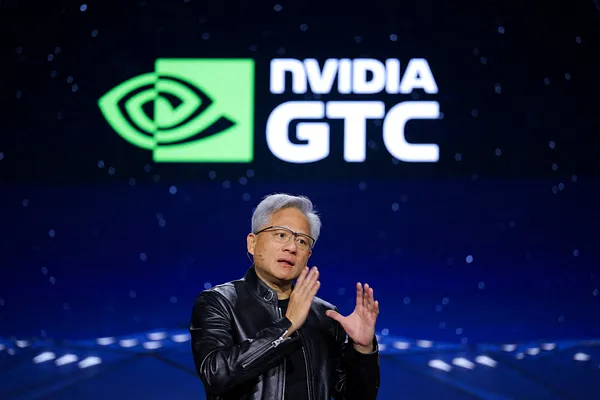
NVIDIA ($NVDA) continues to report outstanding business results in Q3 FY24 (ended October 2023). The drivers behind Nvidia's explosive growth are summed up in CEO Jensen Huang's statement:

"This is the era of generative AI and the demand for a new form of data center - AI factory (AI factory) is increasing day by day. This includes selectively optimizing data for training computers (training), enabling them to perform inference (inference) and then generate AI content (generating)."

AI Market Overview

AI systems operate through 2 main stages:
Viet Hustler is a reader-supported publication. To receive new posts and support my work, consider becoming a free or paid subscriber.

  • Training: In this stage, AI learns from a massive amount of data to develop "intelligence" and pattern recognition capabilities.

    • => NVIDIA dominates this segment with powerful Graphics Processing Units (GPU), accelerating the machine learning process.

  • Inference: After the learning process, AI applies the newly acquired knowledge to real-world situations to make decisions.

    • => In this segment, Nvidia faces fiercer competition from Intel, Qualcomm, and big tech giants, but NVIDIA is still making significant strides.

    • According to Jensen Huang: the advances NVIDIA has achieved in the "Inference" segment are thanks to the software platform AI Enterprise and the widespread use of GPUs across cloud, PCs, and workstations (workstations).

    • The company's design compatibility is a key differentiator from competitors, especially as "Inference" is becoming increasingly dominant.

Amid the explosive AI hype sweeping like a storm, NVIDIA is the first name that comes to mind in the past year's AI boom. From a financial and economic perspective, join Viet Hustler to explore NVIDIA's business results, earnings guidance, and growth potential in this weekend's educational article.

The article consists of 5 main parts (readers can choose the section they want to view):

1. NVIDIA's Q3 FY24 Business Results

2. Assessment of NVIDIA's Development

"3. Highlights in NVIDIA's Q4 FY24 Earnings Plan"

4. Potential of NVIDIA Stock

5. The AI Chip War Among Tech Giants.

(Note: The article below includes a partial translation from App Economy Insights' research, with additions from Viet Hustler)


1. NVIDIA's Q3 FY24 Business Results

Business Results Report

Looking at quarter-over-quarter growth – the clearest evidence of the current growth momentum, we see:

  • NVIDIA's revenue increased +34% Q/Q to 18.1 billion USD (higher than the earnings guidance of 16 billion USD)

    • ⚙️ Data Center: up +41% Q/Q to 14.5 billion USD.

    • 🎮 Gaming: up +15% Q/Q to 2.9 billion USD.

    • 👁️ Professional Visualization: up +10% Q/Q to 0.4 billion USD.

    • 🚘 Automotive: up +3% Q/Q to 0.3 billion USD.

    • 🏭 OEM & Other: up +11% Q/Q to 0.1 billion USD.

The chart below shows revenue for the past 12 quarters:

  • Fiscal Year 2023: Gaming segment declined sharply.

  • Fiscal Year 2024: Data Center segment revenue surged, especially in the last 2 quarters.

  • Gross margin is 74% (+4pp Q/Q), higher than guidance 71.5%

  • Operating margin is 57% (+7pp Q/Q)

  • Non-GAAP operating margin is 64% (+6pp Q/Q)

  • Non-GAAP EPS is $4.02 (higher than expected by $0.63)

Cash flow

  • Cash flow from operations is $7.3 billion (40% margin)

  • Free cash flow is $7.0 billion (39% margin)

Balance sheet

  • Cash and equivalents: $18.3 billion

  • Debt: $9.7 billion

Q4 FY24 guidance:

  • Revenue +10% Q/Q to $20.0 billion (higher than expected by $2.2 billion)

  • Gross margin 74.5% (+0.5pp Q/Q)

So what do these numbers mean?

  • NVIDIA's actual revenue beat estimates by 13%.

    • Q4 expected revenue higher than estimates by $2.2 billion.

  • However, the market seems unmoved despite NVDA having an excellent quarter and bright future.

    • In fact, revenue beats (revenue beat) in Q1 and Q2 were 10% and 23% respectively. Q3 guidance beat expectations by $3.6 billion.

      => Most good news was already priced in so stock price has little surprise movement

    • Data Center accounts for 80% of total revenue (+4pp Q/Q).

      • Strong development of NVIDIA HGX platform (for high-performance computing and AI) is the growth driver for Data center.

        → This segment is growing rapidly and steadily - driven by strong GPU demand from generative AI (generative AI) and large language models (LLM).

    • Segment Games continues to recover.

      • This segment has doubled compared to pre-Covid levels.

        • Inventory continues to improve during back-to-school shopping season.

        • RTX GPU (based on Ada Lovelace design) has driven the recovery.

      • GeForce NOW cloud gaming expands library to 1,700 titles.

    • Professional visualization (professional visualization) also recovers strongly due to higher demand for workstation GPUs and development of NVIDIA RTX products.

    • Automotive segment recovers +3% after declining 15% last quarter , — driven by growth of autonomous platforms based on NVIDIA DRIVE Orin SoC + AI cockpit solutions with OEM customers.

  • Margins improved due to increased Data Center segment revenue and reduced inventory.

    • Gross margin higher by +2.5 bps than guidance

    • Reversal of prior period inventory reserves added +1bps to gross margin.

  • NVIDIA earnings outlook improves: Q4 FY24 outlook

    • gross margin 74.5% (+0.5pp)

    • operating margin 59% (+1pp Q/Q)

  • Strong growth momentum in Q4 will come from Data Center segment.

    • However, US export restrictions will cause significant revenue drop from China.

    • At the same time, the Gaming segment is expected to decline due to seasonality.


2. NVIDIA's Recent Developments

NVIDIA's Strategic Products

(1) NVIDIA H200

NVIDIA H200 is a high-end GPU designed to accelerate the training and deployment of AI models. Key features of NVIDIA H200:

  • Unprecedented Speed: H200, NVIDIA's fastest AI chip, has nearly double the inference speed compared to the H100 GPU.

    => important for running advanced LLMs like Llama 2 from Meta.

  • Performance Leap: H200 boasts an 18x performance increase over A100.

  • Broad Applications: Set to revolutionize data centers, cloud, and edge computing, H200's versatility could drive NVDA revenue growth.

  • Pioneering and Strong Market Demand: Major companies like AWS, Microsoft Azure, and Google Cloud are lining up to offer H200-based services in 2024.

    => strong market demand.

Up to 1.6x higher inference performance with NVIDIA H200
Preliminary H200 Performance Measurements (NVIDIA)

(2) NVIDIA Spectrum-X

  • Spectrum-X what is it?

    => new Ethernet networking platform designed for high-intensity AI workloads + advanced networking, integrating NVIDIA's computing capabilities.

  • Strategic Partnerships for Spectrum-X: Dell, HP, and Lenovo have integrated Spectrum-X.

    => NVIDIA solidifies its role as a key infrastructure provider.

  • Why Spectrum-X important? Its efficiency and high performance capabilities could make NVIDIA the center of AI Data centers.

Announcement of NVIDIA's New Ethernet Networking Platform

Competitor: Microsoft's Chip Designs

Microsoft has announced two new AI chips at the Ignite conference: Azure Maia AI Accelerator and Azure Cobalt Central Processing Unit (CPU).

  • Maia designed for AI tasks, including generative AI

  • Cobalt is a versatile CPU for cloud workloads.

Both chips will be available in Microsoft's data centers early next year.

While Cobalt poses a threat to Intel and AMD's CPUs, Maia could compete with NVIDIA's A100 and H100 chips", and capture market share."

"It's too early to say whether Microsoft's new chip will have a significant impact on NVIDIA's business operations. But Microsoft has focused on reducing costs and improving their self-reliance in this year's AI technology wave."

"3. Highlights in NVIDIA's Q4 FY24 Earnings Plan"

"Potential from statements by CFO Colette Kress:"

"- Data Center segment:"

"CFO Colette Kress emphasized:" "3 main customer segments of NVIDIA's Data Center"

  • "Cloud Service Providers (CSPs):" "contribute nearly half of the segment's revenue" "Data Center".

    • "Most tech giants (Amazon, Microsoft, Google) are NVIDIA customers, with strong demand for GPU H100."

      "Image"
  • "Internet-based companies" "are the second largest customer segment."

    • "For example: Meta is heavily investing in deep learning - using AI to improve ad performance and user time spent on Facebook and Instagram."

  • "Demand from" "enterprises" "for AI" "and accelerated computing reaches all sectors."

    • "Companies like Adobe, Databricks, and Snowflake are adding AI copilots to their platforms."

    • "Tesla is also heavily investing in NVIDIA hardware to power its autonomous driving training systems."

"- Export restrictions to China issue:"

"“Our sales to the China market and other affected markets have contributed about 20%-25% of data center revenue in the past few quarters. …"

"[…] Export control measures will have a negative impact on business operations in China […] However, we are working to expand our product portfolio […] “"

"=> U.S. trade regulations will have the greatest impact on NVIDIA's business results."

  • "Although new compliant products will launch soon, they will not contribute significantly to NVIDIA in Q4."

"- On international growth:"

"“Many countries are recognizing the need to invest in their own AI infrastructure […] ”"

"=> Everyone has their own LLM, from governments to local cloud services: This long-term trend could be an advantage for NVIDIA."

"- On the development of the Inference segment"

"“Inference is making a significant contribution to data center segment demand, as AI is now fully produced to serve deep learning, recommendation tools, chatbots, copilots, and generation, and this is just the beginning. […] We are also working to reduce costs quickly.”"

"=> NVIDIA's focus on performance" "Inference" "and cost efficiency is essential."

  • "Once again," "Inference" "is expected to account for an increasing share."

"Potential from statements by CEO Jensen Huang:"

"Huang mentioned" "3 key factors in NVIDIA's growth strategy":

  • "CPU": Grace and Grace Hopper are in continuous production to launch a new product line worth billions of dollars next year.

    • "NVIDIA is expanding its reach into the cloud computing market, offering its products to more audiences."

  • "Networking": Annual revenue has now exceeded $10 billion.

    • "InfiniBand is positioned as the network for AI factories."

  • "Software and services"": On track to end the year with $1 billion in revenue. => NVIDIA's software revenue will continue to increase even more.","- Assessment of NVIDIA's Total Addressable Market (TAM):","Jensen Huang sees the generative AI wave shifting from this category to the next:","→ Startups and CSP.","→ Consumer Internet.","→ Software platforms.","→ Enterprises and governments.","- Demand visibility:","Wall Street is focused on when the current AI demand will taper off.","=> Huang's view on the peak of AI Data Center demand:","“I am completely confident the Data Center can grow until 2025. […]","We are actively expanding our supply. We have one of the widest, largest, and most capable supply chains in the world. […]","Different regions are building dedicated GPU clouds, AI clouds will sprout up everywhere around the world, because when people realize they cannot “export” their country's knowledge, the country's culture will be influenced by the very places reselling AI to them.”","i.e. the more companies and regions catch up with the AI hype. => the growth trajectory will continue for the next two years.","- On opportunities for demand from Enterprises:","=> NVIDIA is providing sandbox on DGX Cloud on-premises or through CSP. NVIDIA can provide support and charge","licensing fees",".","Customers will run their custom AI models on NVIDIA AI Enterprise, paying 4,500 USD per GPU per year.","NVIDIA can become a “wholesaler” and license to other “retail” enterprises.","4. Potential of NVIDIA stock","Stable cyclical share repurchases by the company itself","NVIDIA has repurchased $3.8 billion worth of its own shares, bringing the total repurchase value for the year to $6.9 billion.","Management has initiated a new $25 billion buyback program, suggesting more repurchases in fiscal year 2024.","In fiscal year 2023, management repurchased $10 billion in NVD shares, so they are likely to continue in FY24.","Time will tell if this is the best use of the company's current excess cash flow. But with a clear view of market demand, management is once again sending a message to Wall Street that","their stock is attractive enough for investors","!","Valuation update","NVIDIA stock valuation remains controversial:","While some argue it is overvalued, many prominent fund managers doubled down on NVDA positions in Q3.","Funds like Altimet, Sands, Light Street, and Atreides all bought more NVDA shares.","Putting NVIDIA into a DCF model is unhelpful and possibly shouldn't be done. A year ago, who could have modeled 279% Y/Y revenue growth for NVIDIA's Data Center segment?","NVIDIA's EPS has beaten Wall Street estimates by 19% in the last two quarters. The company's ability to consistently exceed analyst expectations will be key to justifying this valuation.","According to data from YCharts,","NVIDIA's current forward P/E ~ 44","slightly lower than AMD (46.16), while Microsoft is trading at a P/E of 34.","Chart","Chart","YCharts data","Risks and challenges for NVIDIA stock","Recession:","could reduce demand in Gaming and Data Center segments.","Geopolitical tensions:","U.S. AI chip export controls, particularly impacting sales in the Chinese market.","Further expansion of these controls could exacerbate the impact on NVIDIA.","Supply chain disruptions:","In recent years, the semiconductor industry has faced difficulties due to disruptions, leading to chip shortages, higher prices, and longer production times.","Further supply chain disruptions could significantly impact NVIDIA's business operations.","5. The AI chip war between tech giants."

- Assessment of NVIDIA's Total Addressable Market (TAM):

Jensen Huang sees the generative AI wave shifting from this category to the next:

  1. → Startups and CSP.

  2. → Consumer Internet.

  3. → Software Platforms.

  4. → Enterprises and Governments.

- Visibility on Demand:

Wall Street is focused on when the current AI demand will taper off.

=> Huang's view on the peak of AI Data Center demand:

“I am completely confident the Data Center can grow until 2025. […]

We are actively expanding our supply. We have one of the widest, largest, and most capable supply chains in the world. […]

Different regions are building dedicated GPU clouds, AI clouds will sprout up all over the world, because when people realize they cannot “export” their country's knowledge, their national culture will be influenced by the very places that resell AI to them.”

i.e. the more companies and regions catch up with the AI hype. => the growth trajectory will continue for the next two years.

- On opportunities for demand from Enterprises:

=> NVIDIA is providing sandbox on DGX Cloud on-premises or through CSP. NVIDIA can provide support and charge licensing fees.

  • Customers will run their custom AI models on NVIDIA AI Enterprise, paying 4,500 USD per GPU per year.

  • NVIDIA can become the “wholesaler” and license to other “retail” enterprises.

4. Potential of NVIDIA Stock

Company's treasury stock buybacks stable on a cyclical basis

  • NVIDIA has repurchased $3.8 billion worth of its own shares, bringing the total repurchase value for the year to $6.9 billion.

    • Management has initiated a new $25 billion buyback program, suggesting more repurchases in fiscal year 2024.

  • In fiscal year 2023, management repurchased $10 billion in NVD shares, so they are likely to continue similarly in FY24.

Time will tell if this is the best use of the company's current excess cash flow. But with a clear view of market demand, management is once again sending a message to Wall Street that their stock is attractive enough to investors!

Valuation Update

  • NVIDIA's stock valuation remains controversial:

    • While some argue it is overvalued, many prominent fund managers doubled down on their NVDA positions in Q3.

    • Funds like Altimet, Sands, Light Street and Atreides all bought more NVDA shares.

  • Putting NVIDIA into a DCF model is unhelpful and possibly shouldn't be done. A year ago, who could have modeled 279% Y/Y revenue growth for NVIDIA's Data Center segment?

    • NVIDIA's EPS has beaten Wall Street estimates by 19% in the last two quarters. The company's ability to consistently beat analyst expectations will be key in justifying this valuation.

  • According to data from YCharts, NVIDIA's current forward PE ratio ~ 44

    • slightly lower than AMD (46.16), while Microsoft is trading at a PE of 34.

Chart
YCharts Data

Risks and Challenges for NVIDIA Stock

  • Economic Recession: could reduce demand in Gaming and Data Center segments.

  • Geopolitical Tensions: U.S. AI chip export controls, particularly impacting sales in the Chinese market.

    • Further expansion of these controls could exacerbate the impact on NVIDIA.

  • Supply Chain Disruptions: In recent years, the semiconductor industry has faced disruptions, leading to chip shortages, higher prices, and longer production times.

    • Further supply chain disruptions could significantly impact NVIDIA's business operations.

5. The AI Chip War Among Tech Giants.

The generative AI boom has made Nvidia the brightest star in hardware. However, the chip thirst has also prevented semiconductor manufacturers from sitting idle.

NVIDIA faces increasing competition from Intel, AMD, Qualcomm, and the in-house chip development activities of major manufacturers seeking to reduce dependence on the company.

⚙️ Semiconductor Titans Visualized
  • Despite facing the US ban, Huawei is reportedly successfully producing basic AI chips to fill the gap left by Nvidia.

    • According to Reuters, by the end of October, Huawei delivered more than 60% of the 1,600-chip Ascend 910B order to replace Nvidia A100 on 200 servers for Baidu.

    • Experts assess that 1,600 chips is not a large order but signals that the US no longer holds a monopoly and Huawei is being given the opportunity to conquer the $7 billion domestic market.

  • According to Wired: OpenAI in 2019 also signed a $51 million deal to buy chips from Rain AI.

    • Rain AI, headquartered in San Francisco less than a mile from OpenAI, is researching a neuromorphic chip (NPU).

    • Rain AI is expected to launch its first product in October next year.

2023 closed with a series of "joining the battle" announcements from the world's top semiconductor manufacturers.

  • AMD states that the MI300X processor, from the Instinct MI300 line specialized for generative AI models, has specs equivalent to Nvidia's most powerful H100.

  • In November 2023, Microsoft also unveiled the Azure Maia 100 chip to compete with Nvidia.

  • On 14/12, Intel announced the Gaudi3 chip dedicated to generative AI.

Conclusion

Experts predict that AI chips will remain one of the tech industry's focal points next year as generative AI continues to explode. Meanwhile, Artificial General Intelligence (AGI) may soon become reality as specialized GPUs are upgraded.

With all the above advantages, as Jensen Huang said, “NVIDIA is essentially an AI factory.” GPU, CPU, Networking, AI production services, and NVIDIA AI Enterprise software are all on track to match the growth story with solid demand through 2025. Let's see if the “AI chip industry star” shines as the market expects.

Viet Hustler is a reader-supported publication. To receive new posts and support my work, consider becoming a free or paid subscriber.

Login to read the full article

Create an account to access premium content.

0

Comments (0)

No comments yet

Be the first to comment