MARKET KNOWLEDGE

Basic Macroeconomics - Part 3: Money Supply and Money Market

How the Central Bank intervenes to regulate and balance the money market in the economy

Continuing from Part 2 on the Commodity Market, in Part 3 we will learn about the Money Market - and more broadly the financial market. Through this, we will learn about the role of money in the financial system and how the Central Bank intervenes to regulate and balance the money market in the economy.

Some basic knowledge about Financial Markets (Financial Markets)

The financial market is where capital flows: from those with surplus capital and capital users, from savers/investors and borrowers/investment recipients.

  • Those with idle financial resources will lend to those in need of capital so they can use the money for the purpose of generating profits for both parties.
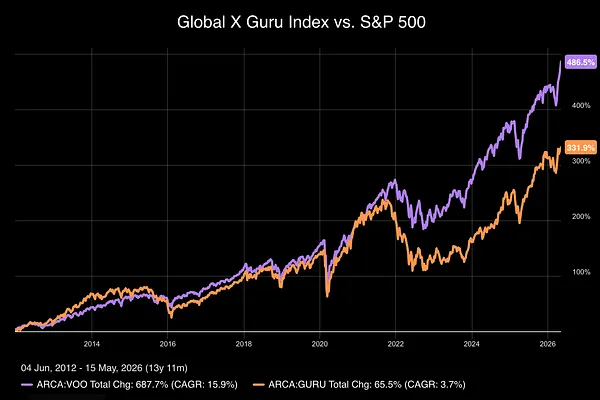
This capital exchange activity occurs in many forms, from individual transactions, OTC to large stock exchanges like the New York Stock Exchange - where transactions of thousands of USD per day are handled.

Some ways to classify Financial Markets

1. Capital Market - Money Market (Capital and Money markets)

This is the most common classification, in which:

  • Money market: exchanges short-term capital (maturity under 1 year) such as loans and short-term bonds (including US Treasury T-bills) or bank deposits,...

  • Capital market: exchanges long-term capital, such as stocks and bonds.

2. Primary Market - Secondary Market (Primary and Secondary markets)

  • Primary market: buying and selling newly issued securities directly from the issuing company.

    • A company's first bond issuances are called IPO - Initial Public Offering. Subsequent times the company issues new securities are called Seasoned Public Offerings (or seasoned issues).

    • Most securities issued through IPOs are issued below potential value, therefore, securities issued through IPOs of promising companies are always anticipated by investors to buy.

  • Secondary market: securities that have previously been issued on the primary market will be bought and sold on the secondary market by traders.

3. Centralized Market – Decentralized Market (Exchange-traded and Over the counter markets)

  • Centralized market: where buyers and sellers trade securities at a specific location (exchange).

  • Decentralized market (OTC): where buyers and sellers trade securities through a broker.

Functions of Money (Money Attribute)

In the past, people often used barter economy for buying and selling. The birth of the first coin is recorded in Mesopotamia around 3000 BC, made from copper, then iron. Followed by the widespread circulation of paper money, commercial paper and up to now virtual money, due to ease of use, no need to weigh the amount of goods.

The birth and improvement of money marks a great advance in global commodity trading.

Money is the general equivalent for exchanging goods, services and is accepted for use by the people.

Speaking of money, first we must mention the 5 basic functions of money:

  1. Money is a medium of exchange (Medium of exchange)

  • For example, you don't need to bring a lot of livestock you raise in the North to buy a house in the South.

    Just convert that livestock into money and take it to buy a house anywhere.

Money is used to easily transfer circulating value without bulky goods.

  1. Money is a medium of payment

Money makes the exchange of goods more convenient:

  • For example, your income is based on selling fruits and you like reading books.

  • You receive money from selling fruits today, tomorrow you use that money to buy books.

=> Money is the medium of exchange - helping complete transactions in different spaces and times: between you and your customers, as well as between you and the bookstore.

  1. Money is a store of value (Store of value)

Money is a means of storing assets. The value that people assign to it helps it represent the assets that people can store and use long-term.

  • Services you create and goods like vegetables you grow cannot be stored for long if in excess. But if converted to cash, you can store the excess assets created from your labor and use them in the future when needed.

  1. Money is a unit of account (Unit of a count)

Money makes equivalent exchanges easier. Money allows comparing values between items and evaluating price changes over time.

  • For example, people can easily recognize that a pizza costing 10 USD is 10 times more valuable than a 1 USD bread.

  1. World money

Currency has this function when it can perform the above functions outside the territory of the issuing country. Typical examples are the USD and the EU's EUR.

Measures of money supply

Basic measures of money supply:

Money: Lubricant of the Economy | SpringerLink
  • M1: Cash + Demand deposits

    • M1 consists of the most liquid money (easily mobilized for use).

  • M2 = M1 + Savings deposits at banks

  • M3 = M1 + Net time deposits included in banks.

Liquidity (ability to convert to cash) of M1, M2, M3 decreases gradually.

Difference between money and bonds

In many cases, bonds are not considered money because they do not have liquidity as high as cash.

  • Users can only use bonds for payment after they have been converted to money. This process can incur transaction fees and time.

However, bonds have higher returns than cash.

Money demand (Demand for money - Md)

Money demand is the amount of wealth that households and businesses in the economy choose to hold in the form of money.

Example: you have 20,000 USD in cash, you only want to keep 5000 USD in cash for basic needs and save 15,000 USD - then your money demand is 5,000 USD.

However, this example is a narrow understanding, “in the form of money” can have many interpretations, which could be demand for M1 - cash and highly liquid short-term deposits, or M2 or even M3 - less liquid “money”.

Money demand depends on 2 factors:

  1. Nominal income level (nominal income): or simply understood as the level of transactions.

    When income increases → People spend more → Demand for money increases.

  2. Interest rate (interest rate):

    When interest rates rise → Bonds become more attractive → People want to buy interest-bearing bonds → Demand for holding cash decreases.

Thus, the money demand curve with respect to interest rate will be a downward-sloping curve:

Formula:

Md = Y * L(i)

Where:

  • Y: Nominal income (nominal income).

  • L(i): Interest rate (interest rate).

  • Md increases with the increase in nominal income Y.

  • Md decreases when interest rate L(i) increases.

Money supply (Money supply – Ms)

Money supply is the total amount of money put into circulation at a specific point in time in the economy.

  • Similarly to money demand, the “money stock” in circulation also has many interpretations: M1, M2 or even M3.

Money supply Ms is determined by the monetary policy of the Central Bank, regardless of whether interest rates rise or fall (independent of interest rates).

→ The money supply curve Ms is a vertical line (vertical money supply curve) with respect to interest rates in the long term (but can be adjusted and changed in the short term, depending on the central bank's interest rate and monetary policies).

The relationship between money supply, money demand, and interest rates

If we construct the money supply curve Md and money demand curve Ms on the same graph, they will intersect at a single point (point A), called the equilibrium interest rate (long term).

  • At that point, the amount of money that people want to hold in demand will always equal the money supply in the economy.

Usually, the interest rate will always tend to move toward the equilibrium point:

  • When interest rate is lower than the equilibrium interest rate → Money demand exceeds money supply (because people prefer to spend money rather than save due to low interest rates)

    ~ People will want to hold more cash → Sell some bonds → Bond prices fall → Yields rise back to the equilibrium level.

  • When interest rate is higher than the equilibrium interest rate → Money demand is lower than money supply (because people are motivated to save to earn high interest rates)

    ~ People have less demand to hold cash → Buy bonds → Bond prices rise → Yields fall back to the equilibrium level.

The meaning of interest rates

As we also know, interest rates are also considered the exchange cost of money, or the cost of holding cash.

The more cash you hold, the higher the cost you incur. Why is that?

  • Suppose you need to use money but don't have cash. You will borrow and have to repay principal and interest in the future → The interest rate is precisely the cost of holding money at the present time, if you don't borrow, you won't have to pay this cost.

  • Another example, you have money in hand. If you invest in risk-free assets like government bonds, bank deposits,… you will earn interest on that money. However, if you don't invest and hold all cash, you will lose the opportunity cost of benefiting from that interest rate level.

The opportunity cost of holding cash is the interest rate.

Thus, predicting whether interest rates will rise or fall in the future is important in terms of whether you lose the opportunity cost or not.

So, specifically, which factors will affect interest rates?

  1. Nominal income (Demand for money)

When income rises, the demand for cash usually increases. However, money supply does not change immediately, resulting in demand exceeding supply.

To rebalance this situation, the Central Bank will raise interest rates to encourage people to save (as well as pressure capital demand for businesses to reduce wages - but we will not discuss labor market equilibrium in this article).

  • Higher interest rates can reduce consumer loan demand, while encouraging users to shift money from cash to other financial assets with higher yields.

Income increases → Money demand increases, money supply doesn't increase fast enough → Demand exceeds supply → Interest rates rise to reduce consumer borrowing demand and shift investments to bonds.

  1. Money supply (Money supply)

When the money supply increases, the prices of goods will increase accordingly (because money becomes cheaper relative to goods), the demand for money usage will also increase accordingly so that people can pay for the increased costs.

In this situation, the Central Bank will

Money supply increases → Interest rates decrease to reduce the attractiveness of bonds, people hold more cash → Market balance.

How does the Central Bank change the money supply?

As mentioned in the previous section, changes in the money supply depend on the economic policies of the Central Bank, through which market interest rates can be adjusted. The Central Bank's buying and selling of securities (bonds) to control the market money supply is called Open market operations (Open market operation - OMO).

  • Expansionary open market operation policy (Expansionary open market operation): The Central Bank expands the money supply by buying bonds to create more cash in the financial system, increasing the money supply.

  • Contractionary open market operation policy (Contractionary open market operation): The Central Bank contracts the money supply by selling bonds to withdraw cash from the financial system, reducing the money supply.

Conclusion

Thus, in part 3, we have grasped the basic knowledge about the financial market, money supply and demand, and the factors affecting interest rates to make accurate financial forecasts. We also know how the Central Bank adjusts the money supply to change interest rates, aiming to balance the financial market. In the next part, we will continue to learn about the roles of the Central Bank and commercial banks on the market.

Login to read the full article

Create an account to access premium content.

0

Comments (0)

No comments yet

Be the first to comment