Video: Kamala Harris's Economic Policy - Why Price Controls?
Kamala Harris announces financial policy if elected and proposes price control idea, or "price control", causing much controversy. So, is direct government price control as effective as expected?
GDP growth, unemployment rate, or consumer confidence are “radars” warning whether an economic recession is likely to occur. Like looking at clouds to predict rain, these indicators help us recognize negative economic fluctuations in advance. Although we cannot predict exactly when the "storm" will hit, grasping early signals will help us be more proactive. Viet Hustler will decode these "radars" with readers, helping you always proactively respond to market fluctuations:
Group of economic growth indicators
Group of consumer confidence indicators
Group of financial market indicators
Group of labor market indicators
I. Group of economic growth indicators
(1) Indicator LEI (Leading Economic Index)
The Conference Board's Leading Economic Index (LEI) provides early signals about the direction of the economy in the coming period.
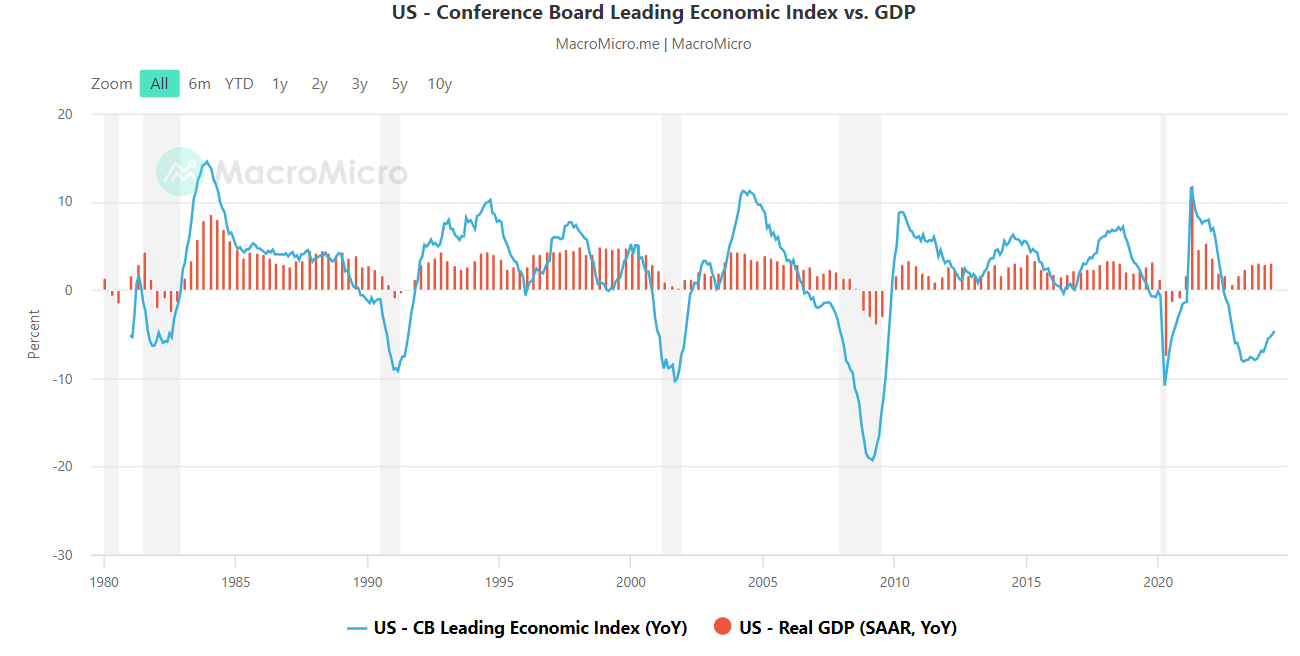
The LEI consists of 10 input components and is reported monthly.
3 financial components include:
Exclusive Leading Credit Index
Spread between 10Y T-bond and Fed fund rates
Performance of S&P 500.
The remaining 7 input components are non-financial:
Average weekly manufacturing hours
Initial jobless claims
New manufacturers' orders
New residential building permits
ISM index on new orders
New orders for non-defense capital goods excluding aircraft
Consumers' average expectations for business conditions
"The LEI is a predictive variable for turning points in the US business cycle within about 7 months" - Conference Board
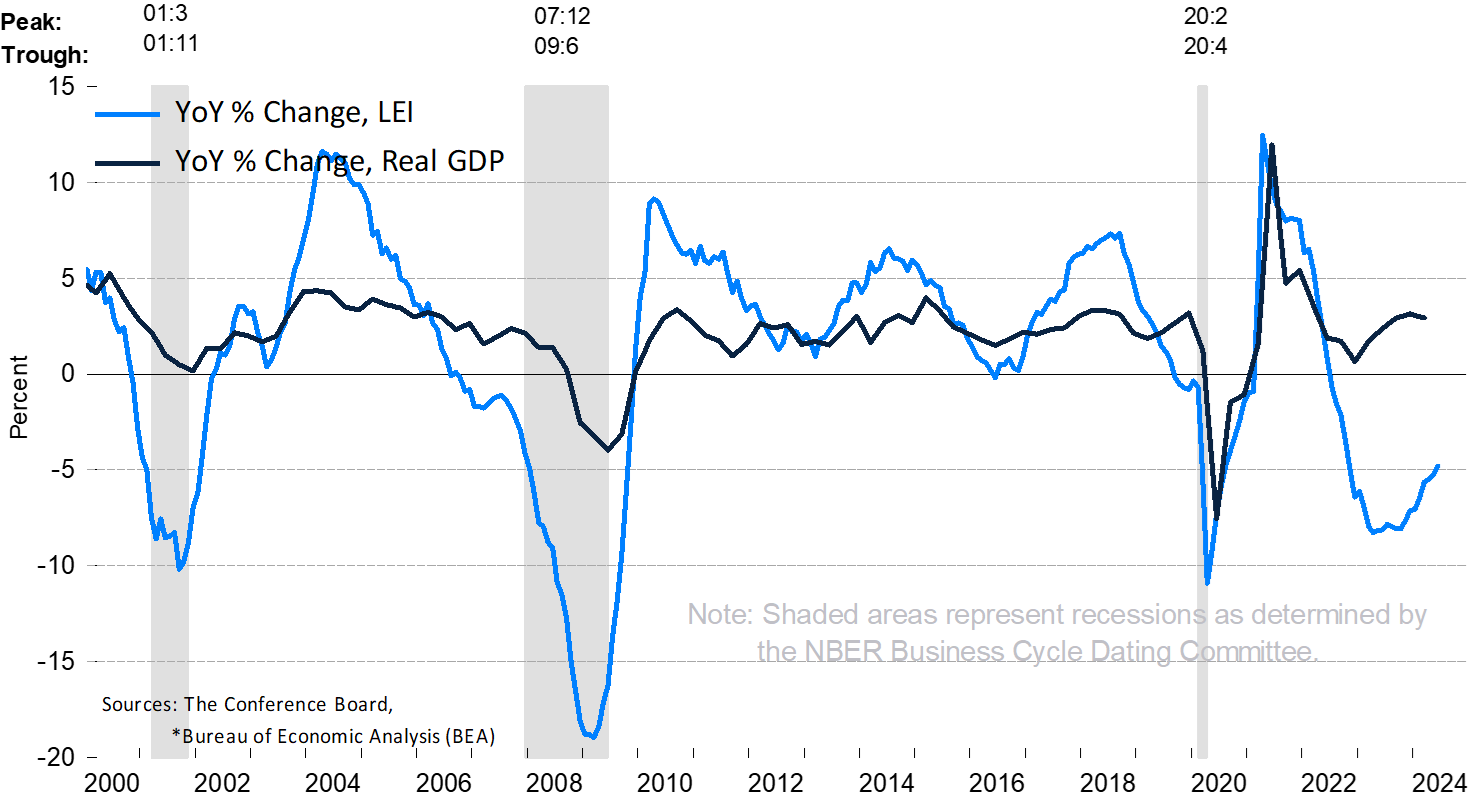
→ LEI can signal economic weakness before the US National Bureau of Economic Research (NBER) officially declares it. The US economy is likely to recess in the next 2-3 quarters when the annual LEI rate falls below 0.
In the past, the number of consecutive months of LEI decline has also been an indicator:
LEI had a 22-month consecutive decline during the 1973-1975 recession and 24 months of decline before the financial crisis (2008-2009)
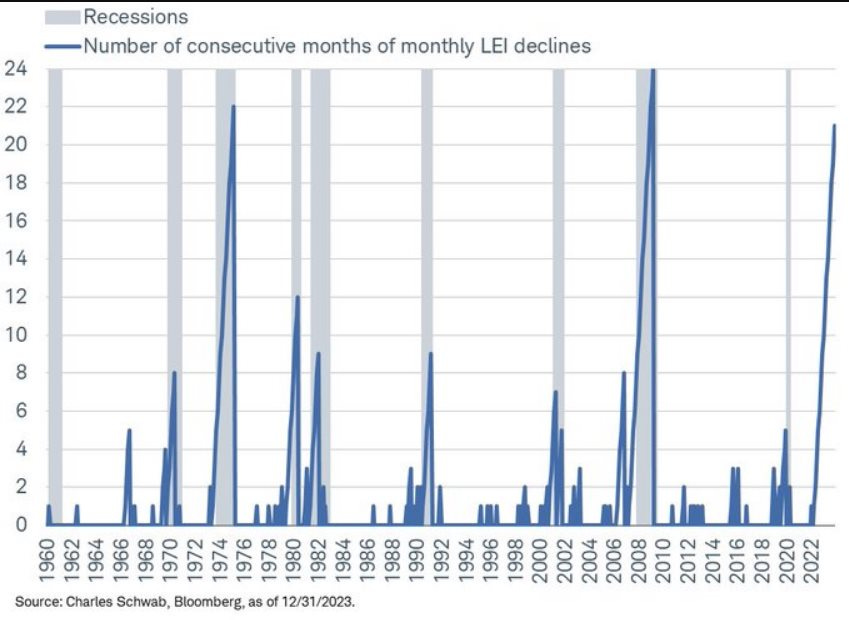
Currently, LEI is still declining but showing signs of recovery:
LEI declined 0.2% in June to 101.1 (2016=100) (May: -0.4%)
In the first half of 2024, LEI declined 1.9%, < the 2.9% decline in the second half of last year.
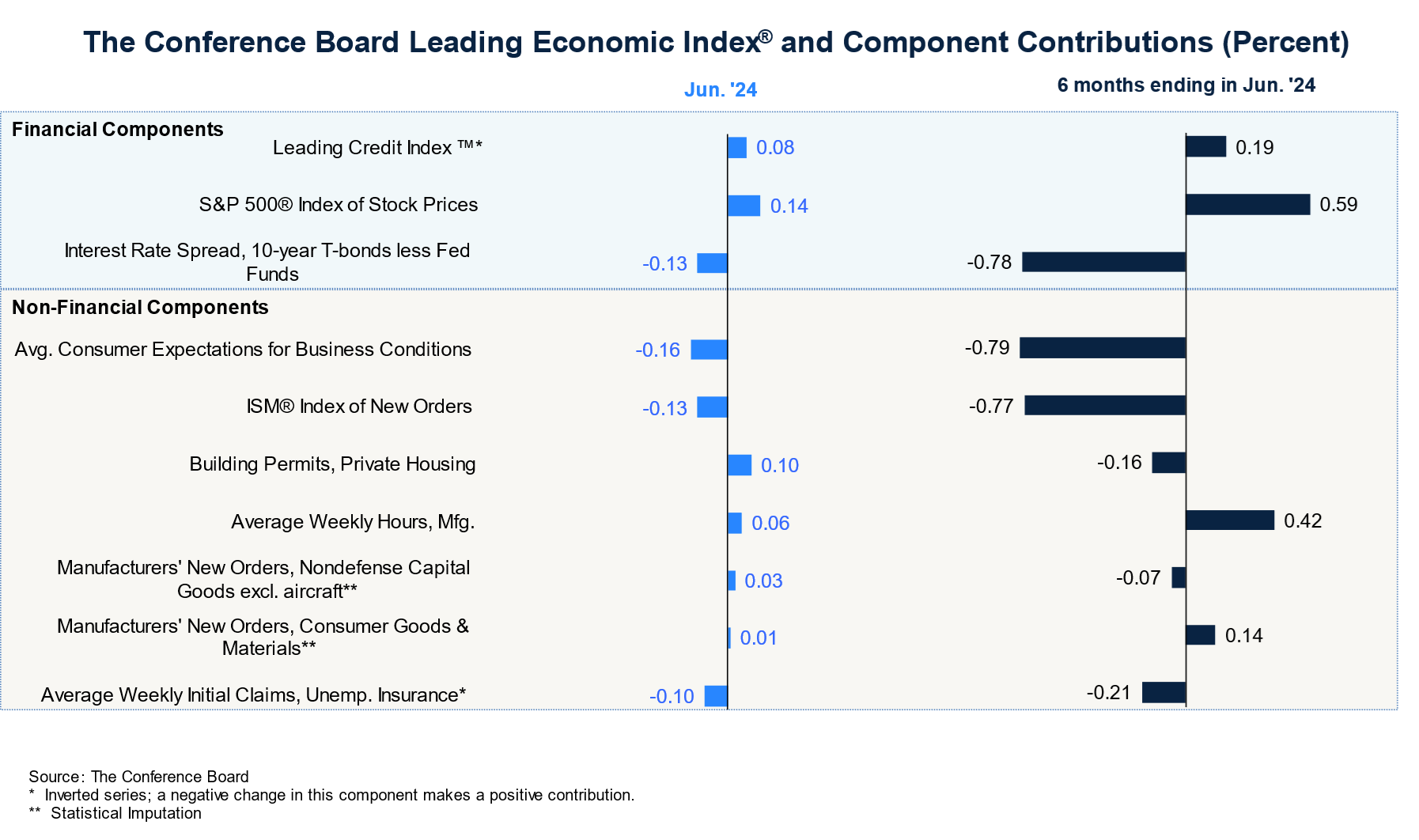
The June decline came from: consumer confidence, new orders, yield spread, and initial jobless claims
The 6-month LEI change is trending to improve, erasing the recession signal
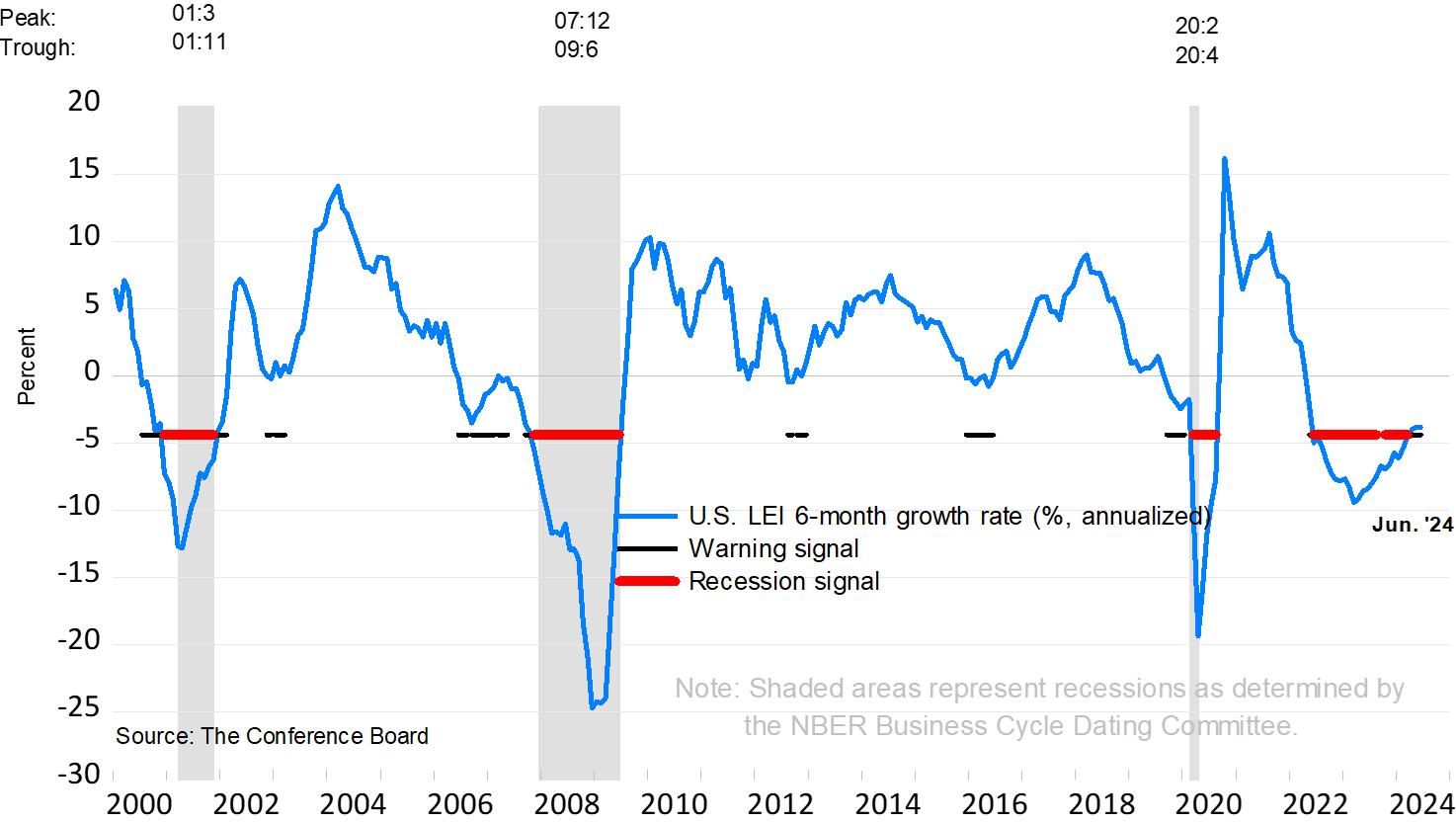
However, looking at the entire cycle, LEI has declined -14.7% from the economic cycle peak
In the past 65 years, such a decline has only occurred during recessions.