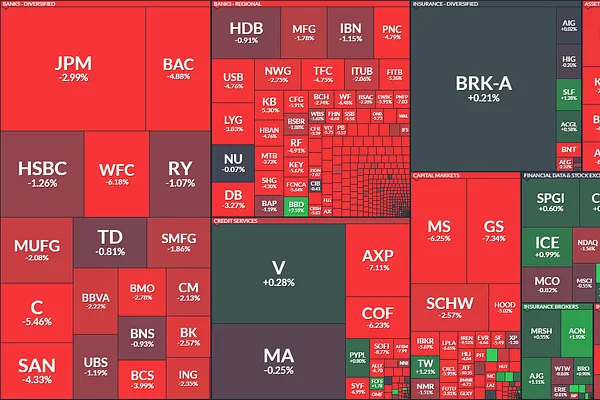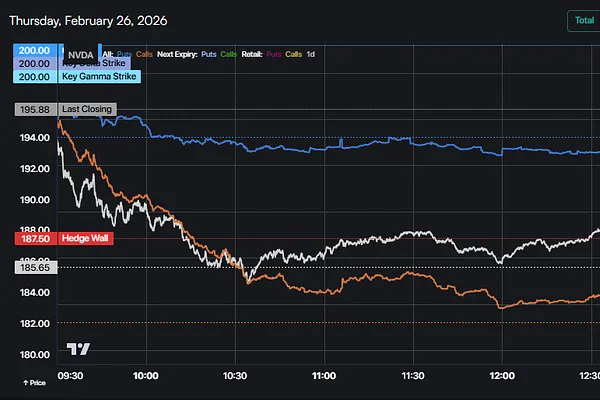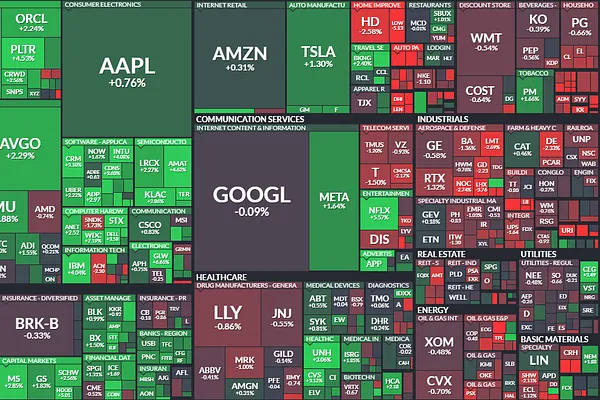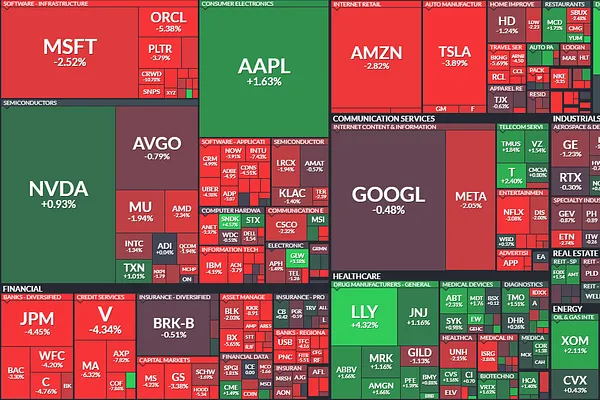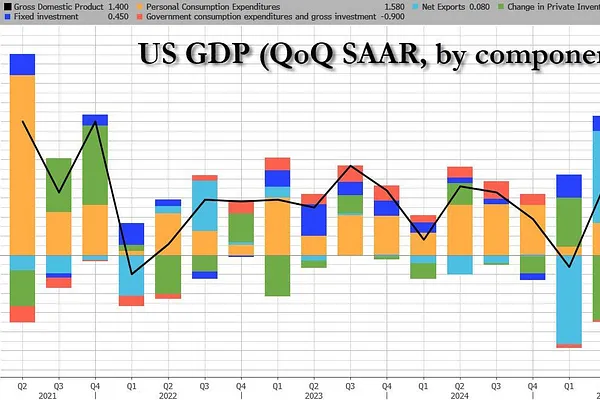
US stock market has a rather dull trading session in the morning with most investors deciding to sit out the market. The index indicators moved lightly from the opening session with liquidity continuing at low levels across all sectors.
Summary of Bank of America financial report:
EPS 94c, Exp. 84c, up 18% or 14c from 80c y/y
Revenue net of interest expense $26.26 billion, +13% y/y, beating estimate $25.4 billion
Trading revenue excluding DVA $5.05 billion, +8.7% y/y, beating estimate $4.46 billion
FICC trading revenue excluding DVA $3.43 billion, +29% y/y, beating estimate $2.62 billion
Equities trading revenue excluding DVA $1.62 billion, -19% y/y, missing estimate $1.8 billiom
Wealth & investment management total revenue $5.32 billion, -2.9% y/y, missing estimate $5.48 billion
Net interest income FTE $14.58 billion, +25% y/y, estimate $14.42 billion
BofA ended the quarter with $904B of Global Liquidity Sources
BofA's consumer banking average deposits declined 3%
BofA Q2 Consumer Banking Avg Deposits Remained Above $1 Trillion
BofA Consumer banking client balances declined $33B, or 2%
BofA Q1 Net Reserve Build $124M in Provision for Credit Losses
BofA Q1 Consumer Banking Avg Deposits Declined $30B
BofA net reserve build driven primarily by consumer
BAC: Qtr Incl $220MM Pretax Loss on Sale of AFS Debt Securities
After the collapse of SVB and FRC, BAC was seen as being in the next group at risk. However, this morning's financial report shows that the deposit shortfall from Bank of America customers is not too large, with management using funds quite effectively, dispelling all investor concerns about this bank.
Summary of Goldman Sachs financial report:
EPS $8.79, beating the estimate $8.21, and down 21% Y/Y
Net revenue $12.22 billion, missing estimate $12.8 billion, and down 5% Y/Y
Net interest income $1.78 billion, estimate $2.18 billion
FICC sales & trading revenue $3.93 billion, badly missing the estimate $4.19 billion
GS is the only bank on Wall Street losing money in the fixed income trading segment but overall it's not too bad as overall profits are still higher than expected with most investment profits from public equities helping to offset losses from the fixed income and private equities segments.
Macroeconomic data continues to be mixed:
NY FED manufacturing activity survey index beats all forecasts with new orders increasing the strongest in history. Accordingly, this index rose to 10.8 from -11.5 at the end of March with forecasts continuing to decline to -18.0
This is an 11-sigma (11 standard deviation) beat of forecasts and the 2nd strongest beat in reporting history:
New orders index went from -21.7 to +25.1 in just one month, the fastest increase in history:
Overview of recession signals:
Accordingly, the US economy has officially entered a recession:
However, credit and especially the high yield block have not yet shown signs of recession, while this is the block that will bear the highest risk:
Not only in the US, the “COVID Rebounce” signals in China are also fading as borrowing demand surges, debunking the notion that Chinese people have huge deposit reserves and will flood the market after reopening:
Meanwhile, the US-China trade balance is gradually shifting in the opposite direction as US companies seek alternative sources of goods from China:
On internal, overall market liquidity continues to be extremely low with little change in both the bond market and options. For the most part, this situation will continue until the end of the trading session.


Comments (0)
No comments yet
Be the first to comment
Login to comment