Today's mid-day newsletter is quite late due to the amount of information needing compilation. Steve is still striving to maintain the quality of his articles and analyses, so writing time is longer than expected.
Steve hopes that compilations like today's can reassure readers about the quality of service received in the coming period.
Viet Hustler will officially restrict access to paid users only from August 01 and monitor account and article sharing. Steve hopes everyone will continue supporting Steve and the team.
S&P Global: Global economy heading down with services and manufacturing continuing to strongly diverge in July
In S&P's July global flash PMI survey, services rose and manufacturing continued to decline sharply with US growth more favorable than Europe
Indices above 50 indicate expansion, below 50 indicate contraction
Europe's composite index fell to 50.1 (51.1 expected) with manufacturing sharply down to 45.6 (46 expected) and services to 51.9 (52.9 expected)
50.1 is the lowest composite index in 4 months.
US manufacturing index fell to 49.5 (51.6 expected) into contraction territory from 51.6 prior month while services beat expectations to 56 (54.9 expected) from 55.3 prior
Pulling US composite PMI up to 55, highest in 27 months
S&P Global forecasts US GDP growth Q2 at 2.0% and full year 2024 at 2.5%
Atlanta FED forecasts US Q2 GDP growth at 2.6%, much higher than the expected 2.0% to be released tomorrow morning
$70 billion 5-year bond auction unexpectedly fails
High Yield: 4.121% (market yield: 4.110% | previous session: 4.335%)
=> Stop-through: 1.1bps
Allocation ratio at High Yield: 96.28% (previous session: 43.69%)
Bid-to-Cover: 2.40 (previous session: 2.35)
Competitive award components:
Dealers: 14.53% (6-session average: 16.3%)
Indirect bidders: 67.3% (previous session: 68.9%)
Contrary to expectations after yesterday's extremely successful $69 billion 2-year bond auction, today's session was generally lackluster with slightly reduced indirect bidder demand. Largely due to heavy recent selling volume and focus on short-end bonds ahead of FOMC.
Yield curve beginning to normalize with short-term yields gradually falling amid rising demand. Long-end starting to move higher with 10Y back to 4.254% after this afternoon's auction.
Imports fall, wholesale inventories pull down June trade deficit
US trade balance narrows slightly to -$96.84 billion from -$99.4 billion in June
Imports dip slightly with wholesale inventories up only 0.2% MoM vs 0.5% expected and +0.6% prior
Core retail inventories little changed, up slightly +0.2% MoM, higher than -0.1% forecast but consistent with other data, indicating business inventory investment demand continues downward trend.
New home sales fall but prices and new construction rise slightly
After data showed existing home sales collapsed in June, today's new home data shows the same.
June sales down only -0.6% MoM, milder than -3.4% forecast but May revised from -11.3% to -14.9%
This is the lowest sales in 7 months
Compared to same period last year, sales down -7.4%
Like existing homes, sales fell but prices still rose in June, median price hits $417,300 still lower than existing home median
Building permit applications rise for the first time in 6 months, +3.9% MoM, higher than expected 3.4% and recovering from -2.8% last month
According to the survey, buyer confidence index is pessimistic but home builders remain stable
Looking further ahead, the current trend shows single-family new builds declining while multi-family (over 5 units) increasing
Mortgage applications down -2.2% for the week at lowest level since 1995 despite 30-year average rate easing slightly to 6.82%
Commercial real estate crisis spreads from offices to apartments
Blackstone's Mortgage REIT cuts dividend 24%, stock drops deepest in
Deutsche Bank reports first loss in 4 years, increases bad debt provisions from commercial real estate, cuts share buybacks
Crisis from office sector starting to spread to apartments segment
518-unit new apartment complex foreclosed by bank in Dallas for $35 million ~$67,000/unit
Tides at Whispering Hill: 314 units
Tides at Lawler East: 204 units
Goldman Sachs hands over 1,200 apartments in 82 buildings in San Francisco to creditor Royal Bank of Canada
Total debt $687.5 million
2020 purchase price: $704 million ($587,000 / unit)
Oil inventories continue to decline boosting price expectations
Data from Department of Energy (DOE)
Crude oil: -3.74 million barrels (-2.6 million forecast)
Gasoline: -5.57 million barrels (from +3.328 million barrels last week)
Government added 690 thousand barrels to SPR last week
US oil production continues at record levels despite declining rig count
Bank of Canada cuts rates for 2nd time, injects $16 billion to rescue bank overnight
BOC cuts rates for 2nd consecutive time in 2 months
"inflation may rise before returning to 2% next year"
BOC is the first G7 central bank to cut rates
Rate cut appears necessary as BOC injected $16 billion via repo overnight and continuously last week
Some Canadian bank facing liquidity issues, we just don't know which one
Earnings reports: Tesla, Google, Enphase, Visa, AT&T
Tesla: Growth expectations do not justify valuation
Revenue +2% YoY to $25.5 billion, $0.8 billion above expectations
Automotive sales revenue down -7% YoY due to price cuts
Gross margin 18%, up after 4 consecutive declining quarters
Operating margin 6%, improved
EPS $0.52, $0.1 below forecast
Free cash flow improves back to positive after last negative quarter, +33% YoY.
Segment margins show no improvement
Overall, Tesla is losing growth momentum to make investors comfortable with current valuation
Robotaxi delayed to end of 2025
Cheap car product ~$25,000 still on track for early 2025
Market share stable in US/Canada but continues to erode in Europe and China
Steve: After $TSLA stock's 50% rise in just over a month, investors seek a spark to justify the extremely high current valuation. This report shows improvement in margins and free cash flow but fails to meet growth expectations. New projects for the next development phase are still far off and market share continues to erode internationally. Overall, not a bad earnings report, but merely “meets expectations” rather than “exceptional” at current prices.
Alphabet: All normal but no AI in sight?
Revenue +14% YoY: $84.7 billion, $0.5 billion above expectations
Google Cloud revenue +29% YoY to $10.3 billion
YouTube ad revenue +13% YoY to $8.7 billion
Operating margin 32% (+3% YoY)
Cloud segment 11% (+6% YoY)
Earnings $1.89/share ($0.04 above expectations)
Begins paying dividend $0.2 per quarter
CEO: does not see enough profit from AI investments, and sees Google investing too much in this area without achieving expected returns.
CEO could not provide an example of a successful AI product Google created in the past year.
Steve: Google has a financial report that's not bad, nearly all metrics are good with expected growth. However, like Tesla, investors want to see a development aspect, and for Google that's naturally the AI story like the entire tech sector now. Disappointment over the ability to create products in the past quarter combined with management's vision on the money needed to invest in artificial intelligence versus immediate profits makes some investors dissatisfied with how to use the $100 billion the company has on hand, especially after failing to acquire Wiz yesterday at $23 billion.
Enphase: First signs of recovery
Earnings: $0.43/share, below $0.48 expected
Revenue: $303.46 million, below $309.67 expected
Gross margin improves to 45.2% from 43.9% Q1
Q3 revenue guidance ~$370-$410 million, down from prior $405.45
Spent $99.9 million on share buyback at average $112.02/share
Steve: Although all key metrics of are not as expected, if looking at quarter-over-quarter, this is the first quarter operations of show signs of quarterly recovery after more than 1 year. With low industry sentiment and expectations, investors feel somewhat more confident finding the bottom, especially with the company confidently spending $100 million on share buybacks and disclosing the buyback price.
Visa: Revenue starts to feel impact from consumer spending
Revenue: $8.9 billion below expected $8.96 billion
Earnings: $2.42/share below expected $2.43
CFO: In the US, transactions stable in high-income customer group while down in low-income group
Spent $5.8 billion on share buybacks and dividends
Steve: Visa overall remains the brightest name in financial services. Although revenue and earnings declined in Q2 due to spending drop, current valuation and Visa's financial strength make it a rational recession safe haven.
AT&T: Stable growth with 5G and Fiber network
Revenue $29.8 billion below $29.98 billion expected
Earnings $0.57/share in line with forecast
Free cash flow $4.6 billion, +9% YoY, above $4.22 billion forecast
Added 419,000 phone subscribers, double the expected 284,800
Only 0.7% churn in Q2, better than all other telcos
Slower spending on phone upgrades affects revenue
Steve: Stock was heavily pressured after cybersecurity breach losing all users' info so this Q2 earnings report is a much-needed win for the company. Growth and user retention of surprised and shattered all expectations. However, when compared to it seems still has more risks even technically with too many security breaches in past years and continuing to ensure growth and user retention.
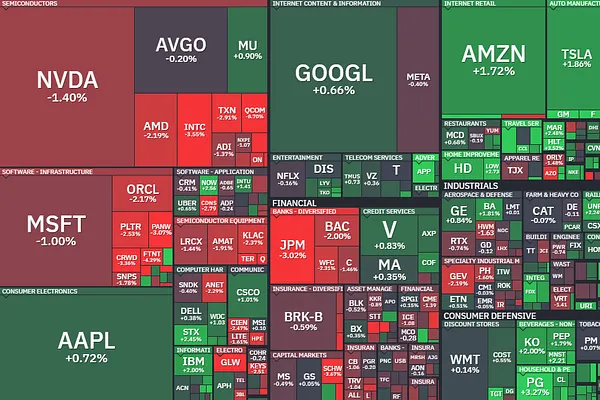
Market: SPX loses 5500, panic dominates market
Market opened Wednesday's trading session with quite unstable sentiment as Google and Tesla earnings failed to instill confidence in investors about current valuations. From previous analyses:
Market levels generally quite thin
Hedge demand down, but not gone with key earnings and macro reports, plus FOMC this week and next
SPX 5500 level is the bias-defining level
De-risk sentiment and rotation out of tech sector still persists
With SPX losing 5500 from the open, the market shifts to full negative gamma with tech leading the sell-off.
Below 5500, puts dominate the market
Currently, most puts are still short-dated, creating opportunity for shorts-cover rally if the market can find short-term support at 5400 (new put wall)
If puts start getting rolled to longer term, the market may see a longer correction.
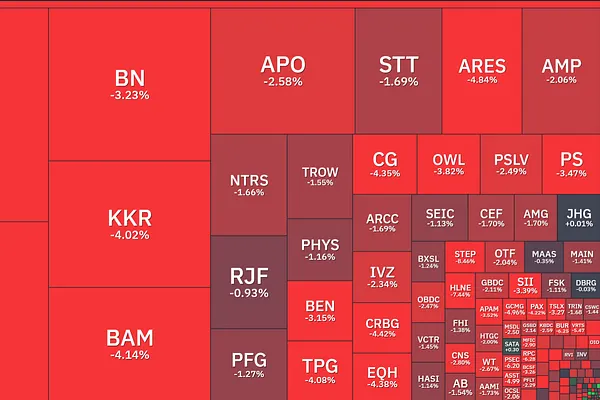
The market's sole bright spot lies in the disparity of buy/sell liquidity across sectors, with total actual selling pressure still not too high early in the morning session, only surging after the unsuccessful midday bond auction, causing 10-year yields to spike and generate fear.
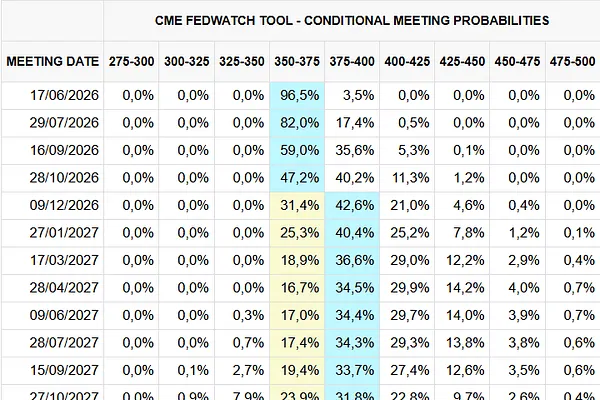
This fear could be resolved if tomorrow's GDP report is weaker than expected, helping investors regain confidence in the likelihood of the FED signaling a rate cut at next week's FOMC.


Comments (0)
No comments yet
Be the first to comment
Login to comment