
Inflation in the US has shown clear signs of cooling; however, across the Atlantic, Europe is still suffering from continuously escalating inflation reaching double digits in October.
Expected, ECB will start the QT process in early 2023 despite the bloc's fragmentation risks. However, currently, ECB has acted to withdraw liquidity from the interbank market by calling on banks to repay cheap loans in the TLTRO program.
Will ECB aggressively raise rates by 75bps to catch up with the Fed or slow down the rate hiking process to protect the Eurozone common currency bloc? This week's macroeconomics article from Viet Hustler returns to Europe, focusing on ECB's dilemma in regulating interest rates and monetary policy for the Eurozone.
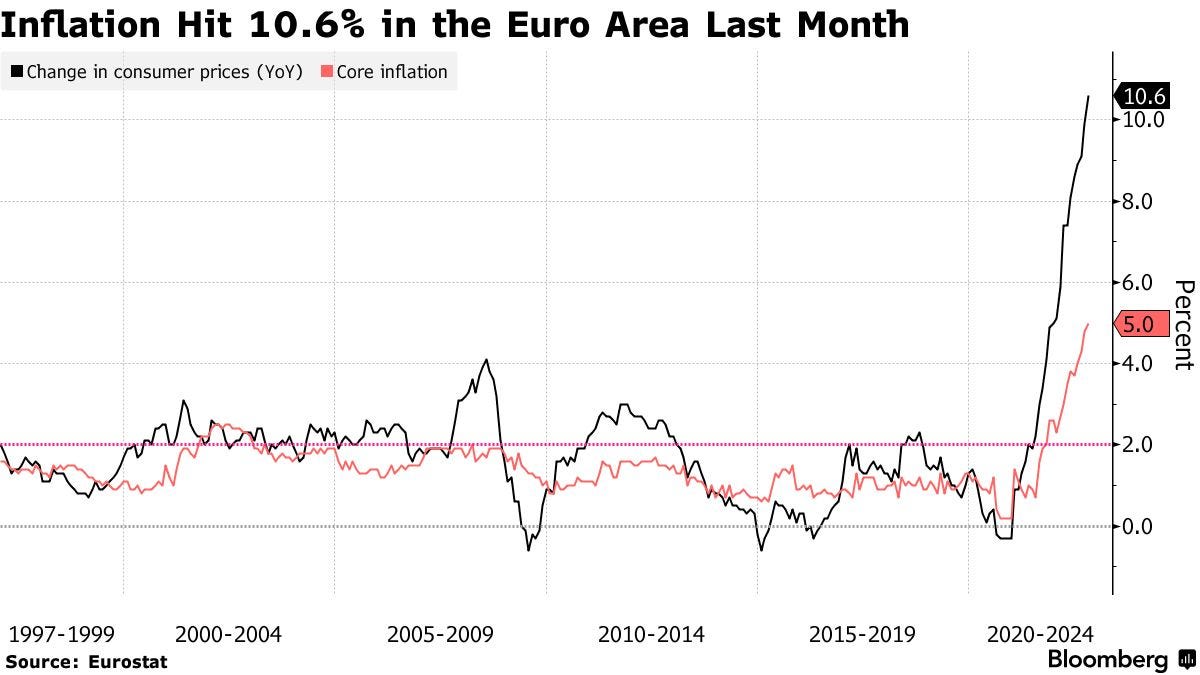
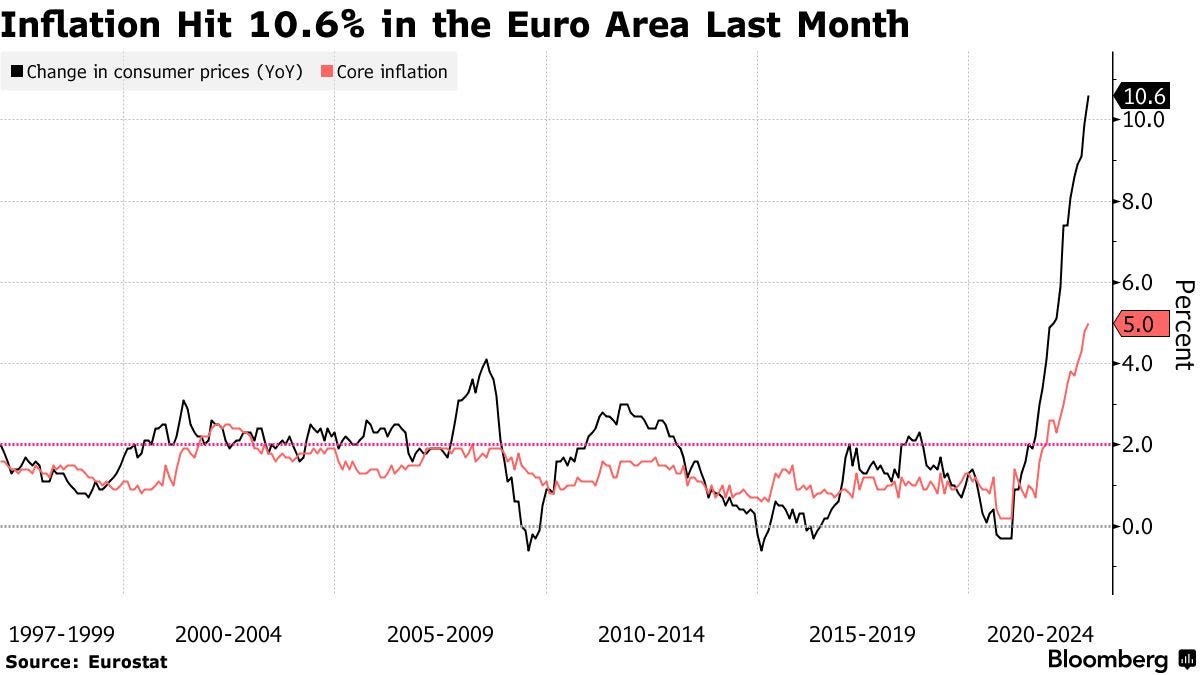
Inflation in the Eurozone has officially reached double digits
Inflation across Europe simultaneously rises to double digits in October 2022
Inflation in the Eurozone: +10.6% y/y, of which:
Energy costs still account for the largest portion of Europe's inflation structure.
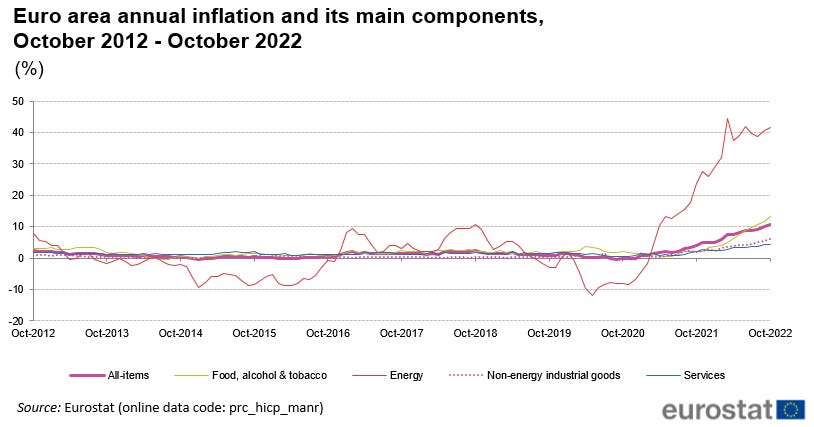
Meanwhile, core inflation (excluding energy and food) is only at: +5% y/y
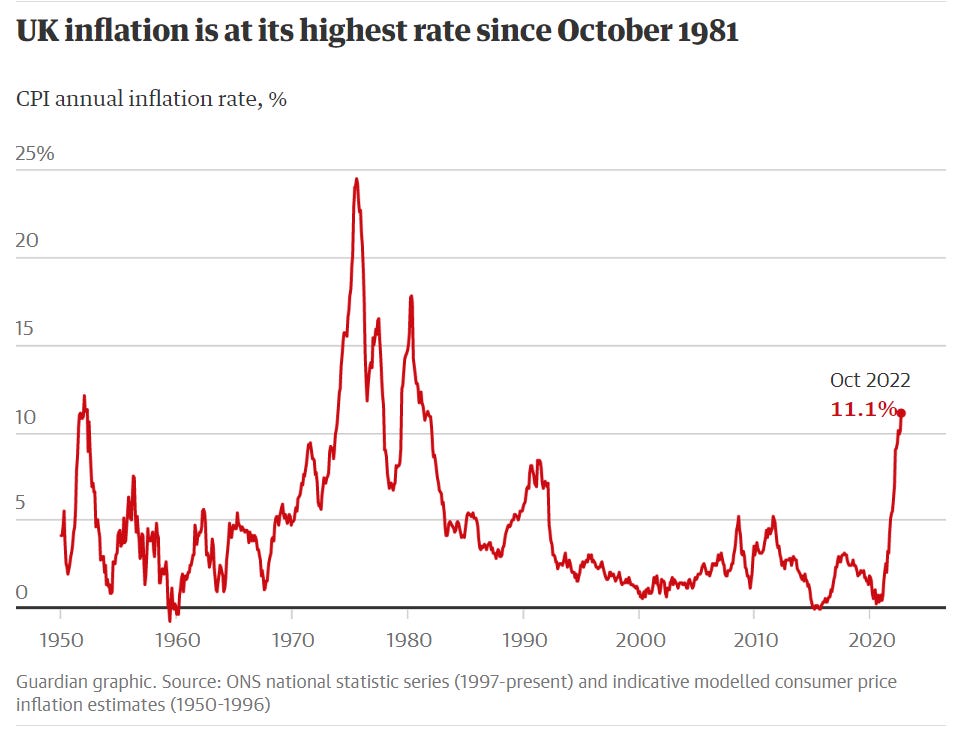
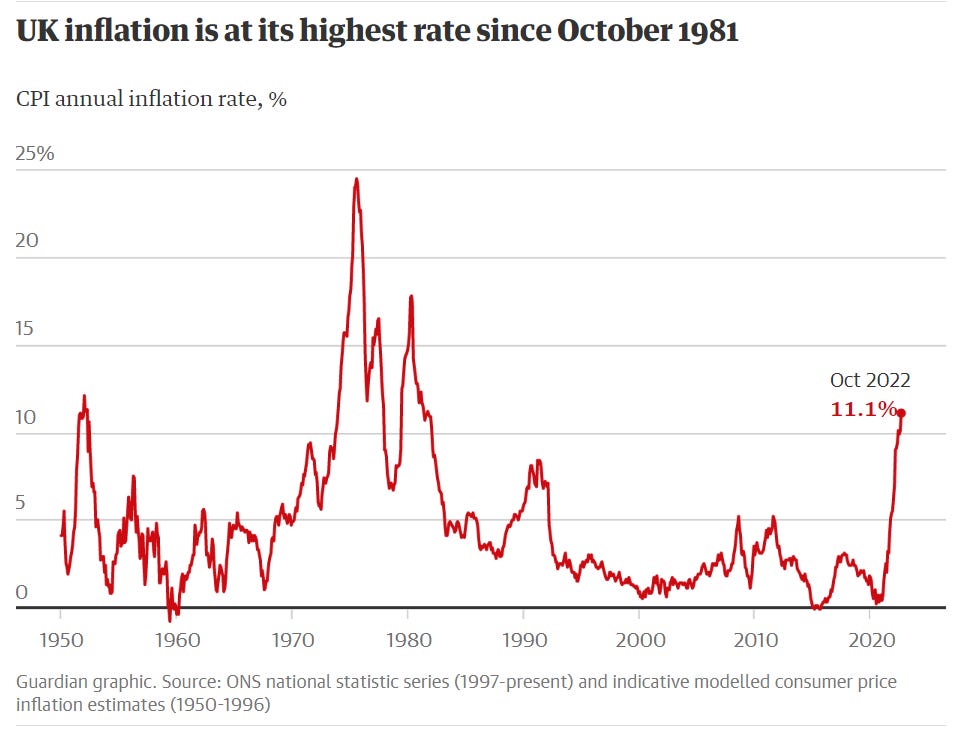
FYI: Outside the EU bloc, UK inflation in October 2022 also continued to rise sharply to +11.1%.
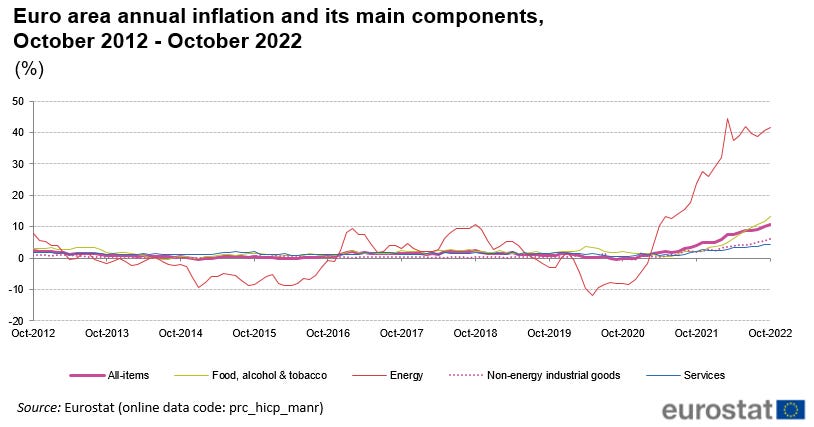
Unlike the US, where current inflation is largely driven by consumer demand (52%). Inflation in Europe is currently still heavily impacted by the energy crisis (43%). The fact that European inflation is only 24% driven by demand will make ECB's rate hikes less effective against inflation compared to the Fed.
Comments (3)
Thị trường hiện tại kỳ vọng mức tăng 57bps trong cuộc họp của ECB vào tháng 12 (trước đó vào cuối tháng 10, thị trường kỳ vọng ECB sẽ tăng 77bps. 57bps và 77bps chắc do typo hả Linh Hà/Steve
Hello Quang, Không phải do typo đâu, đây là implied ECB rate từ hợp đồng overnight rate swap. Linh có để trên hình đó, hiện đang là +56.4 bps (0.564%), Linh có round up hơi sai xíu nên đã sửa lại rồi ạ. Thank you.
Login to comment