
Enron was once America's 7th largest corporation with net income up to 122 million dollars (pre-tax). However, behind the gigantic profit figures was a massive fraud full of lies and political manipulation that shocked U.S. history. At the end of 2001, Enron's scandals were exposed, leading to bankruptcy, and also pulling down one of the world's top 5 auditing firms at the time (Big5) - Arthur Andersen.
In this week's article, Viet Hustler will take readers to one of the biggest financial market scandals of the 21st century that changed many financial control systems of American businesses.
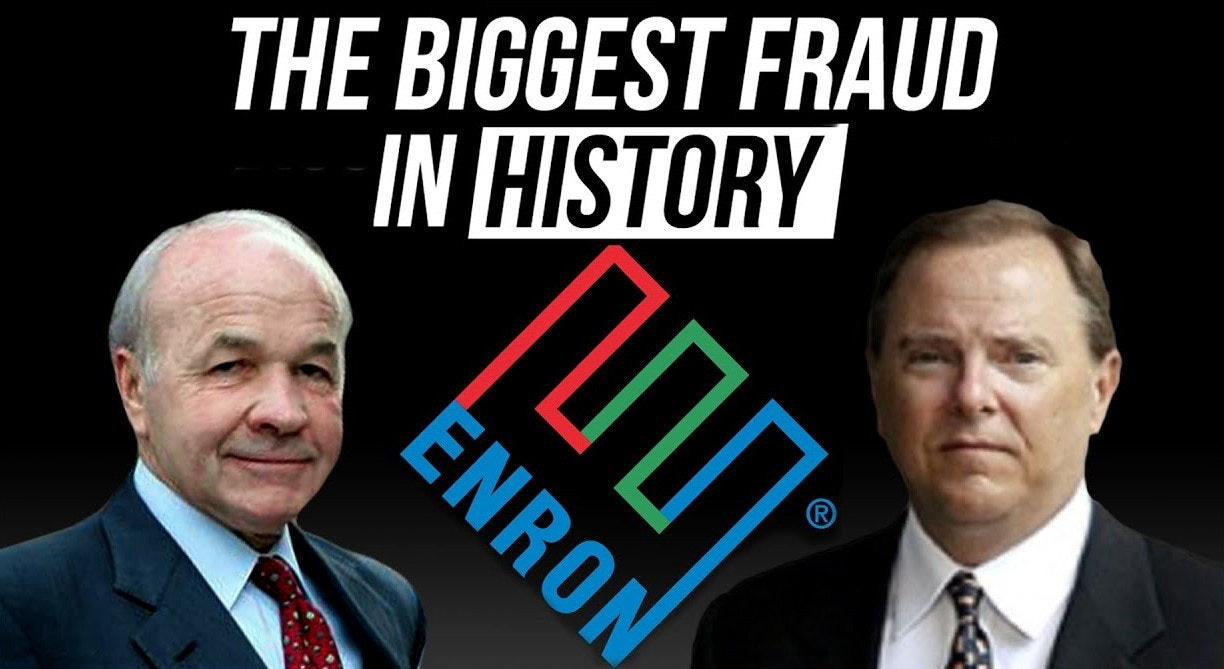
Brief Overview of Enron
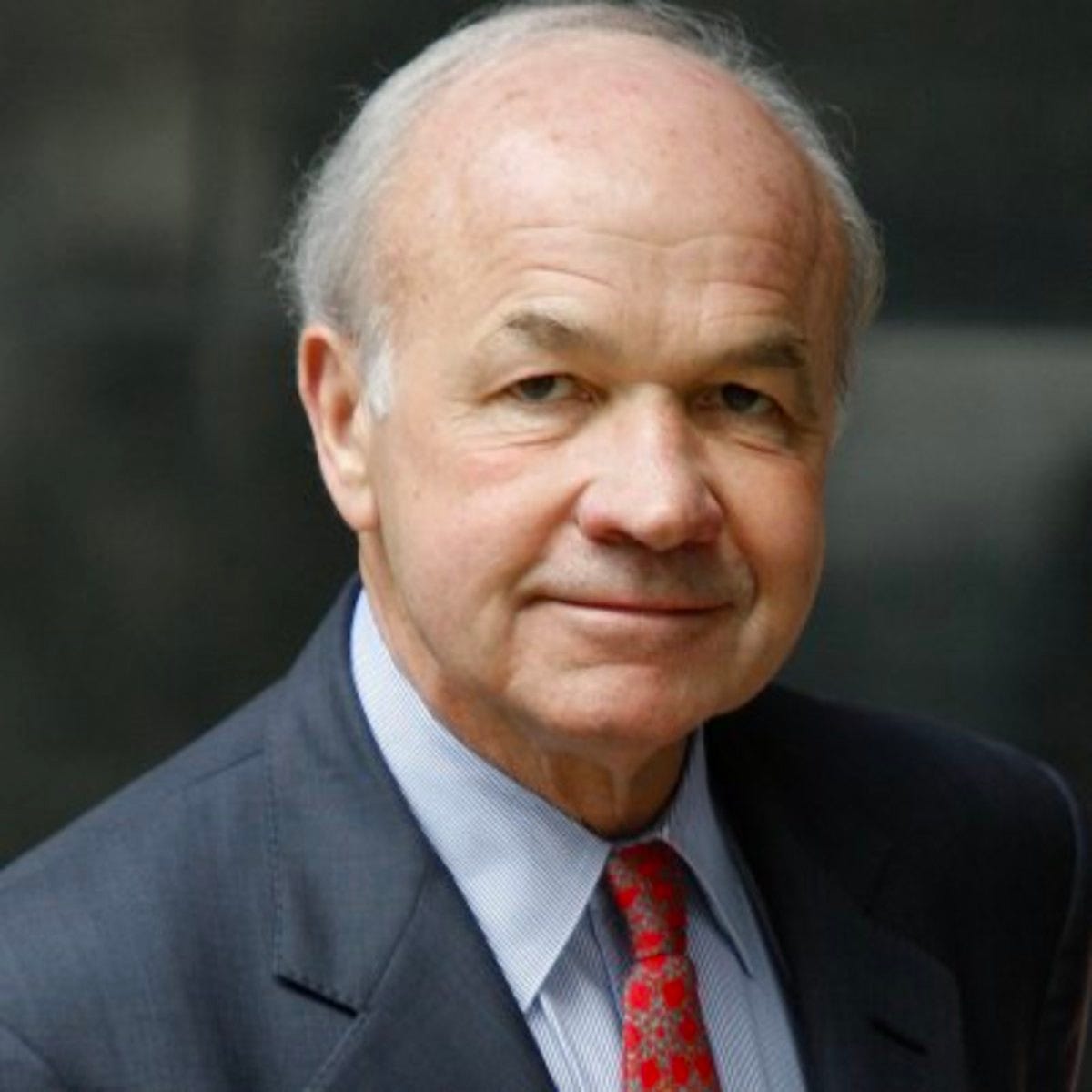
Enron was founded in 1985 by Kenneth Lay based on the merger of Houston Natural Gas and InterNorth natural gas pipeline companies, with headquarters in Houston.
Enron Corporation in the 1990s was likened to the "darling" of Wall Street because its stock price always grew every year.
In addition, Kenneth Lay, former Chairman of Enron, had close ties with many top politicians in the U.S. Government and Congress, especially in the Republican Party. He led the financial contribution campaign for President George W Bush's election campaign. In return, Lay lobbied for policies beneficial to Enron, particularly deregulation policies in the energy sector.
Bush and Lay were very close; he even called Lay "Kenny boy".
"Kenny boy" - Chairman of Enron
Lay was born into a not-very-wealthy family with a pastor father. After graduating from the University of Houston with a PhD, Lay worked at the Pentagon as a financial analyst for the Department of the Navy.
After Lay founded Enron, two employees responsible for buying and selling oil for Enron secretly transferred substantial amounts of company money to fake accounts they themselves created for gambling bets under different names, such as M. Yass. Strangely, when Lay discovered this, he did not fire them or make any policy changes within the company. In fact, Lay sent them a letter saying: "Keep helping us make millions more".
Later, when those two employees were convicted of fraud, Lay pretended to be very "shocked" and said he knew nothing about the "theft" of company money for gambling.
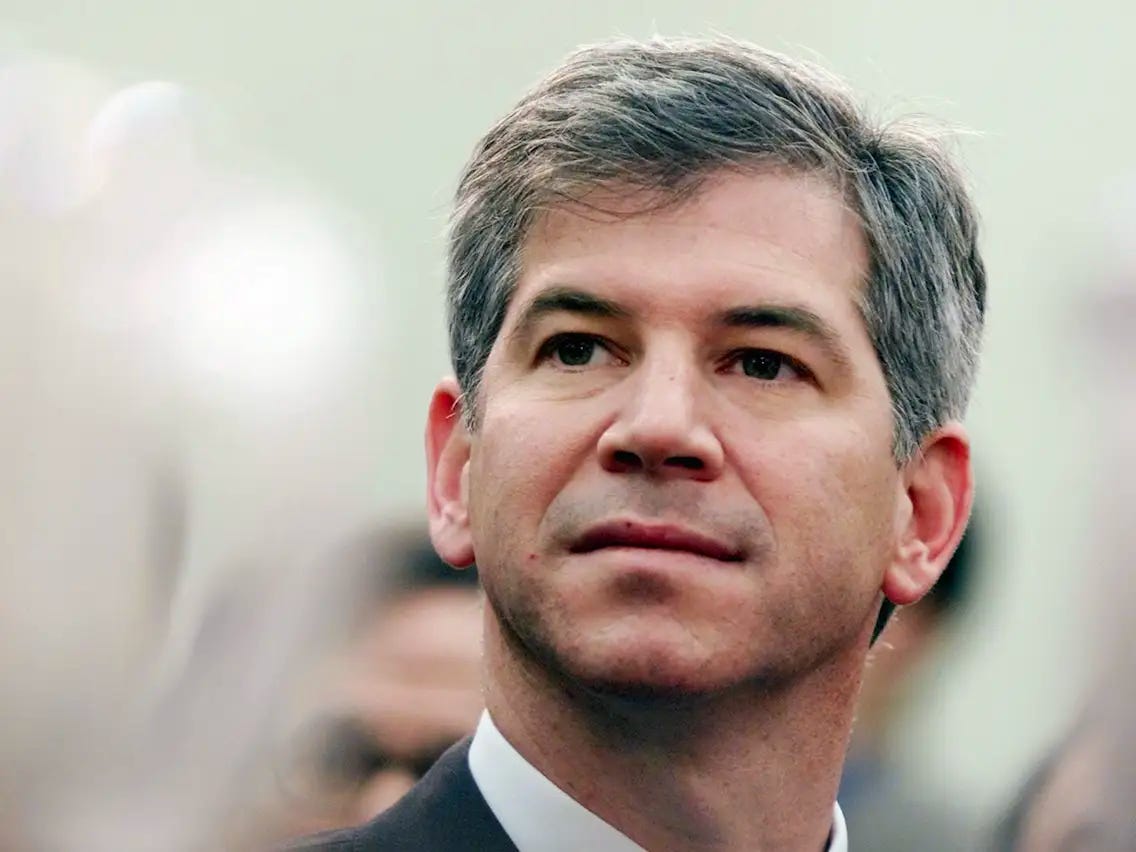
Andy Fastow - "rising star" promoted to CFO
When a Fortune reporter came to interview CFO Andy Fastow, they sat in the office for 3 straight hours with stacks of papers and files. At the end of the session, Andy told the reporter: "I don't care what you write, as long as it's good".
Fastow had a reputation for being unethical. He only cared about how to make Enron have as much "on-paper" profit as possible, even establishing a "shell" company to buy Enron shares - LJM Investment. 96 banks were convinced by Fastow to invest in LJM, bringing 45 million dollars to this backyard company.
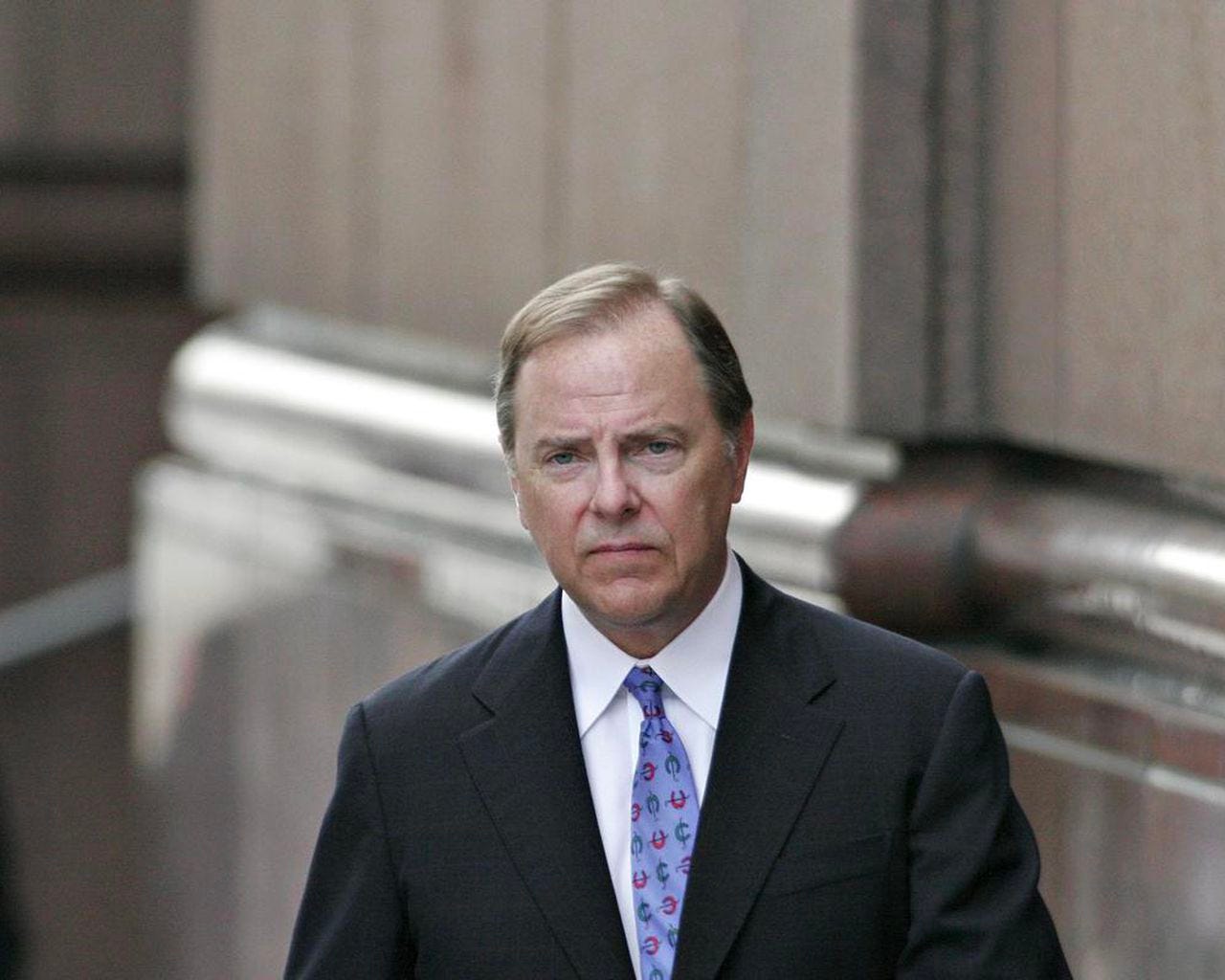
Jeffrey Skilling - "the brain" behind the curtain
When one of the aforementioned employees received a prison sentence, Lay lost a "living moneymaker", and the replacement for that position was Jeffrey Skilling - former CEO of Enron.
Skilling was the one who transformed Enron from simply supplying natural gas to entering the securities market and introducing mark-to-market accounting (MTM) knowledge to Enron - a method that allowed Enron to successfully defraud billions of dollars.
Skilling's "brutal" rules changed the work environment at Enron in a very negative direction:
With his fondness for the book "The Selfish Gene" by Richard Dawkins - which discusses greed and competition in human nature, Skilling applied it to "unlock" this instinct in every employee.
He introduced a performance evaluation metric for them - 1 is best and 5 is worst - with the goal that 10% of employees must score higher than 5, creating an extremely pressured competitive environment. Most employees had to work up to 18 hours a day.
The Fraudulent Tricks
Mark-to-Market Accounting (MTM)
MTM is an accounting practice that involves adjusting the value of an asset based on its current market value.
MTM allows the company to record estimated profits - which may not be exactly received in the future - in the income statement.
Enron used MTM to inflate profit figures. At the time of signing the contract, the estimated value over 10 years was 50 million dollars; Enron could fully record it at 50 million dollars even though they hadn't received a dime. If revenue was lower than expected, instead of taking a loss, the company would transfer the asset to an off-balance-sheet entity, where the loss would not be reported. This type of accounting allowed Enron to wipe out unprofitable operations without affecting their profits.
It was these inflated figures that easily lured investors into the "trap".
The Truth about Revenue:
Enron poured billions of dollars into a project in India, but the project was not economically viable because energy produced from liquefied natural gas at the plant would cost much more than electricity from local coal sources, while India could not afford such large amounts. Even though the power plant lay buried in ruins, Enron still didn't hesitate to inflate profits.
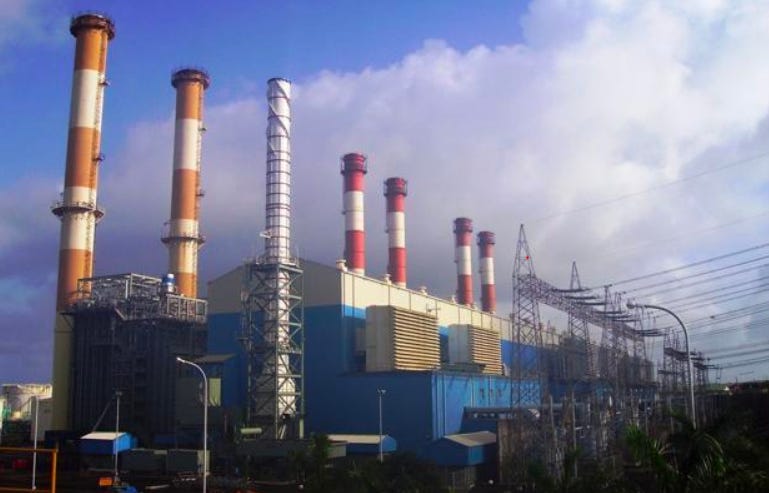
Enron ventured into bandwidth services, unfortunately the technology didn't work well enough. Despite the failure, Enron still recorded 53 million dollars in profit in the revenue report.

2. "Backyard" Companies (SPE - Special Purpose Entity)
Andrew Fastow along with other experts at Enron developed an intentional plan to demonstrate that the company had stable finances even though in reality many of their subsidiaries were incurring increasingly heavy losses.
They used Special Purpose Entities (SPEs) to hide mountains of debt and toxic assets of Enron from investors and creditors. The main purpose of the SPEs was to conceal the actual loss figures.
An SPE is a company created by Enron but with no ownership affiliation with Enron. If there is ownership affiliation, in principle, the SPE must be consolidated with Enron. However, a total of 3,000 "shell companies" were created solely for the purpose of "cooking" Enron's financial reports.
A standard Enron-to-SPE transaction would be as follows: Enron would transfer some of its rapidly rising stocks to the SPE in exchange for cash or 10-year bonds. The SPE would then use the stock to hedge assets listed on Enron's balance sheet.
One point different from the norm is that SPEs were fully capitalized with Enron stock, meaning the SPEs' hedging capability would be affected if Enron's stock price fell.
The second equally dangerous difference: Enron did not disclose conflicts of interest. Enron disclosed the existence of SPEs to public investors but did not fully disclose the non-long-term transactions between the company and SPEs.
SPEs are basically completely legal, but complex SPEs have certain operational limitations.
The enormous difference in revenue between Enron and other top companies in 2000 due to "fabricated" SPEs:
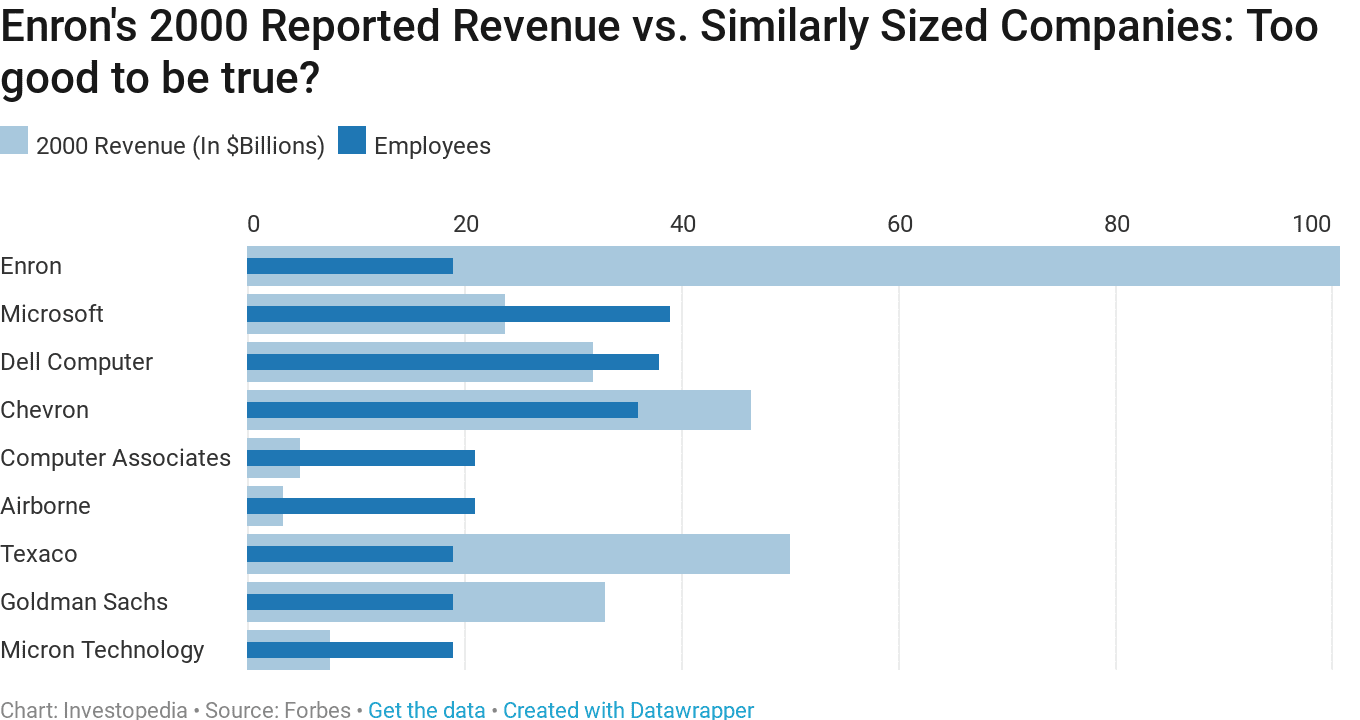
(Microsoft's revenue at that time was just over 20 billion dollars, Chevron over 40 billion dollars but Enron's revenue reached over 100 billion dollars)
3. California State Faced "Mysterious" Power Outages
After merging with Pacific Gas & Electric, Enron gained control of California's power grid. California residents noticed many strange blackouts afterward even though power capacity was double the demand. Enron traders manipulated the market by shipping power out of Cali to increase demand and when prices rose high, shipping it back. California lost 30 billion dollars, but the government did not intervene because the President at the time was George W. Bush, Lay's "close friend".

(One of the consecutive power outage incidents in San Diego, California, 2001)
The Final Act
08/14/2001, after Skilling resigned, Kenneth Lay took the position of Chairman and CEO of Enron. Sharon Watkins, an employee working under Andy Fastow, sent a letter to Lay the next day, detailing the numerous corruption and fraud cases she discovered within the company.
Following that, as soon as Enron's stock price dropped sharply from a high of $90,75/share in mid-2000 to below $1 at the end of November 2001, Enron shareholders filed a lawsuit. The Securities and Exchange Commission (SEC) subsequently investigated and found that Enron had used the aforementioned tricks to falsify figures reported in financial statements for many years. Among them was a team of executives developed by Skilling - just a few years after Enron was founded - to hide billions of dollars in debt from transactions and failed projects.
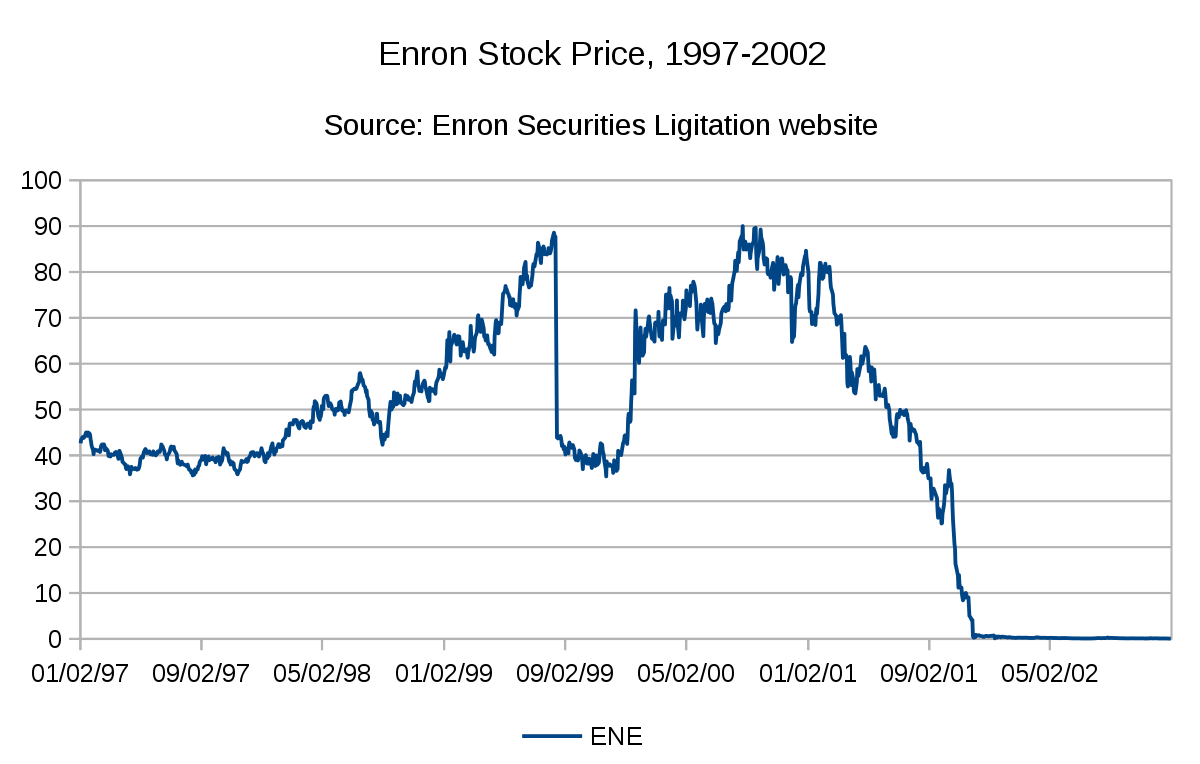
Just one month after the investigation, the "mighty" conglomerate Enron officially went bankrupt.
Enron and A&A: When the servant dies, the master follows.
Audit firm Arthur Andersen (A&A), one of the Big5 audit firms at the time, was accused of aiding these financial reporting frauds, resulting in the loss of its public company auditing license, forcing A&A to close. As a result, A&A completely collapsed, shaking the global financial market.

(CEO of Arthur Andersen, Joseph Berardino, during the hearing investigating the bankruptcy of Enron Corporation at Capitol Hill, February 5, 2002)
"Deep cut" for both giants
This shocking incident caused 29,000 employees at A&A and 20,000 at Enron to lose their jobs.
Lay was sentenced to 45 years in prison but died of a heart attack one month before the sentence took effect. Skilling, the mastermind behind all of Enron's crimes, received 24 years in prison and a $180 million fine. During his time behind bars, his parents and son passed away. In 2019, he was released after 12 years. Fastow received 5 years in prison for 2 counts of fraud as well as facilitating Enron's corrupt activities.
Comments (0)
No comments yet
Be the first to comment
Login to comment